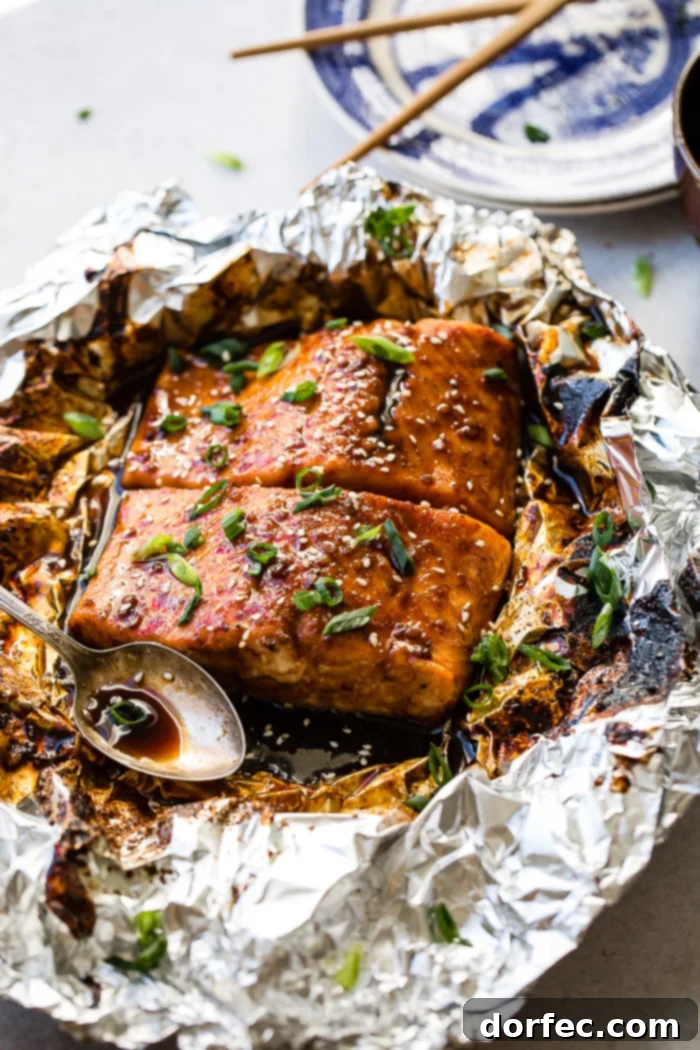
Thinking up quick, easy, and healthy dinner ideas doesn’t have to be a daunting task. In today’s fast-paced world, finding meals that are both nutritious and simple to prepare is a common challenge for many households. That’s where dishes like this incredible Asian Sticky Salmon in Foil come into play. It’s not just a meal; it’s a solution – offering a fantastic way to incorporate a healthy fish recipe into your dinner rotation without compromising on flavor or taking up too much precious time in the kitchen.
Salmon is celebrated for its rich content of Omega-3 fatty acids, which are essential for heart health, brain function, and overall well-being. Coupled with the vibrant, bold flavors of Asian cuisine, this dish transforms a simple fish fillet into an exotic and utterly satisfying culinary experience. The beauty of cooking salmon in foil is the effortless cleanup and the way it steams the fish to perfect tenderness, locking in all the juices and flavors. This method ensures your salmon is moist, flaky, and infused with every note of the delectable sticky sauce, making it a go-to choice for busy weeknights or even impressive enough for guests.
The Irresistible Allure of Our Asian Sticky Sauce
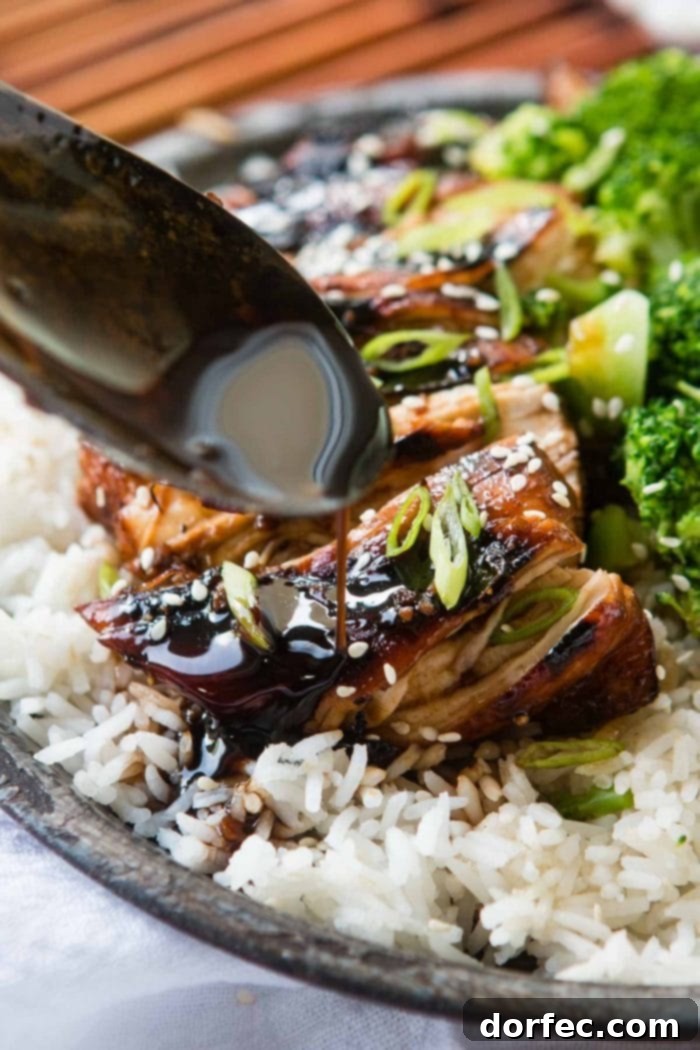
At the heart of this dish lies our signature Asian Sticky Sauce. Have you ever experienced its explosion of flavor? It’s genuinely remarkable and incredibly versatile. While the ingredient list might seem a little extensive at first glance, don’t be intimidated. Many of the measurements are similar, and the sauce comes together surprisingly quickly, transforming common pantry staples into a gourmet glaze. We meticulously blend aromatic spices like fresh ginger and minced garlic, which provide a warm, piquant base, with a hint of smoked paprika for an unexpected depth and earthiness. These flavors are harmoniously combined with savory soy sauce and a touch of sweet chili sauce, delivering that perfect balance of umami, spice, and sweetness that is characteristic of beloved Asian dishes.
A crucial element in achieving that coveted “sticky” texture is brown sugar, which caramelizes beautifully during cooking, and a cornstarch slurry. This mixture is gently simmered until it thickens into a glossy, clingy glaze that adheres perfectly to every surface of the salmon. The result is a sauce that’s not just flavorful but also visually appealing, glistening on the fish and inviting you to take that first mouthwatering bite. This sauce isn’t just for salmon; it’s fantastic on chicken, pork, or even as a dipping sauce for spring rolls, making it a valuable addition to your culinary repertoire.
The magic truly happens when this rich, sticky sauce meets the delicate salmon fillets. With just a quick rub on each salmon fillet to enhance its natural flavors, followed by a generous drizzle of our Asian Sticky Sauce, your fish is ready for the oven. In a mere 10-15 minutes of baking, dinner is ready and on the table. Yes, you read that right – a wholesome, flavorful, and satisfying meal prepared in under 30 minutes from start to finish. This makes it an ideal choice for those evenings when time is of the essence but you still crave a homemade, healthy dish.
From Ribs to Salmon: The Genesis of a Family Favorite
This delightful salmon recipe traces its roots back to one of our all-time most popular creations: our Asian Sticky Slow Cooker Ribs. That recipe isn’t just featured prominently in our first cookbook, “Our Sweet Basil Kitchen”; it’s consistently been one of our top-viewed and most beloved recipes for years. And it’s all thanks to that incredible sticky sauce! Its profound popularity naturally sparked ideas for new applications.
Initially, I admit, I was hesitant to venture into salmon territory. Fish can sometimes be a tricky protein to perfect, and I wanted to ensure any new recipe lived up to the high standards set by our sticky ribs. However, Cade, ever the adventurous palate, was insistent that we give it a try. His enthusiasm was contagious, and I finally caved in, eager to see if the sauce’s magic could translate to seafood.
The first round of recipe testing was quite an memorable experience, happening right as we were tackling the plumbing in our basement finishing project. As someone who, by her own admission, knew “practically nothing about salmon” at the time, I decided to enlist an unbiased expert for taste-testing: our plumber! It might sound unconventional, but who better to give an honest, unvarnished opinion than someone completely outside the food blogging sphere? To our delight, both our plumber and his buddy thoroughly enjoyed the dish. Their positive feedback gave us the confidence boost needed to fine-tune the recipe, ensuring the perfect bake time, optimal servings, and an overall consistently delicious outcome. And now, we are absolutely thrilled to share this perfected Asian Sticky Salmon in Foil with all of you!
Perfectly Baked Salmon: Timing and Temperature
Achieving perfectly cooked salmon is simpler than you might think, but precision with timing and temperature is key. My mom always taught me that salmon cooks very quickly, and this wisdom has certainly held true in my own kitchen. When baking salmon fillets, a general guideline is to preheat your oven to 400°F (200°C) and bake for 10-15 minutes. If you prefer a slightly lower temperature, 350°F (175°C) will typically require 15-20 minutes.
However, the most accurate way to determine doneness is by checking the internal temperature with an instant-read thermometer. For medium-rare salmon, aim for 125-130°F (52-54°C). For medium, target 135-140°F (57-60°C), and for well-done, 145°F (63°C) is ideal. Remember that salmon, like most proteins, will continue to cook slightly after being removed from the oven, so pulling it out a few degrees below your desired final temperature is a good practice. Factors such as the thickness of the fillet, whether it’s skin-on or skin-off, and the calibration of your oven can all influence cooking times, so always use a thermometer for the best results.
Freezing Fresh Salmon Fillets for Future Meals
Knowing how to properly freeze salmon fillets can be a game-changer for meal prep and reducing food waste. The most crucial factor in preserving the quality of salmon when freezing is its freshness at the time of freezing. The fresher the fish when it goes into the freezer, the better it will maintain its taste and texture once defrosted and cooked. Here are the best methods:
Optimal Freezing with a Vacuum Sealer
For the longest-lasting and highest-quality frozen salmon, a vacuum sealer is your best friend. We personally use and highly recommend a Food Saver. If you’ve heard us mention this before, it’s because it truly makes a difference! A vacuum sealer works by removing all the air from the packaging, which is critical for preventing freezer burn – the dehydration that causes food to become dry, tough, and flavorless. When vacuum-sealed, fresh salmon fillets can last for an impressive 6 months in the freezer, tasting almost as good as fresh once thawed.
The Ice Barrier Method for Freezing
If you don’t have a vacuum sealer, the “ice barrier” method is the next best option to protect your fish. Start with a fresh salmon fillet and briefly dip it into cold water. Immediately place the wet fillet on a baking sheet and transfer it to the freezer. Once the thin layer of water is frozen (typically 15-30 minutes), repeat this dipping and freezing process three more times. This creates a protective glaze of ice around the fish, acting as a barrier against air and freezer burn. After the final layer of ice is frozen, wrap the fillet tightly in freezer paper, then place it inside a heavy-duty freezer bag, pressing out as much air as possible. Salmon frozen this way will maintain its quality for up to 3 months.
Short-Term Freezing
For shorter-term storage, you can wrap fresh salmon tightly in plastic wrap, ensuring no air pockets, and then place it in a freezer bag. This method is suitable for up to 1 week in the freezer.
A note on freezing with sauce: If you’re preparing our Asian Sticky Salmon in Foil and plan to freeze it, ensure you freeze the sauce separately, or if freezing the prepared fillets, use the vacuum sealer method. The ice barrier method isn’t ideal for sauced fish as it can affect the sauce’s texture upon thawing. With a Food Saver, you can conveniently freeze your salmon fillets already coated in the delicious sticky sauce!
Can You Freeze Cooked Salmon Fillet?
Yes, you can absolutely freeze cooked salmon, making it a fantastic option for future quick meals or meal prepping. Cooked salmon can be frozen for up to 2-3 months when stored in a freezer bag with the air pressed out. For even longer storage, utilizing a vacuum sealer (like the Food Saver) can extend its freezer life to 4-5 months, maintaining optimal quality.
When you’re ready to enjoy your frozen cooked salmon, always remember to defrost it first in the refrigerator overnight. Once thawed, reheated salmon is incredibly versatile. It’s best used in dishes where its flakiness can be appreciated, rather than as a standalone fillet meant to replicate its freshly cooked texture. Think delightful pasta salads, flavorful sandwiches, vibrant green salads, or even as a topping for grain bowls. This Asian Sticky Salmon in Foil, once cooked and frozen, would be absolutely awesome flaked into an Asian chopped salad, adding a burst of flavor and protein!
Baking Salmon Fillet From Frozen: A Time-Saving Trick
For those moments when you’ve forgotten to thaw your salmon, or simply want to cook it directly from frozen for maximum convenience, rest assured that it is perfectly safe to cook frozen salmon. The key to successfully baking frozen salmon is a slightly adjusted cooking technique to ensure it cooks evenly and retains moisture without drying out.
To cook from frozen, you’ll generally need a hotter oven. Preheat your oven to 425°F (220°C). Place the frozen salmon fillet in a baking dish or directly onto a foil-lined baking sheet. Cover the salmon with foil – this initial covering is crucial as it helps steam the fish, preventing the exterior from overcooking while the interior thaws and cooks. Bake for 5 minutes with the foil on. After this initial period, remove the foil and continue baking for an additional 5-7 minutes, or until the internal temperature reaches 135-145°F (57-63°C). This two-stage cooking process ensures a beautifully cooked, flaky fillet even when starting from frozen.
Is Salmon Safe to Eat When Pregnant?
For expectant mothers, salmon is not only safe to eat during pregnancy but highly recommended due to its exceptional nutritional profile. It’s a fantastic source of lean protein, Vitamin D, and crucial Omega-3 fatty acids, particularly DHA, which plays a vital role in the development of the baby’s brain and eyes. However, the critical caveat is to always ensure the salmon is thoroughly cooked. You should strictly avoid raw preparations of fish, including sushi, during pregnancy, as raw fish can potentially contain parasites or harmful bacteria that could pose risks to both mother and baby. Stick to cooking methods such as poaching, broiling, grilling, or baking salmon fillets to a safe internal temperature, ensuring it’s cooked through. Enjoying salmon a few times a week can be a beneficial part of a healthy pregnancy diet.
Microwaving Salmon: Best Practices and Alternatives
When considering cooking or reheating salmon, many people wonder about the convenience of a microwave. While salmon is one of the firmer fish types that holds up well when eaten cold or flaked into salads, using a microwave for warming it up is generally not recommended. The intense, uneven heat of a microwave can quickly dry out delicate fish, leading to a rubbery texture and often an unpleasant “fishy” odor that permeates the kitchen.
For the best results, ensuring a moist, flaky texture and preserving its delicious flavor, fish should always be prepared using traditional cooking methods. This includes baking, poaching, grilling, pan-frying, or broiling. These methods allow for more control over the cooking process and heat distribution, resulting in a far superior culinary experience. So, while the microwave might seem like a quick fix, it’s best to steer clear when it comes to salmon and other fish.
Asian Sticky Salmon in Foil Recipe
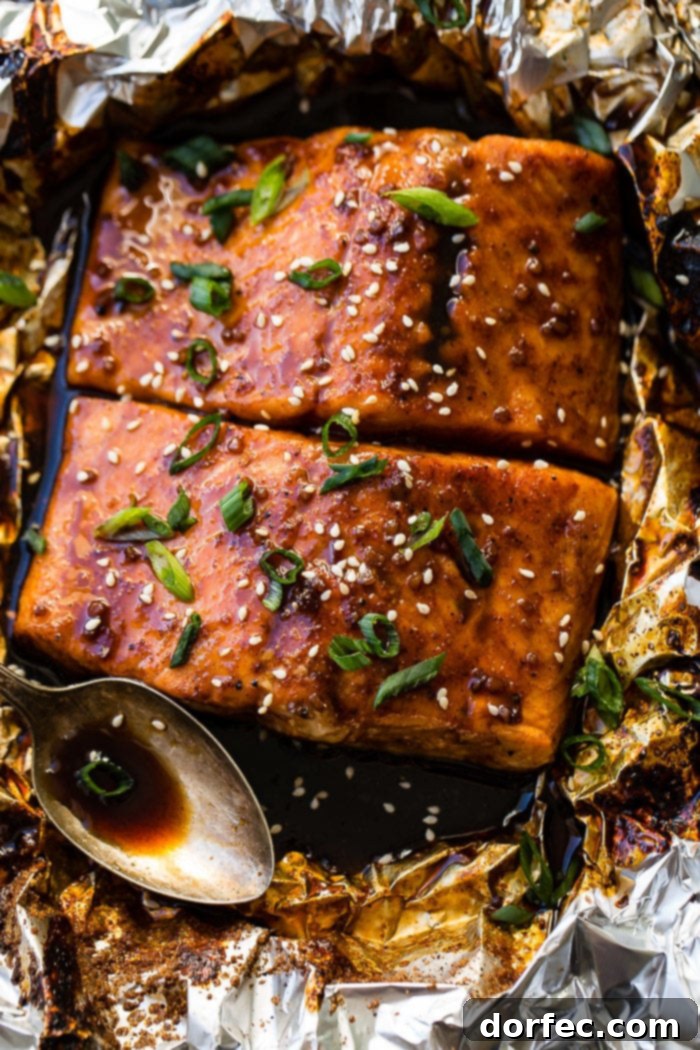
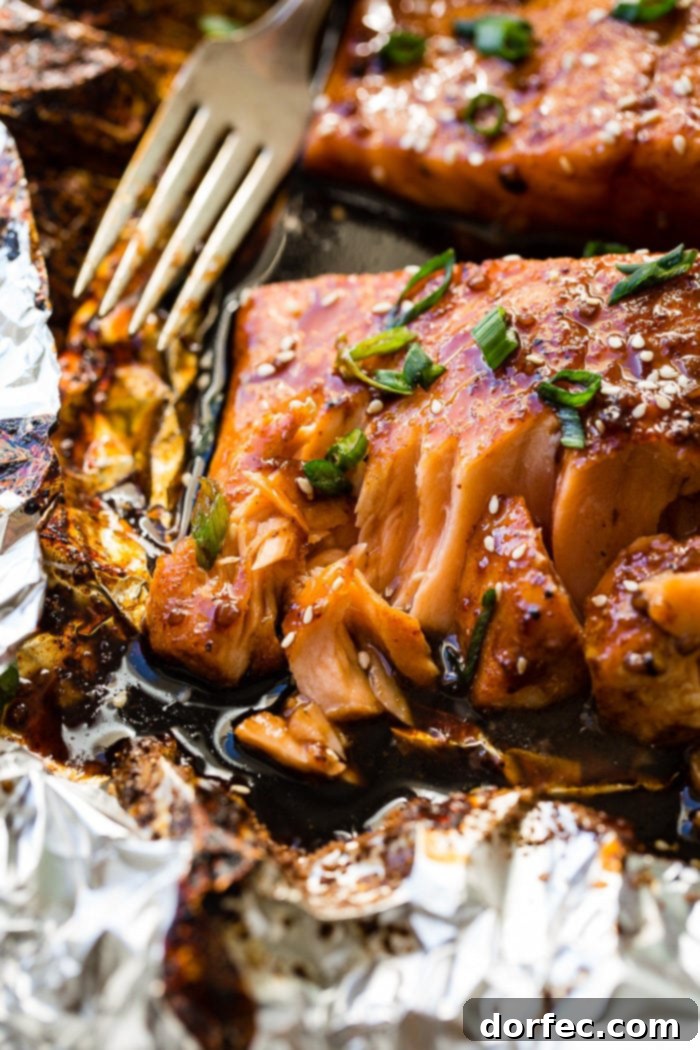
This quick and easy Asian Sticky Salmon in Foil is a great way to get a healthy fish recipe for dinner on the table in under 30 minutes.
Prep Time: 15 minutes
Cook Time: 10 minutes
Total Time: 25 minutes
Servings: 4 servings
Ingredients
- 4 Fresh Salmon Fillets
- Rub and Sauce from Asian Sticky Ribs Recipe (or your favorite Asian sticky sauce)
- 2 Green onions, sliced for garnish
- Sesame Seeds for Garnish
- White Rice for Serving
Instructions
- Preheat the oven to 400°F (200°C). Lay out 4 pieces of foil, stacking 2 on top of each other to create 2 stronger, separate packets.
- Prepare the Asian Sticky Sauce according to your preferred recipe (or the linked Asian Sticky Ribs recipe). Once cooked, set it aside in a small bowl to cool slightly.
- Prepare the rub (from the Asian Sticky Ribs recipe or your own) and generously rub it all over the tops and sides of the salmon fillets. Place 2 fillets on each stacked piece of foil, creating 2 packets in total.
- Drizzle a little of the prepared Asian Sticky Sauce over each fillet.
- Carefully fold the ends and sides of the foil over the top of the salmon, sealing them tightly to form a closed packet.
- Place the foil packets directly in the oven or on a baking sheet for easier handling. Bake for 10-15 minutes, or until the internal temperature of the salmon reaches 135-145°F (57-63°C).
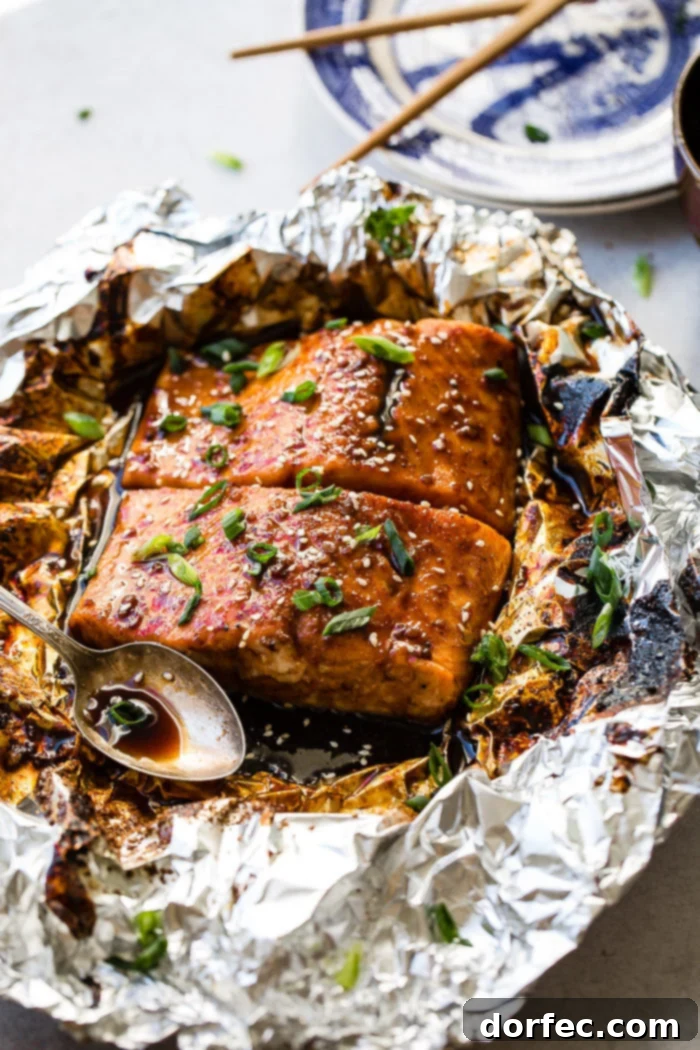
- Remove from the oven and gently open the foil packets, being cautious of the steam to avoid burns.
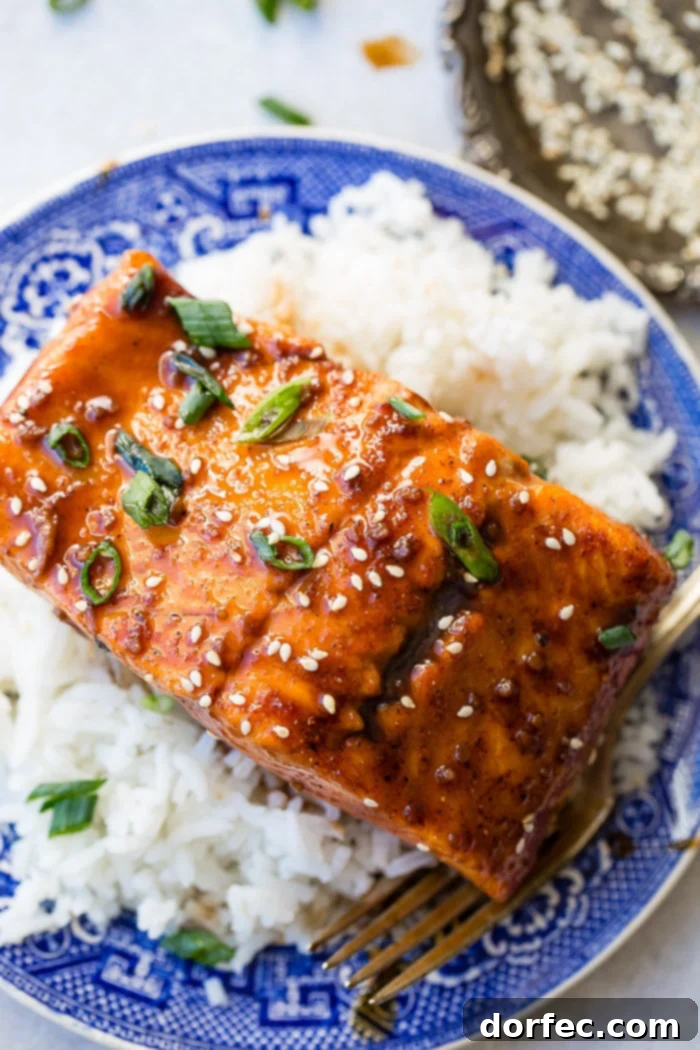
- Drizzle with more of the Asian Sticky Sauce (if desired), and sprinkle generously with sliced green onions and sesame seeds. Serve immediately with white rice.
Recipe Notes
You have the option to freeze the salmon with the rub and sauce before cooking, or after it has been cooked. Refer to the detailed notes in this post for comprehensive guidance on how to properly freeze salmon to maintain its quality. Frozen salmon can be conveniently used later in various meals.
To reheat cooked salmon, place the fish on a rimmed baking sheet and warm it in a 275°F (135°C) oven for approximately 15 minutes, or until it reaches an internal temperature of 125°F to 130°F (52-54°C). This gentle reheating method helps preserve moisture and flavor.
Nutrition
Nutrition information is automatically calculated, so should only be used as an approximation.
Serving: 1g, Calories: 578kcal, Carbohydrates: 16g, Protein: 53g, Fat: 32g, Saturated Fat: 6g, Polyunsaturated Fat: 23g, Cholesterol: 144mg, Sodium: 285mg, Fiber: 2g, Sugar: 2g
We absolutely love hearing from you! If you try this Asian Sticky Salmon in Foil recipe, please consider leaving a comment below with your thoughts and feedback. Your experiences help us and other home cooks discover new favorites and refine our culinary adventures!
Serving Suggestions and Flavor Variations
While this Asian Sticky Salmon in Foil is a star on its own, pairing it with complementary sides can elevate your dining experience. Classic steamed white or brown rice is a perfect absorbent base for soaking up every drop of that delicious sticky sauce. For added nutrients and texture, consider serving it alongside a medley of stir-fried vegetables like broccoli, snap peas, bell peppers, or carrots. A simple side salad with a light vinaigrette can also provide a refreshing contrast to the rich flavors of the salmon. Don’t forget to sprinkle extra sesame seeds and fresh green onions just before serving for that final touch of freshness and crunch.
Want to experiment with the flavors? The beauty of this recipe lies in its adaptability. For a spicier kick, add a pinch of red pepper flakes to the sauce, or a dash of sriracha. If you prefer a richer, more umami depth, a spoonful of miso paste can be incorporated. Lemon or lime juice, squeezed over the salmon after baking, can brighten the flavors and add a zesty finish. Feel free to explore different herbs or even a sprinkle of toasted nuts for an added textural dimension. This recipe serves as an excellent foundation for your culinary creativity!
Conclusion: Your New Favorite Weeknight Salmon Recipe
The Asian Sticky Salmon in Foil is more than just a dinner idea; it’s a testament to how effortlessly delicious and healthy meals can be. Combining the nutritional power of salmon with our rich, sweet, and savory Asian sticky sauce, all cooked to perfection in a convenient foil packet, truly makes this a standout dish. It’s perfect for busy weeknights when you need a quick solution, yet elegant enough to impress when entertaining. From its humble origins as a beloved rib sauce to becoming a celebrated salmon sensation, this recipe offers a foolproof path to a flavorful fish dinner.
We’ve walked through everything from mastering the bake time and proper freezing techniques to answering common questions about salmon consumption during pregnancy and avoiding the microwave for fish. Our goal is to empower you with the knowledge and confidence to create this delightful meal in your own kitchen. So, gather your ingredients, follow these simple steps, and prepare to enjoy a truly unforgettable Asian Sticky Salmon in Foil. It’s time to add this fantastic recipe to your regular rotation!
Looking for More Asian-Inspired Dinner Ideas?
If you’re a fan of the vibrant flavors in our Asian Sticky Salmon, then you’ll definitely want to try this next recipe. It’s another fantastic way to bring bold, sweet, and savory notes to your dinner table, perfect for those who love quick, homemade meals.
STICKY ASIAN GRILLED CHICKEN BREASTS
Are you in need of a truly mouthwatering Asian Chicken recipe, but dreading a long list of obscure ingredients you might not have on hand? Look no further! Our Sticky Asian Grilled Chicken Breasts offer all the incredible flavor you crave with minimal fuss. This recipe leverages many of the same flavor profiles as our famous sticky sauce, adapted perfectly for tender, juicy grilled chicken. It’s a healthy, high-protein alternative that’s equally as satisfying and remarkably easy to prepare.