
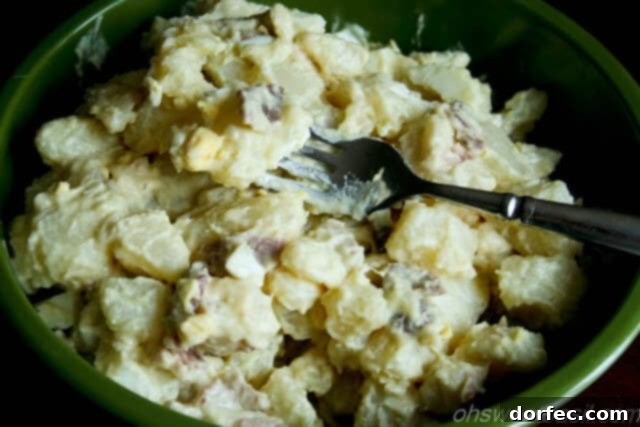
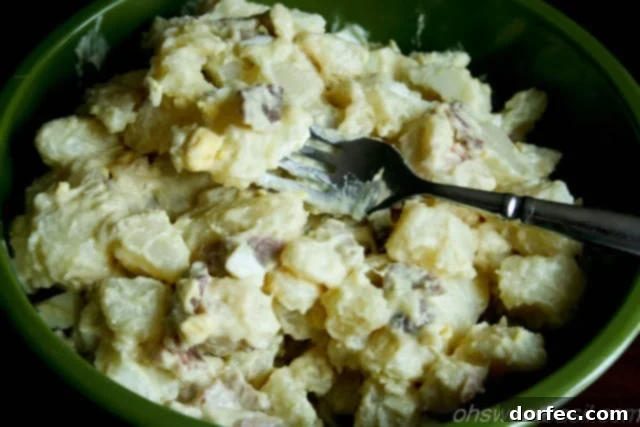
There’s nothing quite like a classic, homestyle potato salad to bring comfort and joy to any meal. This beloved side dish evokes memories of backyard barbecues, family picnics, and festive gatherings. While many variations exist, our focus today is on a truly exceptional recipe for the ultimate creamy bacon potato salad – a dish that stands out for its rich flavor and incredibly satisfying texture. We believe a truly great potato salad should be simple, flavorful, and incredibly comforting, without the distraction of ingredients like pickles or onions that can sometimes overpower the potatoes themselves.
Occasionally, it’s fun to explore new flavor profiles, like a mayo-free version or one with a zesty kick. However, there’s an undeniable allure to the tried-and-true classics. This recipe perfectly embodies that timeless appeal, delivering a potato salad that’s both familiar and extraordinary. What makes our classic bacon potato salad truly stand out, elevating it from good to absolutely unforgettable, is a surprising yet utterly essential ingredient:
Bacon grease. We understand, the thought might give some pause. It’s certainly not the leanest ingredient, but its inclusion is a game-changer. Bacon grease imparts an unparalleled depth of smoky, savory flavor that simply cannot be replicated by any other means. It transforms the dressing, infusing every bite with a richness that ties all the ingredients together seamlessly, creating a truly harmonious and indulgent experience. Trust us, once you try it, you’ll understand why it’s the secret to the best bacon potato salad you’ve ever tasted.
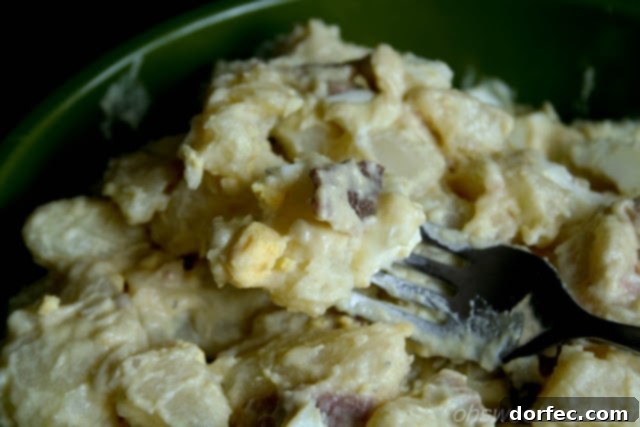
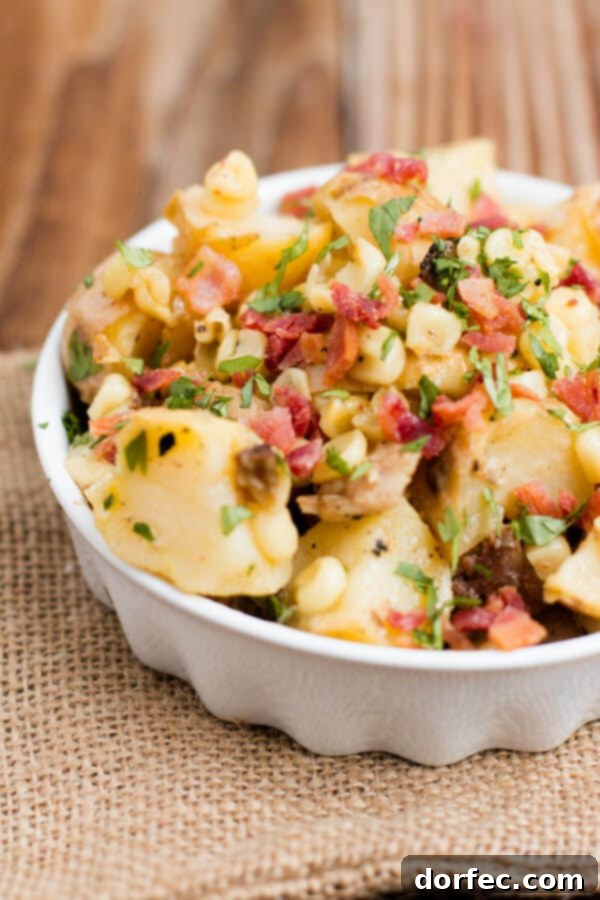
How Long Will Potato Salad Keep? Storage Tips for Food Safety
Proper storage is crucial for enjoying your delicious potato salad safely and prolonging its freshness. Potato salad, especially those made with mayonnaise and eggs, is considered a perishable food and requires careful handling.
First and foremost, any potato salad that has been left out at room temperature for more than 2 hours should be discarded. This is a critical food safety guideline, as bacteria can multiply rapidly in temperatures between 40°F (4°C) and 140°F (60°C), often referred to as the “danger zone.” If it’s a particularly warm day or your kitchen is hot, this timeframe can be even shorter.
When stored correctly in the refrigerator, you can generally keep potato salad for 3-4 days. To ensure it stays fresh and safe, always transfer your potato salad to an airtight container immediately after preparation and cooling. This helps prevent contamination and keeps the flavors locked in. It should be kept well covered and consistently cold until you are ready to serve it. Avoid opening the container unnecessarily, as this can introduce warm air and accelerate spoilage. Freezing potato salad is generally not recommended, as the texture of the potatoes and mayonnaise can become unpleasantly watery and separated upon thawing.
Why Won’t Boiled Eggs Peel Easily? Solving the Shell Struggle
The frustration of trying to peel a stubborn hard-boiled egg is a common kitchen woe. Many factors contribute to why eggshells sometimes stick, but the primary culprit is often the freshness of the egg. The fresher the egg, the harder it is to peel.
This phenomenon is due to the pH level of the egg white (albumen) and the inner membrane. In very fresh eggs, the pH of the albumen is lower, making it adhere more strongly to the inner shell membrane. As an egg ages, its pH naturally increases, causing the membrane to separate more easily from the albumen, thus making it simpler to peel.
To prevent shells from sticking and achieve perfectly smooth, peeled eggs every time, try these proven methods when boiling your eggs:
- **Add Acid or Base to Water:** Incorporating a small amount of either vinegar (acid) or baking soda (base) into your boiling water can help. Vinegar works by gently weakening the shell, while baking soda slightly increases the alkalinity of the water, which can aid in the separation of the egg white from the membrane. A teaspoon of baking soda or a tablespoon of white vinegar per quart of water is usually sufficient.
- **Rapid Cooling:** Immediately after cooking, transfer your boiled eggs to an ice bath (a bowl of ice water) for at least 5-10 minutes. The sudden temperature change causes the egg white to contract, pulling it away from the shell membrane and making it much easier to peel.
- **Peel Under Cold Water:** Once cooled, crack the egg all over by gently tapping it on a hard surface, then roll it to break the shell into smaller pieces. Peel the egg under cold running water; the water can help to loosen any small shell fragments that are still clinging.
How Do You Know If A Boiled Egg Is Done? Achieving Your Preferred Consistency
Boiling eggs seems straightforward, but achieving that perfect yolk consistency—whether runny, jammy, or firm—requires precise timing. Here’s a guide to help you get it right every time, after the water has come to a full boil:
- **Soft-Boiled Eggs (3 ½ minutes):** For a delicate, runny yolk and whites that are just set, boil your eggs for exactly 3 ½ minutes after the water begins to boil. The whites will be firm but tender, and the yolk will remain liquid, perfect for dipping toast.
- **Medium-Boiled Eggs (4-4 ½ minutes):** If you prefer a yolk that is almost set but still wonderfully moist and creamy—often described as “jammy”—cook your eggs for 4 to 4 ½ minutes. The white will be fully set, offering a pleasant texture contrast.
- **Hard-Boiled Eggs (7-8 minutes):** For a completely firm, opaque yolk, boil your eggs for 7 to 8 minutes. This is the ideal consistency for potato salad, deviled eggs, or slicing for sandwiches. Overcooking can lead to a greenish-gray ring around the yolk, which is harmless but can affect appearance and texture.
After cooking for the desired amount of time, it is crucial to immediately place the eggs into a bowl of cold water or an ice bath. This “shock” stops the cooking process instantly, preventing overcooking and making them easier to peel, as detailed in the previous section. For hard-boiled eggs, another effective method is to bring the water to a full boil, then remove the pot from the stove, cover it, and let the eggs sit in the hot water for 15 minutes. Afterward, transfer them directly to a cold water bath to cool completely.
Ultimate Creamy Bacon Potato Salad: A Homestyle Classic
Bacon Potato Salad

Ingredients
- 5 Potatoes, preferably Yukon Gold or Red Bliss, peeled and chopped into 1-inch chunks
- 1/4 Cup Dijon Mustard, scant (adjust to taste)
- 2 teaspoon Granulated Sugar
- 1 Tablespoon Apple Cider Vinegar
- 3/4 Cup Mayonnaise, Light or regular
- 8 Slices Bacon, cooked crispy and chopped, reserving 2 Tablespoons of the rendered bacon grease
- Salt and Pepper , to taste
- 2 Large Eggs, hard boiled, cooled, and chopped
Instructions
-
In a large pot, add enough water to cover the potatoes. Bring the water to a medium boil and add a generous couple of pinches of salt to season the potatoes from within.
-
Carefully peel the potatoes and chop them into uniform 1-inch chunks. Uniformity ensures even cooking.5 Potatoes
-
Add the chopped potatoes to the boiling water and cook until they are fork-tender, but not mushy. This usually takes about 10-15 minutes, depending on the potato type and size of the chunks.
-
Once tender, remove the pot from the heat. Carefully drain the cooked potatoes thoroughly and spread them out on a baking sheet or large plate to cool completely. Allowing them to cool before mixing prevents the mayonnaise from breaking down.
-
While the potatoes are cooling, prepare your rich, flavorful dressing. In a medium-sized bowl, combine the Dijon mustard, granulated sugar, apple cider vinegar, mayonnaise, and the reserved 2 tablespoons of bacon grease. The warm bacon grease will melt beautifully into the dressing, infusing it with incredible flavor.1/4 Cup Dijon Mustard, 2 teaspoon Sugar, 1 Tablespoon Apple Cider Vinegar, 3/4 Cup Mayo, 8 Slices Bacon
-
Whisk all the dressing ingredients together until smooth and well combined. Taste the dressing and season it with salt and freshly ground black pepper as needed. Remember, proper seasoning is key to a delicious potato salad.
-
In a large mixing bowl, gently fold the cooled potatoes, chopped hard-boiled eggs, and the prepared dressing together until everything is evenly coated. We recommend reserving the crispy bacon bits until just before serving to maintain their texture, but you can certainly mix them in now if you prefer.Salt and Pepper, 2 Eggs, 8 Slices Bacon
-
Cover the potato salad tightly and refrigerate for at least 1-4 hours before serving. This chilling period is essential as it allows the flavors to meld and deepen, resulting in a much more delicious and cohesive salad.
-
Just before serving, stir in the reserved chopped crispy bacon. Garnish with a sprinkle of fresh chives or parsley if desired. Enjoy this rich, creamy, and undeniably delicious bacon potato salad!
Recipe Notes
Nutrition
Nutrition information is automatically calculated, so should only be used as an approximation.
Choosing the Right Potatoes for Your Salad
The type of potato you choose significantly impacts the texture of your potato salad. For a creamy and consistent salad that holds its shape without becoming gluey, waxy potatoes are generally preferred. Varieties like Yukon Gold, Red Bliss, or new potatoes are excellent choices because they have a lower starch content and thinner skins, which means they tend to keep their shape well after cooking. They also absorb the dressing beautifully. Starchy potatoes like Russets, while great for mashing, can become crumbly or mushy in potato salad, creating a less desirable texture. For this recipe, Yukon Gold or Red Bliss, chopped into uniform 1-inch chunks, will provide the perfect balance of tenderness and structure.
Tips for Enhanced Flavor and Texture
- **Season the Cooking Water:** Don’t skip salting the water when boiling your potatoes. This is the first layer of seasoning and ensures the potatoes themselves are flavorful, not just the dressing.
- **Don’t Overcook the Potatoes:** Cook the potatoes until they are fork-tender, but stop before they become mushy. Overcooked potatoes absorb too much dressing and can result in a gummy texture.
- **Cool Potatoes Completely:** It’s crucial to allow the potatoes to cool completely before mixing them with the mayonnaise-based dressing. Warm potatoes will cause the mayonnaise to separate and become oily, leading to a less appealing texture.
- **The Magic of Bacon Grease:** As mentioned, the reserved bacon grease is key. When it’s still warm, it melts into the dressing, distributing that irresistible smoky flavor throughout the salad. Don’t be shy with this step; it truly makes all the difference.
- **Chill for Flavor Development:** The chilling time is not just for food safety; it’s essential for flavor. As the potato salad chills, the ingredients meld together, and the potatoes absorb the rich dressing, creating a more cohesive and delicious end product. A minimum of 1-4 hours is recommended, but overnight is even better.
- **Hold the Bacon (Until Serving):** For maximum crispiness and texture contrast, stir in the chopped crispy bacon just before serving. If you mix it in too early, it can lose its crunch.
Serving Suggestions and Occasions
This ultimate creamy bacon potato salad is incredibly versatile and makes a fantastic addition to almost any meal or gathering. It’s the quintessential side dish for:
- **Summer Barbecues and Picnics:** Its robust flavor stands up well to grilled meats like burgers, hot dogs, ribs, and chicken.
- **Holiday Feasts:** A welcome addition to Thanksgiving, Christmas, or Easter dinners, offering a comforting side dish that pairs beautifully with roasted meats.
- **Potlucks and Gatherings:** Always a crowd-pleaser, this potato salad is sure to be devoured quickly at any social event.
- **Weeknight Dinners:** Serve alongside simple grilled chicken, baked salmon, or a hearty sandwich for a complete and satisfying meal.
Garnish with fresh chives, parsley, or a dash of paprika for an extra pop of color and freshness. Whether served as a hearty side or a light lunch, this bacon potato salad is bound to become a staple in your recipe rotation.
Common Potato Salad Mistakes to Avoid
Even a classic dish like potato salad can go wrong if certain pitfalls aren’t avoided. To ensure your ultimate creamy bacon potato salad is a success every time, keep these common mistakes in mind:
- **Using the Wrong Potatoes:** As discussed, starchy potatoes can lead to a mushy texture. Opt for waxy or all-purpose varieties that hold their shape.
- **Under-seasoning or Over-seasoning the Water:** Potatoes absorb salt during cooking, so properly salting the water is vital for foundational flavor. However, don’t go overboard, as you’ll also be seasoning the dressing.
- **Overcooking Potatoes:** Mushy potatoes are the enemy of good potato salad. Cook just until fork-tender, then drain immediately.
- **Mixing Hot Potatoes with Cold Dressing:** This is a cardinal sin! Hot potatoes will “break” the mayonnaise, resulting in a greasy, runny dressing. Always cool your potatoes completely before mixing.
- **Not Chilling Long Enough:** The flavors need time to marry. Rushing the chilling process means you’ll miss out on the full, developed taste of your salad.
- **Adding Crispy Ingredients Too Early:** If you want your bacon to stay crispy, wait until just before serving to add it. The moisture from the dressing will soften it over time.
- **Forgetting to Taste and Adjust:** Everyone’s palate is different. Taste your dressing, then taste the final salad. You might need a little more salt, pepper, a touch more vinegar for tang, or a pinch more sugar for balance.
By avoiding these common errors, you’ll consistently create a potato salad that is perfectly textured, wonderfully seasoned, and bursting with flavor.
German Potato Salad