
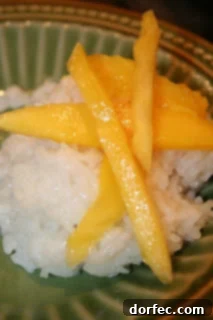
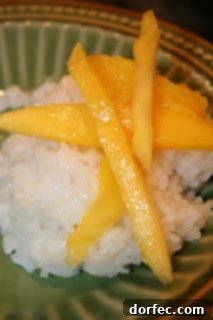
Authentic Mango Sticky Rice: Your Guide to Thailand’s Sweetest Obsession
There’s an undeniable magic to Thai cuisine, and while savory dishes often take center stage, the desserts offer an equally enchanting experience. Among them, Mango Sticky Rice (Khao Niao Mamuang) stands out as a universally adored treat, captivating palates with its harmonious blend of sweet, savory, and subtly tangy notes. As someone who initially preferred different types of sweets, I confess that sweet rice for dessert wasn’t always my go-to choice. However, this iconic dish completely won me over. The first bite of perfectly steamed glutinous rice, bathed in a rich, sweetened coconut cream and paired with slices of fresh, juicy mango, was an absolute revelation. Everyone who tries it falls in love with its irresistible charm!
Creating this exquisite `Thai dessert` might seem intricate at first glance, especially when compared to simply popping a brownie mix in the oven. But rest assured, preparing homemade mango sticky rice is far less complicated than it appears. The beauty of this dessert lies in its simplicity and the quality of its core ingredients. It offers a refreshing departure from heavy, chocolate-laden desserts, making it an ideal sweet ending that perfectly complements, rather than overwhelms, the vibrant and often spicy flavors of an Asian meal. This authentic mango sticky rice recipe is more than just a dessert; it’s a perfect way to conclude any great meal, leaving a lasting impression of tropical delight and culinary satisfaction.
Mastering the Star Ingredient: How to Pick a Perfectly Ripe Mango
The success of your mango sticky rice largely depends on the quality of your mangoes. Choosing a perfectly ripe mango is crucial for that sweet, fragrant, and slightly tangy flavor that balances the rich coconut rice. An underripe mango will be too firm and lack sweetness, while an overripe one can be mushy and stringy. Here’s how you can tell if a mango is ready to be enjoyed:
- The Gentle Squeeze Test: The most reliable indicator is touch. Gently squeeze the mango; a ripe mango will yield slightly under pressure, similar to a ripe avocado or peach. Avoid rock-hard mangoes, which are unripe, and overly mushy ones, which are past their prime. The skin should feel taut but not hard.
- Aroma is Key: Bring the mango to your nose and smell the stem end. A perfectly ripe mango will emit a sweet, fruity, and sometimes floral aroma. If there’s no distinctive smell, it’s likely not ripe enough. If it smells sour, alcoholic, or has a fermented scent, it’s unfortunately overripe.
- Visual Cues (Use with Caution): While color can be an indicator, it’s not always definitive as different mango varieties have different ripe colors. Some ripe mangoes remain green, like the Keitt variety, while others turn bright red, orange, or yellow. For instance, Ataulfo mangoes turn a deep golden yellow when ripe. Always prioritize the feel and smell over color alone.
- Consider the Variety: For mango sticky rice, certain varieties are preferred for their superior sweetness, less fibrous flesh, and ideal texture. Ataulfo (often called honey mango), Alphonso, and Tommy Atkins are popular choices. These varieties tend to have a smoother, richer pulp perfect for this dessert.
By carefully selecting your mangoes using these tips, you’ll ensure they are at their peak of flavor and juiciness, providing the best possible counterpoint to the creamy sticky rice.
Beyond Delicious: The Remarkable Health Benefits of Mangos
Mangoes are not only incredibly delicious but also packed with a wide array of nutrients, earning them the title “king of fruits.” Incorporating mangoes into your diet, perhaps through a delightful serving of mango sticky rice, offers a wealth of impressive health benefits:
- Immune System Boost: Mangoes are an excellent source of vitamin C, a powerful antioxidant that plays a crucial role in boosting your immune system. It helps the body produce white blood cells, which fight off infections and diseases.
- Digestive Health Champion: The significant fiber content in mangoes aids digestion, promotes regularity, and helps prevent constipation. They also contain digestive enzymes like amylases, which help break down complex carbohydrates, making digestion more efficient.
- Cholesterol Management: Pectin, a type of soluble fiber abundant in mangoes, is particularly effective in helping to control high cholesterol levels. It works by binding to dietary cholesterol in the digestive tract, thereby reducing its absorption into the bloodstream.
- Vision Protection: Mangoes are rich in vitamin A (from beta-carotene) and other carotenoids, which are vital for maintaining good vision and overall eye health. Regular consumption can help protect against age-related macular degeneration and improve night vision.
- Antioxidant Powerhouse: Beyond vitamin C, mangoes contain several other potent antioxidants, including quercetin, isoquercitrin, fisetin, astragalin, and gallic acid. These compounds combat harmful free radicals in the body, reducing oxidative stress and potentially lowering the risk of chronic diseases such.
- Radiant Skin and Hair: The combination of vitamins C and A, along with other antioxidants, contributes significantly to healthy, radiant skin and strong, lustrous hair. Vitamin C is essential for collagen production, which keeps skin firm and elastic, while vitamin A aids in skin repair and renewal.
So, indulging in a delightful serving of mango sticky rice not only satisfies your sweet cravings but also provides a nutritious punch, making it a treat you can feel good about!
The Foundation of Flavor: Understanding Glutinous (Sticky) Rice
At the very heart of this beloved Thai dessert is the unique texture and flavor of sticky rice. But what exactly is sticky rice, and how does it differ from other types of rice that are more commonly found in kitchens worldwide?
- Glutinous Rice by Any Other Name: Sticky rice is formally known as glutinous rice or sweet rice. Despite its name, it contains no dietary gluten (the protein found in wheat, barley, and rye), making it naturally suitable for those with gluten sensitivities or celiac disease. The term “glutinous” refers solely to its glue-like, sticky texture when cooked.
- The Science of Stickiness: This remarkable stickiness comes from its unique starch composition. Glutinous rice contains a very high percentage of amylopectin and almost no amylose. Amylopectin is a branched starch molecule that, when heated with water, gelatinizes and creates the characteristic sticky, chewy, and slightly translucent texture. In contrast, regular long-grain rice (like jasmine or basmati) has a higher amylose content, which results in a fluffier, more separate grain when cooked.
- Sourcing the Right Rice: When preparing mango sticky rice, it’s crucial to use the correct type of rice. Specifically, look for “long-grain Thai sticky rice” or “glutinous rice.” You can typically find it in Asian grocery stores, specialty food markets, or the international aisle of larger supermarkets. Do not substitute with other rice varieties like jasmine, basmati, or sushi rice, as they will not achieve the desired sticky, chewy, and absorbent texture essential for this recipe.
- The Steaming Method is Essential: Unlike most rice varieties that are cooked by boiling, sticky rice should almost always be prepared by steaming. Steaming allows the grains to absorb moisture evenly and expand without becoming waterlogged or mushy. This method preserves its unique chewy and cohesive consistency, which is fundamental to the dish. Proper steaming, often preceded by a thorough soaking, ensures each grain becomes translucent and wonderfully sticky, ready to soak up the rich coconut cream.
Understanding these unique characteristics and proper preparation methods is vital for crafting an authentic and truly delicious mango sticky rice, ensuring your dessert has the perfect, quintessential foundation.
Crafting the Luscious Sweet Coconut Sauce
While the mango provides the fruity sweetness and the sticky rice delivers the unique texture, it’s the rich, sweet coconut sauce that truly elevates this dessert, infusing the rice with an irresistible creaminess and tropical flavor. This sauce acts as the binding agent, transforming simple steamed rice into a luxurious base for the mango. For the best results, always opt for good quality, full-fat unsweetened coconut milk. The richness of the full-fat milk is essential for that decadent, melt-in-your-mouth experience.
The preparation is straightforward: coconut milk is gently heated with sugar and a touch of salt. The salt is crucial here, as it balances the sweetness, enhancing the overall flavor profile without making it overly saccharine. The key is to dissolve the sugar and salt thoroughly without bringing the mixture to a rolling boil, as this can sometimes cause the coconut milk to separate. Once the rice is perfectly steamed, it’s immediately combined with this warm, fragrant sauce, allowing each grain to soak up the creamy goodness. This absorption period is vital, as it allows the rice to fully plump up and become deeply flavored, developing its signature taste and texture before being served with the fresh mango.
Tips for a Perfectly Balanced Mango Sticky Rice Experience
Achieving the perfect mango sticky rice involves a few key considerations that can elevate your homemade dessert from good to truly exceptional:
- Don’t Rush the Soak: The lengthy soaking time for the glutinous rice is non-negotiable. It allows the rice grains to hydrate thoroughly, ensuring they cook evenly and achieve that soft, chewy stickiness without being undercooked or too hard. Plan ahead and soak it overnight if possible.
- Steaming, Not Boiling: As discussed, steaming is the only way to cook sticky rice for this recipe. Boiling will result in a mushy, undesirable texture. Ensure your steamer has enough water but that the water doesn’t touch the rice basket.
- Choose Peak Season Mangoes: The quality of your mangoes directly impacts the flavor. Use only fresh, ripe mangoes that are in season. If you can, taste a small piece before assembling to ensure it has the right balance of sweetness and tang.
- Balance the Sauce: The coconut sauce is the soul of the dish. Don’t skip the pinch of salt, as it beautifully offsets the sweetness of the sugar and mango, creating a more complex and satisfying flavor. Taste the sauce as you make it and adjust the sugar to your preference.
- Gentle Combination: When mixing the rice with the coconut sauce, be gentle. You want to coat every grain without mashing the rice. A gentle folding motion works best.
- Allow Absorption Time: Don’t serve the rice immediately after mixing with the sauce. The 30-minute to 3-hour absorption period is crucial for the rice to fully soak up the flavors and develop its signature rich, moist texture.
- Serving Temperature: Mango sticky rice is traditionally served at room temperature or slightly warm, allowing the flavors to meld beautifully. Chilling it can sometimes make the rice a bit too firm.
By keeping these tips in mind, you’re well on your way to creating a flawless and authentic mango sticky rice that will transport your taste buds straight to Thailand.
Authentic Mango Sticky Rice Recipe: A Taste of Thailand at Home
Now that you’re well-versed in the star ingredients and essential techniques, it’s time to bring it all together and create this iconic Thai dessert. This recipe for Mango Sticky Rice (Khao Niao Mamuang) is surprisingly straightforward and yields a remarkably satisfying and authentic result. Get ready to impress your family and friends with this tropical delight!
Mango Sticky Rice
3 hours 50 minutes
50 minutes
4 hours 40 minutes
6
Print Recipe
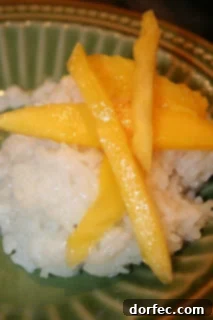
Experience the creamy, sweet, and comforting flavors of traditional Thai Mango Sticky Rice. This dessert is renowned for its luscious coconut-infused glutinous rice paired with fresh, ripe mango slices – a truly irresistible combination. It’s an easy dessert recipe that delivers authentic Thai flavors right to your home.
Ingredients
For the Sticky Rice:
- 1 1/2 Cups Long-grain Thai Sticky Rice
For the Sweet Coconut Sauce:
- 2 Cups Unsweetened Full-Fat Coconut Milk
- 1 Cup Granulated Sugar
- 2 teaspoons Kosher Salt
For Serving:
- 6 Ripe Mangoes, peeled and sliced
- Optional: Toasted sesame seeds or a drizzle of extra coconut cream for garnish
Instructions
-
Prepare the Rice: Rinse the 1 1/2 Cups of Long-grain Sticky Rice thoroughly under cold running water until the water runs clear. This removes excess starch and helps with the final texture. Soak the rinsed rice in cold water for at least 3 hours, or preferably overnight. This crucial step ensures the rice cooks evenly and achieves the desired sticky, chewy consistency.
-
Steam the Rice: Drain the soaked rice completely. Transfer it to a steamer basket lined with cheesecloth or a clean kitchen towel (or use a rice cooker with a steam function).
-
Place the steamer basket over several inches of water in a large saucepan or the base of your steamer. Ensure the water does not touch the bottom of the basket directly.
-
Bring the water to a vigorous boil over medium-high heat.
-
Cover the steamer tightly and cook, adjusting the heat to maintain a steady flow of steam. Steam the rice for 30-45 minutes, or until the grains have swollen, become translucent, and are sticky enough to easily pinch into lumps. It should be tender but still have a slight chew.
-
Prepare the Sweet Coconut Sauce: While the rice is steaming, combine 2 Cups Unsweetened Coconut Milk, 1 Cup Granulated Sugar, and 2 teaspoons Kosher Salt in a medium saucepan over medium heat.
-
Cook and stir gently for 3-4 minutes, or until the sugar and salt are completely dissolved. Avoid bringing the mixture to a boil. Once dissolved, remove the saucepan from heat immediately.
-
Combine Rice and Sauce: As soon as the rice is cooked, transfer it to a large mixing bowl. Pour the warm sweetened coconut mixture evenly over the top of the rice and stir gently to combine everything thoroughly. Ensure every grain is coated.
-
Cover the bowl tightly with a lid or plastic wrap and set it aside for at least 30 minutes, and up to 3 hours. This allows the rice to fully absorb the flavorful coconut sauce, making it wonderfully fragrant and perfectly sticky.
-
Prepare Mangoes: While the rice absorbs the sauce, peel your 6 Ripe Mangoes. Carefully cut the flesh away from the pit, then slice it into beautiful, even pieces or chunks, ready for serving.
-
Serve: Scoop the warm or room-temperature coconut sticky rice onto plates. Arrange the fresh mango slices artfully alongside or on top of the rice. For an extra touch of elegance and flavor, you can garnish with a sprinkle of toasted sesame seeds or a drizzle of additional unsweetened coconut cream. Enjoy this classic Thai treat!
Recipe Notes
Nutrition
Serving: 0.5cup
,
Calories: 570kcal
,
Carbohydrates: 103g
,
Protein: 7g
,
Fat: 17g
,
Saturated Fat: 15g
,
Sodium: 790mg
,
Potassium: 567mg
,
Fiber: 4g
,
Sugar: 62g
,
Vitamin A: 2240IU
,
Vitamin C: 76mg
,
Calcium: 49mg
,
Iron: 3mg
Nutrition information is automatically calculated and should be used as an approximation only.