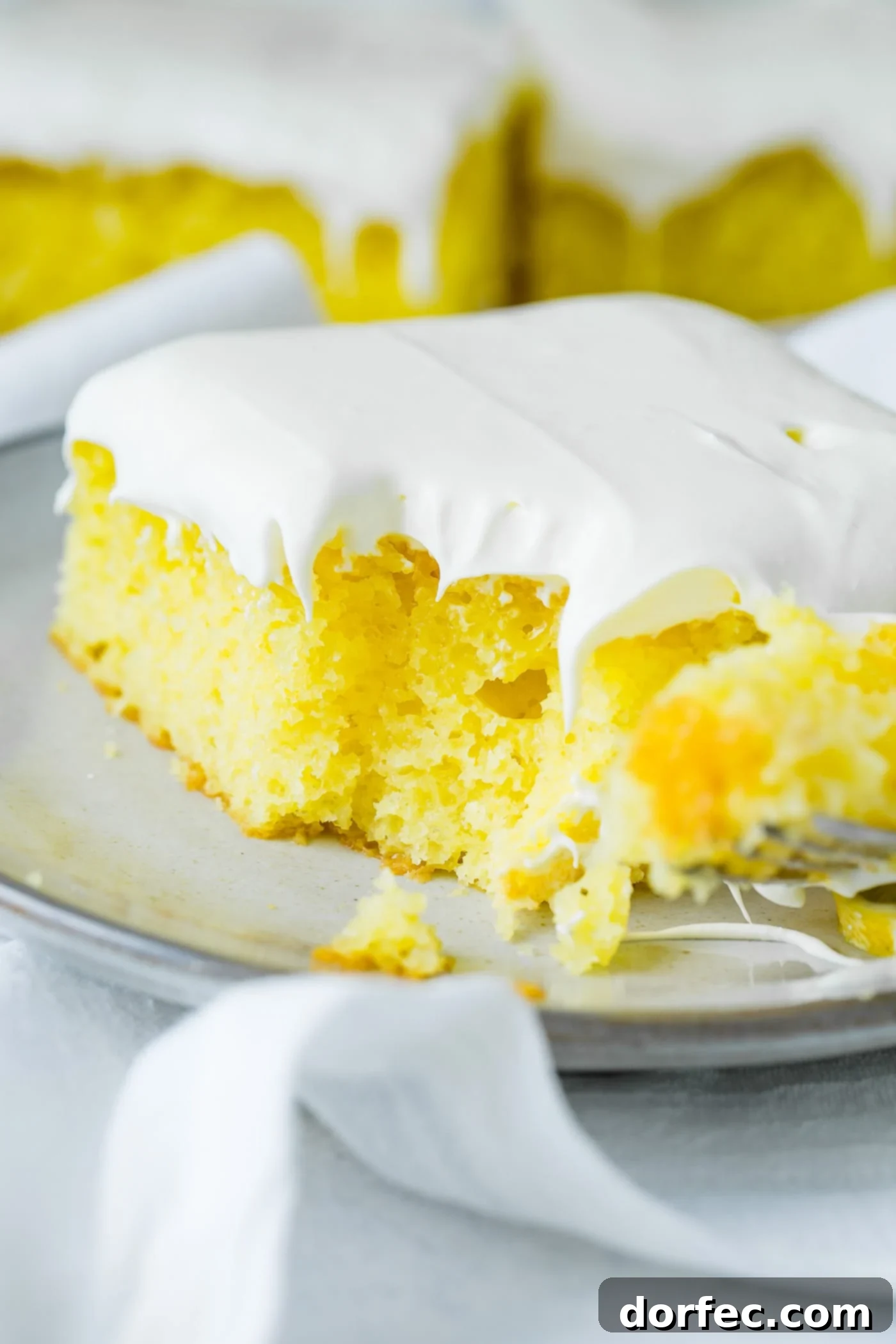
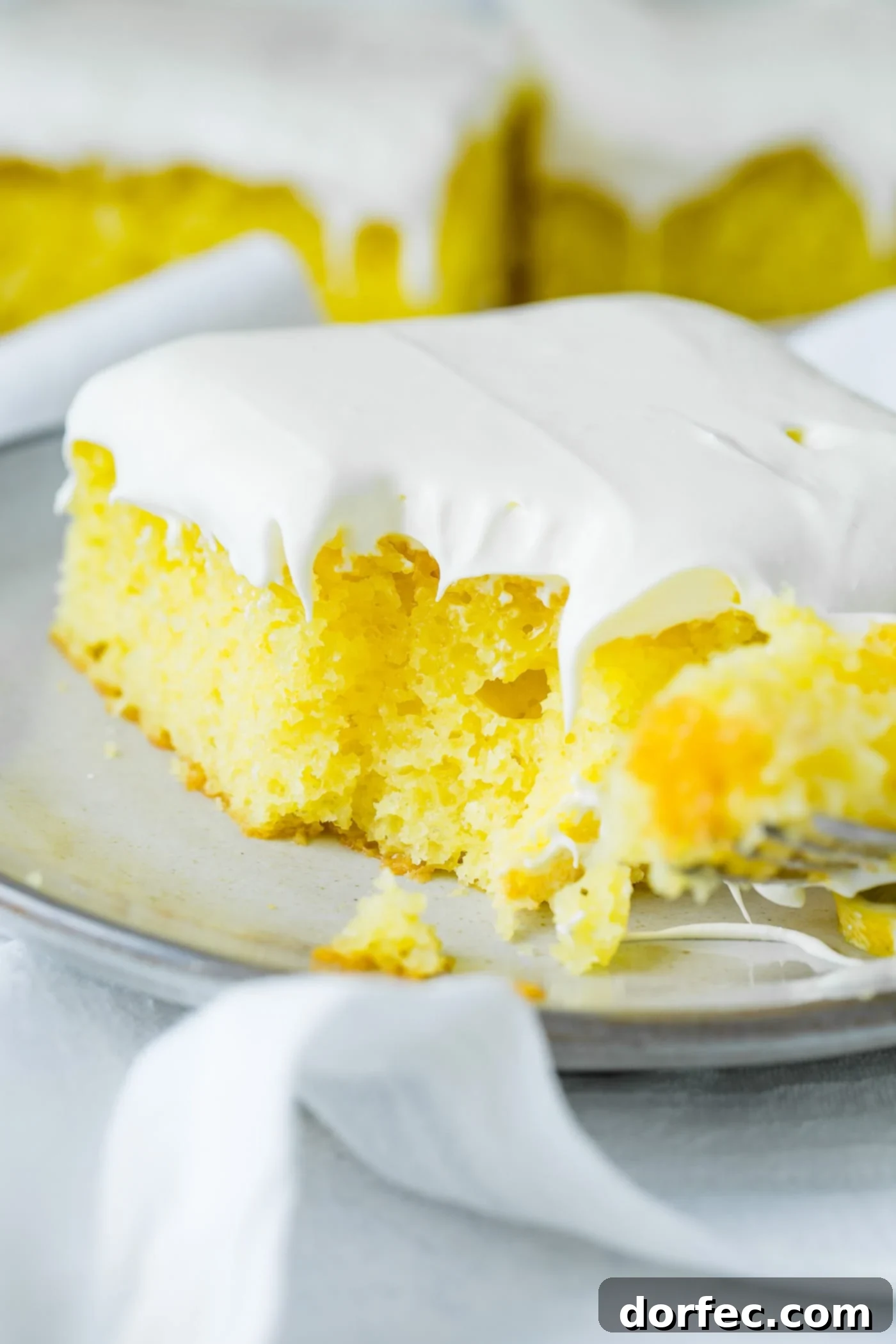
Welcome to the ultimate guide for creating an irresistibly moist and wonderfully flavorful Lemon Jello Cake. This recipe is a delightful adaptation of our cherished original Lemon Jello Cake, enhancing it with a light, airy, and utterly divine fluffy lemon frosting that elevates every single bite to a whole new level of dessert perfection. If you’re searching for a cake that is both simple to prepare and boasts an unforgettable taste, you’ve found your next go-to recipe.
The magic of a Jello cake lies in its inherent ability to deliver an exceptionally moist crumb, thanks to the gelatin infusion. When combined with the vibrant, zesty notes of fresh lemon, it creates a symphony of flavors that is bright, refreshing, and incredibly satisfying. Whether you’re a seasoned baker or just starting your culinary journey, this recipe is designed to be straightforward and rewarding, promising a beautiful and delicious outcome that will impress family and friends alike. Prepare to embark on a baking adventure that culminates in a truly spectacular lemon dessert experience!
Why You’ll Love This Irresistible Jello Cake Recipe
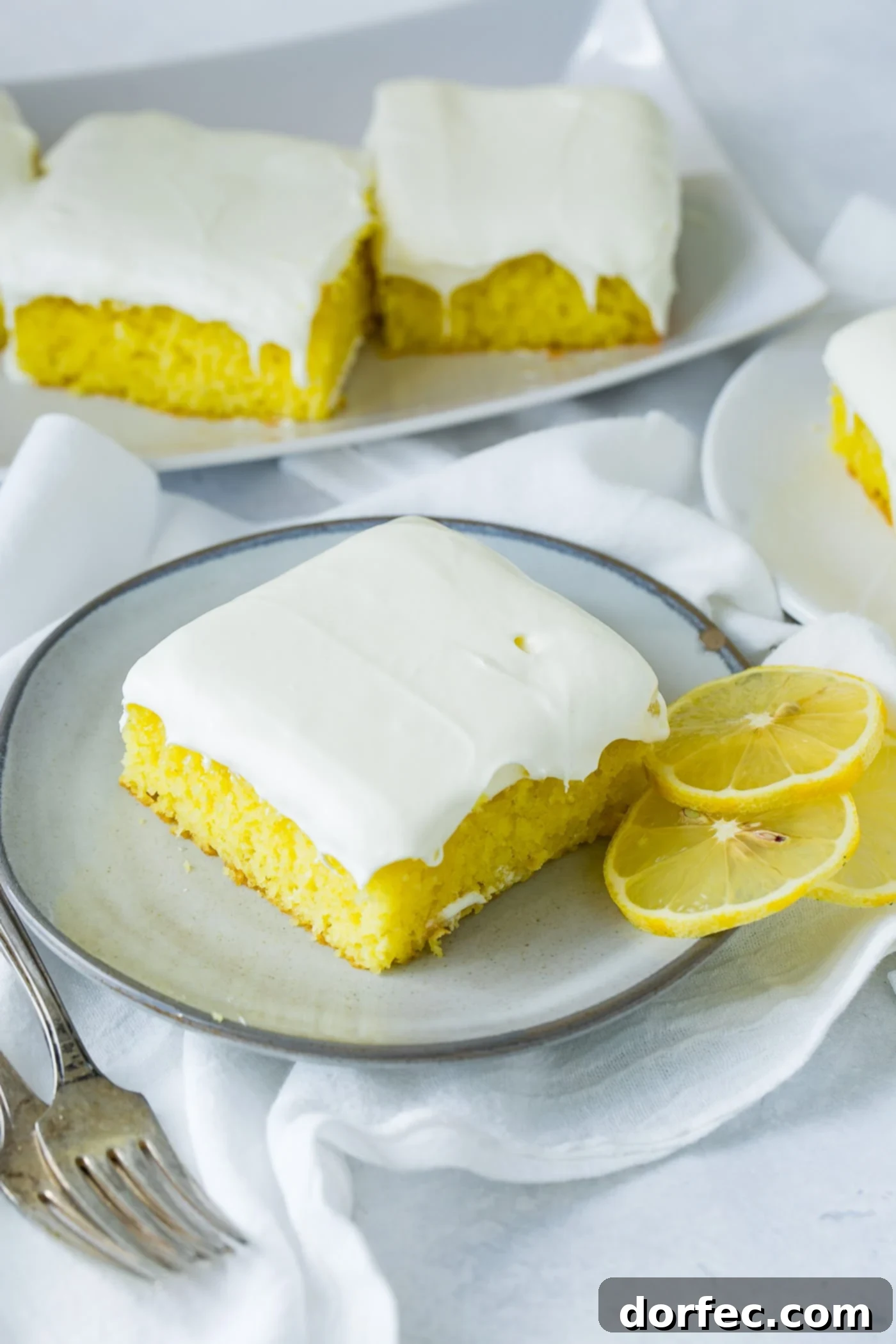
There’s a reason why Jello cakes have remained a beloved classic through generations, and this particular lemon rendition is no exception. Its appeal spans across all ages and skill levels, making it a fantastic choice for any occasion, from casual family dinners to festive celebrations. Here’s why we believe this Lemon Jello Cake will quickly become a cherished staple in your recipe collection:
- Effortlessly Quick to Prepare: In today’s fast-paced world, finding recipes that deliver exceptional results without demanding hours in the kitchen is a true treasure. This Jello cake recipe utilizes a convenient cake mix base, significantly cutting down on prep time. You can go from craving a delicious dessert to having one baking in the oven in mere minutes, making it ideal for spontaneous baking sessions or when you’re short on time but still want to create something special.
- Incredibly Easy for All Skill Levels: You don’t need to be a pastry chef to master this recipe. The steps are simple, logical, and easy to follow, making it perfect for beginners who are just learning the joys of baking. Even experienced bakers will appreciate the straightforward process and consistent, delicious outcome. It’s a foolproof recipe designed for success every time.
- Delightfully Kid-Friendly: Kids absolutely adore Jello cake! The vibrant color, the unique texture, and the sweet, tangy flavor make it an instant hit with the younger crowd. It’s a dessert that brings smiles and excitement to any table, perfect for birthday parties, school events, or just a fun treat.
- A Fantastic Baking Project for Kids: Beyond just eating it, this cake is simple enough for children to help make! Involving kids in the baking process is a wonderful way to teach them basic kitchen skills, foster creativity, and spend quality time together. From mixing ingredients to decorating the finished product, there are plenty of tasks for little hands to assist with, creating lasting memories along the way.
- Endless Flavor Customization: While our lemon version is outstanding, the beauty of a Jello cake is its versatility. You can easily swap out the lemon cake mix and lemon jello for other complementary flavors. Imagine strawberry cake with strawberry jello, or even a mixed berry combination! The possibilities are truly endless, allowing you to tailor the cake to suit any preference or occasion.
- Delicious Even Without Frosting (But Irresistible With It!): One of the perks of a Jello cake is its inherent moisture and flavor, meaning it’s wonderfully delicious even if you choose to serve it unfrosted. The glaze seeps into the cake, creating a tender, flavorful treat on its own. However, if you opt for our fluffy lemon frosting – and we highly recommend you do – it takes the cake to an unparalleled level of lusciousness, adding an extra layer of creamy, tangy sweetness that truly completes the experience.

Mastering the Art: How to Make a Perfectly Moist Jello Cake
Creating this delicious Lemon Jello Cake is a straightforward process that yields incredibly satisfying results. Follow these easy steps to bake a cake that’s bursting with flavor and unbeatable moisture:
- Prepare Your Cake Batter: Begin by combining your chosen cake mix and the dry jello powder in a large mixing bowl. The dry jello powder is the key to infusing your cake with that signature moistness and vibrant flavor. Once these are well combined, add the remaining liquid ingredients required by your cake mix instructions (typically eggs, water, and oil). Mix everything together until the batter is smooth and well incorporated, being careful not to overmix, as this can lead to a tough cake.
- Prepare and Pour: Take a 9×13 inch baking pan (or a similar sized pan, depending on your desired cake thickness). Generously grease the entire inside surface of the pan with butter or non-stick cooking spray, then lightly dust it with flour. This crucial step prevents the cake from sticking and ensures an easy release after baking. Pour your prepared cake batter evenly into the floured pan, spreading it gently with a spatula if needed.
- Bake to Golden Perfection: Place your pan in a preheated oven (usually 350°F or 175°C, but always check your specific cake mix instructions). Bake for the recommended time, typically 27-30 minutes, or until a wooden skewer inserted into the center of the cake comes out clean. The cake should be golden brown around the edges and spring back lightly when touched.
- Whisk Together the Luscious Glaze: While your cake is happily baking, it’s the perfect time to prepare the lemon glaze. In a small bowl, whisk together fresh lemon juice, lemon zest, and powdered sugar until completely smooth. This glaze will be poured over the warm cake, allowing its tart sweetness to penetrate the crumb and enhance its moisture. Ensure there are no lumps in your powdered sugar for a perfectly smooth glaze.
- Infuse with Glaze: Once the cake is baked, remove it from the oven and, while it’s still warm, prick the entire surface evenly with a two-tined fork or a skewer. Make sure to create enough holes for the glaze to seep in without tearing the cake too much. Immediately and generously pour the prepared lemon glaze all over the top of the warm cake. The warmth of the cake will help the glaze soak deeply, creating that signature moist, flavorful texture. Set the cake aside to cool completely on a wire rack. This cooling period is essential for the glaze to fully set and for the cake’s structure to stabilize.
- Apply the Fluffy Frosting: After the cake has cooled entirely, it’s time for the crowning glory: the fluffy lemon frosting. In a separate bowl, gently fold together the lemon frosting (either store-bought or homemade) with whipped topping (like Cool Whip) using a rubber spatula. This folding technique keeps the frosting light and airy. Once combined, spread this delightful frosting evenly over the cooled, glazed cake. For an extra touch of elegance, you can garnish with fresh lemon zest or thin lemon slices.
Each of these steps contributes to the final masterpiece – a beautifully moist, zesty, and utterly delicious Lemon Jello Cake that will be the star of any dessert table.
Common Baking Challenges Solved: Why Cakes Go Wrong
Baking can sometimes present unexpected challenges, but understanding common issues can help you achieve perfect results every time. Here’s a look at why cakes might not turn out as expected and how our Lemon Jello Cake offers a delightful solution.
Why Is My Cake Dry?
A dry cake is one of the most common and disappointing baking outcomes. Several factors can contribute to a cake lacking moisture:
- Incorrect Fat to Flour Ratio: The balance between fat and flour is crucial for a moist cake. Too much flour or too little fat can result in a dry, crumbly texture. Fat (like oil or butter) adds richness and keeps the cake tender, while flour provides structure.
- Overbaking: Leaving a cake in the oven for too long is a primary culprit for dryness. Even a few extra minutes can strip the cake of its natural moisture, turning it dense and dry. Always keep an eye on baking times and test for doneness accurately.
- Insufficient Liquid: Not enough liquid in the batter can also lead to a dry cake. The liquid helps hydrate the flour and other ingredients, creating a soft crumb.
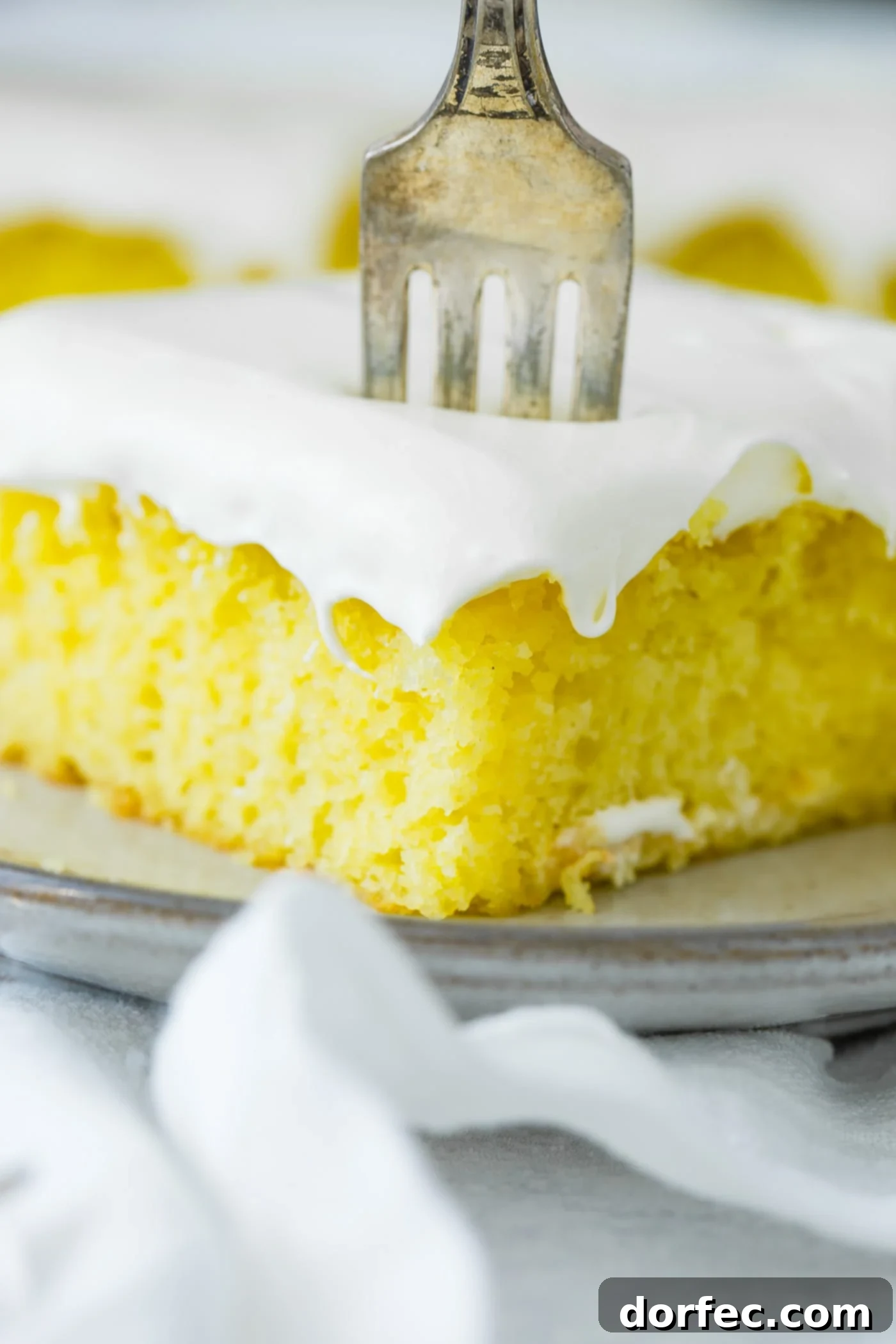
How to Fix a Dry Cake? If you’re looking for a quick and easy fix that guarantees a moist result, try our Lemon Jello Cake recipe. The innovative use of gelatin powder and a penetrating glaze fundamentally changes the cake’s texture. The glaze, rich in lemon juice and sugar, seeps deep into the cake’s crumb after baking, locking in moisture and ensuring every bite is wonderfully tender and flavorful, effectively preventing dryness from the start.
Why Does Cake Fall In The Middle?
Few things are more disheartening in baking than pulling a cake from the oven only to see its center has sunken. This common issue, often referred to as a collapsed cake, can be incredibly frustrating. Here are the main reasons why your cake might fall in the middle:
- Undercooked Batter: The most frequent cause of a sunken cake is inadequate baking. If the cake is removed from the oven before its structure is fully set, the center, still liquid or semi-liquid, will collapse under its own weight as it cools. Always ensure a skewer comes out clean from the center.
- Overbeating the Batter: Incorporating too much air into your cake batter, especially after adding flour, can create a light and airy texture initially. However, during baking, these air bubbles can expand rapidly and then collapse, leading to a sunken center. Mix just until ingredients are combined.
- Oven Temperature Too High: An oven that is too hot can cause the cake to rise too rapidly on the outside, forming a crust before the inside has a chance to cook through. The uncooked interior then sinks, pulling the top crust down with it. An accurate oven thermometer is your best friend here.
- Opening the Oven Door Too Soon: Rapid temperature changes can also cause a delicate cake to fall. Avoid opening the oven door during the first two-thirds of the baking time, as the sudden drop in temperature can halt the rising process and cause the cake to sink.
Practical Tips: Cake Storage and Longevity
Once you’ve baked a delicious cake, knowing how to store it properly is key to maintaining its freshness and flavor. Here’s a comprehensive guide to keeping your cake at its best.
How Long Will Cake Keep Fresh?
Generally, most cakes will last about one week at room temperature before they start to go stale. However, this can vary based on the ingredients:
- Oil-Based Cakes vs. Butter-Based Cakes: Cakes made with oil tend to stay moist longer than those made with butter, often keeping for an additional day or two. This is because oil remains liquid at room temperature, contributing to a consistently softer texture, whereas butter solidifies, which can lead to a firmer crumb.
- Refrigeration for Extended Freshness: If you place an unfrosted or properly covered cake in the refrigerator, you can usually extend its shelf life by an additional 2-3 days, sometimes even up to 10 days in total, depending on the ingredients. Always ensure it’s well-wrapped to prevent it from absorbing refrigerator odors or drying out.
How to Store Cake Effectively
The method of storing a cake differs significantly depending on whether it’s frosted or unfrosted. Proper storage ensures your cake remains delicious and prevents spoilage.
Storing an Unfrosted Cake
For an unfrosted cake, moisture retention is the priority. The best way to store it is to wrap the cake tightly in plastic wrap once it has cooled completely. Ensure no air can get to the cake, as air is the enemy of freshness. Store the wrapped cake on the counter at room temperature. This method keeps the cake soft and palatable for several days without the need for refrigeration, which can sometimes dry out unfrosted cakes.
Storing a Frosted Cake
If your cake has a frosting, especially one made with dairy products or whipped cream, the storage rules change. Keep reading for specific instructions for frosted Jello cakes.
Does Jello Cake Need to be Refrigerated?
The need for refrigeration for a Jello cake primarily depends on its frosting. Because traditional Jello cake, when left unfrosted and simply glazed, has a high moisture content and typically doesn’t contain perishable ingredients that spoil quickly at room temperature, it generally does not need to be placed in the refrigerator. It can stay perfectly fresh and moist on the counter, tightly covered, for several days.
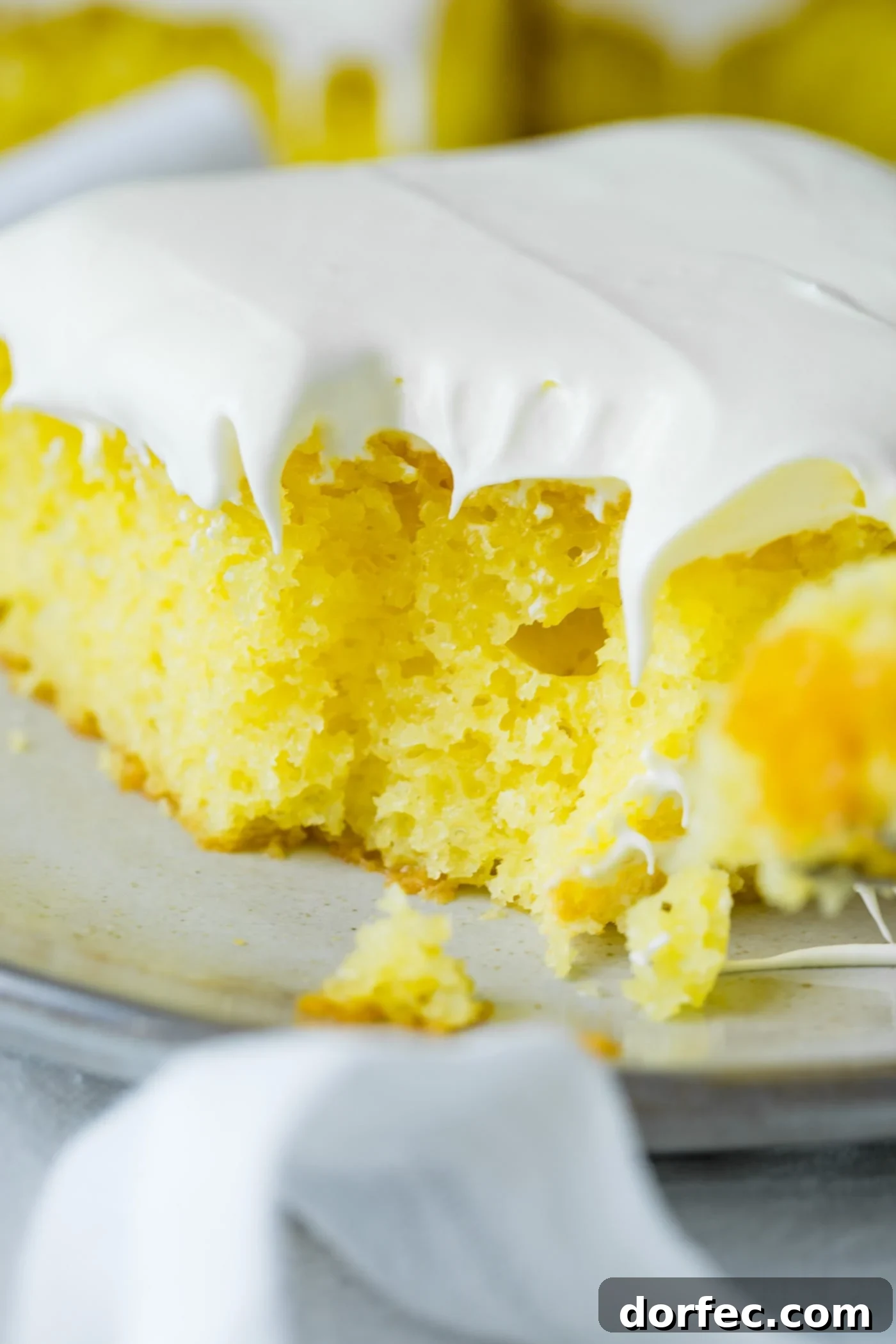
However, this particular Lemon Jello Cake recipe features a light and fluffy whipped cream frosting. Due to the dairy content in whipped cream, which can weep or spoil at room temperature, you will definitely want to store this cake in the refrigerator. Refrigeration will help maintain the frosting’s delicate texture and prevent it from melting or becoming unstable, ensuring your cake remains beautiful and delicious.
Can Cake Be Frozen?
Freezing is an excellent way to extend the life of many cakes, allowing you to enjoy a slice of homemade goodness weeks or even months later. Cake generally responds very well to being frozen. The key is to make sure that you wrap it really well first to prevent freezer burn and absorption of other freezer odors. Use multiple layers of plastic wrap, followed by aluminum foil, or place it in an airtight freezer-safe container.
- General Cake Freezing: Most cakes can be frozen for 4-5 months. However, for the best taste and texture, it’s often recommended to consume them within 3 months of freezing.
- Freezing Jello Cake: A Jello cake, with its extraordinary moisture content from the gelatin, behaves a bit differently when frozen. While it can still be frozen, its high water content makes it more susceptible to developing ice crystals over time. For this reason, we recommend freezing a Jello cake for only about a week or so. After this period, it should be eaten to ensure it retains its optimal texture and doesn’t become laden with ice crystals, which can alter its delightful moistness. Always thaw frozen cake in the refrigerator before serving.
Unlocking Fresh Lemon Flavor: Zesting and Juicing Essentials
Fresh lemon is a star ingredient in our Lemon Jello Cake, providing that essential bright, tangy flavor and aromatic zest. Here’s how to get the most out of your lemons with ease.
How Do You Zest A Lemon Like a Pro?
Zesting a lemon means removing only the outermost yellow layer of the peel, which contains all the fragrant oils, while leaving behind the bitter white pith. To achieve this effectively, you’ll want to invest in a simple yet incredibly effective kitchen tool: a Microplane. This gadget is a game-changer for zest.
Technique: Hold the lemon firmly in one hand and the Microplane in the other. Gently work the lemon over the Microplane’s blades, applying light pressure and rotating the lemon as you go. The Microplane makes shallow cuts that scrape off only the bright yellow zest, leaving the white pith untouched. Continue turning the lemon until you’ve zested all the yellow areas. This method ensures you capture maximum lemon essence without any bitterness.
What Is The Easiest Way To Juice a Lemon?
Getting the most juice out of your lemons doesn’t have to be a struggle. A simple trick can make all the difference:
- Roll and Press: Before cutting, roll the whole lemon back and forth on your counter with the palm of your hand, pressing down hard. This action helps to break down the internal membranes of the lemon, making it much easier to squeeze out the juice.
- Cut Lengthwise: Instead of cutting the lemon crosswise, cut it in half lengthwise with a sharp knife. Many find this method yields more juice, as it exposes more of the lemon’s segments for squeezing.
- Strain for Perfection: To prevent pesky seeds from falling into your precious lemon juice, place a small mesh strainer over the bowl or glass you’re going to use to collect the juice. Squeeze the lemon halves over the strainer. This simple step catches all the seeds and any pulp, leaving you with perfectly clear, smooth lemon juice. Trust us, it’s far better than chasing seeds around your bowl!
Can You Use Bottled Lemon Juice Instead Of Freshly Squeezed?
When it comes to baking, especially with lemon, the freshness of your ingredients can significantly impact the final flavor. While bottled lemon juice can be a convenient pantry staple, it often lacks the bright, nuanced flavor of freshly squeezed lemons and can sometimes carry a slightly bitter aftertaste or an artificial quality due to preservatives and processing. For this reason, we generally don’t recommend using bottled lemon juice in recipes where lemon is a prominent flavor, like our Lemon Jello Cake, as it might diminish the overall vibrant taste.
However, we understand that sometimes you might be in a pinch and fresh lemons aren’t available. If you absolutely must use bottled lemon juice, we advise using just a little less than the recipe calls for. Bottled juice can sometimes have a more concentrated or potent flavor profile, and using slightly less can help prevent it from overpowering the other ingredients or introducing any unwanted bitterness. Always taste and adjust as needed, but for the best results, fresh is truly best!
Explore the Wonderful World of Jello Recipes
Are Jello recipes still a popular choice in today’s culinary landscape? Absolutely! While Jell-O desserts might evoke a sense of nostalgia for many of us who grew up with them, these vibrant and versatile treats are enjoying a delightful resurgence. They’re celebrated for their simplicity, their ability to deliver moist and flavorful results, and their sheer fun factor. Jello cakes, salads, and molds are fantastic for potlucks, parties, or simply as an easy, refreshing dessert any day of the week.
For those who love the unique texture and customizable flavors that gelatin brings to the table, here are some other fantastic Jello-infused recipes to inspire your next kitchen creation. Whether you’re looking for another delightful cake or a refreshing salad, there’s a Jello recipe for every taste and occasion:
- Classic Jello Cake: The foundation for many variations, simple yet satisfying.
- Tropical Pineapple Jello Cake: A sunny, sweet, and tangy delight perfect for summer gatherings.
- Refreshing Raspberry Jello Salad: A lighter, fruit-filled option that’s a perfect side dish or light dessert.
- Bright Lemon Orange Jello Salad: Combines citrusy flavors with the sweetness of mandarin oranges.
- Zesty Lemon Strawberry Jello Cake: A perfect blend of sweet strawberries and tart lemon.
- Creamy Strawberry Jello Cake: Indulgent layers of strawberry goodness and creamy topping.
- Light and Airy Raspberry Fluff: A simple, fluffy dessert that’s quick to whip up.
- Sweet and Tangy Jello Peach Pie: A unique twist on a classic pie, with a gelatinous peach filling.
Frosted Lemon Jello Cake

Print Recipe
Ingredients
Cake
- 1 Lemon Cake Mix
- Zest of 1 Lemon
- 4 Large Eggs
- 1 1/3 Cup Water
- 2/3 Cup Oil
- 1 3 oz. box Lemon Jello, powdered
Icing
- Juice of 2 Lemons
- Zest of 1 Lemon
- 1 1/2 Cups Powdered Sugar
Frosting
- 1 Container Cool Whip, 8 ounce
- 1 Container Lemon Frosting
Instructions
For The Cake
-
Preheat your oven to 350 degrees Fahrenheit (175°C). Prepare a 9×13 inch cake pan by spraying it thoroughly with nonstick cooking spray, then sprinkling it with flour. Tip and tap the pan’s edges to ensure a complete, even coating of flour. This prevents sticking.
-
In the bowl of a stand mixer or a large mixing bowl with a hand mixer, combine the lemon cake mix, fresh lemon zest, large eggs, water, cooking oil, and the dry lemon jello powder. Beat on medium speed until the mixture is smooth and all ingredients are fully incorporated, scraping down the sides of the bowl as needed.1 Lemon Cake Mix, Zest of 1 Lemon, 4 Eggs, 1 1/3 Cup Water, 2/3 Cup Oil, 1 3 oz. box Lemon Jello
-
Carefully pour the prepared cake batter into your greased and floured 9×13 inch pan, spreading it evenly.
-
Bake for 27-30 minutes, or until a wooden skewer inserted into the center comes out clean. While the cake bakes, begin preparing your lemon icing according to the instructions provided below.
-
Once the cake is done baking, remove it from the oven. While it is still warm, use a two-tined fork or a thin skewer to prick holes all over the surface of the cake. This allows the glaze to fully penetrate.
-
Immediately pour the prepared lemon glaze evenly over the warm, pricked cake. The warmth will help the glaze soak in deeply.
-
Allow the cake to cool completely on a wire rack before proceeding. Once fully cooled, top the cake generously with the prepared fluffy lemon frosting.
For The Icing
-
In a small bowl, whisk together the fresh lemon juice, lemon zest, and powdered sugar until the mixture is completely smooth and free of lumps.Juice of 2 Lemons, Zest of 1 Lemon, 1 1/2 Cups Powdered Sugar
For The Frosting
-
In a separate mixing bowl, use a rubber spatula to gently fold together the lemon frosting (from a container) and the Cool Whip until they are well combined and light. Set this fluffy frosting aside until the cake is completely cooled.1 Container Cool Whip, 1 Container Lemon Frosting
Recipe Notes
Nutrition
Calories: 251kcal,
Carbohydrates: 37g,
Protein: 3g,
Fat: 11g,
Saturated Fat: 2g,
Cholesterol: 38mg,
Sodium: 233mg,
Potassium: 41mg,
Fiber: 1g,
Sugar: 24g,
Vitamin A: 75IU,
Calcium: 80mg,
Iron: 1mg
Nutrition information is automatically calculated and should only be used as an approximation.
Like this? Leave a comment below!