
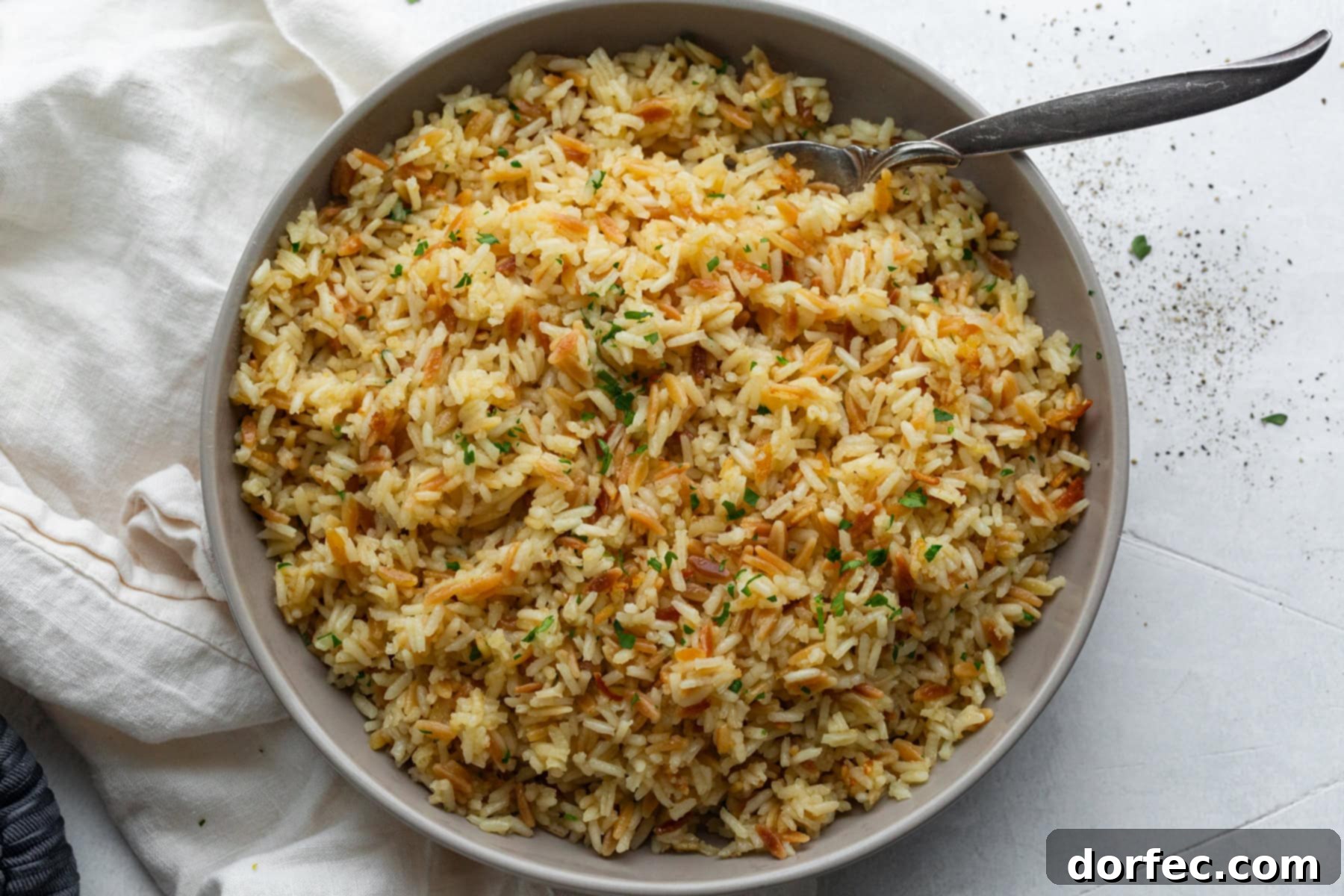
Perfectly Fluffy Rice Pilaf: An Easy Side Dish Recipe
Rice pilaf is a timeless classic, a versatile side dish that effortlessly complements any meal. This easy rice pilaf recipe guarantees a buttery, fluffy texture, making it a delightful addition to your culinary repertoire. Crafted with long-grain rice, delicately toasted pasta, and a savory broth, this dish requires minimal effort while delivering maximum flavor.
Whether you’re serving it alongside grilled chicken, roasted vegetables, or a succulent piece of salmon, this homemade rice pilaf is destined to become a cherished go-to recipe in your kitchen. It elevates everyday dinners and adds a touch of elegance to special occasions.
Ingredients For Exceptional Rice Pilaf
Each ingredient in this rice pilaf recipe plays a vital role in developing its distinctive flavor and texture. From the richness of the broth to the buttery, silky finish, every component harmonizes to create a perfectly fluffy and flavorful pilaf.
- Chicken Broth: Serves as the cooking medium for the rice, imparting a deep, savory flavor. Opt for low-sodium broth to control the salt level.
- Unsalted Butter: Contributes richness and lends the pilaf its signature, smooth, and luxurious finish. Using unsalted butter allows you to control the saltiness of the dish.
- Kosher Sea Salt: Enhances and balances all the flavors, bringing out the nuances of each ingredient. Kosher salt is preferred for its clean taste and ability to dissolve evenly.
- Garlic Powder: Adds a subtle, savory depth without overpowering the dish. A touch of garlic powder complements the other flavors without being too assertive.
- Black Pepper: Provides gentle warmth and seasoning, adding a subtle spicy note. Freshly ground black pepper is recommended for the best flavor.
- Smoked Paprika: Infuses a delicate smokiness and an extra layer of flavor complexity. A pinch of smoked paprika adds a unique and delightful twist.
- Olive Oil: Facilitates the toasting of the pasta and rice, resulting in added nuttiness and depth of flavor. Choose a good quality olive oil for the best results.
- Vermicelli or Orzo: Introduces texture and a subtly toasted flavor to the pilaf, creating a delightful contrast to the tender rice. Both vermicelli and orzo work well in this recipe.
- Long-Grain White Rice: Forms the fluffy, tender base of the dish, providing a light and airy texture. Ensure you select a high-quality long-grain rice for optimal results. Basmati or Jasmine rice can be used as well.
- Fresh Parsley: Garnishes the pilaf with a burst of freshness and a vibrant pop of color, elevating its visual appeal and flavor profile. Freshly chopped parsley adds a refreshing element to the dish.
This rice pilaf is an easy, dependable side dish suitable for both everyday dinners and special occasions. Its versatility makes it a welcome addition to any meal, ensuring satisfaction every time.
How to Achieve Perfect Rice Pilaf
Have you ever encountered rice pilaf with unpleasantly crunchy, undercooked grains? Or perhaps worse, a mushy, bland mess? This foolproof recipe eliminates the guesswork, ensuring perfectly cooked pilaf every single time.
- Simmer: Combine chicken broth, butter, salt, garlic powder, black pepper, and smoked paprika in a saucepan over medium heat. Stir until the butter melts and the ingredients are well combined. Once the mixture begins to simmer, reduce the heat to low and keep warm. This ensures the broth is infused with flavor and ready to cook the rice.
- Toast: Heat olive oil in a large skillet over medium-low heat. Add the vermicelli or orzo and cook until golden brown, stirring frequently to prevent burning. Toasting the pasta adds a nutty flavor and enhances its texture.
- Add: Stir in the rice and continue cooking until lightly toasted, stirring constantly. Toasting the rice releases its natural starches and contributes to a fluffier final product.
- Combine: Carefully pour the warm broth mixture into the skillet with the rice and pasta, stirring gently to combine. Ensure the broth is evenly distributed to cook the rice properly. Bring to a gentle simmer, then cover the skillet tightly.
- Cook: Reduce the heat to low and cook covered for 15-18 minutes, or until the liquid is fully absorbed and the rice is tender. Avoid lifting the lid during cooking to prevent steam from escaping, which can affect the cooking time and texture.
- Finish: Remove the lid and gently stir in a small amount of fresh parsley. Cover again and let it sit for 5 minutes. This allows the flavors to meld and the rice to steam fully.
- Fluff: Remove from heat, uncover the skillet, and fluff the rice pilaf gently with a fork. This separates the grains and creates a light, airy texture. Serve warm and enjoy!
Now you possess the knowledge to create perfectly fluffy, tender rice pilaf with the ideal bite… every time you make it. This simple recipe ensures consistent results, making it a reliable addition to your cooking skills.
Reheating and Storage Instructions
This rice pilaf stores remarkably well after it has been fully cooked and allowed to cool. To store, transfer the cooked rice pilaf to an airtight container and refrigerate it promptly. Stored properly, it will maintain its quality for up to 3-4 days.
To reheat, you can choose between gently warming it on the stovetop or using the microwave. When reheating on the stovetop, add a small splash of broth or water to the rice to help restore moisture and prevent it from drying out. Heat over low heat, stirring occasionally, until heated through. For microwave reheating, place the rice pilaf in a microwave-safe dish, add a small amount of liquid, cover, and microwave in short intervals, stirring in between, until warm.
Before serving, fluff the reheated rice pilaf with a fork to restore its texture and, if desired, garnish with fresh parsley for added flavor and visual appeal. Reheating correctly will allow the rice to retain its quality.
Variations and Substitutions
This rice pilaf recipe is highly adaptable, allowing you to customize it based on your preferences and available ingredients. Here are some exciting variations and substitutions to explore:
Rice Variations:
While this recipe calls for long-grain white rice, you can easily substitute it with other types of rice to create different flavor profiles and textures. Consider using brown rice for a nuttier flavor and increased fiber content. Keep in mind that brown rice requires a longer cook time and may need a bit more liquid. You can also experiment with other varieties like basmati or jasmine rice, each offering a unique aroma and taste.
Nutty Additions:
For added texture and a delightful crunch, stir in crushed pistachios or slivered almonds. You can toast the nuts with the vermicelli or orzo for enhanced flavor, or simply sprinkle them on top of the pilaf just before serving. The addition of nuts elevates both the taste and the presentation of the dish.
Flavor Boosters:
Enhance the flavor of your rice pilaf by incorporating additional spices or herbs. Cumin, thyme, or a bay leaf can add depth and complexity to the dish. Sautéing celery, carrots, or onion in the skillet before adding the pasta and rice introduces a savory sweetness that complements the other ingredients.
Vegetable Additions:
Stir in peas near the end of the cooking process for a burst of color and sweetness. You can also experiment with other vegetables such as diced carrots, bell peppers, or mushrooms. Adding vegetables transforms the rice pilaf into a more substantial and nutritious side dish.
Mediterranean Twist:
Incorporate sun-dried tomatoes, lemon zest, and grated Parmesan cheese for a delightful Mediterranean-inspired rice pilaf. This variation offers a tangy, savory flavor profile that pairs well with grilled chicken or fish.
Vegetarian Option:
To create a vegetarian version of this recipe, simply replace the chicken broth with vegetable broth. This maintains the savory flavor while ensuring the dish is suitable for vegetarians and vegans.
What to Serve With Rice Pilaf
Rice pilaf is an incredibly versatile side dish that pairs well with a wide array of main courses. Its subtle flavor and fluffy texture make it a perfect complement to various proteins, vegetables, and more. Here are some delectable serving suggestions:
Protein Pairings:
Rice pilaf is exceptionally delicious served alongside salmon or grilled chicken. The buttery, savory flavor of the pilaf complements the lighter proteins, creating a well-balanced and satisfying meal. You can also pair it with baked chicken or pork chops for a heartier dining experience.
Vegetable Accompaniments:
Balance your meal by adding simple, flavorful vegetables. Roasted or sautéed asparagus makes a wonderful pairing, offering a crisp-tender texture and a slightly bitter note that contrasts beautifully with the richness of the pilaf. Other excellent vegetable choices include green beans and carrots.
Salad Sensations:
For a refreshing and lighter meal, serve rice pilaf with a fresh side salad. A simple avocado salad or a mixed green salad with a light vinaigrette dressing provides a vibrant contrast to the warmth and richness of the pilaf.
Holiday and Family Dinners:
Rice pilaf is an excellent side dish for holiday gatherings and family dinners. Its versatility makes it a crowd-pleaser, and it pairs well with traditional dishes like roasted turkey, ham, or beef.
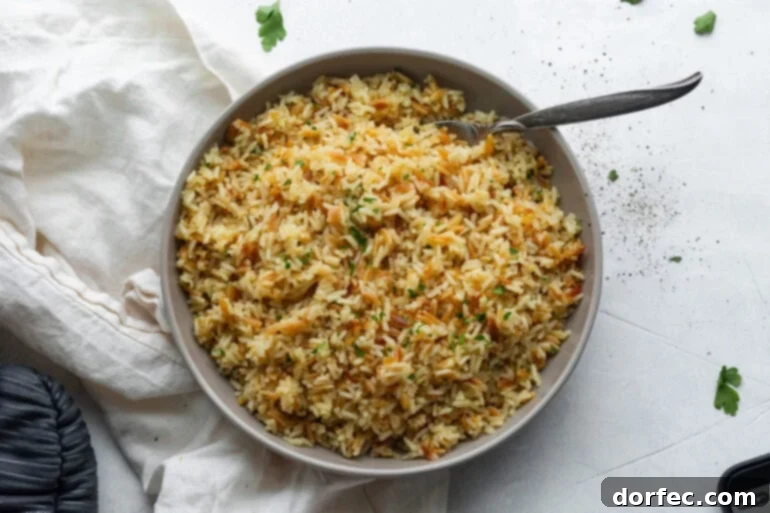
This rice pilaf recipe offers an uncomplicated approach to creating a side dish with remarkable texture and flavor. No matter the occasion, it’s a dependable choice that consistently delivers satisfaction.
Other Side Dish Recipes to Explore
If you’re seeking inspiration for more delicious side dishes, consider trying these exciting options:
- Wild Rice and Chickpeas with Crispy Shallots: A hearty and flavorful dish that combines the nuttiness of wild rice with the creaminess of chickpeas and the crunch of crispy shallots.
- Balsamic Vinaigrette Grilled Vegetables: A vibrant and healthy side dish featuring an array of grilled vegetables marinated in a tangy balsamic vinaigrette.
- Oven Roasted Vegetables: A simple and versatile side dish that brings out the natural sweetness of vegetables through roasting.
- Gruyere Potatoes: A decadent and comforting side dish featuring creamy potatoes baked with Gruyere cheese, creating a rich and satisfying flavor.