
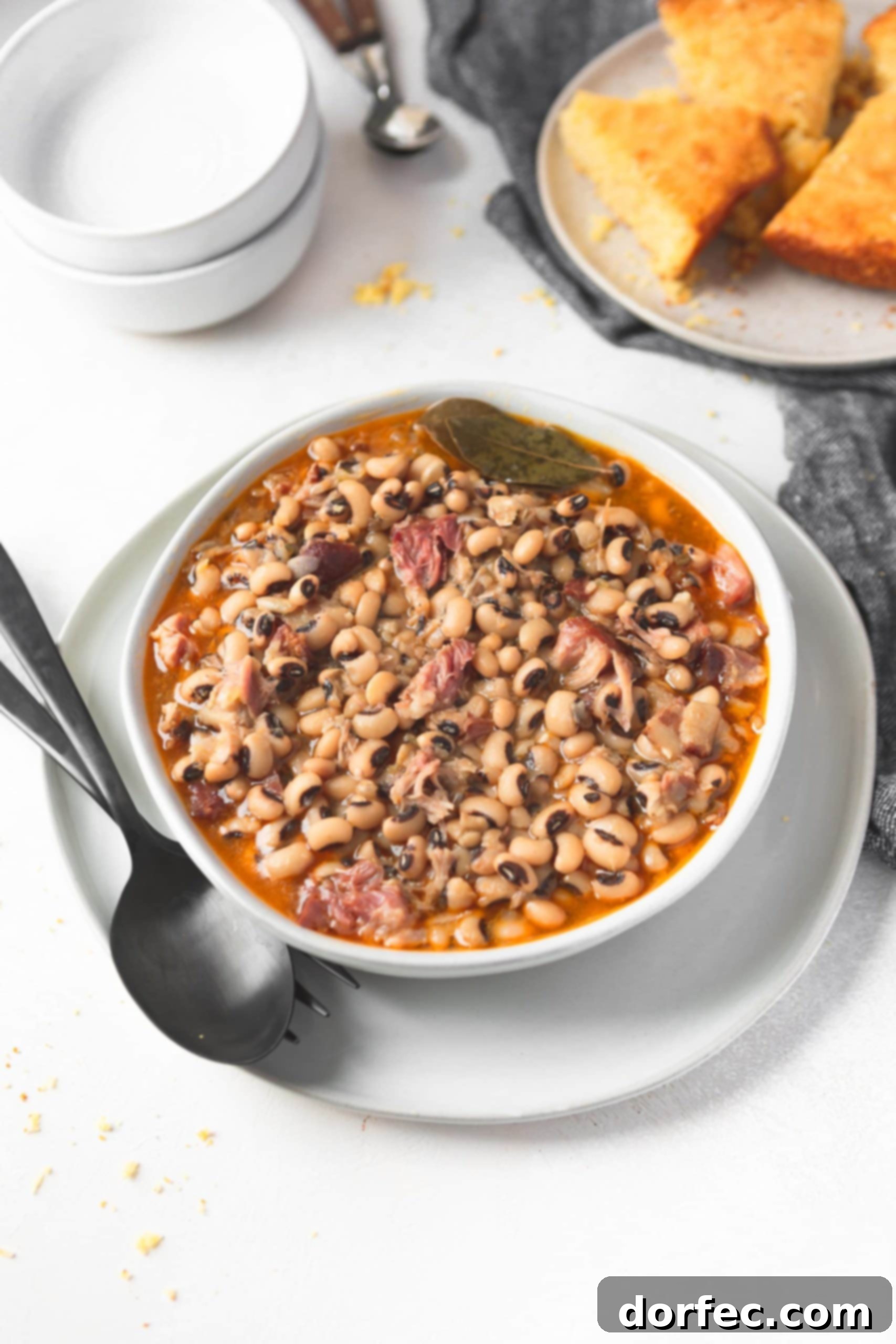
The Ultimate Southern Black Eyed Peas Recipe for New Year’s Day Prosperity
Welcome to a culinary journey that promises not just exquisite taste but also a sprinkle of good fortune for the year ahead! Our signature Southern Black Eyed Peas recipe is more than just a dish; it’s a cherished tradition, a staple of Southern comfort food, and a symbol of prosperity. If you’re looking to usher in the New Year with a flavorful bang and a dash of luck, you’ve come to the right place. This recipe is designed to bring you both, wrapped in a bowl of rich, smoky, and utterly delicious goodness. Prepare to transform humble legumes into a soulful masterpiece that will delight your senses and potentially bring you all the blessings you could wish for.
My first encounter with black eyed peas was during a memorable trip to South Carolina. Having grown up in a region where these legumes weren’t a common sight on menus, I was immediately intrigued. They seemed to be everywhere, a cornerstone of local cuisine. When the topic of traditional New Year’s Day meals arose, a friend passionately advocated for black eyed peas, highlighting their deep cultural roots and the promise of good fortune. That conversation sparked a culinary quest: to create the absolute best black eyed peas recipe. After countless experiments and adjustments, I perfected this version, a hearty and authentic dish that truly captures the spirit of Southern cooking. It’s a recipe that has since become a cherished annual ritual in my own home.
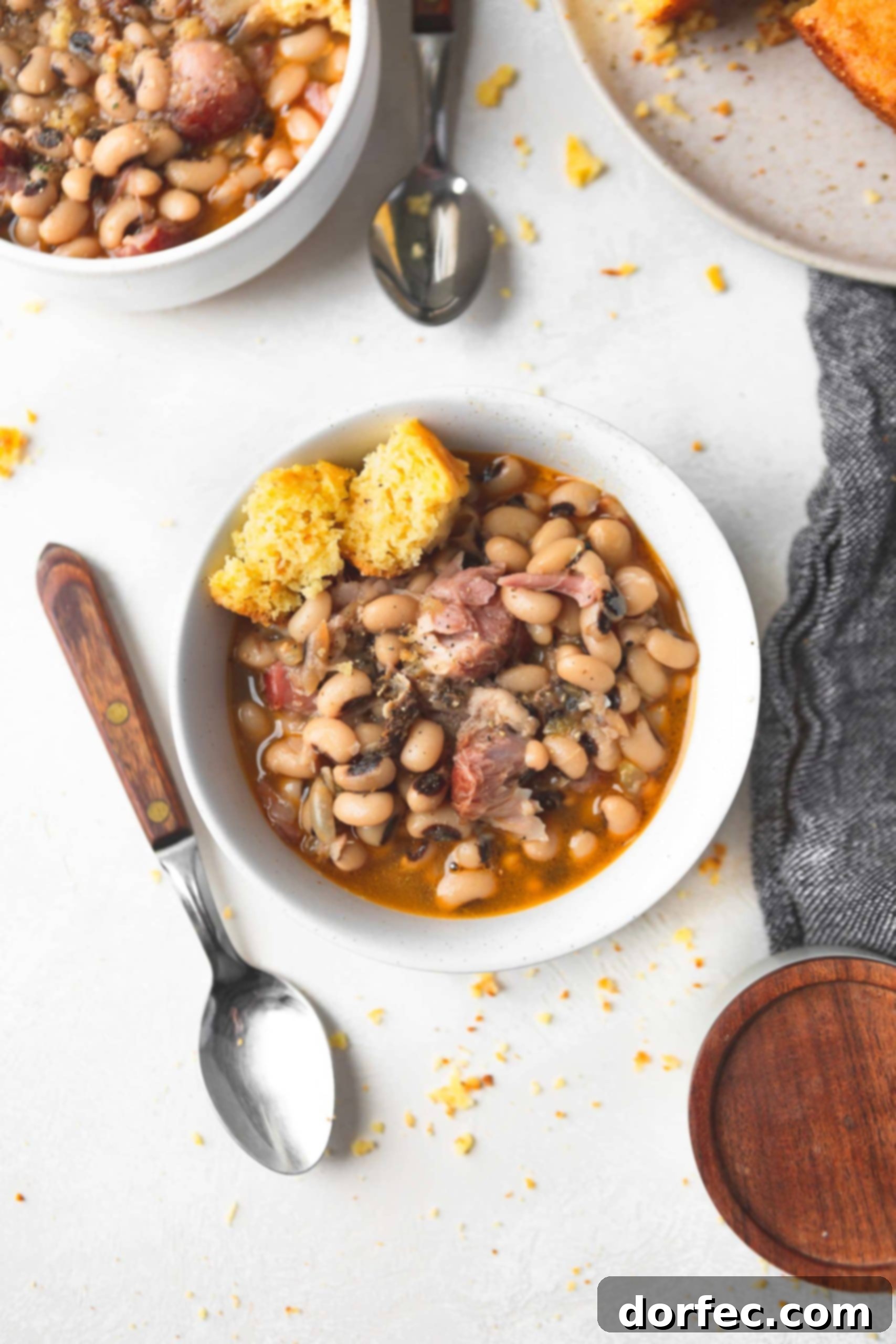
To truly complete this classic Southern experience, don’t forget to pair your black eyed peas with a warm, golden slice of Southern skillet cornbread. The slightly sweet, crumbly texture of the cornbread is the perfect complement to the savory depth of the peas, creating a harmonious meal that is both satisfying and incredibly comforting. It’s an unbeatable combination that makes for an unforgettable New Year’s feast.
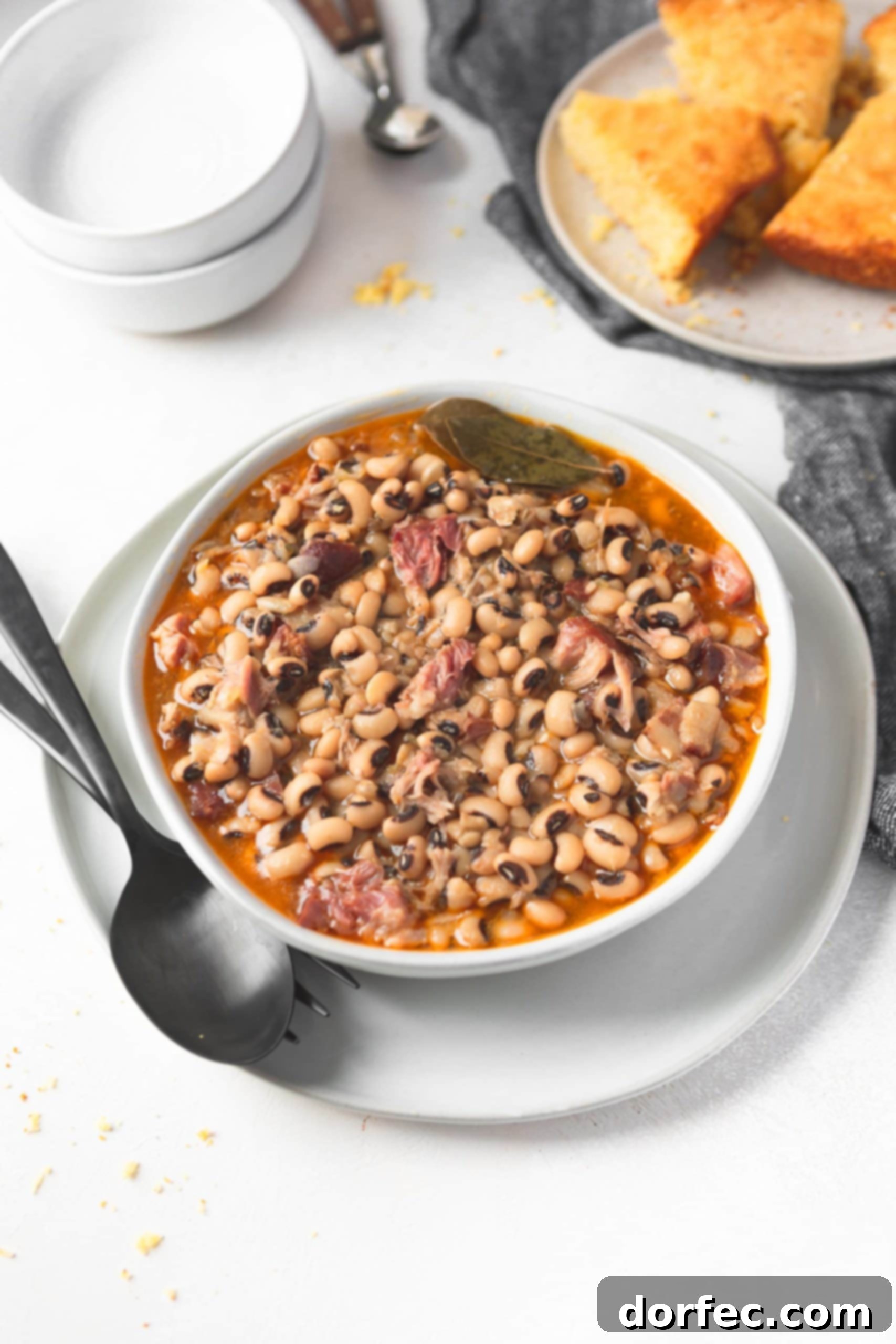
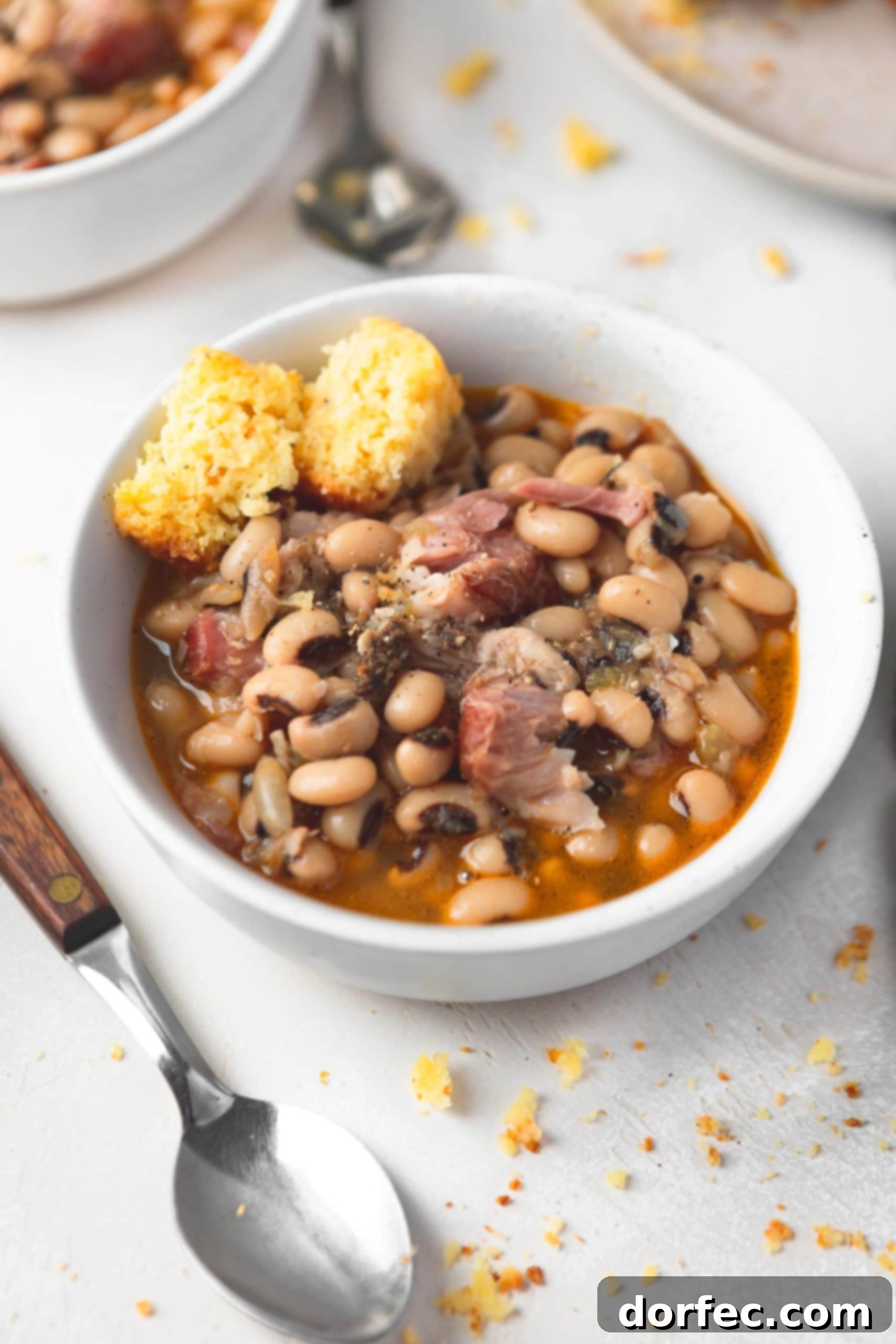
Initially, I approached this dish with a touch of skepticism. It stirred memories of my mother’s hearty ham hock soup from my childhood – a dish I’ve grown to adore, but wasn’t always my favorite as a young picky eater. However, one spoonful of these black eyed peas banished all doubt. The rich, savory essence of the pork, slow-cooked until it practically melts into the beans, creates an explosion of flavor that is undeniably scrumptious. This isn’t just a side dish; it’s a profound culinary experience, offering a depth of flavor that can only be achieved through careful preparation and quality ingredients. The umami-rich broth, infused with spices and vegetables, transforms the humble black eyed pea into a truly remarkable main event.
Why This Southern Black Eyed Peas Recipe Stands Out
What elevates this particular black eyed peas recipe above others? It’s the meticulous balance of traditional Southern flavors with a few thoughtful enhancements. We don’t just cook beans; we build layers of flavor. The combination of smoky bacon, tender pork shoulder (or a robust ham hock), and an aromatic sofrito of onion, celery, and garlic lays a foundational taste that is unparalleled. The addition of smoked paprika and a hint of balsamic vinegar might seem unconventional to some, but these ingredients are game-changers, adding depth, brightness, and a subtle tang that rounds out the entire dish. This recipe respects tradition while embracing techniques that ensure every bite is packed with incredible, soul-satisfying flavor.
Essential Ingredients for Your Lucky Black Eyed Peas
Embarking on your journey to good fortune and a fantastic meal begins with selecting the right ingredients. Here’s a comprehensive list to guide your grocery run, ensuring you have everything needed to create this delightful New Year’s tradition. Each component plays a vital role in building the rich, layered flavors that define truly exceptional Southern black eyed peas.
- Black Eyed Peas: 1 Pound dry, or canned (see notes below for preparation differences). Dry peas offer a more robust, earthy flavor and better texture if soaked properly.
- Cooking Fats: 1 Tablespoon Oil (vegetable or olive oil for browning) and 2 Tablespoons Butter (for sautéing aromatics and adding richness).
- Pork Power: 6 oz. Pork Shoulder, diced in ½” pieces, or 1 Ham Hock. The pork is crucial for that deep, smoky, umami flavor.
- Smoky Bacon: 4 Strips Bacon, thick-cut, cut into ½” pieces. Bacon adds a foundational layer of smoky, salty goodness and renders fat for cooking.
- Aromatics: 1 Yellow Onion, minced; 1 Stalk Celery, sliced; 4 Cloves Garlic, minced. These form the traditional “holy trinity” of Southern cooking, building a fragrant base.
- Seasonings: 1 ½ teaspoons Salt; ½ teaspoon Black Pepper; 1 teaspoon Garlic Powder; 1 teaspoon Smoked Paprika. These spices bring warmth, depth, and a hint of smoky sweetness.
- Flavor Enhancer: 2 teaspoons Balsamic Vinegar. This is a subtle but powerful addition, cutting through richness and enhancing overall flavor.
- Liquids: 4 Cups Chicken Stock; 2 Cups Water. Provides the essential cooking liquid and forms the flavorful broth.
- Herbal Touch: 3 Bay Leaves. Infuse the broth with a subtle, aromatic quality.
- Optional Green Goodness: 1 Cup Collard Greens, chopped in 2” pieces. A traditional addition for added nutrition and a nod to the “money” symbolism.
For precise measurements and detailed instructions on each ingredient, refer to the full recipe card further down this page. Remember, quality ingredients are the foundation of a truly remarkable dish, so choose wisely!
Step-by-Step Guide: Crafting Your Perfect Black Eyed Peas
Creating this soulful dish is a rewarding process, and the key to its incredible flavor lies in careful preparation. Let’s walk through each step, ensuring your black eyed peas turn out perfectly tender, smoky, and utterly delicious. The choice between dry and canned beans marks your first important decision, influencing your preparation timeline significantly.
Preparing Your Black Eyed Peas: Dry vs. Canned
Before you begin cooking, you need to prepare your black eyed peas. This critical first step ensures they cook evenly and absorb all the wonderful flavors you’ll be building:
- For Dry Black Eyed Peas: We highly recommend using dry beans for the best texture and deepest flavor. You’ll need to start this process the day before you plan to cook. Place the 1 pound of dry black eyed peas in a large pot and cover them with at least 4 inches of cold water. Let them soak overnight (about 8-12 hours). This rehydrates the beans, reducing cooking time and aiding in digestibility. Before proceeding with the recipe, drain the soaked beans thoroughly and rinse them under cold running water. This removes any residual starch and ensures a clean flavor.
- For Canned Black Eyed Peas: If time is of the essence, canned black eyed peas are a convenient alternative. While they might lack the earthy depth of dry beans, they still yield a phenomenal dish. Simply drain the liquid from the cans and rinse the peas thoroughly under cold water. This helps remove excess sodium and improves the overall taste.
The Art of Cooking: Basic Steps for Flavorful Black Eyed Peas
Once your beans are prepped, it’s time to bring all those delicious ingredients together. Follow these fundamental steps to create a rich and satisfying meal:
- Brown the Pork: Begin by heating 1 tablespoon of oil in a large, heavy-bottomed pot or Dutch oven over medium-high heat. Add your diced pork shoulder (or ham hock) and cook, stirring occasionally, until it’s beautifully browned on all sides. This step is crucial for developing deep, savory flavors. Remove the pork and set it aside, leaving the rendered fat in the pot.
- Sauté the Aromatics: Reduce the heat to medium. Add 2 tablespoons of butter to the pot. Once melted, add the chopped bacon and cook until crispy. Then, add the minced onion, sliced celery, and minced garlic. Sauté these aromatics until they are softened and lightly browned, typically 7-8 minutes. This builds a fragrant and savory base for your stew.
- Bloom the Spices: Sprinkle in the salt, pepper, garlic powder, smoked paprika, and balsamic vinegar. Stir well and cook for another 2 minutes. This “blooming” process, where spices are briefly toasted in fat, intensifies their flavor and aroma, adding incredible depth to the dish.
- Simmer the Liquids: Pour in the chicken stock and water, then add the bay leaves. Bring the mixture to a gentle simmer, then reduce the heat to low, cover, and let it cook for 30-40 minutes. This allows the flavors to meld and the pork (if using ham hock) to tenderize.
- Combine and Cook Until Tender: Once the pork is fork-tender and begins to fall apart (or after the initial simmer if using ham hock), return it to the pot if you removed it. Add the prepped black eyed peas and, if using, the collard greens. Continue to simmer, covered, until the beans are soft and creamy, which usually takes about 1 ½ hours for soaked dry beans, or about 30-45 minutes for canned beans (depending on desired tenderness). Stir occasionally to prevent sticking.
- Final Touches and Serve: Remove the bay leaves from the pot. Taste and adjust seasonings as needed. Serve your hearty black eyed peas hot, with an optional dash of your favorite hot sauce for an extra kick.
Remember, the magic is in the slow simmer, allowing all the flavors to deepen and intertwine. Don’t rush it!
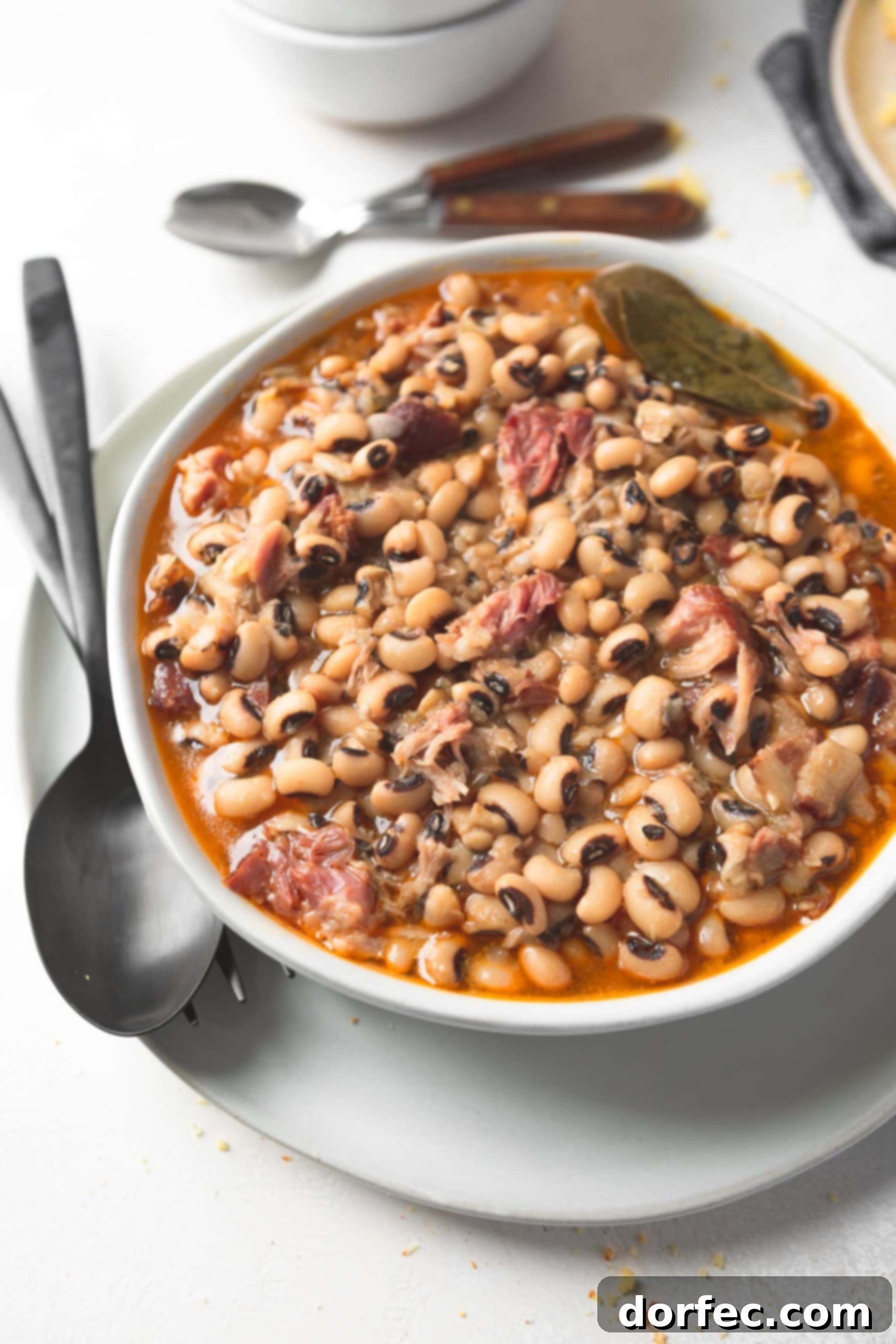
The Enduring Tradition: Black Eyed Peas on New Year’s Day
The practice of eating black eyed peas, often prepared as “Hoppin’ John,” on New Year’s Day is a deeply ingrained tradition in the American South, believed to usher in a year of prosperity and good fortune. This culinary custom dates back centuries, with various theories about its origins. One popular belief traces it to the Civil War era, when Union soldiers, raiding Confederate food supplies, reportedly left behind only black eyed peas and salted pork, considering them animal fodder. Southerners, grateful for their survival, considered these overlooked foods lucky.
Beyond historical anecdotes, each component of this traditional New Year’s meal is imbued with specific symbolism, reinforcing the hopeful aspirations for the coming year:
- Black Eyed Peas: These represent prosperity and good luck. Their round shape is thought to symbolize coins, or the fullness of the coming year.
- Greens (Collard, Mustard, or Cabbage): Often served alongside, these leafy greens symbolize money, specifically paper money, due to their color. The more greens you eat, the more financially prosperous your year is believed to be.
- Pork (Ham, Bacon, Ham Hocks): Pork symbolizes positive motion and progress. Pigs root forward when they forage, representing forward momentum and a progressive future. Its richness also signifies abundance.
- Cornbread: The golden color of cornbread is said to represent gold, further enhancing the theme of wealth and abundance for the New Year.
Together, these ingredients create a meal that is not only delicious and nourishing but also rich in cultural significance, a heartfelt wish for a bountiful and fortunate year. It’s a tradition many eagerly embrace, myself included, hoping to stack the odds in favor of those cherished blessings!
Storing and Reheating Your Lucky Leftovers
One of the many great things about black eyed peas is that they often taste even better the next day, once the flavors have had more time to meld and deepen. Proper storage is key to enjoying your leftovers safely and deliciously.
- In the Refrigerator: Black eyed peas will keep beautifully for 4-5 days when stored in an airtight container in the refrigerator. Make sure to cool them completely before transferring to storage containers to prevent bacterial growth.
- Freezing for Longer Storage: For extended enjoyment, black eyed peas freeze exceptionally well. Portion cooled leftovers into freezer-safe containers or heavy-duty freezer bags. They can be stored in the freezer for up to 3 months. Thaw overnight in the refrigerator before reheating.
- Reheating Tips: To reheat, gently warm the peas on the stovetop over medium-low heat, stirring occasionally, until heated through. If they seem too thick, you can add a splash of chicken stock or water to reach your desired consistency. Microwaving is also an option for smaller portions.
- Creative Leftover Ideas: Don’t limit yourself to just reheating! Leftover black eyed peas can be transformed into delicious dishes like a hearty black eyed pea salsa, a component in grain bowls, or even mashed into savory patties.
Understanding Black Eyed Peas: A Culinary and Botanical Insight
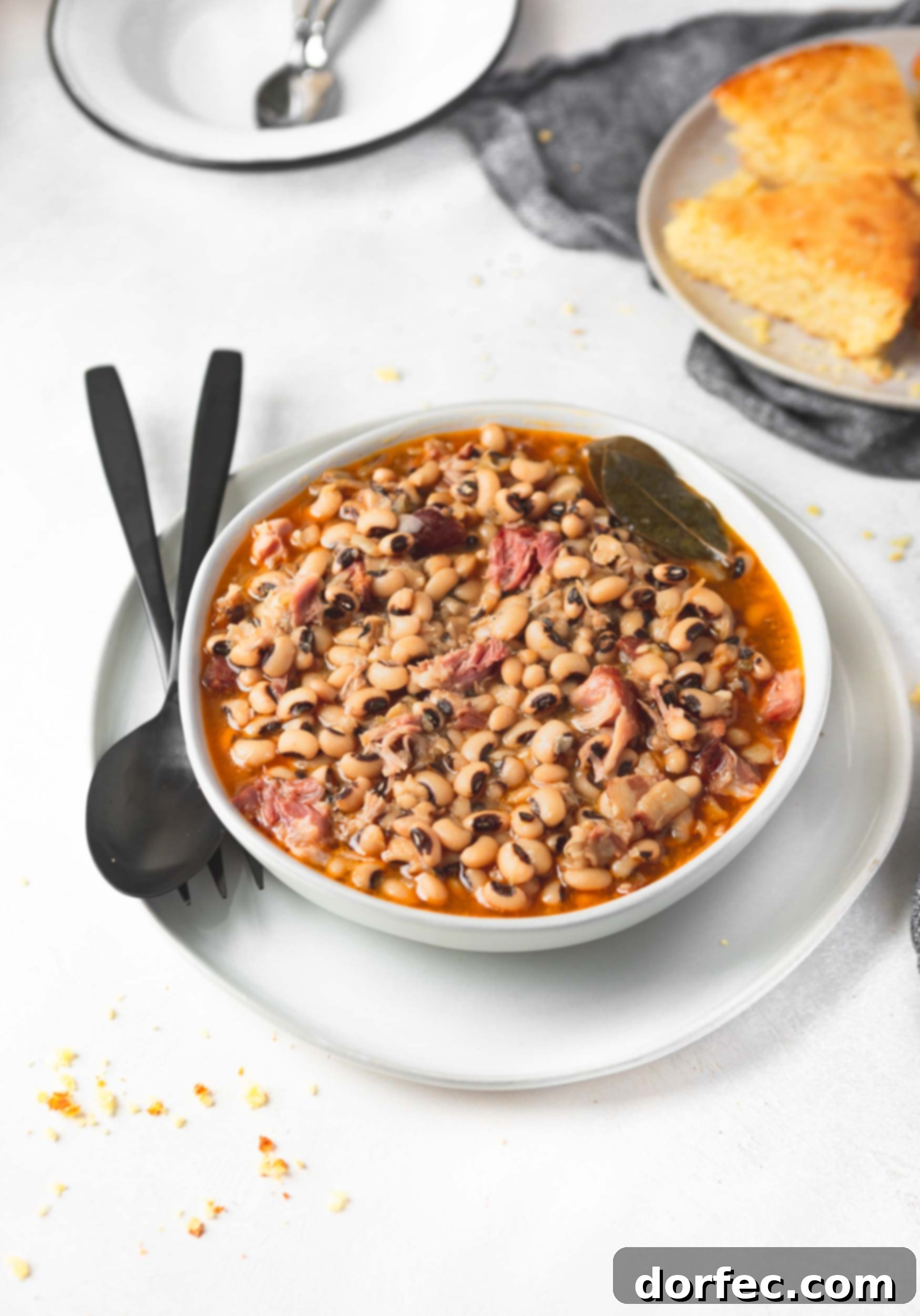
Despite their common name, black eyed peas are actually a type of legume, botanically classified as a bean (Vigna unguiculata), not a pea. They are often referred to as “cowpeas,” a term that encompasses several varieties of this versatile legume. Distinguished by a prominent black spot (or “eye”) on their creamy white or pale colored seed coat, these beans boast a slightly earthy, savory flavor and a tender, creamy texture when cooked.
Thought to have originated in North Africa, black eyed peas have a rich history spanning thousands of years. They were cultivated in Africa for their resilience in hot, dry climates and their nutritional value. From Africa, they made their way to Asia and eventually across the Atlantic to the Americas, primarily via the transatlantic slave trade. In the Southern United States, they thrived in the local climate and became a dietary staple, particularly among enslaved people, who adapted them into many traditional dishes that are still enjoyed today. Their widespread cultivation and adaptability contributed to their prominence in Southern cuisine and their symbolic role in traditions like New Year’s Day celebrations.
The Nutritional Powerhouse: Are Black Eyed Peas Good For You?
Beyond their cultural significance and delicious taste, black eyed peas are celebrated for their impressive nutritional profile. They are indeed incredibly good for you, making them an excellent staple food for a healthy diet:
- Rich in Fiber: Black eyed peas are an outstanding source of dietary fiber, crucial for digestive health, blood sugar regulation, and maintaining a healthy weight. The fiber content helps you feel full and satisfied, contributing to satiety.
- Excellent Source of Protein: As a plant-based protein powerhouse, black eyed peas are vital for muscle repair, growth, and overall bodily function. They are a fantastic protein alternative for vegetarians, vegans, and those looking to reduce their meat intake.
- Low in Fat: Naturally low in fat, especially saturated fat, black eyed peas contribute to heart health and make them a lean choice for any meal.
- Energy-Boosting: Packed with complex carbohydrates, fiber, and protein, black eyed peas provide sustained energy without the spikes and crashes associated with simple sugars.
- Vitamins and Minerals: These humble beans are also loaded with essential micronutrients, including folate (important for cell growth and function), iron (for oxygen transport), magnesium (for muscle and nerve function), and potassium (for blood pressure regulation). They also contain various B vitamins, crucial for energy metabolism.
Incorporating black eyed peas into your diet is a smart choice for boosting your overall health and well-being, making this New Year’s tradition not just lucky, but genuinely wholesome.
Tips for Success: Achieving the Best Black Eyed Peas
While the recipe is straightforward, a few expert tips can elevate your black eyed peas from good to unforgettable:
- Don’t Skimp on Soaking (for Dry Beans): Proper soaking is non-negotiable. It ensures even cooking and a tender, creamy texture. Skipping this step can lead to tough, unevenly cooked beans.
- Flavor Base is Key: Take your time browning the pork and sautéing the aromatics. This foundational step builds the deep, savory profile of the entire dish. Don’t rush the browning or let the vegetables burn.
- Bloom Your Spices: Cooking spices briefly in fat awakens their flavors and aromas, making them much more potent and integrated into the dish.
- Low and Slow Simmer: Black eyed peas thrive on a gentle simmer. This allows the beans to slowly absorb the rich broth and become incredibly tender without breaking apart.
- Taste and Adjust Seasoning: Always taste your dish before serving. Beans can absorb a lot of salt, so you might need to adjust based on your preference and the saltiness of your chicken stock and ham.
- Hot Sauce for a Kick: A dash of hot sauce at the end is a classic Southern touch that brightens the flavors and adds a welcome warmth.
Serving Suggestions and Perfect Pairings
As the New Year’s Eve festivities wind down, often leaving us craving something substantial after a night of appetizers and desserts, this black eyed peas recipe offers the perfect hearty and wholesome antidote. Start your year off right, not just with a delicious meal, but with a dish steeped in tradition, promising a prosperous and fortunate twelve months ahead.
While cornbread is a classic and indispensable companion, here are other wonderful ways to serve your black eyed peas:
- With Rice: Traditionally, Hoppin’ John is served with rice, often mixed in. This creates a complete and satisfying meal, and the rice helps to absorb the flavorful broth.
- A Southern Plate: Serve alongside other Southern staples like collard greens (if not already incorporated), baked ham, sweet potato casserole, or fried chicken for a truly authentic spread.
- As a Hearty Side: They make an excellent side dish to grilled meats, roasted poultry, or even a simple green salad.
- In a Bowl: Enjoy a generous bowl on its own, perhaps with a sprinkle of fresh herbs or a dollop of sour cream.
More Hearty Bean Recipes You’ll Love:
If you’ve fallen in love with the comforting versatility of beans, explore these other delicious and wholesome recipes from our collection:
- Cheesy Black Beans and Rice
- Instant Pot Taco Chili
- Hearty Black Bean Burgers
- Authentic Mexican Black Beans
- Restaurant-Style Instant Pot Refried Beans
Southern Black Eyed Peas Recipe for New Year’s Day
8 hrs
15 mins
2 hrs
10 hrs
15 mins
12

Ingredients
- 1 Pound Black Eyed Peas, dry, (or canned is fine)
- 1 Tablespoon Oil
- 6 oz. Pork Shoulder, diced in 1/2 “ pieces or 1 ham hock
- 2 Tablespoons Butter
- 4 Strips Bacon, thick cut, cut into 1/2” pieces
- 1 Onion, yellow, minced
- 1 Stalk Celery, sliced
- 4 Cloves Garlic, minced
- 1 1/2 teaspoons Salt
- 1/2 teaspoon Pepper
- 1 teaspoon Garlic powder
- 1 teaspoon Smoked Paprika
- 2 teaspoons Balsamic Vinegar
- 4 Cups Chicken Stock
- 2 Cups Water
- 3 Bay Leaves
- 1 Cup Collard Greens, chopped in 2” pieces *optional
Instructions
-
If using dried beans, place in a large pot with 4 inches of water and allow to soak overnight, then drain and rinse. This is essential for proper cooking and texture.1 Pound Black Eyed Peas
-
Heat the oil in a pot over medium-high heat. Once shimmering, add the pork and cook until nicely browned on each side, about 4-5 minutes. Remove the pork and set aside.1 Tablespoon Oil, 6 oz. Pork Shoulder
-
Add butter to the pot, and once melted, add the bacon, onion, celery, and garlic. Cook, stirring frequently, until the vegetables are softened and lightly browned, approximately 7-8 minutes.2 Tablespoons Butter, 4 Strips Bacon, 1 Onion, 1 Stalk Celery, 4 Cloves Garlic
-
Sprinkle in the salt, pepper, garlic powder, smoked paprika, and balsamic vinegar. Cook for another 2 minutes, stirring constantly, to bloom the spices and enhance their flavor.1 1/2 teaspoons Salt, 1/2 teaspoon Pepper, 1 teaspoon Garlic powder, 1 teaspoon Smoked Paprika, 2 teaspoons Balsamic Vinegar
-
Pour in the chicken stock and water, then add the bay leaves and the browned pork (if you removed it earlier). Reduce the heat to a gentle simmer, cover the pot, and cook for 30-40 minutes to develop the broth’s flavors.4 Cups Chicken Stock, 2 Cups Water, 3 Bay Leaves
-
Once the pork is fork-tender, add the pre-soaked and rinsed black eyed peas (or drained and rinsed canned peas) and the chopped collard greens (if using). Continue to simmer, covered, until the beans are soft and creamy, approximately 1 ½ hours for dry beans, or 30-45 minutes for canned beans. Stir occasionally.1 Cup Collard Greens
-
Remove the bay leaves. Taste and adjust seasonings as desired. Serve hot, with an optional dash of hot sauce for a spicy kick. Enjoy your prosperity meal!
Recipe Notes
Nutrition
Calories: 160kcal,
Carbohydrates: 13g,
Protein: 9g,
Fat: 8g,
Saturated Fat: 3g,
Cholesterol: 22mg,
Sodium: 489mg,
Potassium: 291mg,
Fiber: 3g,
Sugar: 3g,
Vitamin A: 312IU,
Vitamin C: 3mg,
Calcium: 27mg,
Iron: 1mg
Nutrition information is automatically calculated, so should only be used as an approximation.
Connect With Us for More Delicious Recipes!
Don’t miss out on our latest culinary creations and tips! REMEMBER TO SUBSCRIBE TO our FREE Oh Sweet Basil NEWSLETTER to receive easy, delectable recipes delivered straight into your inbox every day. Join our growing community of food lovers and never run out of inspiration for your next meal!
We absolutely love seeing your culinary triumphs! When you try one of our recipes, please share it on social media using the hashtag #ohsweetbasil on INSTAGRAM for a chance to be featured in our stories! Be sure to FOLLOW OH, SWEET BASIL on FACEBOOK | INSTAGRAM | PINTEREST | TWITTER for all of our latest content, mouth-watering recipes, and heartwarming stories from our kitchen to yours.