
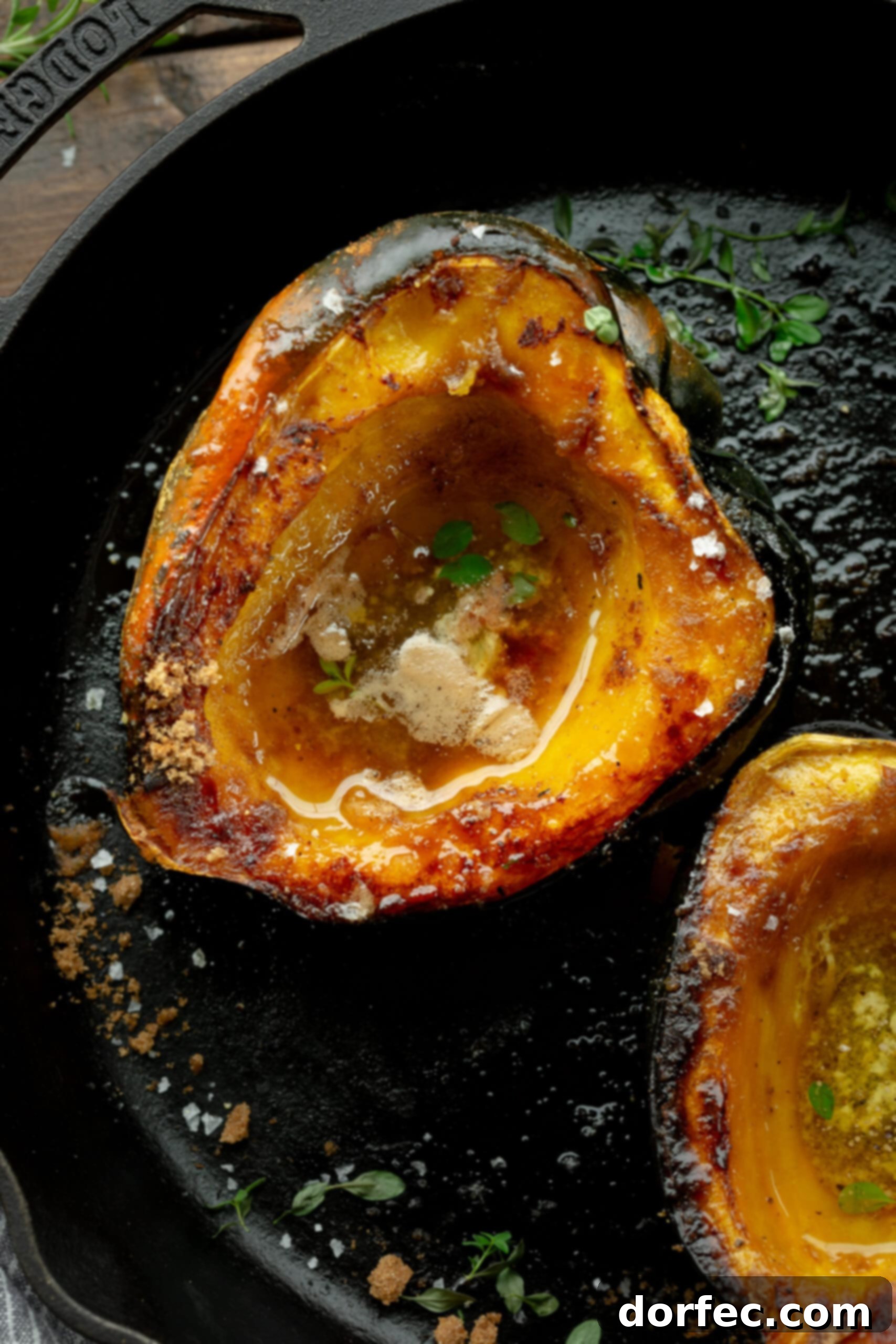
Welcome to a culinary journey that celebrates the rich, comforting flavors of autumn! This exceptional Roasted Brown Sugar Acorn Squash recipe is more than just a side dish; it’s a symphony of sweet and savory notes that will tantalize your taste buds and earn a permanent spot on your holiday menu. Imagine perfectly roasted acorn squash, naturally sweet and tender, enhanced with the warm embrace of dark brown sugar, rich butter, and a hint of fragrant spices. It’s the kind of dish that makes any meal feel special, transforming ordinary dinners into extraordinary dining experiences, especially during festive occasions like Thanksgiving and Christmas.
The magic happens in the oven, where roasting coaxes out the squash’s inherent sweetness, intensifying its flavor. When combined with the caramelizing power of brown sugar and the luxurious melt of butter, alongside a carefully selected blend of warm fall spices, each bite feels like a delightful treat. This recipe promises not only ease of preparation but also an unforgettable taste that pairs harmoniously with virtually any main course, from a succulent roasted turkey to a hearty beef tenderloin. Get ready to elevate your meal prep with this simple yet sophisticated dish that truly captures the essence of the season.
From Childhood Gardens to Culinary Creations: My Acorn Squash Journey
My earliest memories of gardening are filled with ambitious, often comical, attempts. I once dedicated an entire season to growing the “biggest pumpkin Vancouver Washington had ever seen,” convinced that weekly warm milk feedings were the secret. Months were spent nurturing that pumpkin, padding through the slowly drying grass, occasionally sneaking a few raspberries (much to my mother’s canning dismay), only to face the harsh reality that my giant pumpkin dreams were just that – dreams. While my pumpkin didn’t win any blue ribbons, the experience fostered a deep-seated desire to see things through and appreciate the simple bounty of a homegrown harvest.
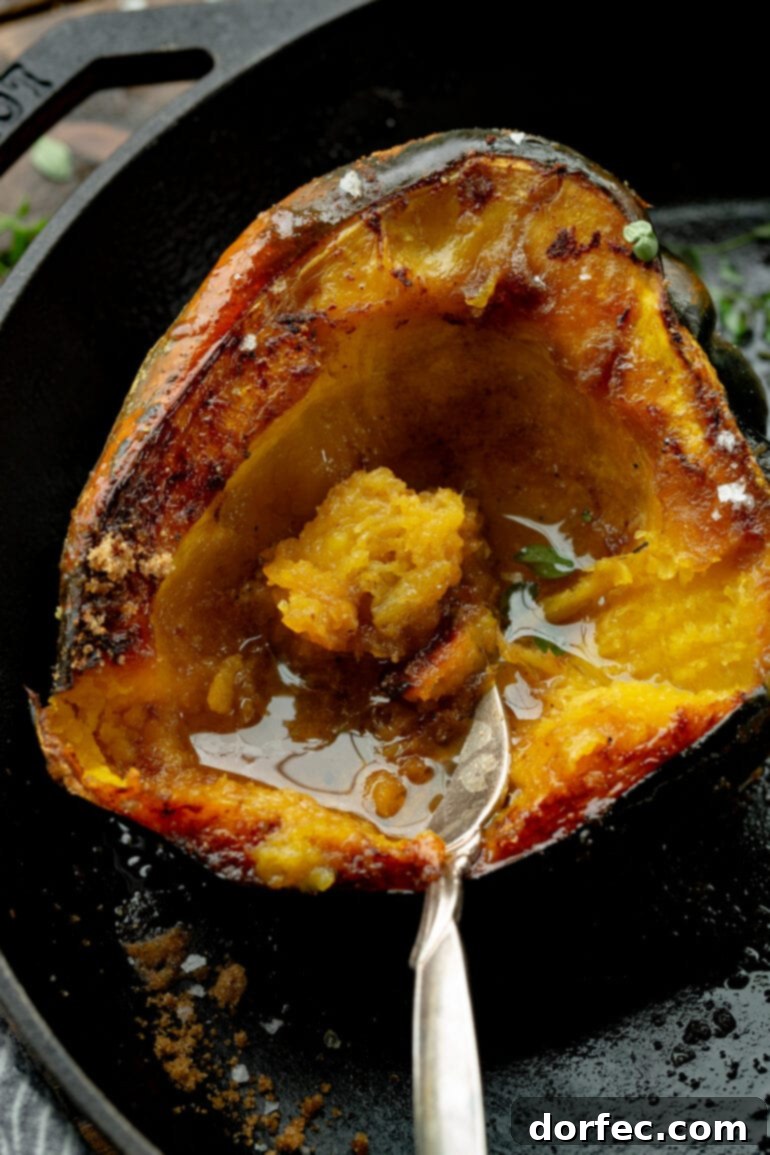
And indeed, something truly good did come from my parents’ garden: acorn squash. While my little pumpkin plant never quite reached ginormous proportions, the acorn squash vines flourished, introducing me to a new culinary world. I can still vividly recall the simple joy of mashing my small serving of roasted acorn squash, generously loaded with butter and brown sugar. It was a comforting, familiar ritual, often accompanied by the sound of the garage door signaling dinnertime. This humble squash, once an unfamiliar item, quickly became a cherished part of our family meals, sparking a lifelong love for exploring new foods and flavors. This recipe brings back those cherished memories, delivering a taste of autumn warmth and family tradition with every bite.
Unlocking the Flavor: Why Acorn Squash is a Fall Favorite
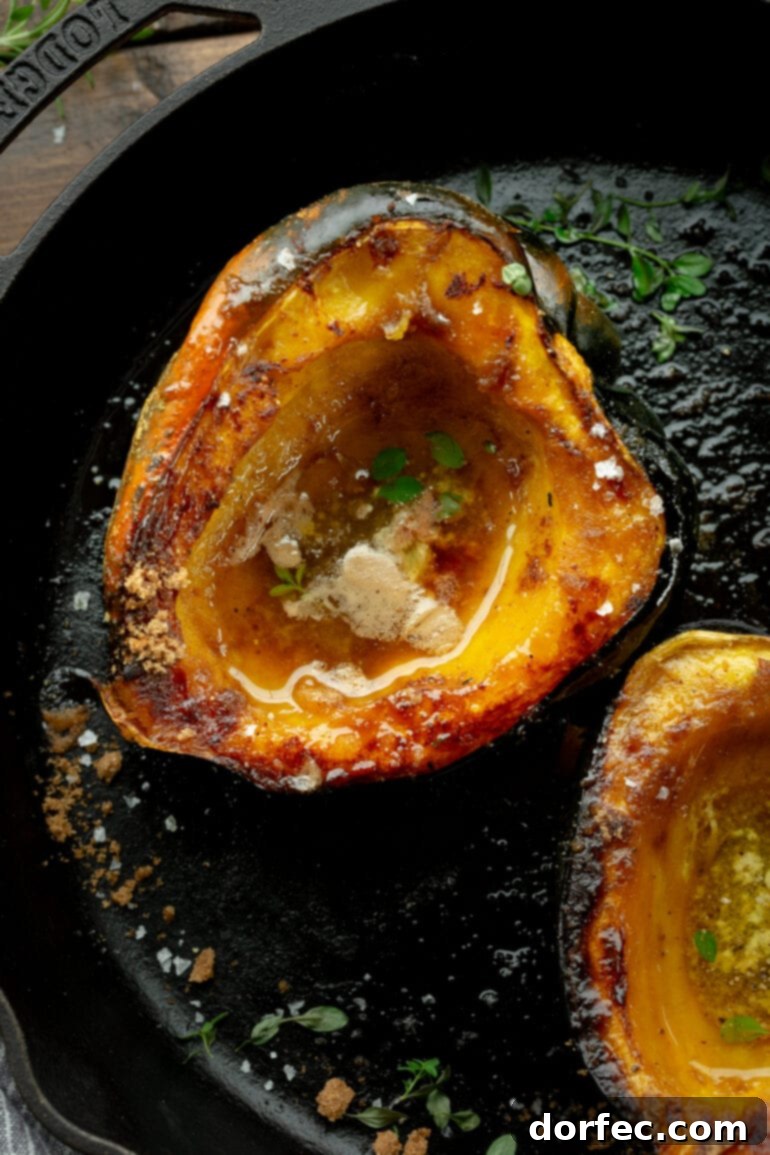
Acorn squash, with its distinctive ridged exterior and sweet, nutty flavor, is a true gem of the autumn and winter seasons. Its versatility makes it a beloved ingredient for a variety of dishes, but it truly shines when roasted. When subjected to the high heat of the oven, the squash undergoes a magical transformation: its natural sugars caramelize, and its flesh becomes incredibly tender, almost custardy. This makes it an ideal canvas for both sweet and savory preparations, absorbing flavors beautifully while retaining its unique character.
Beyond its delightful taste and texture, acorn squash also offers a surprisingly robust nutritional profile. It’s a fantastic source of dietary fiber, which aids digestion and promotes a feeling of fullness. Furthermore, it’s packed with essential vitamins and minerals, including a significant amount of Vitamin C, a powerful antioxidant that supports immune health. It also provides potassium, crucial for maintaining healthy blood pressure, and magnesium, vital for muscle and nerve function. While our recipe certainly indulges with butter and brown sugar, the core nutritional benefits of the squash itself remain, offering a comforting side that can still be part of a balanced diet.
Essential Ingredients for Your Perfect Roasted Acorn Squash
One of the best aspects of this easy acorn squash recipe is its simplicity. You don’t need a long list of exotic ingredients to create something truly delicious. The key lies in a few high-quality staples that work together to bring out the best in the squash. Here’s what you’ll need for this incredibly flavorful fall side dish:
- Acorn Squash: The star of our dish! Choose any size that fits your needs. Look for firm squash with dull, dark green skin, free from soft spots. Its natural sweetness and mild, nutty flavor make it ideal for roasting.
- Olive Oil: A crucial element for achieving that perfect roasted texture. Olive oil not only prevents the squash from sticking to the pan but also helps the edges to caramelize beautifully, adding depth of flavor.
- Salt and Pepper: The foundational seasonings. A simple sprinkle of salt and freshly ground black pepper enhances the squash’s natural taste and provides a balanced base before the sweet additions.
- Butter: This is where the richness comes in. Butter adds a decadent creaminess and contributes significantly to the browning and caramelization process, infusing the squash with an irresistible flavor.
- Dark Brown Sugar: Our primary sweetener, dark brown sugar brings a deep, molasses-rich sweetness and helps create a gorgeous, sticky glaze as it melts and caramelizes in the oven. Adjust the amount to your preference for a sweeter or more subtly enhanced dish.
- Kosher Salt: A finishing touch that makes all the difference. A light sprinkle of kosher salt at the end cuts through the sweetness, brightens all the flavors, and adds a delightful textural contrast.
- Cinnamon: The quintessential fall spice. Cinnamon infuses the squash with a warm, inviting aroma and a classic autumnal flavor profile that complements the sweetness of the brown sugar.
- Cardamom: This often-underestimated spice adds a unique, sophisticated warmth and a hint of citrusy, floral notes that perfectly encapsulate the signature taste of fall. It truly elevates the dish from good to exceptional.
You’ll find precise measurements for each ingredient, along with detailed instructions, in the recipe card at the end of this article. This makes it easy to save or print for your convenience.
Mastering the Cut: Safely Preparing Acorn Squash
Cutting an acorn squash can sometimes feel like a challenge, but with the right technique, it’s straightforward and safe. The key is to work carefully and use a sharp, sturdy knife. Let’s ensure all your digits stay intact as we prepare this delicious squash!
- **Gather Your Tools:** You’ll need a sharp chef’s knife and a stable cutting board. A dull knife is more dangerous than a sharp one, as it requires more force and can slip.
- **Stabilize the Squash:** Place the acorn squash on its side on your cutting board. Its natural ridges can make it wobble, so finding a stable position is crucial.
- **Locate a Furrow:** Identify one of the deep furrows (the indentations between the bumps) on the squash. This is the easiest point to start your cut, as the knife can settle into it.
- **Initial Incision:** Carefully position your knife in a furrow, ensuring your fingertips are tucked under and away from the blade. Apply firm, steady pressure to push the knife down. You will feel the blade penetrate through the tough skin and dense flesh until it reaches the hollow center.
- **Cut Around the Perimeter:** Once the knife is in, gently slide it around the tip of the squash, following the natural curve. **Do not attempt to cut directly through the tough stem.** The stem is incredibly dense and difficult to cut through safely.
- **Separate the Halves:** After cutting all the way around the squash, set your knife down. Use your hands to pry open the squash. The stem will either cleanly crack or break away to one side, allowing the two halves to separate easily.
- **Scoop Out Seeds:** With a spoon (a sturdy metal spoon works best), scrape out the stringy pulp and seeds from the center of each squash half. You can discard the seeds or save them for roasting later for a delicious snack!
Now your acorn squash is perfectly prepared and ready for seasoning and roasting!
Step-by-Step Guide: How to Make Irresistible Roasted Acorn Squash
Creating this flavorful roasted acorn squash side dish is surprisingly simple. Follow these straightforward steps to achieve perfectly tender, sweet, and caramelized squash:
- **Preheat Your Oven:** Begin by preheating your oven to 400°F (200°C). This high temperature is key for achieving that desirable caramelization and tender texture that makes roasting so effective.
- **Prepare the Baking Pan & Squash:** Drizzle a generous amount of olive oil into a cast-iron pan, baking dish, or baking sheet. Rub the cut sides and bottoms of the squash halves thoroughly with olive oil. This not only prevents sticking but also aids in browning and caramelization. Season the flesh side liberally with salt and pepper to taste.
- **PRO TIP:** While a cast-iron pan is excellent for even heat distribution and superb caramelization, a regular baking dish or baking sheet works perfectly fine. Just keep in mind it might take a few extra minutes to achieve the same golden-brown, crispy edges.
- **First Roast (Flesh Side Down):** Place each acorn squash half, flesh side down, onto the prepared pan. Loosely lay a sheet of aluminum foil over the top of the squash. Roast in the preheated oven for approximately 20-30 minutes, or until the flesh side begins to turn golden brown and shows signs of caramelization. The foil helps to steam the squash initially, ensuring it becomes tender without drying out.
- **Flip & Butter:** Carefully remove the pan from the oven. Flip the acorn squash halves over so they are now flesh side up. Take a pat of butter, rub it generously all over the rims of each squash half, then place the remaining butter directly into the hollow well of each squash.
- **Sweeten & Spice:** Liberally sprinkle dark brown sugar into the wells and over the rims of the squash. Then, divide the cinnamon and cardamom evenly between the two squash halves, sprinkling them over the brown sugar and butter.
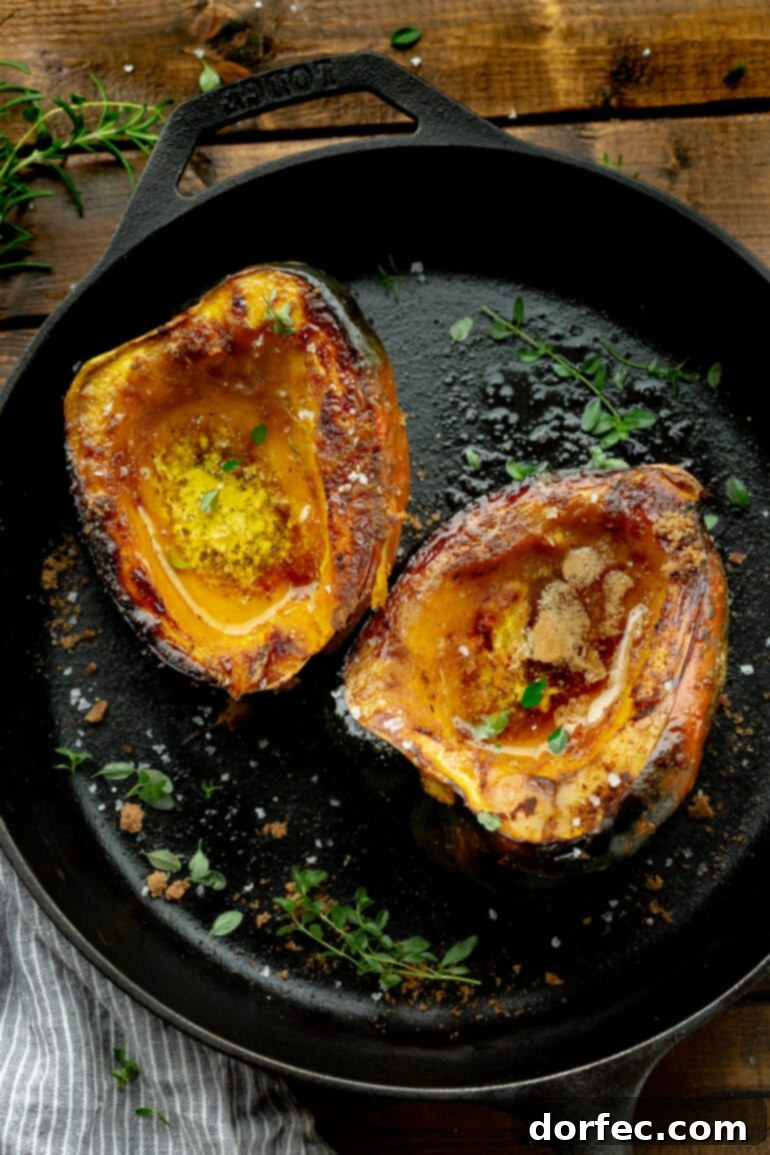
- **Second Roast (Flesh Side Up):** Return the pan to the oven, keeping the squash loosely covered with aluminum foil. Continue roasting for another 20-25 minutes, or until the squash is completely fork-tender. The brown sugar and butter will melt and create a beautiful, rich glaze.
- **Serve & Season:** Once tender, remove the squash from the oven. If desired, finish with a final sprinkle of flaky kosher salt. This little touch perfectly balances the sweetness and enhances all the warm flavors.
- **PRO TIP:** While the skin of acorn squash is technically edible, it can be tough. At this stage, the tender flesh should easily separate from the skin, making it simple to scoop out and discard if you prefer not to eat it.
All these instructions, along with ingredient measurements, are conveniently located in the detailed recipe card below.
Acorn Squash: A Healthy Indulgence?
Acorn squash itself is a nutritional powerhouse. It’s naturally low in calories and boasts an impressive array of essential nutrients, including significant amounts of Vitamin C, a robust immune booster, and potassium, vital for heart health and fluid balance. It also provides dietary fiber, promoting healthy digestion, and magnesium, which supports muscle and nerve function. So, on its own, acorn squash is indeed a very healthy vegetable.
However, when we generously load it up with butter and brown sugar, as this delicious recipe calls for, we are certainly adding calories, fats, and sugars. This transforms it from a strictly “healthy” vegetable into a more indulgent side dish. The beauty of this recipe lies in its balance: you still get the fantastic nutrients from the squash, but with an added layer of comforting sweetness and richness. It’s a perfect example of how a nutritious base can be made into a delightful treat for special occasions or when you simply crave something wonderfully flavorful. Enjoy it as a delicious occasional indulgence!
Roasting vs. Baking Acorn Squash: Understanding the Difference
While often used interchangeably, “roasting” and “baking” refer to distinct cooking methods that yield different results, especially when it comes to vegetables like acorn squash. Both methods involve cooking food in an oven until it’s tender and delicious, but the temperatures involved are the primary differentiator.
- **Roasting:** This technique typically uses higher temperatures, generally 400°F (200°C) and above. The intense heat causes the exterior of the food to brown and caramelize, developing a rich, complex flavor and a slightly crispy texture. This is known as the Maillard reaction, which creates those deeply savory and sweet notes we adore. For acorn squash, roasting is ideal because it enhances its natural sweetness and creates delicious caramelized edges, making the flesh incredibly tender and flavorful.
- **Baking:** This method usually involves lower temperatures, typically 375°F (190°C) and below. Baking aims for an even, gentle cooking throughout the food, often resulting in a softer, more uniformly cooked interior without as much browning or crisping on the surface. While you can certainly bake acorn squash until it’s tender, it won’t develop the same depth of flavor and appealing texture that high-heat roasting provides.
For this brown sugar acorn squash recipe, roasting is definitely the preferred method, as it unlocks the squash’s full potential for flavor and texture, yielding a beautifully browned and caramelized dish that’s truly irresistible.
To Peel or Not to Peel: Acorn Squash Skin Explained
When preparing acorn squash for roasting, a common question arises: do you need to remove the skin? The simple answer is **no, the skin does not need to be removed before roasting.** In fact, leaving the skin on offers several advantages:
- **Maintains Shape:** The tough skin helps the squash halves maintain their structure and shape during the roasting process, preventing them from collapsing or becoming mushy.
- **Ease of Handling:** It makes the squash easier to handle in and out of the oven.
- **Natural Barrier:** The skin acts as a natural barrier, helping to retain moisture within the flesh and ensuring it cooks evenly and becomes wonderfully tender.
- **Edibility (with caveats):** While the skin of acorn squash is technically edible, it tends to remain somewhat tough even after roasting. Unlike butternut squash, whose skin often softens significantly, acorn squash skin is generally discarded by most people after cooking. However, if you prefer, you can certainly eat it! The good news is that once the squash is fully roasted and fork-tender, the sweet, soft flesh will easily pull away from the skin, making it very simple to scoop out and enjoy without consuming the tougher outer layer.
So, save yourself the effort of peeling! Simply wash the exterior of the squash thoroughly before cutting, and you’re good to go.
Creative Variations & Perfect Pairings for Roasted Acorn Squash
While our Roasted Brown Sugar Acorn Squash is a masterpiece on its own, its versatility allows for exciting variations and makes it an ideal companion to a wide array of main dishes. Don’t hesitate to experiment!
Flavor Variations:
- **Savory Herb Infusion:** For a less sweet approach, omit the brown sugar and instead rub the squash with olive oil, garlic powder, onion powder, dried rosemary, thyme, sage, salt, and pepper. A sprinkle of Parmesan cheese in the last 10 minutes of roasting adds a golden, crispy crust.
- **Spicy Kick:** Add a pinch of cayenne pepper or a dash of red pepper flakes to the brown sugar mixture for a sweet-and-spicy twist that’s surprisingly delicious.
- **Maple Pecan Delight:** Swap brown sugar for maple syrup and sprinkle toasted chopped pecans over the squash before the second roast. The pecans will become deliciously caramelized and add a delightful crunch.
- **Apple & Cranberry Fusion:** Tuck a few slices of apple and a handful of dried cranberries into the wells of the squash before roasting. Their tartness beautifully complements the sweet squash.
- **Brown Butter & Sage:** Melt butter until it turns a nutty brown, then infuse it with fresh sage leaves. Drizzle this fragrant brown butter over the squash instead of plain butter, creating an incredibly aromatic and sophisticated flavor.
Serving Suggestions:
- **Holiday Feast Staple:** This dish is a quintessential side for Thanksgiving and Christmas. It pairs beautifully with roasted turkey, ham, or prime rib, adding a vibrant splash of color and a comforting flavor profile to your holiday spread.
- **Weeknight Wonder:** Elevate your regular weeknight meals by serving it alongside roasted chicken, pork chops, or even a simple pan-seared steak.
- **Vegetarian Main:** For a lighter meal, consider stuffing the roasted acorn squash halves with a mixture of quinoa, wild rice, cranberries, nuts, and herbs.
- **Breakfast Side:** Believe it or not, a small serving of this sweet roasted squash makes a delightful addition to a hearty breakfast alongside eggs and sausage!
However you choose to customize or serve it, this versatile acorn squash is sure to impress!
Storing & Reheating Your Roasted Acorn Squash
Should you be fortunate enough to have leftovers (which is rare with something this delicious!), storing and reheating your roasted acorn squash is simple, ensuring you can enjoy its comforting flavors for days to come. Here’s how to do it effectively:
- **Storage:** Allow the roasted acorn squash to cool completely to room temperature before storing. Once cooled, transfer the squash (either still in halves or scooped out) to an airtight container. Place the container in the refrigerator. Properly stored, roasted acorn squash will maintain its quality and flavor for up to **5 days**.
- **Reheating in the Microwave:** For a quick reheat, place individual portions of the squash on a microwave-safe plate. Cover loosely with a paper towel or microwave-safe lid to prevent drying. Heat on high for 1-2 minutes, or until warmed through, stirring halfway if possible.
- **Reheating in the Oven:** For best results, especially if you want to revive some of that caramelized texture, reheat the squash in the oven. Preheat your oven to 300°F (150°C). Place the squash halves or scooped portions on a baking sheet. Loosely cover with aluminum foil to prevent excessive browning or drying. Heat for 10-15 minutes, or until thoroughly warmed through.
Enjoying your delicious roasted acorn squash again is just a few minutes away!
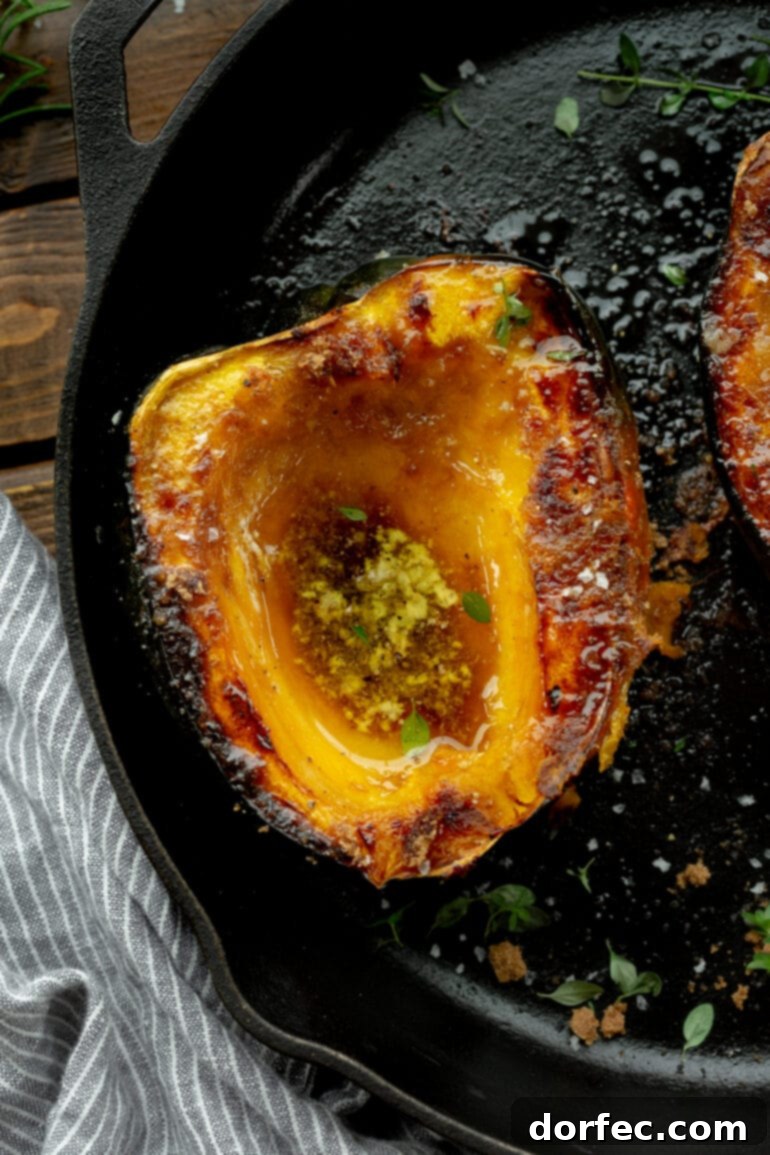
There’s an undeniable charm and warmth that a beautifully roasted squash side dish brings to any table. Its comforting presence pairs perfectly with hearty main courses, and those irresistible crispy, caramelized edges truly taste like a slice of heaven! This roasted acorn squash recipe, brimming with the goodness of butter and dark brown sugar, is destined to become a staple on your holiday side dishes list and a cherished family favorite for years to come. It’s simple to prepare, incredibly flavorful, and embodies the very essence of cozy fall and winter dining. Don’t just make a side dish; create a memorable culinary experience!
More Tasty Squash Side Dishes You’ll Love:
- Brown Butter Spaghetti Squash
- Creamy Butternut Squash Soup
- Browned Butter Sage Honeynut Squash
- Roasted Butternut Squash and Kale Salad
Roasted Brown Sugar Acorn Squash
5 mins
40 mins
45 mins
6
Ingredients
- 1 Acorn Squash, halved and seeds removed
- Olive Oil
- Salt and Pepper
- 2 Tablespoons Butter
- 2-4 Tablespoons Dark Brown Sugar
- Kosher Salt
- 1/4 teaspoon Cinnamon, divided
- 1/4 teaspoon Cardamom, divided
Instructions
- Heat the oven to 400°F (200°C).
- Drizzle olive oil in a cast-iron pan (or baking dish/sheet) and rub it all over the acorn squash flesh and bottom. Add a tiny drizzle of oil into the well of each squash and season well with salt and pepper if desired.
- Roast for about 20-30 minutes, flesh side down and loosely covered with foil over the backs until the flesh is browning and caramelizing.
- Flip the squash over. Rub the rims with a pat of butter, then place the remaining pat of butter into the well of each squash half.
- Sprinkle liberally with dark brown sugar in the well and over the rims, as well as the cinnamon and cardamom, divided evenly between the two squash halves.
- Roast again, cut side up and loosely covered with foil, for another 20-25 minutes or until the squash is fork-tender and mashable. Serve with a little more Kosher salt if needed.
Nutrition
Calories: 78 kcal,
Carbohydrates: 12g,
Protein: 1g,
Fat: 4g,
Saturated Fat: 2g,
Polyunsaturated Fat: 0.2g,
Monounsaturated Fat: 1g,
Trans Fat: 0.2g,
Cholesterol: 10mg,
Sodium: 33mg,
Potassium: 257mg,
Fiber: 1g,
Sugar: 4g,
Vitamin A: 380 IU,
Vitamin C: 8mg,
Calcium: 29mg,
Iron: 1mg
Nutrition information is automatically calculated, so should only be used as an approximation.