
There’s something truly magical about discovering a new breakfast tradition. My culinary journey recently took an exciting turn during a casual chat with friends. As we swapped stories about our favorite morning delights, the conversation inevitably drifted to crepes. That’s when my friends excitedly introduced me to their beloved Swedish pancakes. Having never tried them, I was immediately intrigued, especially by the notion that they were like crepes, but with a delightful twist: a slightly thicker, fluffier texture.
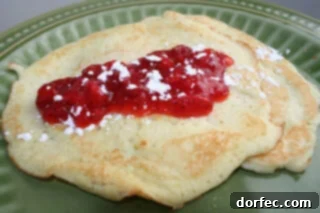
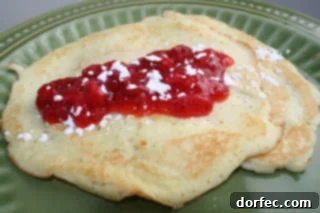
My enthusiasm was doubled by the fact that I needed to make them Dairy-Free Swedish Pancakes. This wasn’t just about trying a new recipe; it was about adapting it to fit dietary needs without compromising on flavor or texture. I’m always on the lookout for fresh breakfast ideas, and this seemed like the perfect challenge. Instead of simply turning to a quick Google search, I decided to approach it with a sense of adventure, creating my own rendition from scratch. I envisioned combining the delicate thinness of crepes with the airy lightness I adore in Ebelskivers, which achieve their puffiness from whipped egg whites. The result? A batch of incredibly delicious pancakes that truly exceeded expectations. Seriously, you absolutely have to try them! My kids, Cade and Peys, predictably opted for a generous slather of Nutella. Not to be outdone, I happily indulged in some fantastic homemade freezer jam from last summer. Mine was absolutely fantabulous!
What Are Swedish Pancakes? A Culinary Exploration
Swedish pancakes, known in Sweden as “pannkakor,” are a beloved breakfast and dessert staple that hold a special place in Scandinavian cuisine. Often compared to French crepes, they share a similar thin, delicate profile but typically possess a slightly thicker, richer batter, resulting in a more substantial yet still wonderfully tender pancake.
Unlike their thicker American counterparts that rely heavily on baking powder for their characteristic fluff, Swedish pancakes achieve their unique texture through a higher egg content and a thinner batter. This allows them to spread easily across a hot pan, creating a wide, round, and incredibly satisfying form. The edges often become slightly crisp, providing a delightful textural contrast to the soft, pliable interior.
Traditionally, Swedish pancakes are cooked on a special pan with a slightly raised lip, which makes it easier to swirl the thin batter evenly across the surface without it running over. This technique is crucial for achieving their signature uniform thinness. They are usually served warm, often accompanied by classic Swedish toppings such as lingonberry jam, a dusting of powdered sugar, or a dollop of whipped cream. However, their versatility means they pair beautifully with a wide array of sweet and savory fillings.
The history of pancakes, in various forms, spans centuries and cultures. In Sweden, “pannkakor” have been enjoyed for generations, symbolizing comfort and home-cooked goodness. They are often served on “Pancake Day” (Fettisdagen or Shrove Tuesday), traditionally eaten before the fasting period of Lent. While the ingredients are simple – flour, eggs, milk, sugar, and salt – the method of preparation and the resulting delicate texture truly set them apart from other pancake varieties around the world.
The Benefits of Dairy-Free Swedish Pancakes
Creating a dairy-free version of Swedish pancakes opens up a world of delicious possibilities for many individuals. For those with lactose intolerance, dairy allergies, or who simply prefer a plant-based diet, traditional recipes can be a barrier to enjoying these delightful treats. By substituting cow’s milk with a suitable dairy-free alternative, everyone can partake in this beloved breakfast without sacrificing flavor or texture.
In this recipe, we opt for coconut milk, which lends a subtle richness and a creamy consistency to the batter. Coconut milk is an excellent choice for dairy-free baking and cooking because its fat content helps to mimic the mouthfeel and structure that dairy milk provides. Other popular alternatives include almond milk, soy milk, or oat milk, each bringing its own unique flavor profile. When choosing your dairy-free milk, consider its thickness and how it might interact with the other ingredients to ensure your pancakes achieve that perfect delicate balance.
Beyond dietary needs, choosing dairy-free options can also be part of a broader culinary exploration, introducing new flavors and textures to classic dishes. It’s a wonderful way to expand your cooking repertoire and cater to a wider audience, making sure that everyone at your breakfast table can enjoy a stack of these delightful pancakes.
Can Swedish Pancakes Be Reheated? Absolutely!
One of the many great things about Swedish pancakes is their suitability for make-ahead meal prep. Leftover pancakes can be easily stored and reheated, making them a convenient option for busy mornings or a quick snack.
To store, allow the pancakes to cool completely. Stack them with a piece of parchment paper or wax paper in between each pancake to prevent sticking. Place the stacked pancakes in an airtight container or a freezer-safe bag. They will keep fresh in the refrigerator for 2-3 days, or in the freezer for up to 1-2 months. If freezing, make sure to label the container with the date.
When you’re ready to enjoy them again, reheating is simple:
- Microwave: For a quick reheat, place one or two pancakes on a microwave-safe plate and heat for 15-30 seconds, or until warmed through. Be careful not to overheat, as this can make them tough.
- Skillet: For best results, reheat individual pancakes in a lightly oiled non-stick skillet over medium heat for about 1-2 minutes per side, until they are warm and slightly crisp again. This method helps to restore some of their fresh-off-the-pan texture.
- Oven: If you have a larger batch, preheat your oven to 275°F (135°C). Place the pancakes in a single layer on a baking sheet, cover loosely with foil, and heat for 5-10 minutes, or until warmed through.
Serving Swedish Pancakes: Rolled or Stacked?
Swedish pancakes are incredibly versatile when it comes to serving. Their thin, pliable nature makes them perfect for rolling, much like crepes, or they can be enjoyed flat like traditional pancakes.
Rolling: This is a very popular way to serve Swedish pancakes. Once cooked, spread your favorite filling generously over the entire surface of the pancake, then simply roll it up tightly. This method creates a neat, portable package of deliciousness that’s easy to eat. Common fillings for rolling include:
- Lingonberry jam (the quintessential Swedish choice!)
- Fresh berries (strawberries, blueberries, raspberries)
- Fruit compotes or preserves (like my freezer jam!)
- Whipped coconut cream (for a dairy-free treat)
- Powdered sugar and a squeeze of lemon juice
- Dairy-free Nutella alternative or chocolate spread
- Maple syrup or honey
Stacked (like traditional pancakes): Alternatively, you can stack several Swedish pancakes on a plate and drizzle them with syrup or top them with a spoonful of jam or fresh fruit. This presentation highlights their delicate layers and allows for easy sharing. Whether rolled or stacked, a light dusting of powdered sugar is often the perfect finishing touch, adding both sweetness and visual appeal.
While typically enjoyed as a sweet dish, a less common but equally delicious approach can involve savory fillings, such as cheese and herbs, making them a versatile option for any meal of the day.
Dairy Free Swedish Pancakes Recipe
Dairy Free Swedish Pancakes
By Sweet Basil
15 mins
5 mins
20 mins
4
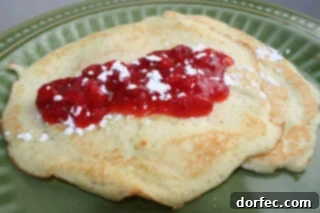
These dairy-free Swedish pancakes are incredibly delicious. I’M SERIOUS. You must try them right away for a light, fluffy, and utterly delightful breakfast!
Ingredients
Recipe by me
- 5 Medium Eggs, Divided
- 1 Cup Flour
- 1/2 teaspoon Salt
- 2 Tablespoons Sugar
- 1 Cup Coconut Milk
- Oil (for cooking)
Instructions
-
Whisk the egg yolks until smooth and pale yellow.
-
Sift the dry ingredients (flour, salt, sugar) together in a separate bowl.
-
In a clean, dry bowl, whisk the egg whites until soft peaks form. This step is crucial for achieving the light, airy texture.
-
Gradually alternate adding the sifted dry ingredients and the coconut milk to the whisked egg yolks, mixing until just combined. Be careful not to overmix.
-
Gently fold in about one-third of the whipped egg whites into the egg yolk mixture. This lightens the batter. Then, carefully fold in the remaining egg whites until no streaks remain, preserving as much air as possible.
-
Heat a non-stick skillet or a specialized Swedish pancake pan over medium heat. Drizzle in about 1 teaspoon of oil, or enough to lightly coat the bottom.
-
Using a soup ladle, pour approximately 1/4 to 1/3 cup of the pancake mixture into the hot skillet. Immediately swirl the mixture around by tilting the pan in a clockwise motion, ensuring the batter evenly coats the entire pan surface, forming a large, thin pancake or crepe.
-
Cook for 1-2 minutes, or until the underside begins to lightly brown and the top surface starts to set and bubble slightly. Then, carefully flip the pancake over with a thin spatula and cook for another 30-60 seconds, or until the other side is golden brown.
-
Transfer the cooked pancake to a plate and repeat with the remaining batter, adding a little more oil to the pan as needed for each pancake.
-
Serve immediately with your desired fillings and toppings, whether rolled or stacked.
Recipe Notes
Leftovers can be reheated in a skillet for 4-5 minutes over medium heat, or briefly in the microwave for a quicker option. Stack with parchment paper for easy storage.
Nutrition
Serving: 1g, Calories: 327kcal, Carbohydrates: 32g, Protein: 11g, Fat: 18g, Saturated Fat: 12g, Cholesterol: 205mg, Sodium: 377mg, Potassium: 234mg, Fiber: 1g, Sugar: 6g, Vitamin A: 297IU, Vitamin C: 1mg, Calcium: 46mg, Iron: 4mg
Nutrition information is automatically calculated and should only be used as an approximation. Individual results may vary based on exact ingredients and preparation.
Like this? Leave a comment below!