
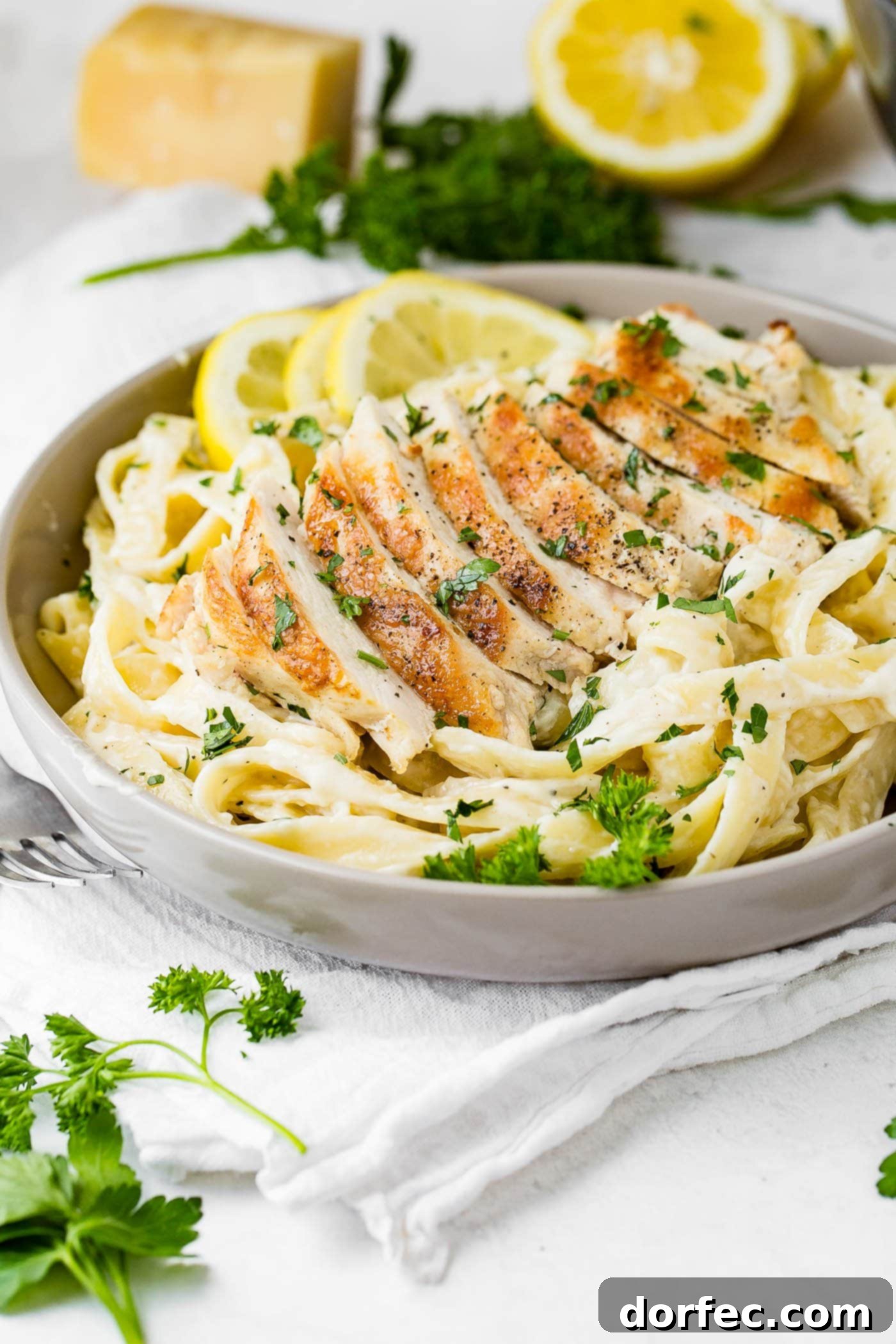
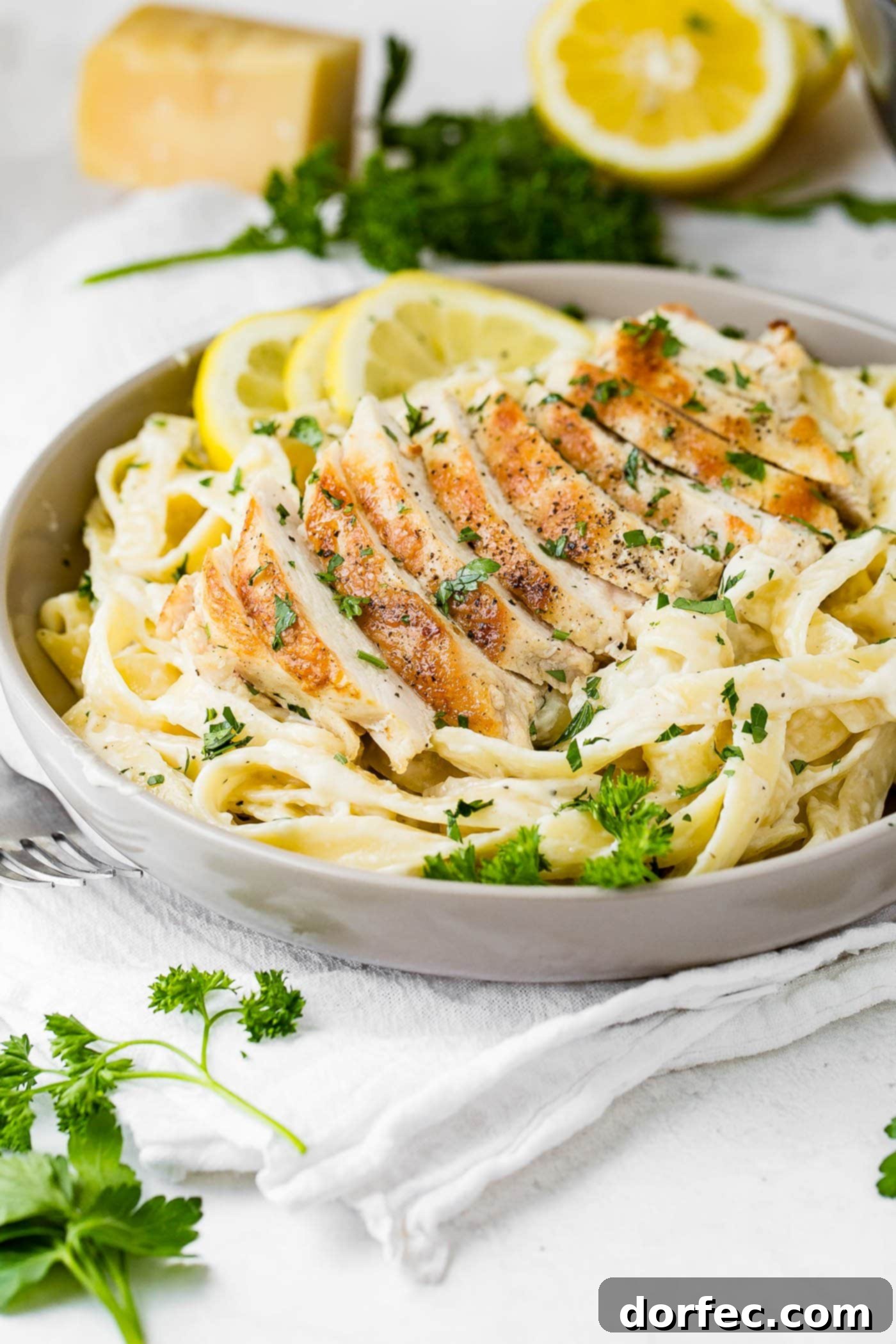
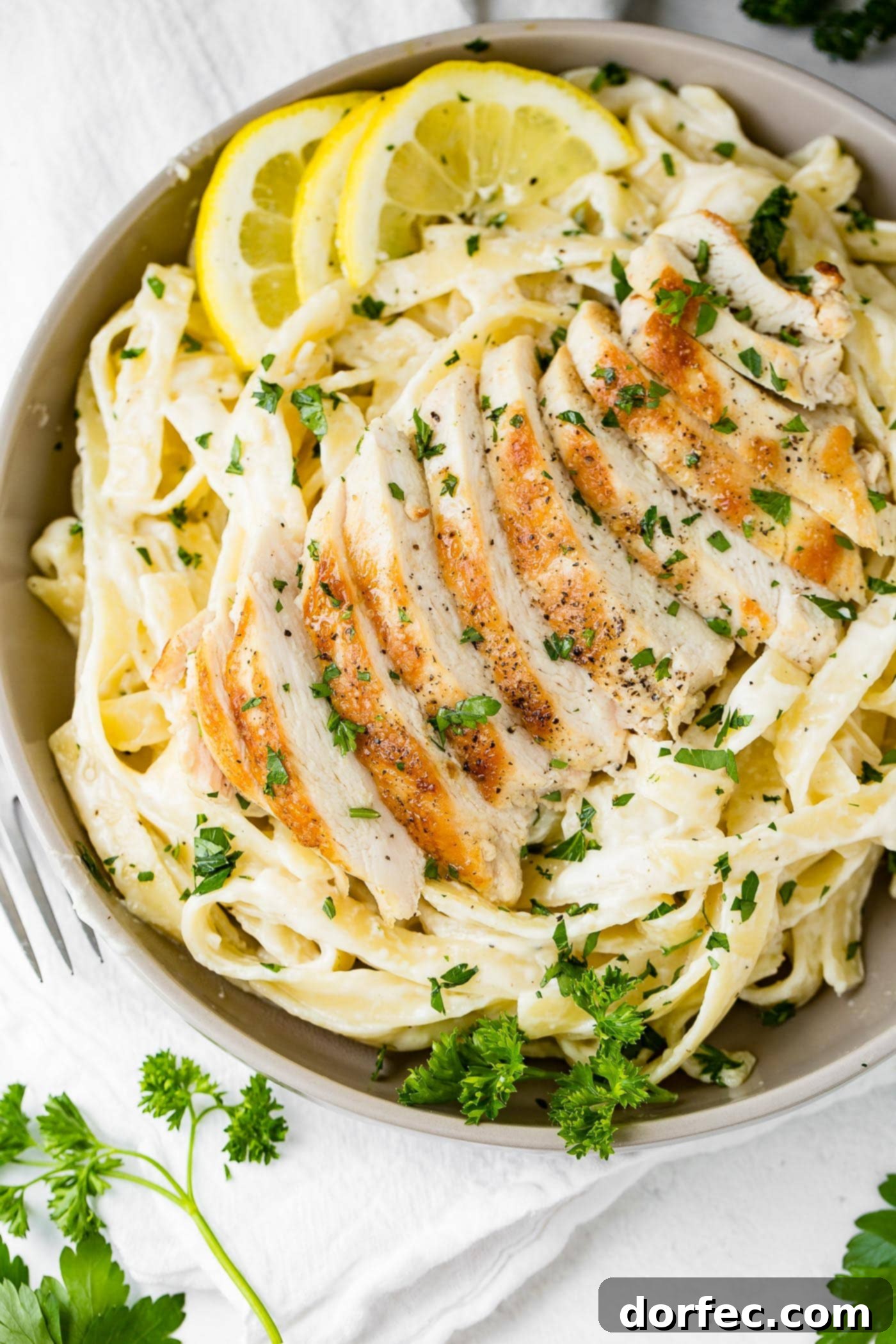
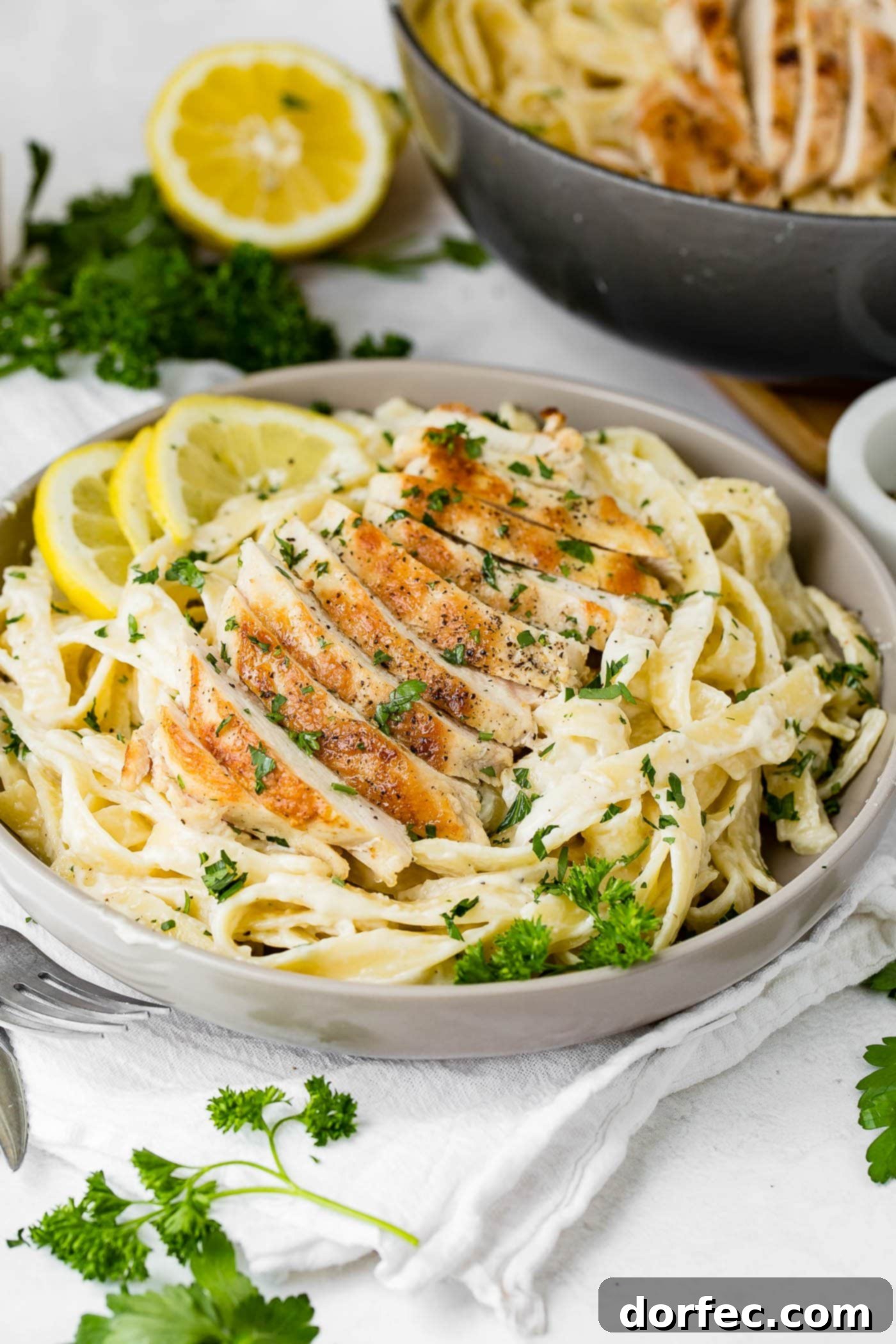
There are few dishes that capture the essence of Italian-American comfort food quite like Chicken Fettuccine Alfredo. This beloved classic harmoniously blends thick, perfectly cooked fettuccine noodles with tender, succulent chicken, all generously coated in a rich, velvety homemadeAlfredo sauce. It’s a meal that promises satisfaction with every forkful, bringing warmth and joy to any dining table, making it a perennial family favorite and a perfect choice for any occasion.
The timeless allure of Chicken Fettuccine Alfredo lies in its inherent simplicity and the luxurious texture of its components. Imagine the broad, flat fettuccine noodles, perfectly suited for cradling every drop of the creamy sauce, combined with juicy chicken that has been expertly prepared to a golden crisp. This isn’t just a meal; it’s a delightful culinary experience that transforms ordinary evenings into special occasions. Whether you’re a seasoned home cook or new to the kitchen, mastering this dish is an incredibly rewarding endeavor that will undoubtedly earn you rave reviews from family and friends.
The Essential Choice: Why Fettuccine Noodles Reign Supreme
When it comes to crafting an authentic and satisfying Alfredo, the choice of pasta is paramount, and there’s simply no substitute for those iconic fettuccine noodles. While some might argue that ridged pasta shapes like penne or shells are superior for “holding” sauce within their crevices, traditional fettuccine brings a unique elegance and unparalleled mouthfeel to this dish. The wide, flat surface of each noodle provides an expansive canvas for the rich, dairy-laden Alfredo sauce to cling to, ensuring that every single strand is thoroughly coated. This creates that perfect, satisfying slurp that is synonymous with a well-made and truly enjoyable Fettuccine Alfredo.
Beyond strict adherence to tradition, the texture of properly cooked fettuccine is absolutely crucial. It should always be al dente – firm to the bite, yet yielding and pleasant. This provides a delightful textural contrast to the smooth creaminess of the sauce and the tender bite of the chicken. While you technically *could* use other pasta shapes in an absolute pinch, veering from fettuccine means missing out on the dish’s quintessential charm and the harmonious balance of textures. So, unless absolute desperation strikes, stick with the classic choice; it’s perfect just the way it is and delivers the most authentic experience.
Crafting Your Own Homemade Chicken Fettuccine Alfredo: A Step-by-Step Guide
Creating this gourmet dish at home is surprisingly straightforward, allowing you to control the quality of ingredients and tailor the flavors precisely to your liking. The magic truly happens when the tender chicken and perfectly cooked pasta are united with your luscious, homemade Alfredo sauce. Let’s walk through the essential steps to achieve this culinary masterpiece right in your own kitchen.
Preparing the Perfect Fettuccine Noodles
The foundation of any truly great pasta dish begins with the noodles themselves. Always follow the package directions for cooking your fettuccine to ensure the best results. For an authentic Italian touch and maximum flavor, ensure your pasta water is generously salted – it should taste distinctly like the sea. This is your only real opportunity to season the pasta itself, as it absorbs the salt during cooking. Bring a large pot of water to a rolling boil, add about 1/4 cup of kosher salt, and then drop in your fettuccine. Cook until al dente, usually around 8-12 minutes depending on the brand. Remember, achieving that perfect al dente bite is crucial; do not overcook the pasta, as it will continue to cook slightly when combined with the hot sauce.
Mastering the Art of Chicken Preparation
Tender, flavorful chicken is an indispensable component of an outstanding Chicken Fettuccine Alfredo. Proper preparation ensures even cooking and maximum juiciness, preventing dry, unappetizing results.
- Using a meat mallet, place each boneless, skinless chicken breast between two pieces of wax paper or plastic wrap. Gently but firmly pound them out to an even thickness, ideally about half an inch. This ensures uniform cooking, preventing thicker sections from remaining undercooked while thinner parts dry out.
- Generously sprinkle both sides of each flattened chicken breast with Montreal Chicken Seasoning, or your favorite blend of herbs and spices. A simple mix of salt, freshly ground black pepper, garlic powder, and a pinch of paprika also works wonderfully to build flavor.
- Heat a large, heavy-bottomed skillet or cast-iron pan over high heat. Add your preferred cooking fat – olive oil, butter, or cooking spray – and allow it to get very hot. You’ll know it’s ready when the oil begins to shimmer slightly or you see a faint wisp of smoke, indicating it’s reached a high searing temperature.
- Carefully place the seasoned chicken breasts into the hot skillet. You should hear an immediate and satisfying sizzle, which is a sign of good searing. Avoid overcrowding the pan; cook in batches if necessary.
- Immediately reduce the heat to low. This crucial step prevents the outside from burning while allowing the inside to cook through gently. Cook for 5-7 minutes on one side, allowing a beautiful golden-brown crust to form. (Refer to our detailed notes below on checking for doneness to ensure food safety).
- When the chicken appears opaque and white about halfway up the sides, use tongs to carefully flip it to the other side. Continue cooking for an additional 5-7 minutes, or until fully cooked through.
- Once cooked, remove the chicken breasts from the skillet and transfer them to a clean cutting board. Let them rest for a crucial 1-3 minutes. This resting period allows the muscle fibers to relax and the juices to redistribute throughout the meat, resulting in significantly more tender and flavorful chicken.
- Loosely cover the rested chicken with foil to keep it warm while you finalize the Alfredo sauce and pasta. The chicken will be sliced just before serving to maintain its moisture.
Crafting the Velvety Homemade Alfredo Sauce
The rich, creamy Alfredo sauce is undoubtedly the heart and soul of this dish. Making it from scratch at home elevates the entire meal to restaurant-quality status, offering a depth of flavor and luxurious texture that pre-made, store-bought versions simply cannot match.
- In a Dutch oven or a high-sided skillet, melt 6 tablespoons of unsalted butter over medium heat. Using unsalted butter gives you precise control over the final saltiness of your sauce, allowing you to adjust it perfectly to your taste.
- Once the butter is fully melted and shimmering, add 2 cloves of freshly minced garlic and 1/2 teaspoon of Dijon mustard. Stir continuously for 30 seconds to 1 minute, allowing the garlic to become fragrant and release its aroma without browning, which can make it bitter. The Dijon mustard is a subtle yet secret ingredient that significantly enhances the richness and complexity of the sauce without imparting a distinct mustard flavor.
- Add 2 tablespoons of cream cheese to the skillet. Whisk vigorously until the cream cheese is completely smoothed out and thoroughly incorporated into the butter-garlic mixture, ensuring there are no lumps. This step adds an extra layer of decadence and helps to stabilize the sauce, preventing it from breaking.
- Quickly pour in 1 cup of heavy cream and 1/2 cup of milk (whole milk is highly recommended for maximum richness and a velvety texture). Bring the mixture to a gentle simmer, stirring occasionally to prevent scorching. Do not allow it to come to a rapid boil.
- Stir in 1/2 cup of freshly grated Parmesan cheese and 1/2 cup of finely grated Parmigiano Reggiano cheese. The combination of these two distinct Italian cheeses provides a complex, nutty, and perfectly salty flavor profile that is essential for authentic Alfredo.
- Allow the sauce to cook for approximately 10 minutes, or until it has thickened to your desired consistency. Stir frequently and gently to prevent the cheese from clumping at the bottom of the pan and ensure even heating.
- Taste the sauce. If it seems bland or lacking depth, add a little more salt (start with 1/2 teaspoon, as specified in the ingredients, and adjust to taste). Remember that the cheeses already contribute significant saltiness, so be careful not to over-salt.
- Whisk 1 teaspoon of fresh lemon juice into the sauce just before combining it with the pasta. The bright acidity from the lemon juice is a crucial step that cuts through the richness of the heavy sauce, brightening its flavor and creating a perfectly balanced, irresistible profile.
- Finally, using tongs, remove the cooked fettuccine noodles directly from their boiling water (or drain them, reserving about a cup of the starchy pasta water) and add them directly into the Alfredo sauce along with another 1/2 cup of grated Parmesan cheese. Toss everything gently but thoroughly to ensure every strand of pasta is coated in the luxurious sauce. If the sauce is too thick, add a tablespoon or two of the reserved pasta water to loosen it to your preferred consistency.
- Slice the rested chicken breasts into even strips. Serve the pasta and chicken together immediately, garnished with a crack of fresh black pepper and an extra sprinkle of grated Parmesan cheese and minced fresh parsley for a beautiful, aromatic finish.
How to Safely and Perfectly Cook Chicken: Ensuring Doneness Without Drying It Out
One of the most common questions and challenges when cooking chicken is how to ensure it’s fully cooked and safe to eat, all while preventing it from becoming dry and tough. Overcooked chicken can be stringy and unappetizing, while undercooked chicken poses significant health risks. Here’s a comprehensive guide to achieving perfectly cooked, juicy chicken every single time:
The absolute most important visual cue you’re looking for, especially with flattened chicken breasts, is to observe the side of the chicken as it cooks. As the heat penetrates the meat, you’ll see the color gradually change from pink and translucent to opaque white. Once the chicken is visibly white and appears cooked through at least halfway up the thickness of the breast, it’s the ideal moment to flip it over. Continue cooking on the second side until that side also turns opaque white, and critically, there is no longer any pink rim visible around the edges or in the very center when a small incision is made. For thin, uniformly pounded chicken breasts, this visual indicator is often sufficient for accurate doneness.
For absolute certainty and unparalleled food safety, particularly when cooking thicker chicken pieces, a reliable meat thermometer is your invaluable kitchen companion. Insert the thermometer into the thickest part of the chicken, being careful to avoid any bone, which can give a false reading. Chicken is safely cooked and ready to eat when its internal temperature consistently registers 165°F (74°C). If you don’t own a meat thermometer, you can resort to the traditional method: make a small cut into the thickest part of the chicken; the juices should run perfectly clear, and the meat should be white throughout with no traces of pinkness remaining.
Remember, resting the chicken for a few minutes after it’s removed from the heat is also a vital step that many cooks overlook. This short rest period allows the muscle fibers to relax and reabsorb the flavorful juices that have migrated to the center during cooking, resulting in a significantly more tender and moist piece of meat. Covering it loosely with foil during this process helps to retain its warmth. For even more in-depth guidance and expert tips on pan-frying chicken to perfection, be sure to check out our detailed post on how to cook chicken in a pan.
Frequently Asked Questions About Chicken Fettuccine Alfredo
Can You Freeze Chicken Fettuccine Alfredo?
Yes, you can freeze Chicken Fettuccine Alfredo, but it requires a few important considerations to maintain its quality and texture. Alfredo sauce, being cream-based, has a tendency to separate or become slightly grainy upon thawing and reheating. To minimize this, it’s best to freeze the dish in flat layers within heavy-duty freezer bags (removing as much air as possible) or in airtight freezer-safe containers. When you’re ready to enjoy it again, thaw it completely overnight in the refrigerator. To restore its creamy texture, gently reheat it on the stovetop over very low heat, adding a splash of milk or a little extra heavy cream and whisking continuously until it becomes smooth and is warmed through. Avoid using high heat or bringing it to a rapid boil, as this can exacerbate curdling and separation.
How Long Will Chicken Alfredo Keep?
Chicken Alfredo will typically keep for 3-5 days when stored properly in an airtight container in the refrigerator. While it remains safe to eat during this period, it’s worth noting that the pasta noodles will gradually absorb more of the sauce over time. This means the overall texture and creaminess will not be identical to the first night it was freshly made. For the absolute best experience and optimal texture, we recommend trying to enjoy any leftovers within 1-2 days. If you anticipate needing to store it longer than that, freezing the dish (following the reheating tips mentioned previously) might be a better option to preserve its quality.
What Can You Substitute For Parmigiano Reggiano Cheese?
Parmigiano Reggiano is renowned for its distinct nutty, salty, and complex flavor, which is a hallmark of authentic Alfredo. However, if it’s unavailable or you’re looking for alternatives, several excellent cheeses can be used in your Alfredo sauce. Grana Padano is a very close relative to Parmigiano Reggiano, offering a similar nutty and salty profile and a fine texture. Aged Asiago cheese provides a sharp, somewhat tangy flavor that works wonderfully and adds character. Pecorino Romano, made from sheep’s milk, offers a saltier, tangier, and sometimes spicier kick, which can be a delightful twist if you prefer bolder, more robust flavors in your sauce. If these specific Italian cheeses are not accessible, a good quality plain Parmesan cheese (often labeled simply as “Parmesan”) is a perfectly acceptable and widely accessible substitute. Always opt for freshly grated cheese from a block over pre-grated varieties for the best possible texture, melt, and flavor in your sauce.
Can You Use Regular Salt Instead Of Kosher Salt When Cooking Pasta?
Absolutely, you can certainly use regular table salt or various types of sea salt to season your pasta water. The primary and essential goal of generously salting pasta water is to infuse the pasta itself with flavor as it cooks, as the pasta absorbs the salty water. We often specifically recommend kosher salt because its larger, coarser granules are easy to measure (making it harder to accidentally over-salt) and they dissolve effectively, providing a clean, briny taste without clumping. However, any salt will effectively season your pasta water; just be mindful of the amount. For fine table salt, you might use slightly less than the recommended amount for kosher salt (for example, about 1/8 cup instead of 1/4 cup) to achieve a similar level of salinity, as table salt is denser by volume. Always taste your pasta water to ensure it’s sufficiently salty, like the sea!
Is Heavy Cream Whipping Cream?
Yes, in the United States, heavy cream and heavy whipping cream are essentially the same product. Both are required to contain at least 36% milkfat. They are commonly used interchangeably in a wide array of recipes, particularly for rich sauces like Alfredo and various desserts where a thick, creamy consistency is desired. “Whipping cream” (sometimes labeled as “light whipping cream”) is a similar dairy product but contains a slightly lower percentage of milkfat, typically around 30-35%. This makes it a bit lighter and generally results in a softer whipped texture when aerated. For Alfredo sauce, both heavy cream and heavy whipping cream will yield a delightfully rich and decadent result. If you find yourself needing a substitute for heavy cream in your Alfredo sauce, whole milk is the creamiest and most recommended alternative. While it will naturally result in a slightly lighter sauce (whole milk contains about 8 grams of fat per cup compared to heavy cream’s approximate 96 grams per cup), it can still work effectively if heavy cream isn’t readily available. You might consider adjusting the thickening agents, perhaps by adding a little more cheese or a cornstarch slurry, if you opt for a lower-fat milk to ensure the sauce achieves its desired consistency.
Can Alfredo Sauce be Made Ahead of Time?
Yes, Alfredo sauce can be conveniently prepared in advance, which is a fantastic time-saver for busy weeknights, meal prep, or when entertaining guests. You can easily make the sauce entirely and then refrigerate it in a clean, airtight container for up to five days. For even longer storage, it can certainly be frozen (please refer to the specific freezing and reheating tips below). The crucial key to maintaining optimal quality is to **not combine the sauce with the noodles until you are absolutely ready for serving**. Reheating the sauce and then tossing it with freshly cooked pasta will yield the best results, ensuring the pasta is perfectly al dente and the sauce remains fresh and luscious. When reheating, do so gently over low heat, whisking frequently, and add a splash of milk or cream if the sauce has thickened too much during refrigeration.
Can Alfredo Sauce Be Frozen?
Alfredo sauce can indeed be successfully frozen, providing a convenient option for meal planning. For the best possible results, allow the sauce to cool completely to room temperature before transferring it to an airtight freezer-safe container or a heavy-duty freezer bag. It can typically be stored in the freezer for up to 3-4 months. When you’re ready to use it, remember to thaw it slowly in the refrigerator overnight. To prevent cream-based sauces from curdling or separating upon reheating, the essential trick is to stir it well and reheat it very slowly over low heat. Absolutely avoid bringing it to a high boil, as rapid temperature changes and aggressive boiling can cause the fats and proteins to separate, leading to an undesirable grainy or curdled texture. A gentle, consistent whisking motion during slow reheating will help restore its wonderfully smooth and creamy consistency.
Will Alfredo Sauce Thicken As It Cools?
Yes, Alfredo sauce will naturally and significantly thicken as it cools. This phenomenon occurs due to several factors: the fats from the heavy cream and butter solidify slightly, and the starches and proteins from the cheese firm up and bind together more tightly as the temperature drops. So, when you retrieve chilled Alfredo sauce from the refrigerator, it will likely be quite thick, possibly even solid. Don’t worry, this is entirely normal and expected! To bring it back to its luscious, pourable, and velvety consistency, simply reheat it gently over low heat on the stovetop. While reheating, add a small amount of milk or cream (starting with 1-2 tablespoons at a time) and whisk constantly. Continue adding liquid gradually and whisking until it reaches your desired smoothness and consistency. This gradual addition of liquid helps to thin the sauce beautifully without compromising its rich flavor or luxurious texture.
If you’re looking to elevate your weeknight dinner routine or impress guests with a dish that’s both elegantly comforting and incredibly satisfying, look no further than this homemade Chicken Fettuccine Alfredo. It’s a guaranteed hit with kids and adults alike, including even the pickiest eaters, making it a reliable crowd-pleaser. Say goodbye to traditional spaghetti and meatballs for a night and warmly welcome this creamy, dreamy pasta into your family’s cherished favorite rotation!
Explore More Delicious Homemade Pasta Sauce and Chicken Recipes!
- The Secret to Authentic Italian Bolognese Sauce
- Favorite Homemade Spaghetti Sauce
- 20 Minute Creamy Sun-Dried Tomato Chicken Pasta
- Greek Chicken Pasta Skillet
- Avocado Pesto Chicken Pasta
- White Balsamic and Basil Chicken Pasta
Chicken Fettuccine Alfredo
By Sweet Basil
Prep Time: 15 mins
Cook Time: 25 mins
Total Time: 40 mins
Servings: 4
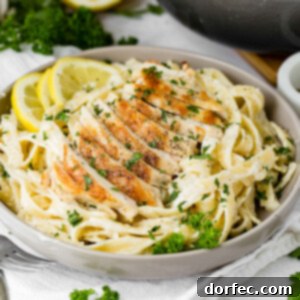
Chicken Fettuccine Alfredo is a classic dish everyone loves. Thick fettuccine noodles, perfectly cooked chicken, all covered in homemade alfredo sauce.
Ingredients
Fettuccine
- 1/4 Cup Kosher Salt
- 8 Ounces Pasta, Fettuccine
Chicken
- 2 Breast Chicken
- Montreal Chicken Seasoning
Alfredo Sauce
- 6 Tablespoons Butter, unsalted
- 2 Cloves Garlic, minced
- 1/2 teaspoon Dijon Mustard
- 2 Tablespoons Cream Cheese
- 1 Cup Heavy Cream
- 1/2 Cup Milk
- 1 1/4 Cups Parmesan Cheese, divided
- 1/2 Cup Parmigiano Reggiano Cheese
- 1/2 teaspoon Salt
- 1 teaspoon Lemon Juice
- 1/4 teaspoon Pepper
- 1 Tablespoon Parsley, minced
Units are in US Customary.
Instructions
For The Pasta
- Bring a large pot of water to a boil, adding in ¼ cup kosher salt to the water.
- Once boiling, add the fettuccine and cook according to package directions until al dente.
For The Chicken
- Using a meat mallet, place the chicken between pieces of wax paper and pound out each chicken breast so they are an even width.
- Sprinkle each breast with Montreal Chicken Seasoning.
- Bring the oil (or butter or cooking spray) to heat over high heat in a skillet.
- When the oil starts to shimmer and smoke, add the chicken. It should pop and sizzle.
- Immediately turn the heat down to low and cook for 5-7 minutes. (See note below on how to know when your chicken is finished cooking.)
- When the chicken is white halfway up the chicken breast, flip it and cook an additional 5-7 minutes. (See note below).
- Remove the chicken to a cutting board for 1-3 minutes to rest.
- Cover with foil until ready to serve.
For The Alfredo Sauce
- In a Dutch oven or high-sided skillet over medium heat, add the butter and melt.
- Once melted, add the garlic and mustard and stir to combine for 30 seconds to 1 minute.
- Dump in the cream cheese, whisking until smoothly incorporated.
- Quickly add the heavy cream and milk and bring to a simmer.
- Stir in ½ cup Parmesan and Parmigiano Reggiano cheese.
- Allow to cook for 10 minutes, or until thickened.
- Keep tasting the sauce; if you need a little more salt because it’s bland, please use it, otherwise let it sit.
- Whisk the lemon juice into the sauce. The acid helps to balance the heavy sauce.
- Remove the pasta from the water and add into the sauce with ½ cup Parmesan, stirring with tongs to combine.
- Slice the chicken, serve all together with a crack of fresh pepper and more cheese!
Recipe Notes
The most important thing to ensure chicken doneness is to look at the side of the chicken. Once it is white and cooked through halfway up the chicken, flip it over. When there is no longer a pink rim around the edges of the chicken, it’s thoroughly cooked.
Chicken Alfredo can be kept in the refrigerator for 3-4 days.
Nutrition
Serving: 1g, Calories: 786kcal, Carbohydrates: 48g, Protein: 26g, Fat: 55g, Saturated Fat: 34g, Cholesterol: 168mg, Sodium: 8286mg, Potassium: 262mg, Fiber: 2g, Sugar: 4g, Vitamin A: 1972IU, Vitamin C: 3mg, Calcium: 622mg, Iron: 1mg
Nutrition information is automatically calculated, so should only be used as an approximation.
REMEMBER TO SUBSCRIBE TO our FREE Oh Sweet Basil NEWSLETTER AND RECEIVE EASY RECIPES DELIVERED INTO YOUR INBOX EVERY DAY!
When you try a recipe, please use the hashtag #ohsweetbasil on INSTAGRAM for a chance to be featured in our stories! FOLLOW OH, SWEET BASIL ON FACEBOOK | INSTAGRAM | PINTEREST | TWITTER FOR ALL OF OUR LATEST CONTENT, RECIPES AND STORIES.