
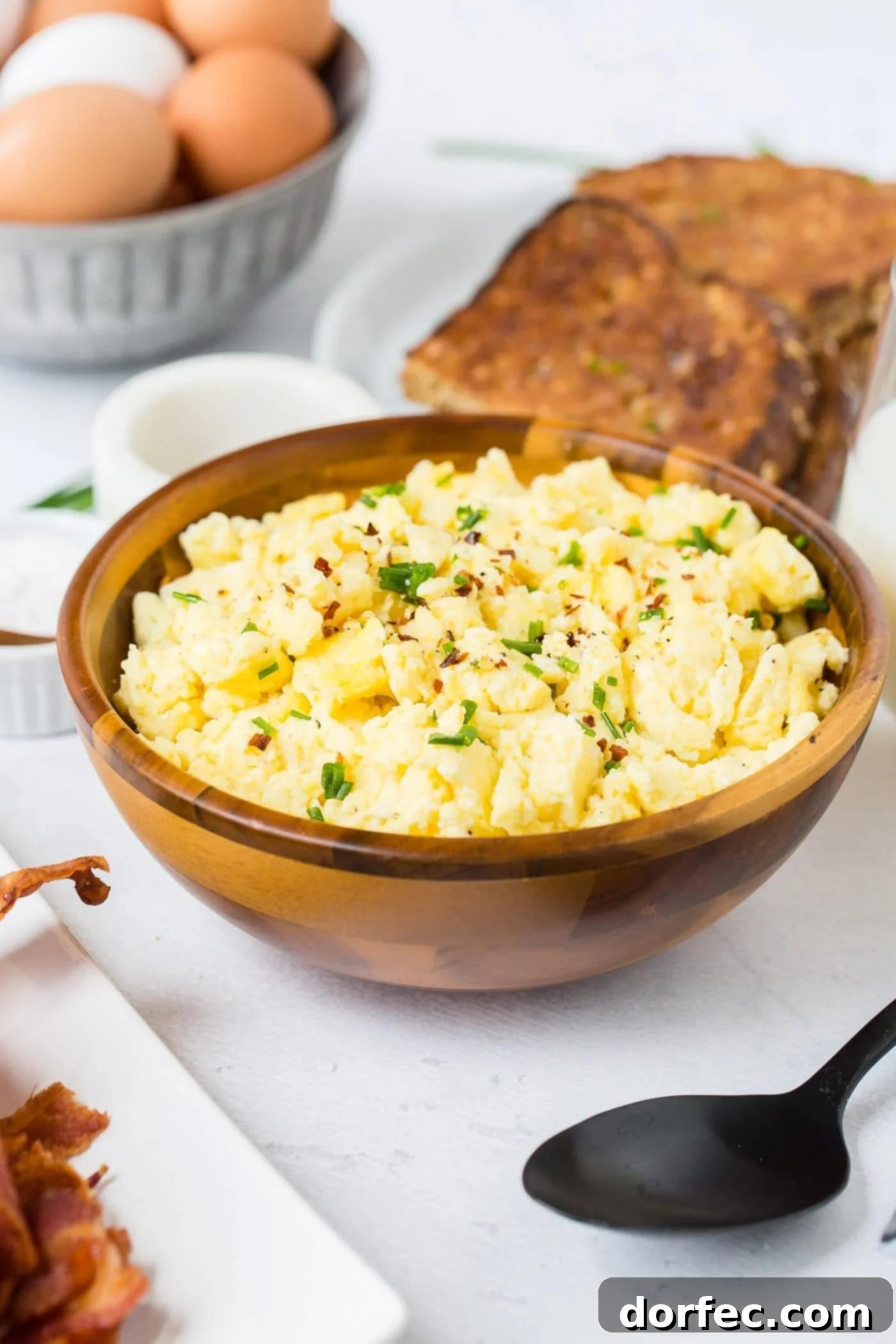
Unlock the Secret to Fluffy, Flavorful Scrambled Eggs Every Time! Forget everything you thought you knew about cooking this breakfast classic, especially if you’ve been using low heat. Get ready to transform your morning meal with the ultimate guide to perfect scrambled eggs.
Scrambled eggs are often perceived as a simple dish, yet achieving that ideal balance of fluffy texture, rich flavor, and moist consistency can be surprisingly tricky. Many of us have experienced the disappointment of overcooked, rubbery eggs or undercooked, runny ones. It’s a common culinary challenge, but one that’s easily overcome with the right techniques. This comprehensive guide is designed to equip you with all the essential tips and tricks, ensuring your scrambled eggs are consistently delectable – soft, airy, and bursting with savory goodness. Prepare to impress yourself and your family with this foolproof recipe!
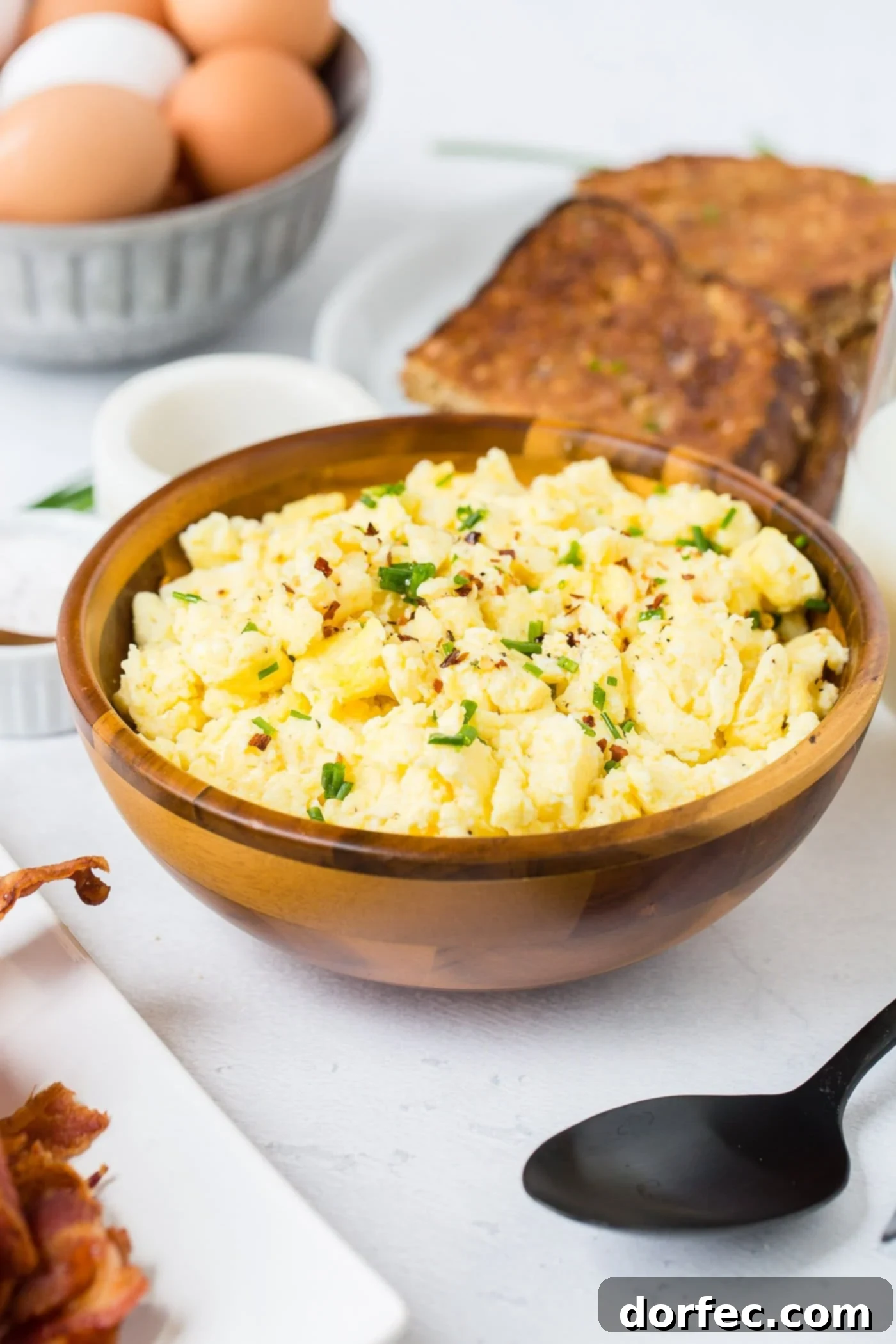
Essential Tips for Crafting the Best Scrambled Eggs
Creating truly exceptional scrambled eggs goes beyond just cracking a few eggs into a pan. It’s about understanding the subtle nuances that elevate a good dish to a great one. Here are some fundamental tips that will revolutionize your approach to this breakfast staple:
- Choose the Right Tool for Beating: The Fork. While a whisk might seem like the obvious choice for beating eggs, a simple kitchen fork often yields superior results for scrambled eggs. The tines of a fork are ideal for breaking up the egg whites and yolks without incorporating too much air. Over-aeration can lead to a less cohesive, frothy texture. A fork provides just enough agitation to combine the eggs thoroughly while maintaining their natural structure, resulting in a creamier, more consistent scramble. Beat the eggs until the whites and yolks are fully integrated and a uniform color is achieved, but avoid excessive whipping.
- Integrate Milk and Seasonings Early. For scrambled eggs that are both fluffy and flavorful, add your milk and desired spices (like salt and pepper) *before* you start beating. Milk, or a splash of cream, is a secret weapon for achieving that coveted light and airy texture. It adds a touch of richness and helps prevent the eggs from becoming too dense or rubbery. By incorporating salt and pepper at this stage, you ensure that the seasoning is evenly distributed throughout the egg mixture. This allows the flavors to meld perfectly as the eggs cook, rather than having pockets of uneven seasoning. Consider a pinch of garlic powder or onion powder for an extra layer of savory depth.
- Invest in a Quality Non-Stick Skillet and a Rubber Spatula. Eggs have an uncanny ability to cling to almost any cooking surface, making a good non-stick skillet an absolute must. Even with oil or butter, eggs can stick if your pan isn’t up to the task. A reliable non-stick surface ensures easy flipping and stirring, preventing bits of egg from burning onto the pan and making cleanup a breeze. Pair your non-stick skillet with a heat-resistant rubber spatula. The soft, flexible edge of the spatula allows you to gently scrape the bottom and sides of the pan, folding the eggs without scratching the non-stick coating. This helps create those beautiful, soft curds that are characteristic of perfectly scrambled eggs.
The Science Behind the Scramble: Why These Tips Work
Understanding the “why” behind these techniques can further enhance your cooking. Beating eggs thoroughly ensures proteins are evenly distributed, leading to uniform cooking. Adding milk or cream introduces fat and liquid, which coats the protein strands and prevents them from binding too tightly, thus producing a softer, more tender result. Salt, when added before cooking, interacts with the egg proteins, helping them retain moisture and preventing a dry, rubbery texture. Lastly, a non-stick surface and a rubber spatula minimize sticking and allow for gentle manipulation, crucial for achieving those desirable soft curds.
Simple Ingredients for a Superb Scramble
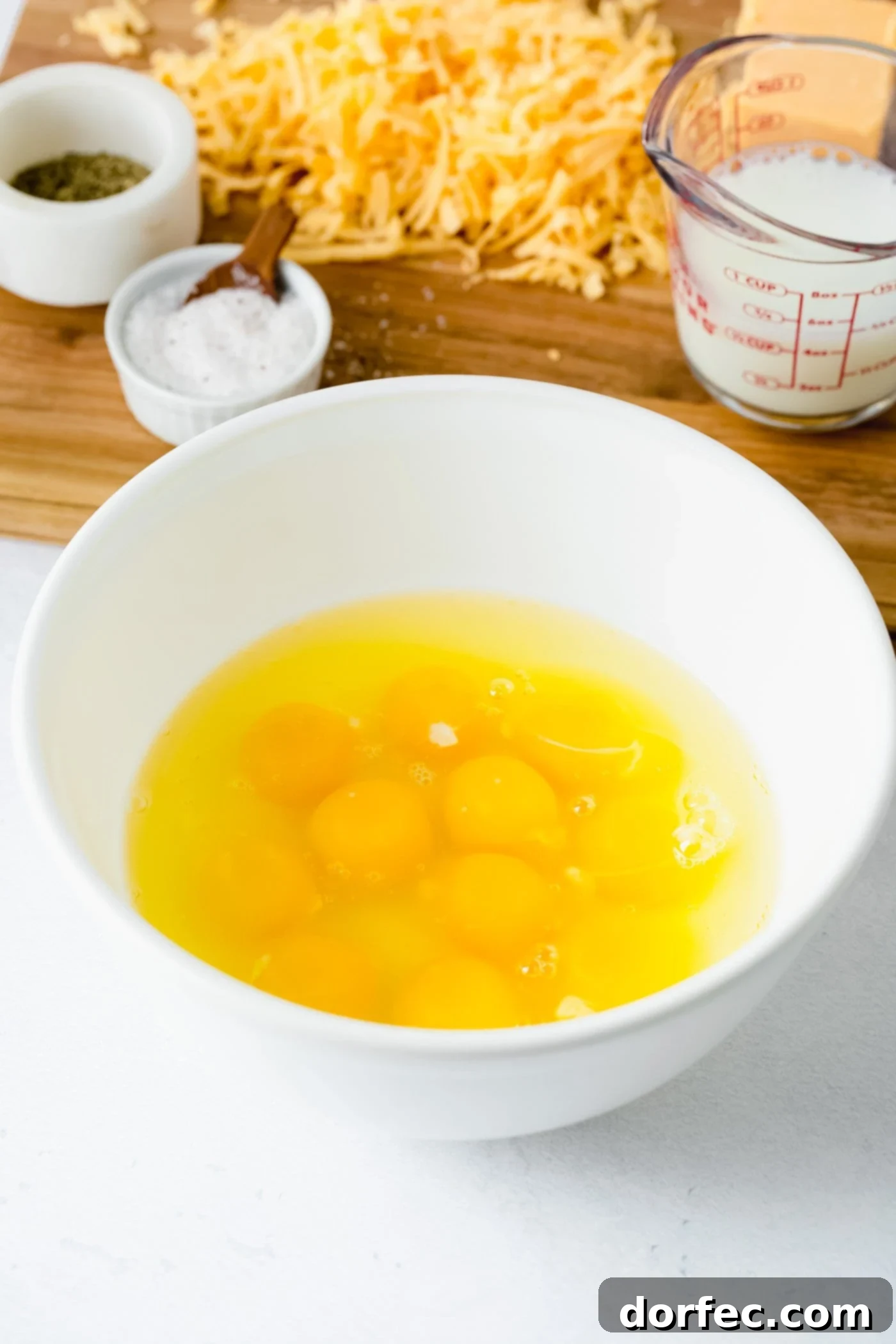
One of the many joys of this classic breakfast dish is its simplicity. You don’t need a pantry full of exotic items or a huge time commitment to create a truly memorable plate of scrambled eggs. The magic lies in the quality of a few core ingredients and how they are prepared.
For a batch of the best scrambled eggs, you will primarily need:
- Large Eggs: The fresher, the better. Fresh eggs often have richer yolks and whites that hold together well.
- Milk: Whole milk or a splash of half-and-half or cream will yield the creamiest, fluffiest results. For a slightly lighter version, skim milk or even water can be used, though the texture might vary.
- Shredded Cheddar Cheese: This adds a wonderful savory depth and creamy texture as it melts into the eggs. Feel free to experiment with other cheeses like Monterey Jack, Gruyere, or even a sprinkle of Parmesan.
- Salt: Essential for enhancing flavor and, as we’ll discuss, for moisture retention.
- Pepper: Freshly ground black pepper adds a delightful aromatic kick.
- Butter: For sautéing the eggs. Good quality butter provides superior flavor and helps achieve a golden-brown hue. You can also use oil or a non-stick cooking spray for a healthier option.
Pro Tip on Ratios: When cooking for a crowd, getting the egg-to-liquid ratio right is key. If you’re making scrambled eggs for more than three people, a good general guideline is to use 2 tablespoons of milk (or cream) for every 3 large eggs. This ensures a consistent, fluffy texture even when scaling up the recipe.
Choosing Your Cheese
While shredded cheddar is a classic choice for its meltability and tangy flavor, don’t hesitate to personalize your scrambled eggs with other cheeses. A sharp cheddar can add a bold flavor, while a milder Monterey Jack provides gooey texture. For an extra luxurious touch, a creamy goat cheese or a hint of feta can elevate the dish. Just ensure the cheese is finely shredded or crumbled to melt evenly into the eggs.
The Definitive Method: How to Make the Best Scrambled Eggs
Follow these step-by-step instructions to achieve perfectly fluffy, moist, and delicious scrambled eggs every single time. It’s a simple process, but paying attention to each detail makes all the difference.
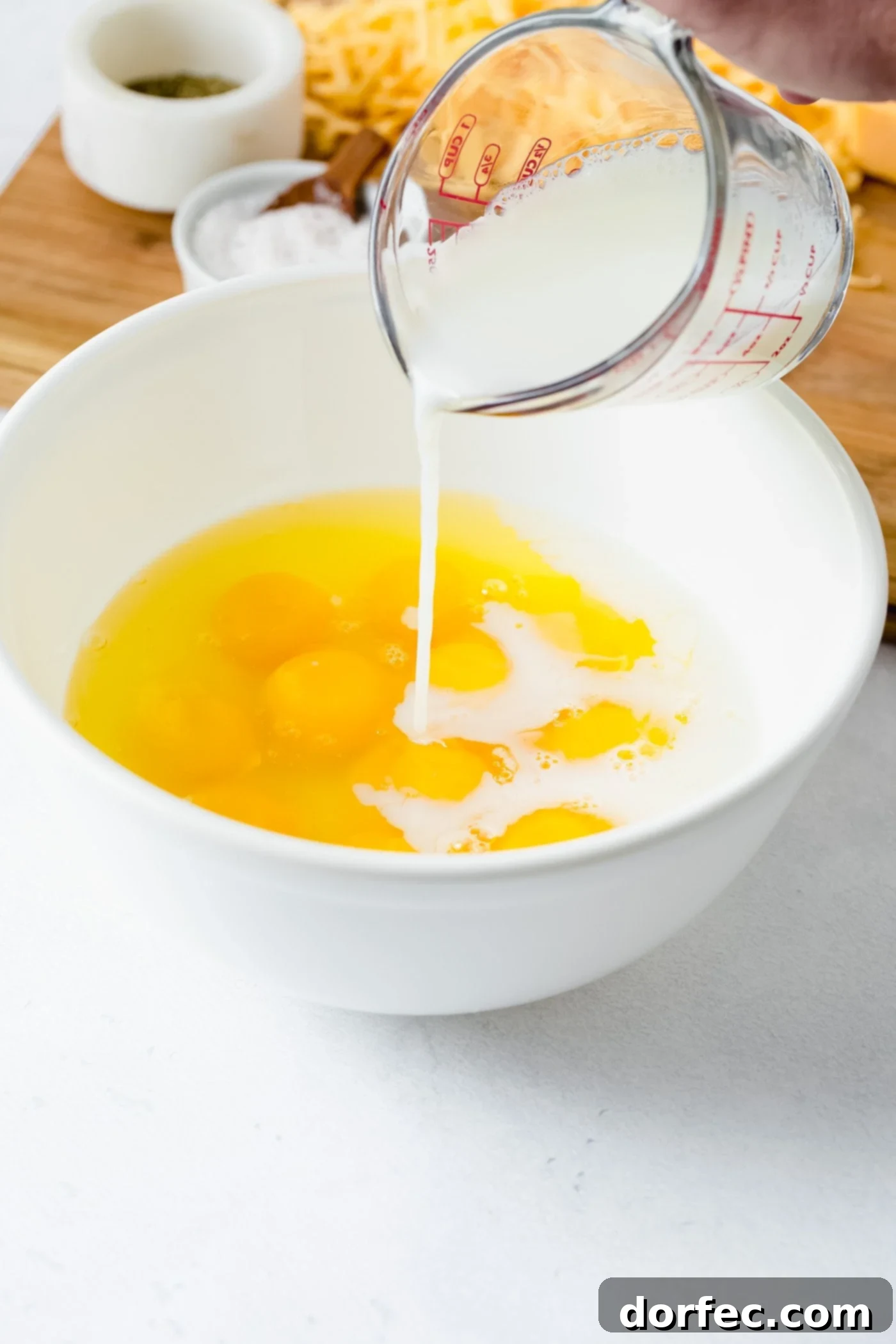
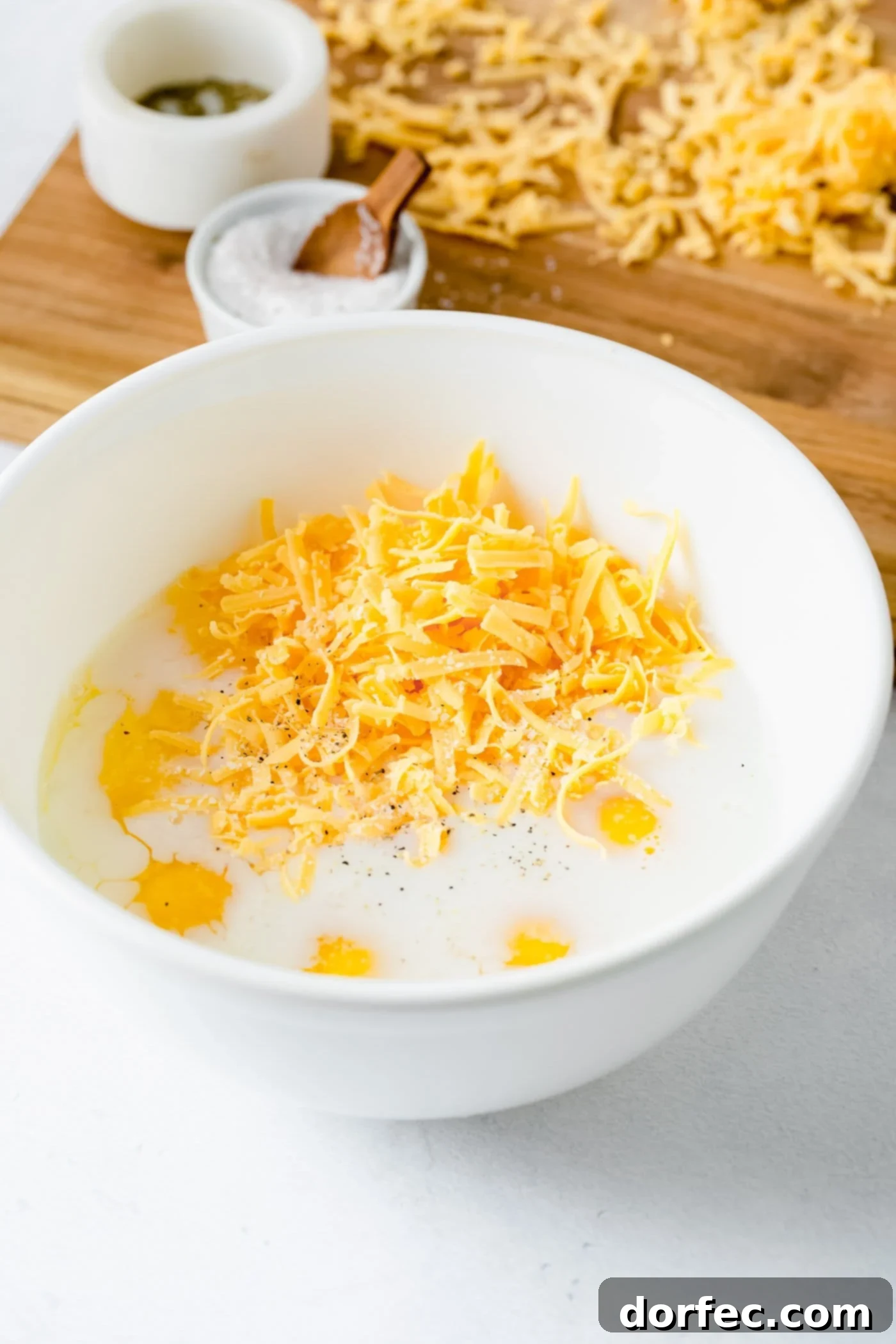
- Prepare Your Egg Mixture: In a large mixing bowl, combine the large eggs, milk, shredded cheddar cheese, salt, and pepper. Using a fork, whisk these ingredients together vigorously until the egg whites and yolks are fully combined and the mixture has a uniform, pale yellow color. Ensure no streaks of clear egg white remain.
- Allow to Rest (Optional but Recommended): For an even moister and more tender scramble, cover the bowl and allow the egg mixture to rest in the refrigerator for at least 15-20 minutes while you prepare other breakfast items. The salt needs a little time to work its magic, interacting with the egg proteins to help them retain moisture. If time is of the essence, you can skip this step and proceed directly to cooking, but the resting period truly enhances the final texture.
- Heat Your Pan Properly: Place a large, high-sided nonstick pan over medium-high heat. Allow the pan to heat for 1-2 minutes. A properly preheated pan is crucial for achieving the right texture and preventing sticking. You should feel a distinct warmth radiating from the pan when you hold your hand an inch or two above it.
- Add Butter and Eggs: Add 1-2 tablespoons of butter (or your chosen fat) to the hot pan. Swirl the butter until it’s completely melted and shimmering, but before it starts to brown. Immediately pour the whisked egg mixture into the pan.
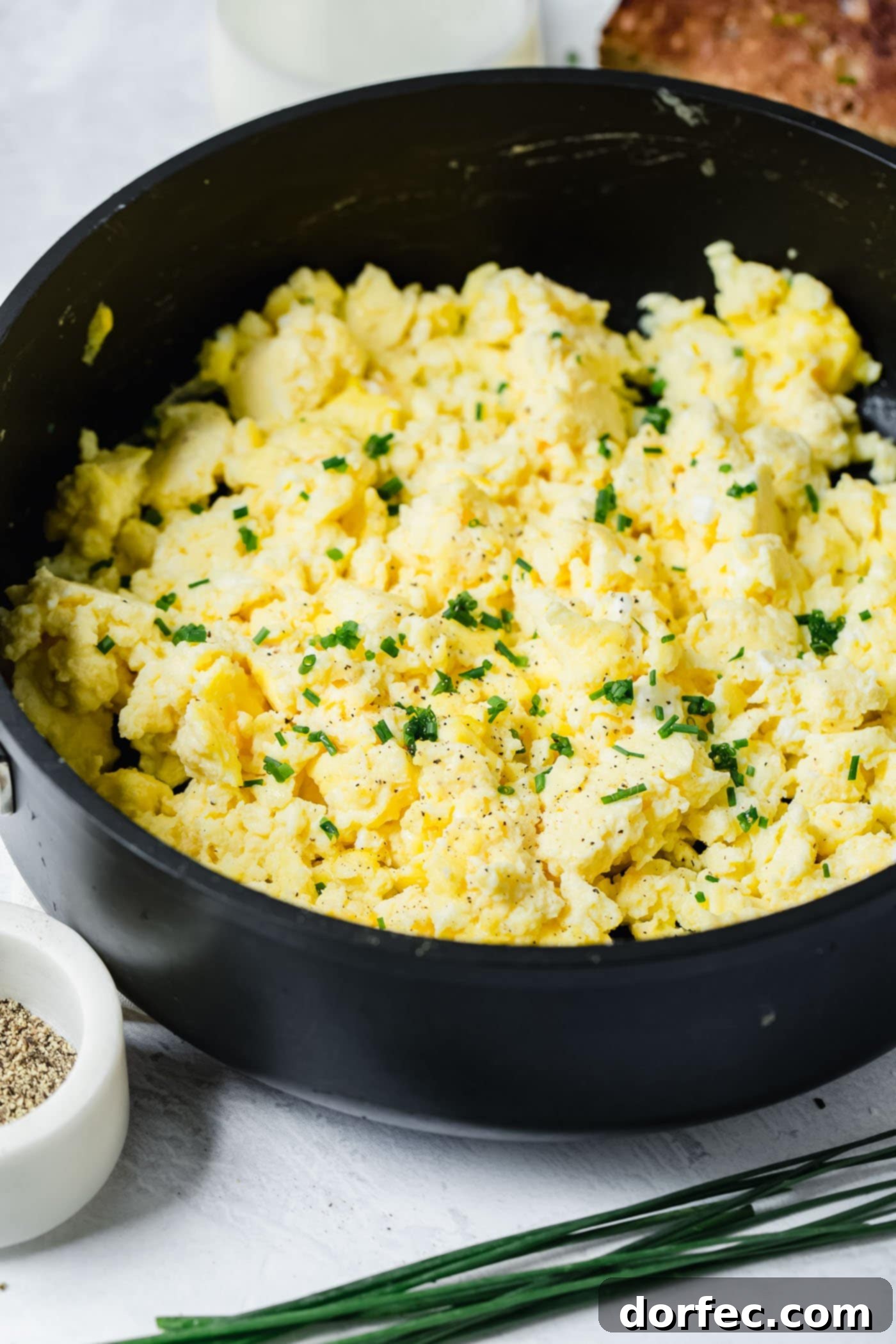
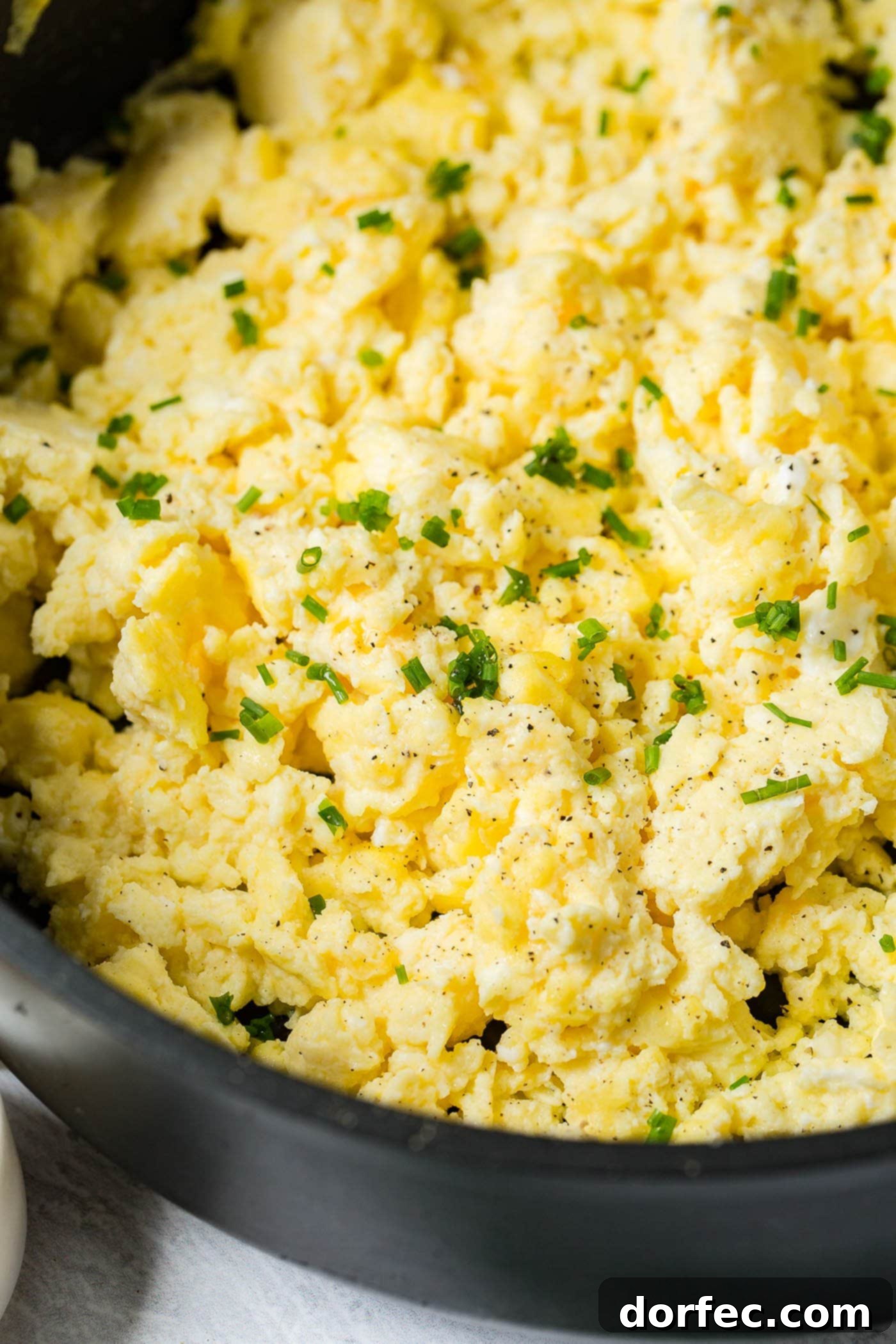
- Master the Scramble: Let the eggs sit undisturbed for a few seconds until the edges just begin to set. This initial pause creates a base. Then, using your rubber spatula, gently push the cooked egg from the edges towards the center of the pan, allowing the uncooked liquid egg to flow into the empty spaces. Continue this gentle folding and pushing motion. Avoid frantic stirring, as this can break the curds too small. As the eggs cook, they will form soft, creamy curds. Remove the pan from the heat when the eggs are mostly set but still slightly moist and glossy – they will continue to cook slightly from residual heat. Transfer the scrambled eggs immediately to a serving plate. Season with a little more salt and freshly ground pepper if desired, and garnish with fresh herbs like chives or parsley.
Expert Tip for Runnier Scrambled Eggs: If your preference leans towards a more soft, custardy, and slightly runny texture, adjust your cooking technique. Use medium-low heat and employ a slower, more gentle stirring motion from start to finish. This allows the eggs to cook more slowly and evenly, preventing them from firming up too quickly.
The Great Debate: High Heat & Fast vs. Low & Slow Scrambled Eggs
The cooking temperature is perhaps the most critical factor in determining the final texture of your scrambled eggs, and it’s a point of frequent debate among chefs and home cooks. For the truly fluffy, light, and quickly-cooked scrambled eggs, the secret is to use high heat and move the eggs around quickly.
This method might sound counterintuitive, as many recipes advocate for low and slow. However, for a classic American-style scramble with distinct, tender curds, high heat is your ally. The rapid cooking sets the proteins quickly, trapping moisture and creating those airy pockets. This means you cannot simply pour the eggs in and walk away. For 2-3 eggs, this fast-paced technique should only take about 30-40 seconds of active stirring. The goal is to cook them just until set, then immediately remove them from the heat to prevent overcooking.
While high heat and quick cooking are preferred for the fluffy style, there are times when a low and slow approach is necessary, or desired. If you absolutely need to multitask in the kitchen and can’t dedicate constant attention to your eggs, avoid the medium setting. Instead, turn the heat down to low. On low heat, the eggs will cook very gently, resulting in a finer, more custard-like texture, often preferred in French-style scrambled eggs. This method requires occasional stirring and will take considerably longer, usually 8-10 minutes, depending on the quantity of eggs.
Understanding the Different Styles
The “high heat, fast stir” method generally produces larger, distinct curds with a light, fluffy texture, often seen in American diners. The “low heat, slow stir” method, conversely, yields smaller, creamier, and more uniformly textured curds, often referred to as French-style scrambled eggs, which are known for their luxurious, almost sauce-like consistency. Both are delicious, but they achieve different results. For the purpose of this guide, which aims for the “fluffy, soft, full of flavor” outcome, the higher heat method is recommended.
Portion Planning: How Many Eggs Per Person?
When preparing scrambled eggs for a group, a good rule of thumb is to plan on serving 2 large eggs per person. This amount provides a satisfying portion that is neither too overwhelming nor too little, making it just right for most appetites. Of course, you can always adjust based on whether the eggs are a main dish or a side, and the general hunger levels of your diners!
Storing and Reheating Scrambled Eggs
How Long Will Cooked Eggs Keep?
To keep scrambled eggs fresh, ensure they are stored in an airtight container in the refrigerator as soon as they have cooled down. When properly stored, cooked scrambled eggs will maintain their quality for up to 4 days. However, it’s worth noting that scrambled eggs, like many egg dishes, are undeniably at their peak when enjoyed hot and fresh, straight from the pan. The texture can change slightly upon refrigeration.
How Do You Reheat Scrambled Eggs?
Reheating scrambled eggs without compromising their texture can be a bit challenging, but it’s certainly possible. The microwave is your quickest option: place the eggs in a microwave-safe dish, cover them loosely with plastic wrap (this helps trap moisture and prevents drying), and microwave for 15-20 seconds. After this initial burst, gently stir the eggs and continue heating in 15-second intervals, stirring in between, until they are heated through to your desired temperature. Be careful not to overheat, as this can make them tough and rubbery.
Alternatively, you can gently reheat them in a non-stick skillet over low heat, adding a tiny splash of milk or water to help revive their moisture. Stir frequently until warmed.
Common Scrambled Egg Problems and Solutions
Why Are My Eggs Rubbery?
Rubbery scrambled eggs are almost always a result of overcooking. When eggs are left on the heat for too long, the proteins tighten excessively, squeezing out moisture and resulting in a dry, tough, and unappetizing texture. The key is to remove the eggs from the heat when they are just set but still slightly moist and glossy. They will continue to cook with residual heat, reaching perfect doneness as they rest on the plate. Remember, scrambled eggs should be thoroughly cooked for safety, but never longer than necessary to maintain their delicate texture.
Why Are My Eggs Watery?
Watery scrambled eggs can occur for a few reasons. If you’re using too much milk, the excess liquid won’t fully evaporate, leaving a watery residue. Using older eggs can also contribute, as their whites tend to be thinner. Another common culprit is adding vegetables with high water content (like tomatoes or mushrooms) directly to the pan without pre-cooking and draining their liquid. To avoid watery eggs, use the correct milk-to-egg ratio, opt for fresh eggs, and sauté watery vegetables separately before folding them into the almost-cooked eggs.
Recommended Nonstick Skillets for Flawless Eggs
A good nonstick skillet is an invaluable tool for egg preparation. Here are a couple of recommendations:
- Budget-Friendly & Reliable: T-Fal Nonstick Skillet – A great entry-level option that performs well for everyday cooking.
- Premium Quality & Durable: 2 Piece Le Creuset Nonstick – A higher-end investment that offers exceptional nonstick performance and longevity.
Explore More Delicious Egg Creations
Eggs are incredibly versatile! Once you’ve mastered the scrambled egg, venture into these other delightful egg recipes:
- Perfect Hard-Boiled Eggs
- The BEST Deviled Eggs
- Scrambled Eggs Breakfast Burrito
- Eggs in a Nest
Savor More Savory Breakfast & Brunch Recipes
Complete your breakfast spread with these savory delights that pair wonderfully with scrambled eggs:
- Maple Mustard Croissant Breakfast Sandwich
- Cheesy Hashbrown Sausage Breakfast Casserole
- Cheesy Southern Grits
- Ham and Cheese Scones
- Avocado Toast 6 Ways
Perfect Pairings: What to Eat with Scrambled Eggs
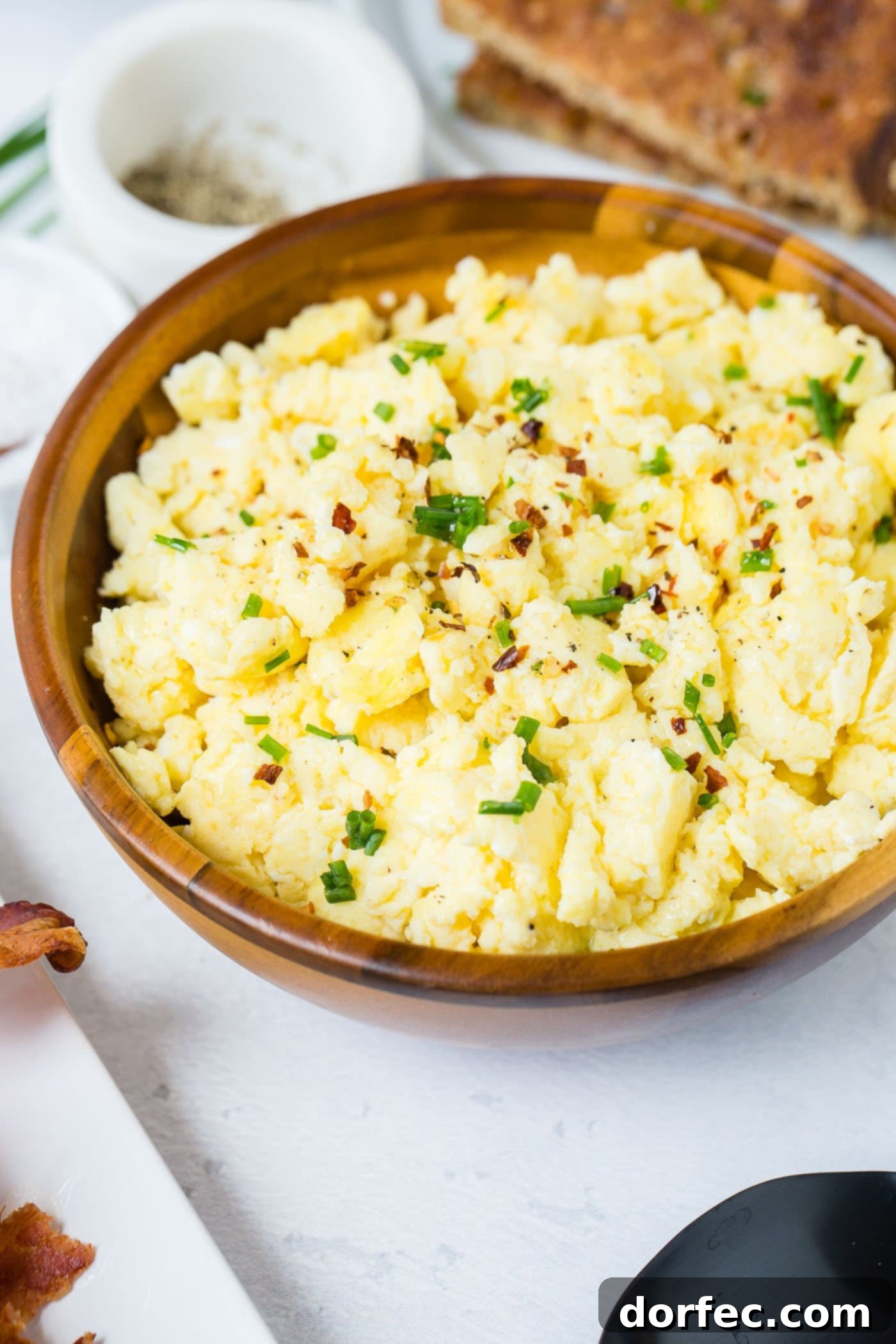
While a perfectly cooked batch of scrambled eggs can certainly stand alone as a delightful and satisfying breakfast, they also serve as an excellent foundation or side dish for a more elaborate morning feast. Their creamy texture and mild flavor make them incredibly versatile. Here are a few fantastic options to accompany your flawless scramble:
- Classic Toast or English Muffins: A simple slice of toasted artisan bread or a warm English muffin is always a winner.
- Fluffy Pancakes or Waffles: For a sweet and savory contrast, serve your eggs alongside our irresistible buttermilk pancakes recipe or our indulgent copycat Waffle Love liege waffles recipe.
- Gourmet French Toast: Elevate your breakfast with our BEST French toast recipe, a rich and satisfying partner for scrambled eggs.
- Crispy Bacon or Sausage: No breakfast is complete for many without a side of perfectly cooked bacon strips or savory sausage links.
- Fresh Fruit Salad: A bowl of colorful, seasonal fresh fruit provides a refreshing and healthy counterpoint to the richness of the eggs.
- Roasted Potatoes or Hash Browns: Hearty and comforting, crispy potatoes are a fantastic addition to any breakfast plate.
- Avocado Slices or Guacamole: For a healthy fat boost and creamy texture, a side of avocado is always a good idea.
Fluffy Scrambled Eggs Recipe
By Sweet Basil
Total Time: 10 minutes
Servings: 3
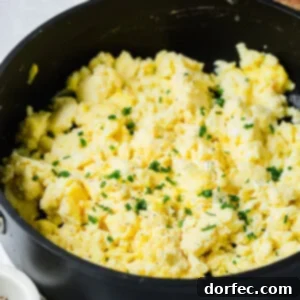
You might know how to scramble an egg, but do you know how to make perfect, fluffy scrambled eggs? These expert tips and detailed instructions will guide you to culinary success!
Ingredients
- 6 Large Eggs
- 4 Tablespoons Milk (or cream; use 2 tablespoons to every 3 eggs for larger batches)
- 1/2 Cup Shredded Cheddar Cheese
- 1/2 teaspoon Salt
- 1 Dash Pepper (freshly ground recommended)
- 1-2 Tablespoons Butter (or oil/nonstick spray for a healthier option)
Instructions
- In a large bowl, whisk together the eggs, milk, cheese, salt, and pepper until fully combined and uniform in color.
- (Optional) Allow the mixture to sit in the fridge for 15-20 minutes while you prepare other breakfast items. The salt helps trap moisture for a tender result.
- Heat a large, high-sided nonstick pan over medium-high heat for 1-2 minutes.
- Add the butter to the pan. Once melted and shimmering, quickly pour in the egg mixture.
- Allow the eggs to sit undisturbed for a few seconds until the edges just begin to set. Then, using a rubber spatula, gently push the cooked egg from the edges towards the center, allowing uncooked egg to flow into the gaps. Continue this gentle folding until the eggs are mostly set but still moist and glossy. Remove from heat immediately.
- Transfer the scrambled eggs to a plate and season with a little more salt and pepper if needed. Serve immediately.
Recipe Notes
- For more runny or custardy scrambled eggs, use medium-low heat and a slower, very gentle stirring motion throughout the cooking process.
- Leftover scrambled eggs can be stored in a covered container in the refrigerator for up to 4 days.
- To reheat, gently warm in the microwave in 15-second intervals, stirring between each, or in a non-stick pan over low heat with a splash of milk.
Nutrition Information (Approximate)
Serving: 2 eggs, Calories: 247kcal, Carbohydrates: 2g, Protein: 16g, Fat: 19g, Saturated Fat: 9g, Trans Fat: 1g, Cholesterol: 359mg, Sodium: 671mg, Potassium: 168mg, Fiber: 1g, Sugar: 1g, Vitamin A: 813IU, Calcium: 209mg, Iron: 2mg.
Nutrition information is automatically calculated and should only be used as an approximation.
You may know how to cook an egg, but do you truly know how to create the ultimate perfect, fluffy, and flavorful scrambled eggs? With these detailed tips, insights, and a foolproof recipe, you are now equipped to master this breakfast essential. Say goodbye to rubbery, bland eggs and hello to a consistently delicious experience. We hope all these techniques empower you to craft the best scrambled eggs every single time!
REMEMBER TO SUBSCRIBE TO OUR FREE OH SWEET BASIL NEWSLETTER AND RECEIVE EASY RECIPES DELIVERED INTO YOUR INBOX EVERY DAY!
When you try a recipe, please use the hashtag #ohsweetbasil on INSTAGRAM for a chance to be featured in our stories! FOLLOW OH, SWEET BASIL ON FACEBOOK | INSTAGRAM | PINTEREST | TWITTER FOR ALL OF OUR LATEST CONTENT, RECIPES AND STORIES.