
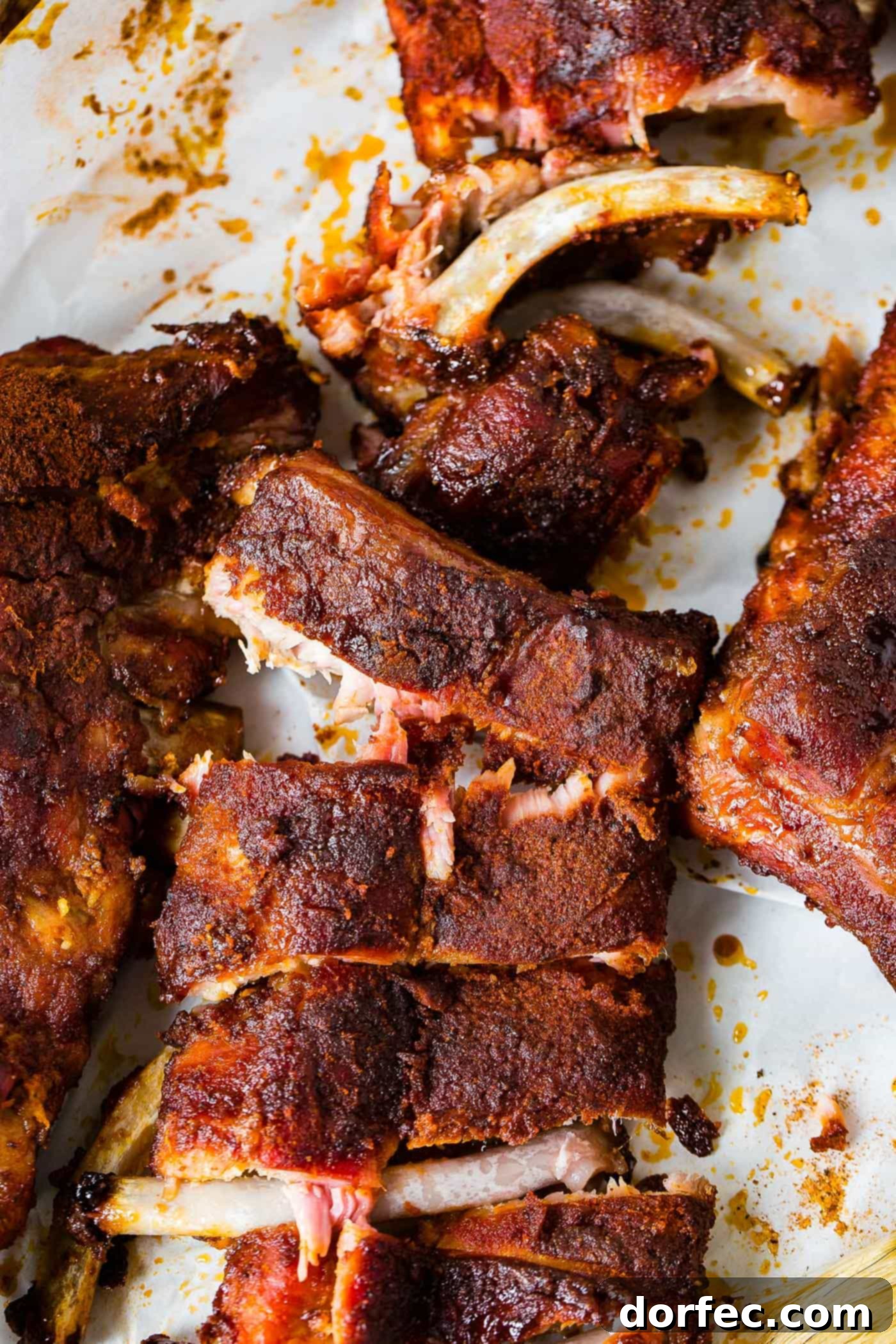
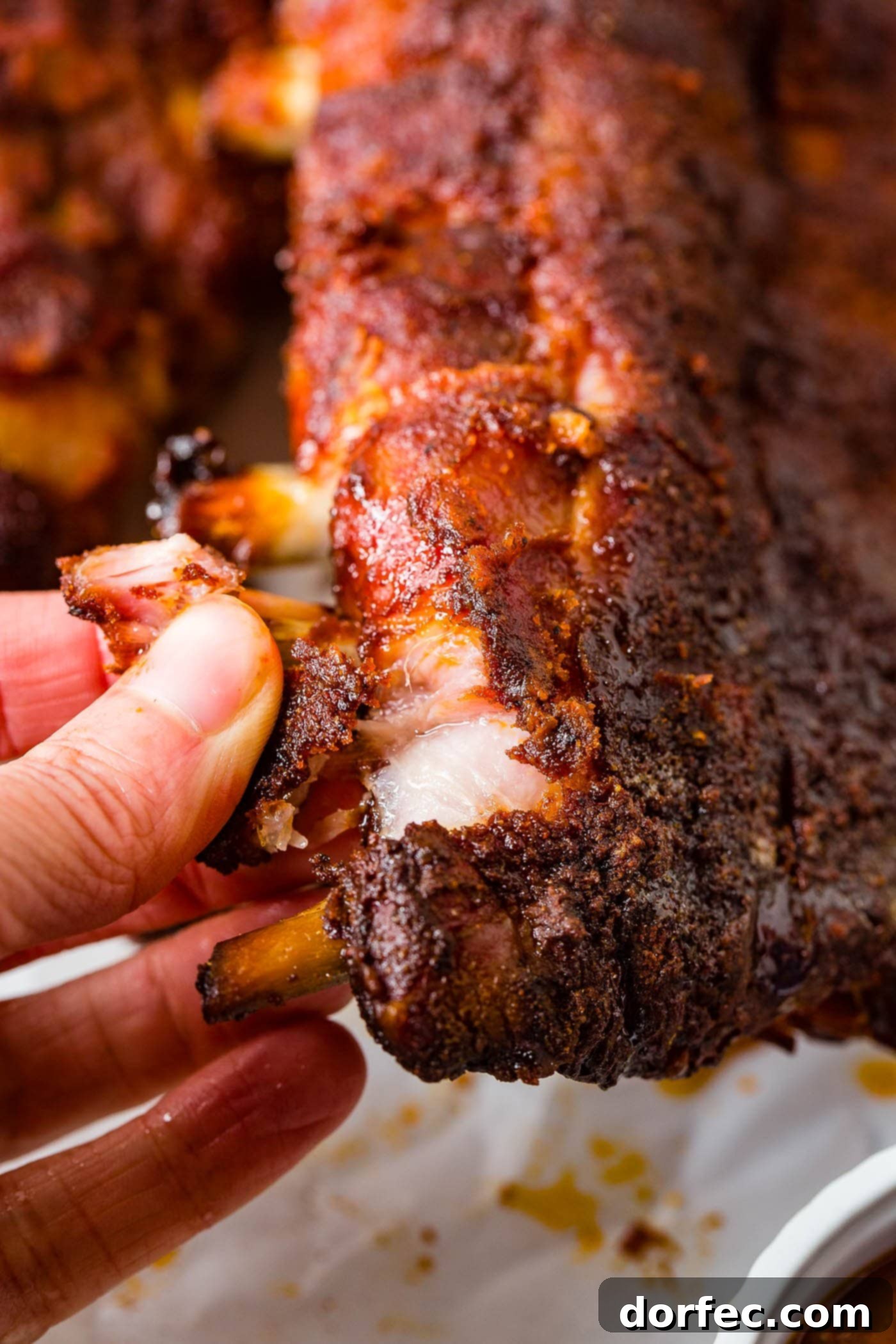
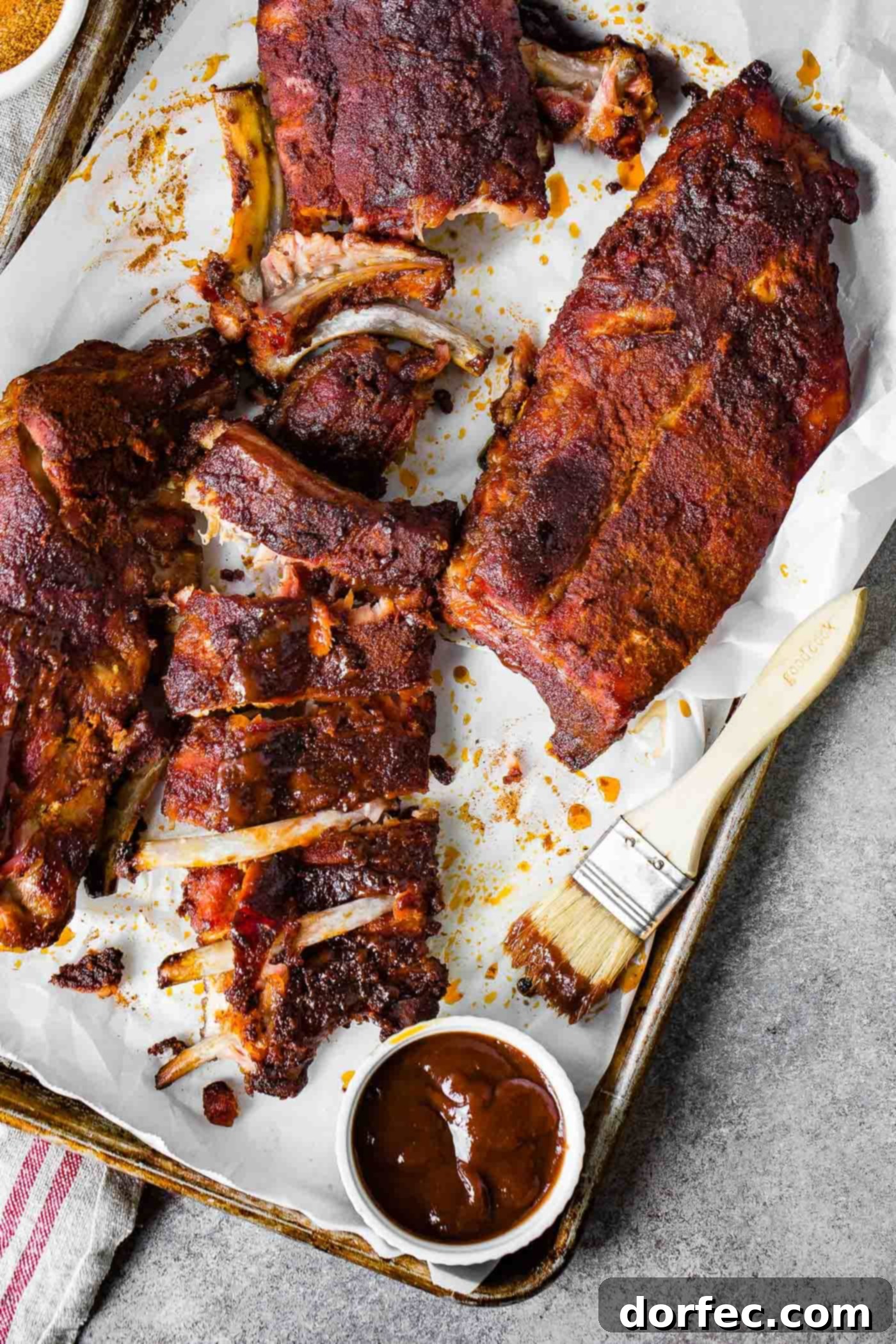
Prepare for an unforgettable culinary experience with these incredible Traeger ribs, a recipe guaranteed to transform your backyard barbecue. Coated in a robust, flavorful dry rub and meticulously smoked to achieve unparalleled tenderness, these ribs are designed to simply fall right off the bone. Perfect for any gathering, from casual picnics to grand BBQ feasts, they promise a mouth-watering delight that will leave everyone craving more.
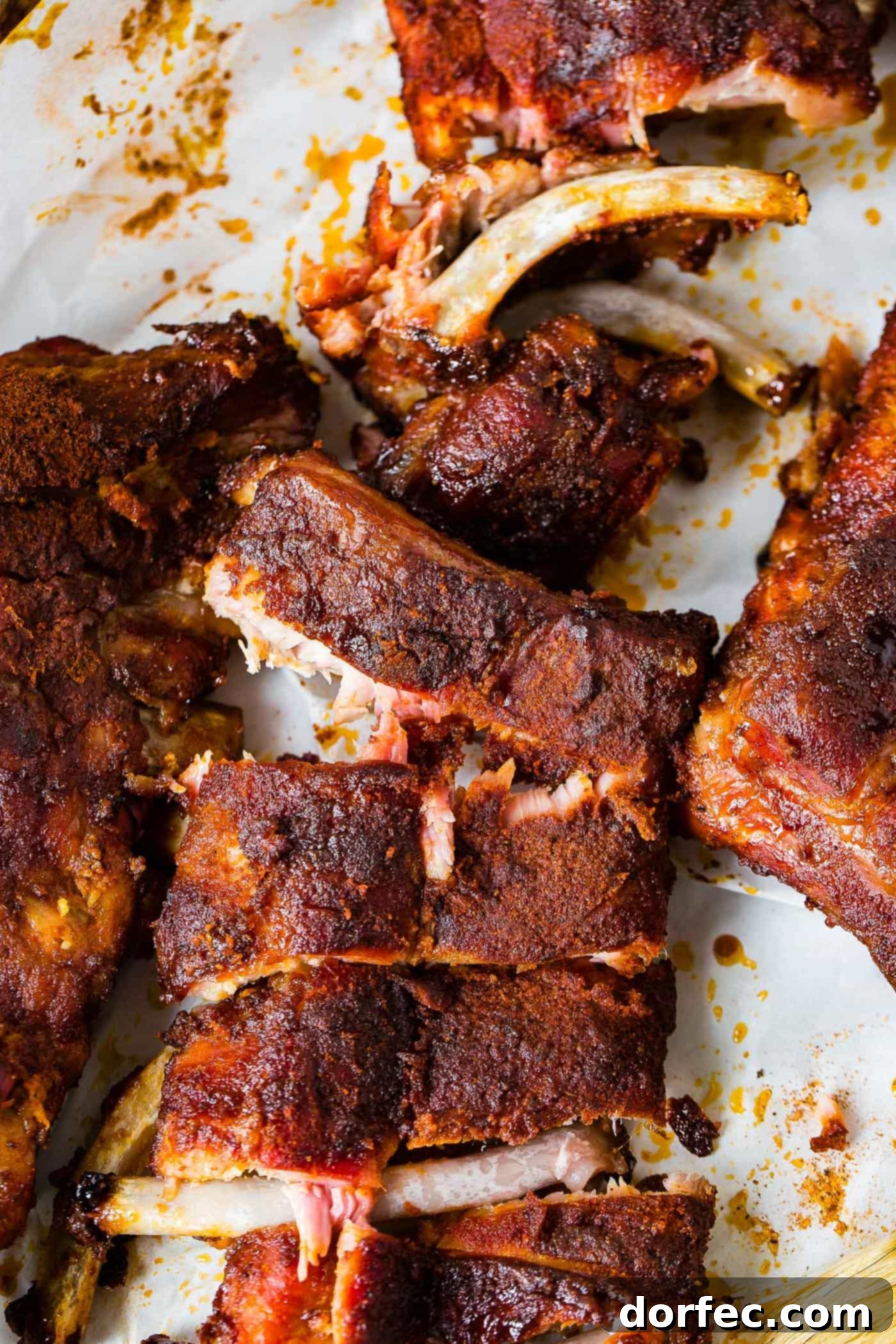
Mastering Traeger Ribs: The Ultimate Smoked Ribs Recipe
My journey to perfecting the art of smoked ribs began during a trip to South Carolina, where I first experienced authentic Southern BBQ with Cade’s family. It was an revelation! Until then, my exposure to ribs was limited to those heavily slathered in sauce. However, at that traditional southern restaurant, I discovered the magic of a simple dry rub and, more importantly, the unparalleled tenderness of ribs that genuinely fell off the bone. That experience was a game-changer; I was instantly captivated by the depth of flavor and incredible texture.
Since then, we’ve dedicated countless hours to testing and refining numerous rib recipes, striving to replicate that unforgettable tenderness and flavor profile. This particular recipe for Traeger smoked ribs has emerged as a clear winner, standing out as one of the best smoked rib recipes we’ve ever created. It encapsulates everything we loved about that initial Southern BBQ encounter, bringing restaurant-quality results right to your home.
While our blog boasts a variety of beloved rib recipes, such as our slow cooker Asian sticky ribs and our smoky BBQ Instant Pot ribs, each offering unique flavors and cooking techniques, this is our very first dedicated smoked ribs recipe. We’ve poured our passion into ensuring it’s not just good, but truly exceptional. Get ready to experience ribs that are juicy, deeply flavored, and so tender they practically melt in your mouth – we are confident you’re going to absolutely adore it!
To elevate your smoking game even further, consider whipping up a batch of homemade BBQ sauce to pair with these masterpieces. Prepare yourself for sticky fingers, watering mouths, and the undeniable reality that these Traeger smoked ribs are about to become a cherished and regular item on your family’s menu. They are, without a doubt, the best ribs I’ve ever had, and I can’t wait for you to try them!
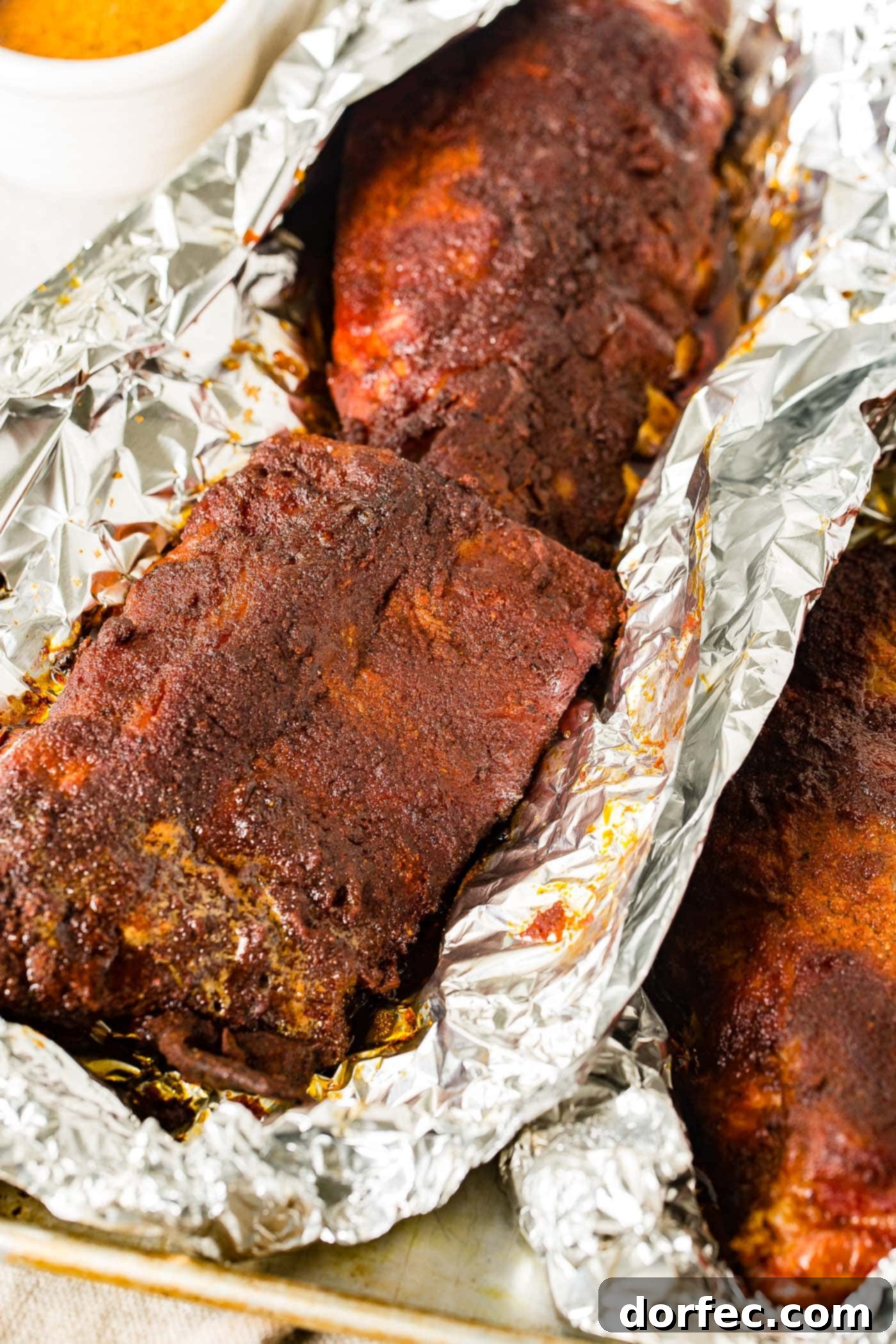
Essential Ingredients for Award-Winning Traeger Pork Ribs
The secret to these sensational Traeger pork ribs lies in a two-part flavor strategy: a bold dry rub applied upfront, followed by additional flavorings introduced midway through the smoking process. A dry rub is an artful blend of various dry spices and seasonings, meticulously massaged into the meat before it hits the smoker or grill. This initial coating creates a flavorful crust, infusing the meat with deep, aromatic notes that build throughout the slow cooking.
Achieving the perfect balance of sweet, savory, and a hint of spice is key. Here’s a comprehensive look at what you’ll need to create the ultimate smoked ribs that truly stand out:
- Pork Ribs: The star of our show, providing a rich, savory foundation.
- Smoked Paprika: Delivers a beautiful red hue and a crucial smoky depth, enhancing the natural wood-fired flavor.
- Dark Brown Sugar: Essential for caramelization, creating that desirable sweet and sticky bark, and balancing the spices.
- Black Pepper: Adds a classic, pungent bite and aromatic warmth to the rub.
- Garlic Powder: Offers a foundational savory flavor that complements pork wonderfully.
- Cumin: Introduces an earthy, slightly nutty aroma, a signature element in many BBQ rubs.
- Kosher Salt: A coarse salt that provides excellent seasoning, drawing out moisture initially and helping create a tender interior.
- Cayenne: Brings a subtle (or not-so-subtle, depending on your preference!) kick of heat, adding complexity without overpowering.
- Honey: Used later in the cooking process to add sweetness and moisture, contributing to the “fall-off-the-bone” texture.
- Dijon Mustard: Acts as a binder for the dry rub and contributes a tangy, sharp note that complements the pork and other seasonings.
- Apple Cider: Provides a touch of fruity acidity and moisture, helping to tenderize the meat and infuse it with a delicate apple flavor during the wrap phase.
For precise quantities and a detailed ingredient breakdown, please continue scrolling down to the comprehensive recipe card located further below.
Choosing the Best Ribs for Smoking Perfection
The type of ribs you select plays a significant role in the smoking process and the final outcome of your Traeger ribs. Each style offers unique characteristics in terms of meatiness, fat content, and cooking time. Understanding these differences will help you choose the ideal cut for your perfect smoked masterpiece.
We typically gravitate towards St. Louis style ribs for smoking on our Traeger. These ribs are cut from the belly of the hog, specifically the spare ribs, but with the brisket bone, cartilage, and skirt removed, resulting in a more uniform, rectangular rack. This trim makes them easier to handle and ensures more even cooking. St. Louis style ribs boast a fantastic meat-to-fat ratio, delivering rich flavor and cooking relatively quickly to a tender finish. Their flat shape also makes them ideal for uniform rub application and consistent smoking.
Alternatively, baby back ribs are another excellent choice that would work splendidly for this recipe. Originating from the loin area, these ribs are typically shorter, leaner, and more curved than St. Louis style ribs, often containing more meat on top of the bone. Their meatier nature can result in an incredibly succulent final product, though they might require a slightly longer cooking time to reach that desired, safe internal temperature and tender consistency. Many prefer baby backs for their smaller size and often more tender meat if cooked correctly.
Spare ribs, which are essentially untrimmed St. Louis style ribs, can also be used. They are a larger, flatter cut with more bone and cartilage, and often a higher fat content. While they offer robust flavor, they tend to have less meat directly on the bone compared to baby back or St. Louis style. If you opt for spare ribs, be mindful that they may require even less time in the smoker due to their composition, so keep a close eye on their progress to prevent overcooking and ensure they remain juicy and tender.
Regardless of your choice, the goal is always that exquisite balance of smoky flavor and melt-in-your-mouth texture that defines truly great Traeger smoked ribs.
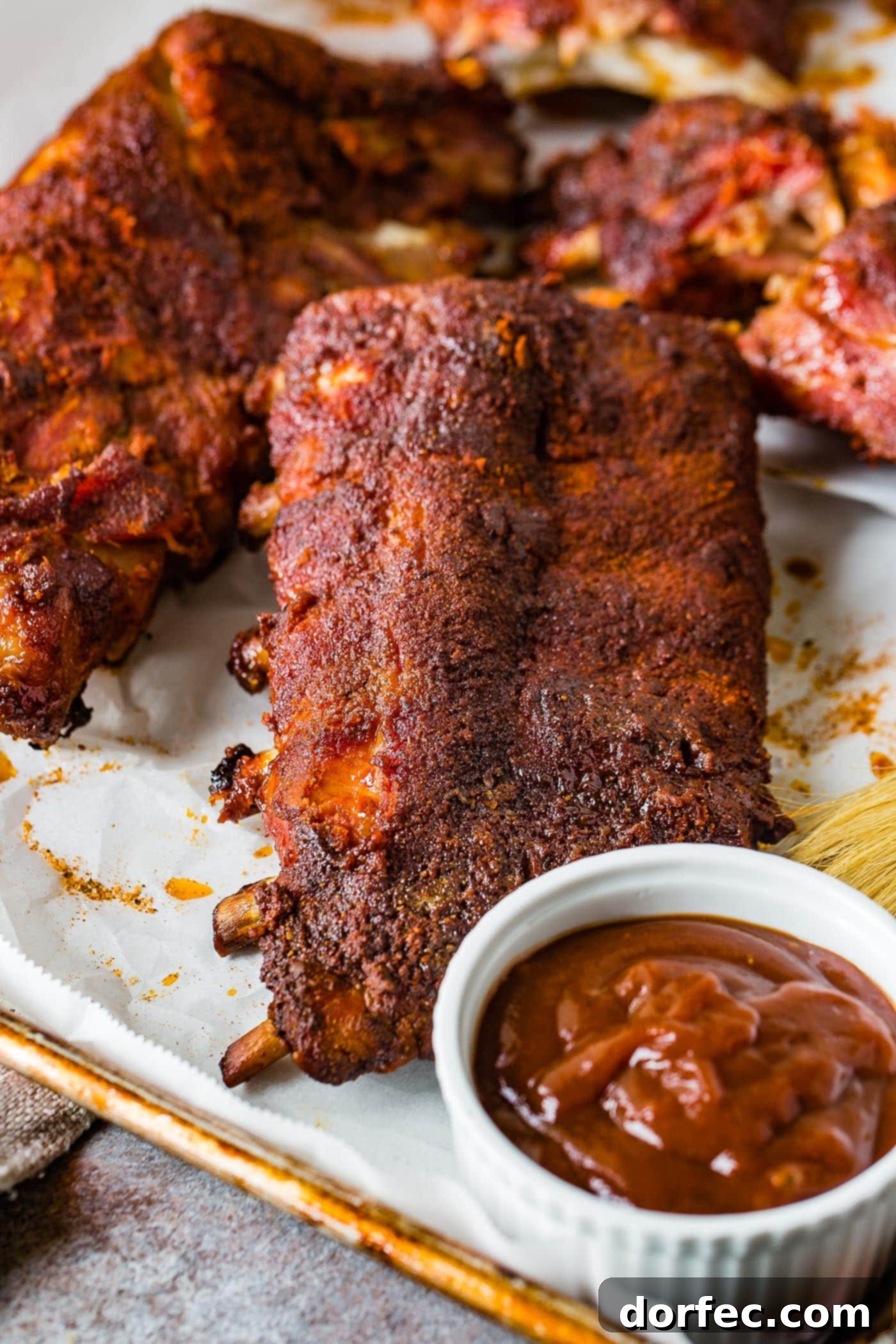
Step-by-Step Guide: How to Smoke Ribs on a Traeger
Get ready to impress with tender, flavorful smoked pork ribs that truly melt in your mouth! We’ve provided an extremely detailed, step-by-step guide in the recipe card below, but for those eager to understand the core process, here are the fundamental steps to mastering this incredible Traeger ribs recipe:
- Prepare the Dry Rub: Begin by combining all the specified ingredients for the smoked ribs dry rub in a small bowl. Whisk them together thoroughly until well blended. Set this aromatic mixture aside, as it will be generously applied to the ribs shortly.
- Rib Preparation – Remove the Silver Skin: This is a crucial step for achieving maximum tenderness. Carefully inspect the underside of your pork ribs. If you find a thin, tough membrane (often called silver skin or silverskin), it must be removed. Use the tip of a butter knife or a small spoon to gently work your way under the membrane, typically starting over a middle bone. Once you have a corner lifted, grasp it firmly with a paper towel for better grip and slowly tear the entire membrane away from the bone side of the ribs. This prevents the ribs from becoming chewy.
- Apply the Binder and Dry Rub: In a separate small bowl, whisk together the Dijon mustard and 1/4 cup of the apple cider. Lightly brush this mixture evenly over both sides of the ribs. This mustard-cider blend acts as a perfect “glue” for the dry rub, helping it adhere beautifully and adding another layer of subtle flavor. Immediately follow by generously applying your prepared dry rub to both sides of the ribs, pressing it gently to ensure it sticks well. Don’t be shy – a good coating is essential for a flavorful bark.
- Preheat Your Traeger Smoker: Set your Traeger to 180°F (82°C). Close the lid and allow the smoker to preheat completely for at least 15 minutes. This ensures the temperature is stable and the smoke production is consistent, setting the stage for optimal smoke penetration.
- Initial Smoke Phase (3 Hours): Once the smoker is fully preheated, carefully place the seasoned ribs directly onto the grill grates, ensuring they are meat-side up. Close the lid and let them smoke undisturbed for 3 hours. During this phase, the low temperature and steady smoke will infuse the ribs with that deep, characteristic smoky flavor.
- Increase Temperature and Prepare to Wrap: After the initial 3 hours of smoking, gently transfer the ribs from the smoker to a large, rimmed baking sheet. At this point, increase your Traeger’s temperature setting to 225°F (107°C). While the smoker comes up to the new temperature, prepare your wrapping materials.
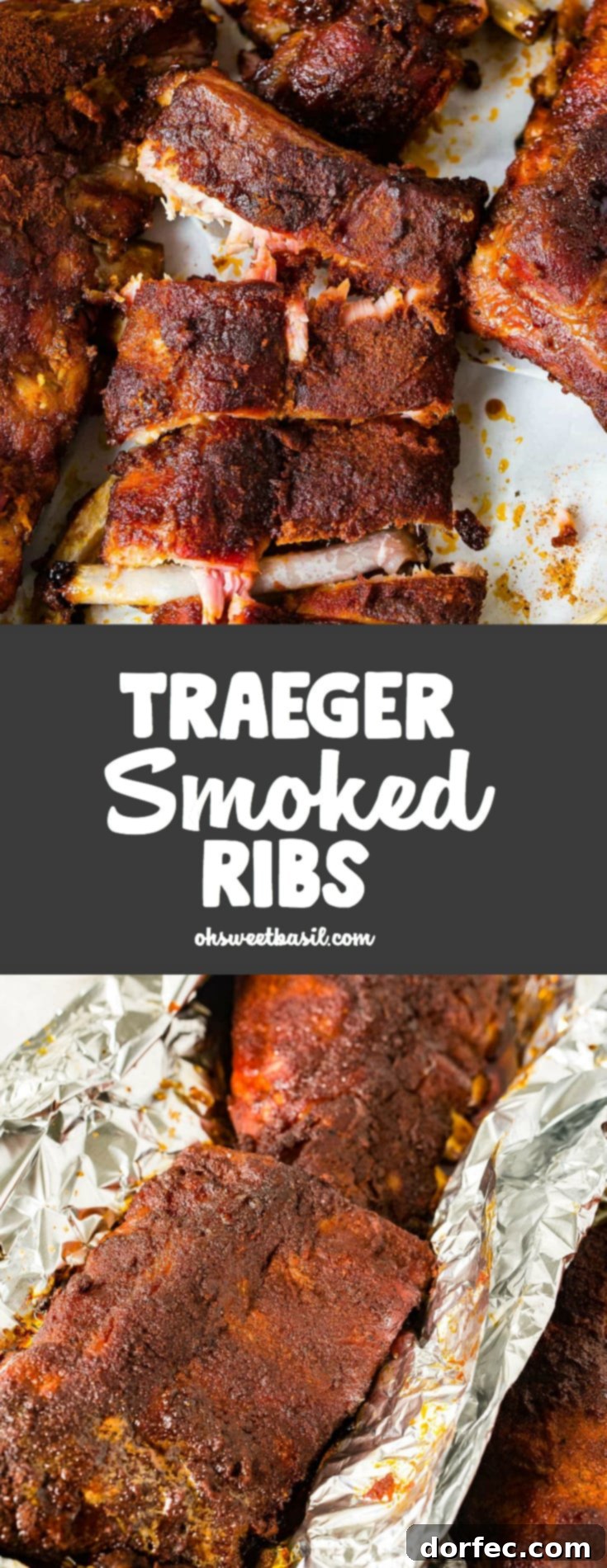
- The Wrap Phase – Juicing Up the Ribs: Tear off two large pieces of peach butcher paper (or heavy-duty aluminum foil if butcher paper isn’t available) for each rack of ribs. Place one rack of ribs on the center of one piece of butcher paper. Carefully pull up the sides of the paper, creating a shallow basin around the ribs – this is crucial to contain the liquids you’re about to add and prevent any leakage.
- Add Moisture and Sweetness to the Wrap: Evenly sprinkle half of the remaining brown sugar over the top of the ribs. Drizzle half of the honey over the brown sugar, followed by half of the remaining apple cider. These additions will create a steamy, flavorful environment within the wrap, tenderizing the ribs and adding incredible moisture and sweetness. Place a second piece of peach butcher paper directly on top of the ribs, then tightly crimp and seal all the edges of both pieces of paper around the ribs, forming a secure, leak-proof packet. Repeat this wrapping process for all remaining racks of ribs.
- Return to Smoker (3-4 Hours): Carefully return the securely wrapped ribs to the Traeger smoker, still at 225°F (107°C). Allow them to cook for an additional 3 to 4 hours. This extended period in the moist, flavorful wrap is where the magic happens, transforming the ribs into that coveted “fall-off-the-bone” tenderness.
- Final Grill/Setting the Bark (30-60 Minutes): Once the wrapped smoking phase is complete, carefully remove the ribs from their butcher paper or foil. Place them directly back onto the smoker grates, meat-side up. Continue to grill them for another 30 to 60 minutes. This final unwrapped stage allows the bark to firm up, caramelize further, and achieve a beautiful texture and appearance.
- Rest and Serve: Once the ribs have reached your desired tenderness and bark, remove them from the smoker. Let them rest for a few minutes on a cutting board before slicing and serving. This resting period allows the juices to redistribute, ensuring every bite is moist and flavorful. Serve with your favorite barbecue sauce on the side and enjoy!
Understanding the 3-2-1 Method for Smoked Ribs
This particular recipe for Traeger smoked ribs is expertly crafted around a technique widely beloved in the BBQ community: the 3-2-1 method. This classic approach is a foolproof way to achieve consistently tender, juicy, and flavorful ribs, especially on a pellet smoker like the Traeger. It breaks down the smoking process into three distinct phases, each crucial for the perfect rib.
The “3” in 3-2-1 refers to the initial 3 hours of smoking. During this phase, the ribs are placed unwrapped directly on the smoker grates at a lower temperature, typically around 180-200°F. The goal here is maximum smoke penetration. This low and slow exposure to wood smoke infuses the meat with a deep, complex flavor and helps to set the “bark” – that delicious, flavorful crust on the outside of the ribs. This is where the foundation of that authentic BBQ taste is built.
The “2” represents the next 2 hours, during which the ribs are wrapped, usually in butcher paper or aluminum foil, along with a liquid (like apple cider, apple juice, or even a little beer) and often some additional sweeteners like brown sugar or honey. This phase is all about tenderization. The moisture trapped inside the wrap creates a steamy environment that helps break down tough connective tissues, making the ribs incredibly tender. It also keeps the ribs from drying out and allows them to absorb more flavor from the added liquids and sugars, leading to that coveted “fall-off-the-bone” texture.
Finally, the “1” signifies the last hour, where the ribs are unwrapped and returned to the smoker or grill. This final phase has a few key objectives: to firm up the bark that may have softened during the wrapped phase, to allow any glaze or sauce to caramelize and set, and to achieve the perfect textural balance. Sometimes this final hour is slightly less, or slightly more, depending on your preferred level of bark and tenderness.
Combining these stages, the traditional 3-2-1 method totals 6 hours for perfectly smoked ribs. However, personal preference and the thickness of your ribs can influence these timings. For thicker cuts or if you desire an even more profound tenderness, I often adjust the middle “wrapped” phase, extending it to a 3-3-1 or sometimes even a 3-4-1 approach. This flexibility ensures that no matter the size or style of your ribs, you can achieve that ideal, melt-in-your-mouth perfection every time.
The Magic Behind Your Traeger Smoker: How It Works
For anyone passionate about BBQ, understanding how a Traeger smoker operates is key to appreciating the consistent and delicious results it delivers, especially for recipes like these amazing Traeger ribs. A Traeger isn’t just a grill; it’s a sophisticated wood pellet smoker that combines the best elements of traditional smoking with modern, user-friendly technology.
At its heart, a Traeger uses an intelligent system to convert wood pellets into smoke and heat. It starts with a hopper, located on the side of the grill, which holds the hardwood pellets. An auger, a corkscrew-like mechanism, precisely moves these pellets from the hopper into a small component called the fire pot, situated inside the main grilling chamber. When you set your desired cooking temperature, the Traeger’s controller signals the auger to feed more or fewer pellets into the fire pot, directly regulating the heat. The higher the temperature you select, the more pellets are introduced, increasing the intensity of the fire.
Once the pellets are in the fire pot, an igniter rod automatically lights them, creating a consistent, controlled flame. Simultaneously, a fan plays a crucial role by stoking these flames and circulating the heat and smoke throughout the cooking chamber. This fan-driven circulation mimics a convection oven, ensuring that the food, such as your Traeger smoked ribs, cooks evenly from all sides. This consistent heat distribution eliminates hot spots and the need for constant flipping, a common chore with traditional grills.
But the true magic lies in the smoky flavor. As the wood pellets burn, they produce a rich, aromatic smoke that permeates the meat. This isn’t just any smoke; it’s the authentic, delicious taste that comes from cooking over a real wood fire. Unlike gas or charcoal grills that might require special smoker boxes, the Traeger consistently delivers this genuine wood-fired flavor with minimal effort.
In essence, Traegers are nothing short of miraculous for home cooks and BBQ enthusiasts alike! They simplify the often-complex process of smoking, offering exceptional ease of use, reliable temperature control, and consistently delicious results. It’s truly a game-changer for anyone looking to achieve professional-grade BBQ without the fuss.
Explore More Traeger Creations: After you’ve mastered these smoked ribs, why not try our Smoked Chicken Breast Recipe or delve into the art of a Smoked Whole Chicken Recipe next? These recipes perfectly showcase the versatility of your Traeger!
Selecting the Best Wood Pellets for Your Smoked Ribs
The choice of wood pellets is a critical component in developing the unique flavor profile of your Traeger ribs. Different wood types impart distinct aromas and tastes, allowing you to customize your BBQ experience. While many blends work well, some woods are particularly renowned for their compatibility with pork and slow-smoked dishes.
For a bold, classic smoke flavor that truly stands out, we highly recommend using hickory, mesquite, or oak wood pellets. Hickory offers a strong, savory, and slightly bacony flavor that is a cornerstone of traditional American BBQ, pairing exceptionally well with pork. Mesquite delivers an intense, earthy, and robust smoke profile, perfect for those who love a deep, pronounced smoky taste. Oak provides a medium-strength smoke that is versatile and complements virtually any meat, offering a pleasant, rich aroma without overpowering the natural flavors of the pork.
You can also experiment with a blend of these woods to create a more nuanced flavor, combining the strengths of each. For instance, a mix of hickory and oak can offer a powerful yet balanced smoke that enhances the dry rub and the pork’s richness.
Beyond these stronger options, several other types of wood pellets make excellent choices for smoking ribs, offering milder or fruitier notes. Apple wood provides a delicate, slightly sweet, and fruity smoke that is fantastic with pork, giving the ribs a gentle sweetness and bright aroma. Cherry wood also imparts a sweet, mild flavor with a beautiful reddish hue to the meat, enhancing its visual appeal. Pecan wood offers a rich, nutty, and slightly spicy smoke that is smoother than hickory but still very flavorful. Lastly, maple wood delivers a subtle, sweet smoke that is great for a less aggressive, more nuanced flavor. Experimenting with these various options can help you discover your favorite combination for your signature smoked pork ribs.
Tips for Achieving Perfectly Tender Traeger Ribs
While the 3-2-1 method and the Traeger smoker do much of the heavy lifting, a few expert tips can elevate your smoked ribs from great to absolutely legendary. These insights focus on preparation, consistency, and knowing when your ribs have reached their peak:
- Don’t Skip the Silver Skin Removal: As mentioned in the instructions, this step is non-negotiable. The silver skin is a tough membrane on the bone side of the ribs that will prevent your ribs from becoming truly tender and can make them chewy. Taking a few extra minutes to remove it will make a world of difference.
- Generous Rub Application: Don’t be shy with the dry rub. A thick, even coating ensures a flavorful bark and deeply seasoned meat. The mustard binder helps, so make sure the entire surface is covered.
- Maintain Consistent Temperature: The beauty of a Traeger is its ability to hold a steady temperature. Avoid opening the lid unnecessarily during the initial smoking phase, as this causes temperature fluctuations and prolongs cooking time. “If you’re looking, it’s not cooking!”
- Spritzing (Optional but Recommended): During the initial unwrapped smoking phase, some pitmasters like to spritz the ribs every hour or so with apple cider, apple juice, or even water. This helps keep the surface moist, prevents the bark from drying out too much, and can promote better smoke adhesion.
- The Bend Test for Doneness: After the wrapped phase, when unwrapped and back on the smoker for the final hour, you can perform the “bend test” to check for doneness. Gently pick up a rack of ribs with tongs in the middle. If they bend easily and the meat starts to crack on the surface, they are likely ready or very close. If they are still stiff, give them more time.
- Rest Your Ribs: Just like any other cut of meat, ribs benefit from a resting period after cooking. Tent them loosely with foil and let them sit for 10-15 minutes before slicing. This allows the juices to redistribute throughout the meat, resulting in a more succulent and flavorful bite.
- Internal Temperature Check (for Safety): While the bend test is great for tenderness, ensure your pork ribs reach a safe internal temperature of at least 145°F (63°C). For fall-off-the-bone tenderness, they will typically be much higher, often between 195-205°F (90-96°C) as connective tissues break down.
Serving Suggestions for Your Smoked Ribs
Once your perfectly smoked Traeger ribs are ready, the feast truly begins! These ribs are incredibly versatile and pair beautifully with a wide array of classic BBQ sides. Here are some serving suggestions to complete your meal:
- Classic Coleslaw: The crisp, tangy freshness of coleslaw provides a perfect contrast to the rich, smoky ribs.
- Creamy Macaroni and Cheese: A hearty and comforting side that complements the savory ribs with its creamy texture.
- Baked Beans: Sweet and smoky baked beans are a quintessential BBQ side that harmonizes perfectly with pork ribs.
- Corn on the Cob: Whether grilled, boiled, or roasted, sweet corn is always a crowd-pleaser and a natural partner for ribs.
- Potato Salad: A cool, creamy potato salad can be wonderfully refreshing alongside warm, smoky ribs.
- Fresh Green Salad: For a lighter touch, a simple green salad with a vinaigrette dressing can cut through the richness of the meat.
- Cornbread: Fluffy, slightly sweet cornbread is excellent for soaking up any leftover BBQ sauce or rib juices.
- Homemade BBQ Sauce: While these ribs are flavorful on their own, a side of your favorite homemade or store-bought BBQ sauce allows guests to customize their experience. Consider both sweet and tangy options.
- Pickles and Onions: A platter of sliced dill pickles and thinly sliced red onions can add a welcome sharp, acidic crunch.
No matter what sides you choose, these Traeger smoked ribs are guaranteed to be the star of your spread, creating a memorable and delicious meal for all!
Frequently Asked Questions About Smoking Ribs
Can You Smoke Meat on a Regular Grill?
Yes, it is possible to smoke meat on a regular gas or charcoal grill, but it can be more challenging to achieve the consistent low temperatures and steady smoke production compared to a dedicated pellet smoker like a Traeger. To smoke on a conventional grill, you typically need to create an indirect heat zone. For a gas grill, you might light burners on one side and place wood chips in a smoker box over the lit burners, then place the meat on the unlit side. For a charcoal grill, you would arrange hot coals on one side and place wood chunks on top, with the meat on the cooler side. The key is maintaining a low temperature (around 225-275°F) and consistent smoke for several hours, which often requires frequent monitoring and adjustment of vents and fuel on a traditional grill.
Is Smoked Meat Cooked?
Absolutely, yes! Smoked meat is indeed fully cooked. The smoking process is a method of cooking that involves exposing food to smoke from burning wood at controlled, typically low, temperatures for an extended period. Just like grilling, roasting, or braising, smoking changes the texture and flavor of the meat, making it safe to eat as long as it reaches appropriate internal temperatures. For pork ribs, this typically means reaching at least 145°F (63°C) for safety, though for ultimate tenderness, they are often cooked much higher, up to 195-205°F (90-96°C), to allow connective tissues to break down.
Is Smoked Meat Safe?
Yes, when prepared correctly, smoked meat is perfectly safe to eat and incredibly delicious! The primary safety concern with any meat preparation is ensuring it reaches a safe internal temperature to kill harmful bacteria. As long as your smoked meat, including these Traeger smoked ribs, is cooked to its recommended safe internal temperature (and then held at safe temperatures if not consumed immediately), it is completely safe. The smoking process itself can also have a mild antimicrobial effect due to the compounds in the smoke. Always use a reliable meat thermometer to verify doneness.
What Can You Substitute for Kosher Salt?
If you don’t have kosher salt on hand for your dry rub, a coarse sea salt is the best substitute. Both kosher salt and coarse sea salt have larger crystal sizes than regular table salt, which affects how they dissolve and distribute flavor. They also tend to be purer in flavor. It is crucial to avoid substituting with standard table salt directly in equal amounts. Table salt has much finer crystals, making it denser by volume, and it often contains anti-caking agents and iodine that can impart an off-flavor. If you must use table salt, use about half the amount specified for kosher salt and adjust to taste.
Should You Flip Ribs in a Smoker?
No, there is generally no need to flip ribs when smoking them in a Traeger or any other pellet smoker. Traeger smokers, like convection ovens, use an internal fan to circulate heat and smoke evenly throughout the cooking chamber. This convection heating ensures that the ribs cook uniformly on all sides, eliminating the need to flip them. One of the many advantages of using a smoker is this hands-off cooking approach, allowing you to “set it and forget it” (mostly!) while the consistent environment works its magic. So, confidently place your ribs meat-side up and let the smoker do its job!
I genuinely adore ribs prepared in every conceivable way, but I am utterly convinced that cooking them on a smoker, particularly a Traeger, is undeniably one of the absolute best methods available. That distinct, deep smoky flavor that permeates every fiber of the meat is simply unbeatable, creating a taste sensation that transcends other cooking techniques. You won’t be able to resist the allure of these incredibly tender smoked pork ribs – they are truly in a league of their own!
Explore More Delicious Ribs Recipes:
- Smoky BBQ Instant Pot Ribs
- Instant Pot Country Style Ribs
- Braised Beef Short Ribs
- Sticky Instant Pot Bone-In Beef Short Ribs
- Asian Sticky Slow Cooker Ribs
- Mustard Carolina BBQ Sauce Instant Pot Beef Short Ribs
- Korean Oven Braised Short Ribs
- Easy BBQ Ribs
- Blackberry Hoisin BBQ Ribs
Traeger Smoked Ribs
Ingredients
- 2 Racks Pork Ribs, St Louis style or baby back pork ribs
Dry Rub:
- 1/4 Cup Smoked Paprika
- 1/2 Cup Dark Brown Sugar
- 1 Tablespoon Black Pepper
- 1 Tablespoon Garlic Powder
- 2 teaspoon Cumin
- 1 Tablespoon Kosher Salt
- 1 teaspoon Cayenne
For Cooking:
- 1/2 Cup Dijon Mustard
- 1/2 Cup Apple Cider, divided
- 1/2 Cup Dark Brown Sugar
- 1/3 Cup Honey
Instructions
For the Rub:
-
Mix all dry rub ingredients together and set aside.
-
Check the underside of the ribs. If there is a thin layer of silver skin, remove it from the bone-side of the ribs by working the tip of a butter knife underneath the membrane (choose to pierce it over a middle bone.) Use paper towels to get a firm grip, then tear the membrane off.
-
In a small bowl, combine the Dijon mustard and 1/4 cup of apple cider (reserve the remaining cider for later). Spread this mixture thinly on both sides of the ribs to act as a binder, then generously season with the prepared dry rub.
To Cook:
-
Set your Traeger Smoker temperature to 180℉ (82°C) and preheat with the lid closed for 15 minutes.
-
Once preheated, place the ribs directly into the smoker, meat-side up, and smoke for 3 hours. After 3 hours, transfer the ribs to a rimmed baking sheet and increase the smoker temperature to 225℉ (107°C).
-
Tear off two long sheets of Peach Butcher Paper (or heavy-duty aluminum foil) for each rack of ribs. Place one sheet down, position a rack of ribs on top, and pull up the sides of the paper to enclose the liquid.
-
Sprinkle half of the remaining brown sugar onto one rack, then drizzle with half of the honey and half of the reserved apple cider. Place the second sheet of butcher paper (or foil) on top and tightly crimp all the edges to create a sealed packet, preventing any liquid leakage. Repeat this process for the second rack of ribs.
-
Return the wrapped ribs to the smoker and cook for an additional 3-4 hours at 225℉.
-
Carefully remove the wrap from the ribs and place them directly back onto the smoker grate. Continue to grill for 30-60 minutes more to set the bark and achieve desired tenderness.
-
Let the ribs rest for a few minutes before slicing and serving with your favorite barbecue sauce.
Recipe Notes
Nutrition
Serving: 4 ribs, Calories: 1082kcal, Carbohydrates: 59g, Protein: 49g, Fat: 73g, Saturated Fat: 23g, Polyunsaturated Fat: 13g, Monounsaturated Fat: 27g, Trans Fat: 1g, Cholesterol: 243mg, Sodium: 1654mg, Potassium: 994mg, Fiber: 3g, Sugar: 54g, Vitamin A: 2384IU, Vitamin C: 1mg, Calcium: 115mg, Iron: 5mg
Nutrition information is automatically calculated, so should only be used as an approximation.
REMEMBER TO SUBSCRIBE TO our FREE Oh Sweet Basil NEWSLETTER AND RECEIVE EASY RECIPES DELIVERED INTO YOUR INBOX EVERY DAY!
When you try a recipe, please use the hashtag #ohsweetbasil on INSTAGRAM for a chance to be featured in our stories! FOLLOW OH, SWEET BASIL ON FACEBOOK | INSTAGRAM | PINTEREST | TWITTER FOR ALL OF OUR LATEST CONTENT, RECIPES AND STORIES.