
Unlock the secret to crafting consistently delicious and incredibly nutritious smoothies right in your own kitchen: freezing your fruit. This comprehensive guide will teach you exactly how to properly freeze fruit, transforming your daily smoothie routine into an effortless, cost-effective, and highly beneficial habit. Say goodbye to watery, bland concoctions and hello to thick, creamy, and satisfying blends that energize your day.
For too long, the importance of a truly healthy and energizing breakfast has been underestimated. Many of us, myself included, have fallen into the trap of quick, convenient options that, while tasty, often lack the vital nutrients needed to fuel a productive day. My personal journey towards a more vibrant morning started with a commitment to healthier eating. Moving beyond the usual cereal, I sought out options that would provide a sustained energy boost and a rich array of vitamins and minerals.
This quest led me to the wonderful world of smoothies and breakfast parfaits. While both offer fantastic ways to pack nutrients into your morning, I quickly discovered a few key challenges, especially with smoothies. These realizations became the driving force behind mastering the art of freezing fruit, which ultimately led to the creation of better, more economical, and incredibly delicious smoothies.
Why Frozen Fruit is Your Smoothie Game-Changer
When it comes to creating the ultimate smoothie experience, incorporating frozen fruit is not just a suggestion – it’s a necessity. Here’s why making the switch to frozen fruit will revolutionize your breakfast and snack routines:
- Unmatched Flavor and Nutritional Punch: Fresh fruit forms the backbone of any great smoothie, providing natural sweetness and essential nutrients. Freezing fruit at its peak ripeness locks in these flavors and vitamins, ensuring your smoothies are consistently delicious and incredibly beneficial for your health. It’s an easy way to meet your daily fruit intake and enjoy a burst of natural goodness.
- Significant Cost Savings: One of the biggest hurdles to maintaining a healthy diet can be the cost of fresh produce. Eating a whole foods diet, rich in fresh fruits and vegetables, often comes with a hefty price tag. My solution was simple yet effective: buy fresh fruit when it’s in season and on sale, then freeze it. This strategy allows you to enjoy premium quality fruit at its lowest price, significantly cutting down the cost of your smoothies compared to buying pre-frozen fruit or out-of-season fresh produce. It’s smart shopping for smarter eating.
- Achieving the Perfect Creamy Texture: Nobody enjoys a watery smoothie that tastes more like juice than a satisfying meal. Frozen fruit is the secret ingredient for achieving that coveted thick, creamy, and milkshake-like consistency without the need for ice cubes. Ice can quickly melt and dilute your smoothie, compromising both flavor and texture. Frozen fruit, on the other hand, blends into a luxurious, cold base that makes every sip an absolute delight.
By understanding these core benefits, you can see why freezing your own fruit is a crucial step in elevating your smoothie game. It’s not just about convenience; it’s about optimizing taste, nutrition, and your budget.
Is It More Economical to Freeze Your Own Fruit for Smoothies?
Absolutely, without a doubt! Freezing your own fruit is significantly more cost-effective than purchasing pre-frozen options from the grocery store. Let’s break down the economics with a few examples:
Consider the humble banana. A 16 oz (1 lb) bag of frozen sliced bananas might cost around $2.99. In stark contrast, fresh bananas typically retail for about $0.25 per pound. If you buy 2 pounds of fresh bananas (accounting for the peel weight), you’d spend a mere $0.50. With just a few minutes of peeling and slicing, you’ve saved over $2.00 on a single fruit! Imagine those savings accumulating over weeks and months.
Strawberries offer another compelling case. A 10 oz bag of frozen strawberries could set you back $2.99. For the same price, you can often find a 1 lb (16 oz) carton of fresh strawberries, especially when they are in season or on sale. This means you get almost half a pound more fruit for the exact same cost, just by taking a few moments to prepare them yourself. When strawberries are truly in season, you can often find even larger quantities for less, multiplying your savings.
These examples clearly demonstrate that a little bit of upfront effort in freezing your own fruit translates into substantial long-term savings, making healthy eating more accessible and budget-friendly for everyone. It’s a simple yet powerful way to maximize your grocery budget while ensuring you always have prime ingredients for your smoothies.
How to Freeze Fruit for Smoothies: A Step-by-Step Guide
Mastering the art of freezing fruit is incredibly simple and requires minimal effort, but the impact on your smoothie quality is immense. Follow these easy steps to ensure your fruit freezes perfectly, ready for blending at a moment’s notice:
- Select Peak Ripeness: Start with fresh, ripe fruit. The flavor and nutritional content are at their best, and freezing will preserve these qualities. Avoid overly soft or bruised fruit, as this can affect the final texture and taste of your smoothie.
- Clean and Prepare: Thoroughly rinse all your fruit under cool water. For fruits like bananas, pineapples, or mangoes, peel them completely. Remove any stems (from strawberries, cherries), cores (from apples, pineapples), or pits (from cherries, peaches). For larger fruits, chop them into small, manageable chunks or slices. Aim for pieces that are roughly uniform in size, as this helps with even freezing and blending.
- Ensure Thorough Drying: This is a critical step often overlooked! After rinsing and chopping, gently pat the fruit dry with paper towels. Excess moisture on the surface of the fruit can lead to ice crystals forming, which can degrade the fruit’s texture and lead to freezer burn. A dry surface ensures individual pieces freeze separately.
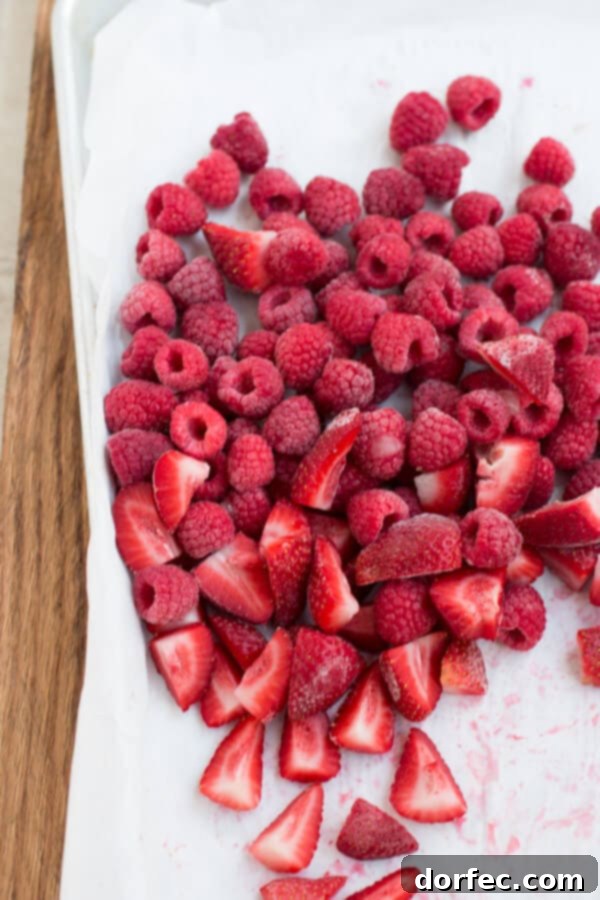
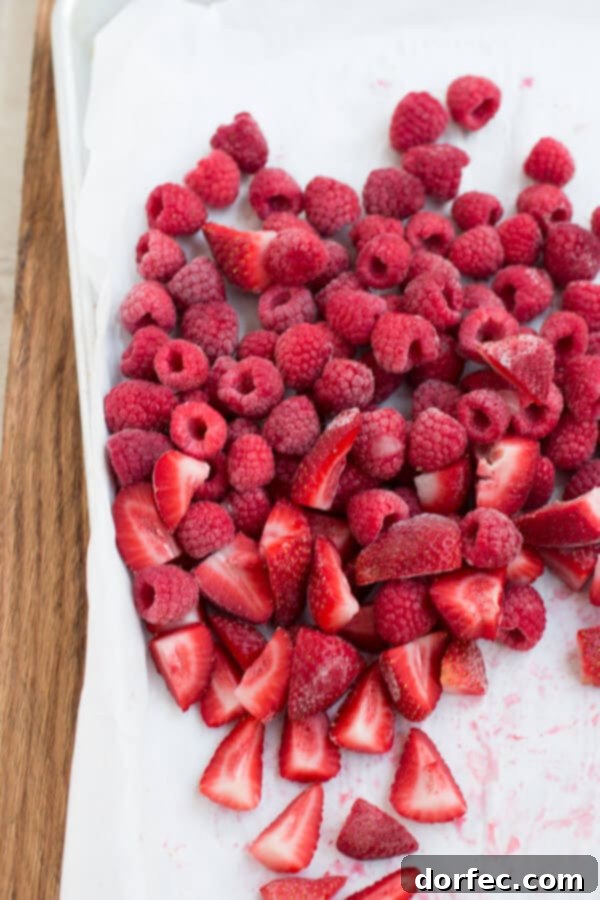
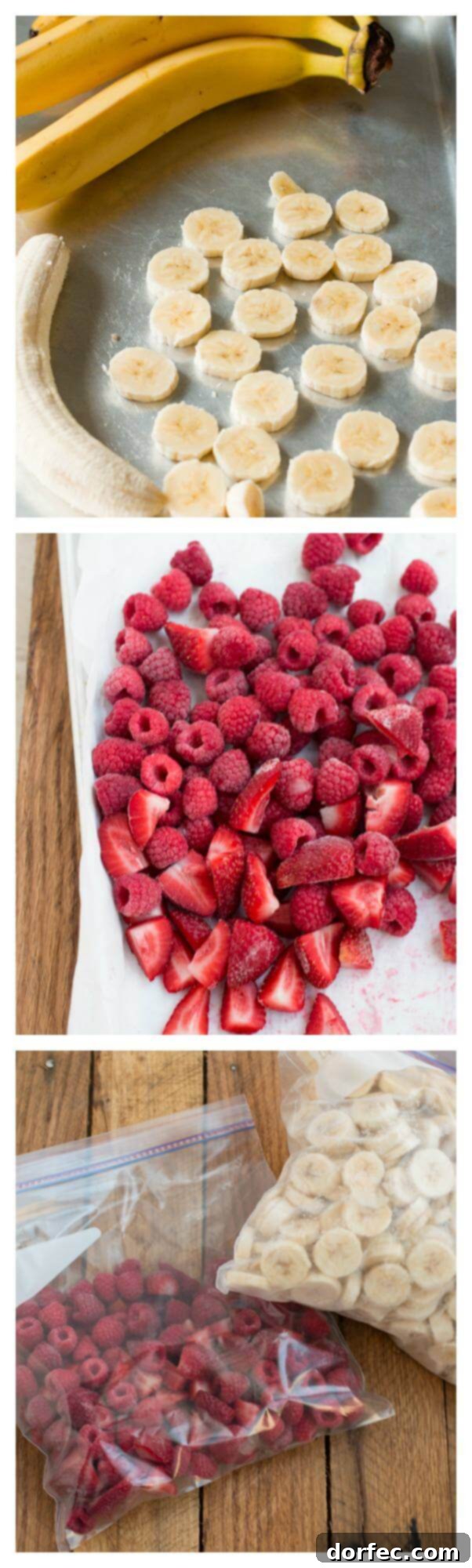
- The Flash Freeze Method (Crucial for Non-Clumping): Line a large baking sheet or cookie sheet with parchment paper or a silicone baking mat. Arrange the prepared fruit in a single layer, ensuring there’s a little space between each piece. This step, known as flash freezing, prevents the fruit from clumping together into one giant frozen block. If pieces touch, they will stick.
- Freeze Solid: Carefully transfer the baking sheet to your freezer. Allow the fruit to freeze solid for a minimum of 3 hours, or preferably overnight (up to 24 hours). This ensures each piece is individually frozen.
- Transfer and Store: Once the fruit is completely frozen, remove the baking sheet from the freezer. Quickly transfer the frozen fruit pieces into freezer-safe bags, such as Ziploc freezer bags, or rigid freezer containers. Press out as much air as possible from the bags before sealing them shut to prevent freezer burn. Label the bags with the type of fruit and the date it was frozen.
Properly frozen fruit will maintain its quality for 6 to 9 months, ensuring you have a steady supply of smoothie-ready ingredients whenever inspiration strikes.
Do You Have to Defrost Fruit Before Adding It to Smoothies?
Absolutely not! In fact, I highly recommend adding your fruit directly to the blender while it’s still completely frozen. This is one of the key secrets to achieving that perfect thick, creamy, and wonderfully cold smoothie consistency without relying on ice. Ice melts quickly and can significantly water down your delicious blend, diluting both its flavor and nutritional impact. By using frozen fruit, you ensure your smoothie remains rich, cold, and satisfying from the first sip to the last, without any unwanted dilution.
Optimal Fruits for Freezing
While most fruits can be frozen, some are exceptionally well-suited for this process, retaining their texture and flavor beautifully in smoothies. Here’s an expanded list of fruits that are fantastic for freezing, along with any specific preparation notes:
- Strawberries: Hull and halve larger ones.
- Raspberries: Freeze whole.
- Blackberries: Freeze whole.
- Marionberries: Freeze whole (similar to blackberries).
- Blueberries: Freeze whole. No special prep needed other than rinsing.
- Bananas: Peel and slice into 1-inch thick rounds. For best results, freeze very ripe bananas (with brown spots) for maximum sweetness.
- Pineapple: Peel, core, and cut into chunks.
- Mango: Peel, remove pit, and cut into cubes.
- Papaya: Peel, remove seeds, and cut into chunks.
- Cherries: Pit them before freezing for easier blending.
- Avocados: Peel, remove pit, and slice or dice. Freeze in small portions. While not a fruit in the traditional sense for sweetness, frozen avocado adds incredible creaminess and healthy fats to smoothies.
- Peaches: Peel (optional, but recommended for smoother texture), pit, and slice.
- Kiwi: Peel and slice into rounds.
- Grapes: Freeze whole for a sweet, icy treat that also works great in smoothies.
Crafting the Perfect Smoothie: Beyond Frozen Fruit
While frozen fruit is undeniably the star, building a truly exceptional smoothie involves a few more elements and considerations:
- Invest in a Quality Blender: A powerful blender is key to breaking down frozen fruit into a smooth, consistent texture. We highly recommend using a Blendtec blender or a similar high-speed model for optimal results.
- Choose Your Liquid Base Wisely: The liquid you add will determine the consistency and some of the flavor profile.
- Dairy Milk: Adds creaminess and protein.
- Plant-Based Milks: Almond, soy, oat, or coconut milk offer dairy-free alternatives with varying flavor notes.
- Juice: Orange juice, apple juice, or cranberry juice can add sweetness and tartness, but be mindful of added sugars.
- Water: The simplest option, letting the fruit flavors shine, but might result in a less creamy smoothie.
- Coconut Water: A hydrating option with a subtle tropical flavor.
- Boost Your Nutrients: This is where you can truly personalize your smoothie for maximum health benefits.
- Protein Powder: Vanilla or unflavored protein powder (whey, plant-based) is excellent for satiety and muscle repair.
- Greens: Spinach, kale, or collard greens blend seamlessly into most fruit smoothies, adding vitamins and minerals without significantly altering the taste.
- Healthy Fats & Fiber: Chia seeds, flax seeds, hemp seeds, or a spoonful of almond or peanut butter add healthy fats, fiber, and protein.
- Superfoods: A dash of spirulina, maca powder, or acai powder can elevate the nutritional density.
Delicious Smoothie Recipes Featuring Frozen Fruit
Having your fruit prepped and frozen ahead of time makes these incredible smoothie recipes a breeze to whip up. Just toss the ingredients into your blender with your liquid of choice, and you’ll have a healthy, filling breakfast or snack in minutes! Here are some of our absolute favorites, all utilizing the magic of frozen fruit:
- Cold Buster Smoothie: A powerful blend to boost immunity featuring Orange Juice, Spinach, Fresh Orange, Baby Carrots, Frozen Bananas, Frozen Pineapple, Apple, and Vanilla Protein Powder.
- Raspberry Pineapple Coconut Smoothie: A tropical escape with Frozen Raspberries, Frozen Pineapple, Frozen Bananas, Coconut Extract, Creamy Coconut Milk, and a touch of Honey or Agave for sweetness.
- Peach Berry Protein Green Smoothie: A nutrient-packed option with Almond or Coconut Milk, Vanilla Protein Powder, Fresh Spinach, Frozen Mixed Berries, Frozen Bananas, Frozen Peaches, topped with Granola, Chia Seeds, and Almonds.
- Pineapple Orange Banana Green Smoothie: A refreshing and vibrant green smoothie with Fresh Spinach, Frozen Banana, Frozen Pineapple, Juicy Mandarin Orange, Milk, and a sprinkle of Chia Seeds.
- Protein Green Smoothie Granola Parfait: A layered delight perfect for breakfast, combining Milk, Spinach, Frozen Mangoes, Frozen Bananas, Crunchy Almonds, Vanilla Protein Powder, and your favorite Granola.
By taking a little time to freeze fruit ahead of time, you’re not just saving money; you’re investing in your health and simplifying your daily routine. Imagine having all the ingredients prepped and ready for creamy, delicious, and nutritious smoothies every single day of the week. This simple habit empowers you to make healthier choices consistently, ensuring you start each morning feeling energized and ready to tackle whatever comes your way.