
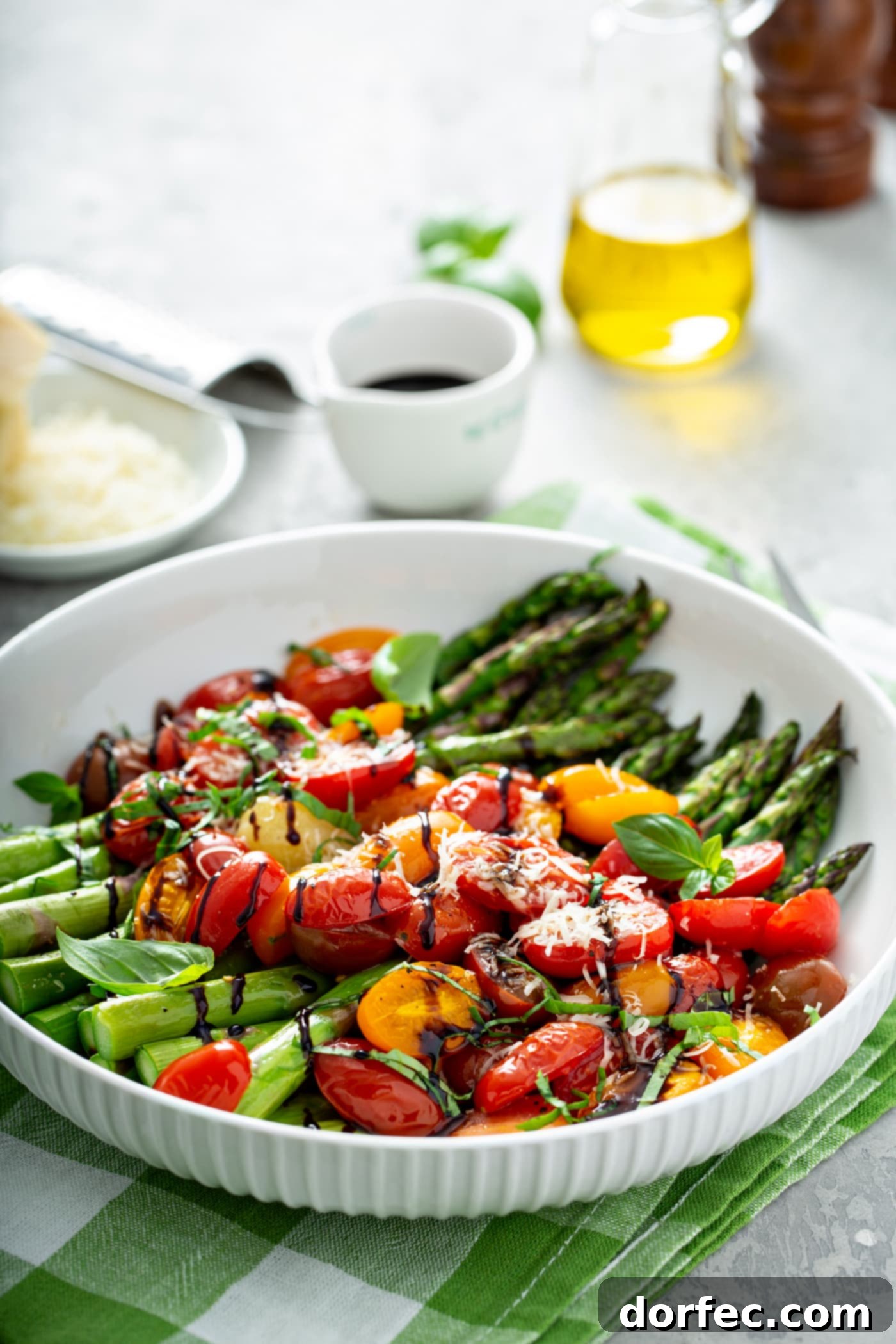
Balsamic Glazed Roasted Tomato and Asparagus: An Elegant, Easy Side Dish
Transform ordinary vegetables into an extraordinary culinary experience with this incredibly simple yet sophisticated recipe for Balsamic Glazed Roasted Tomato and Asparagus. This delightful side dish looks and tastes fancy, but secretly takes only minutes to prepare, making it perfect for both weeknight dinners and special occasions. The magic happens in the oven: fresh asparagus and ripe tomatoes are roasted to perfection, enhancing their natural sweetness and creating tender textures. A luxurious balsamic glaze, rich and tangy, then brings all the flavors together, complemented by a sprinkle of savory Parmesan cheese.
Before diving into this vibrant dish, ensure your asparagus is perfectly prepped for optimal flavor and texture. If you’re new to preparing this delicious green spear, we recommend taking a moment to review our comprehensive guide on how to prepare asparagus to get the best results every time.
Once your ingredients are ready, you’re just a few simple steps away from enjoying one of our favorite roasted vegetable side dishes. Its irresistible combination of sweet, savory, and tangy notes makes it a beloved companion to heartier meals, much like our comforting Instant Pot Green Beans and Potatoes with Bacon or as a fresh contrast to a robust main course such as Instant Pot Short Ribs.
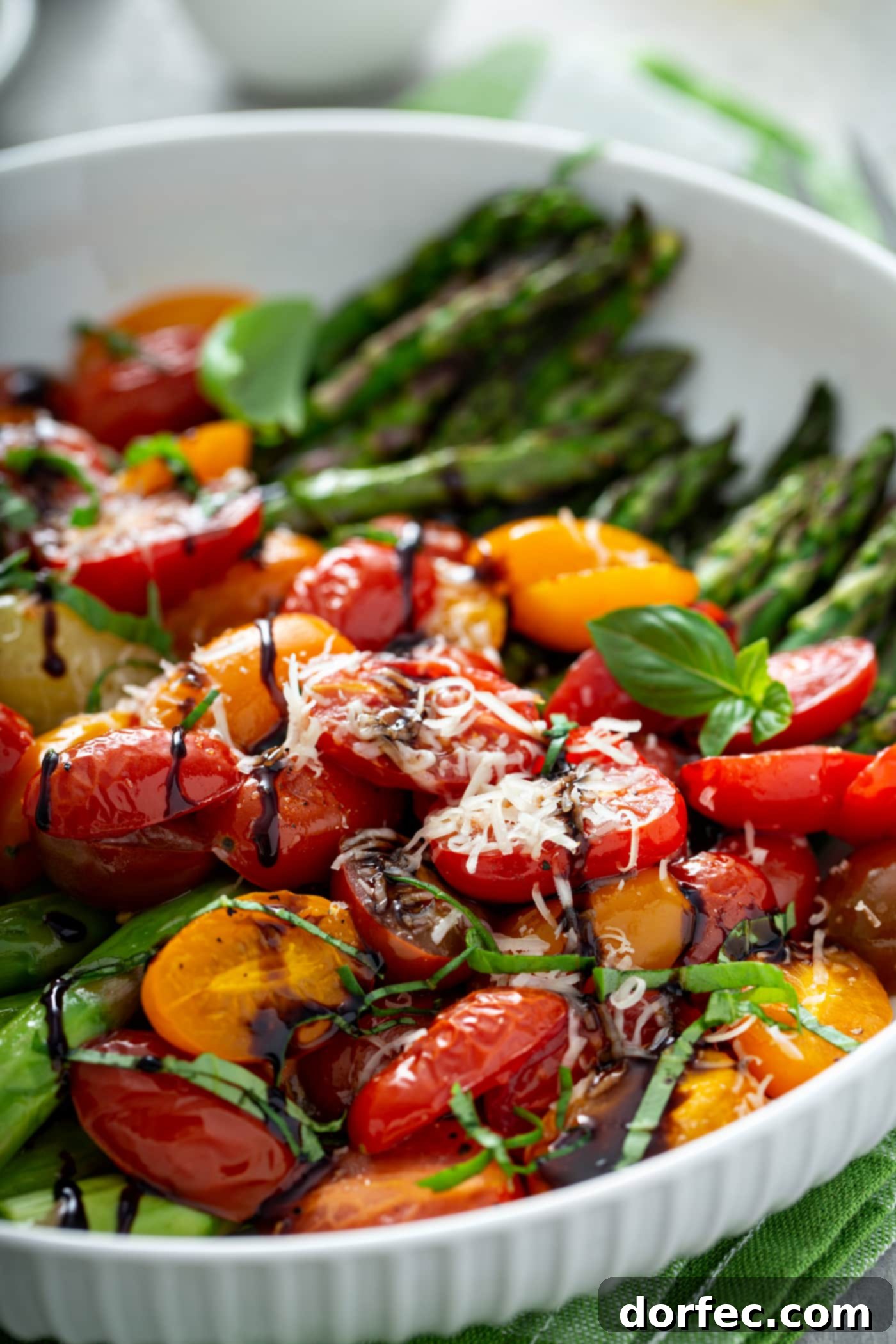
Why You’ll Love This Balsamic Roasted Vegetable Recipe
This dish is more than just a side; it’s a celebration of simple, fresh flavors brought to life with minimal effort. Here’s why it deserves a spot in your regular cooking rotation:
- Effortlessly Elegant: Despite its gourmet appearance, this recipe is incredibly straightforward, requiring just a few minutes of active prep and hands-off roasting time.
- Bursting with Flavor: Roasting intensifies the natural sweetness of tomatoes and asparagus, while the balsamic glaze adds a rich, tangy depth that elevates the entire dish.
- Healthy & Nutritious: Packed with vitamins, minerals, and fiber, this vegetable-rich side supports a balanced diet without compromising on taste.
- Versatile & Adaptable: Serve it as a dazzling side dish, a light vegetarian main with crusty bread, or even incorporate leftovers into salads and pasta.
- Seasonal Flexibility: While peak-season produce is always a treat, the ingredients for this recipe are readily available year-round, making it a reliable choice for any season.
The Magic of Roasting
Roasting is truly one of the best cooking methods for vegetables. The high heat of the oven not only cooks the vegetables but also caramelizes their natural sugars, leading to a depth of flavor that boiling or steaming simply cannot achieve. This process creates tender interiors and slightly crispy, browned edges that are utterly delicious. For this recipe, roasting brings out the best in both the sweet acidity of the tomatoes and the earthy, slightly bitter notes of the asparagus.
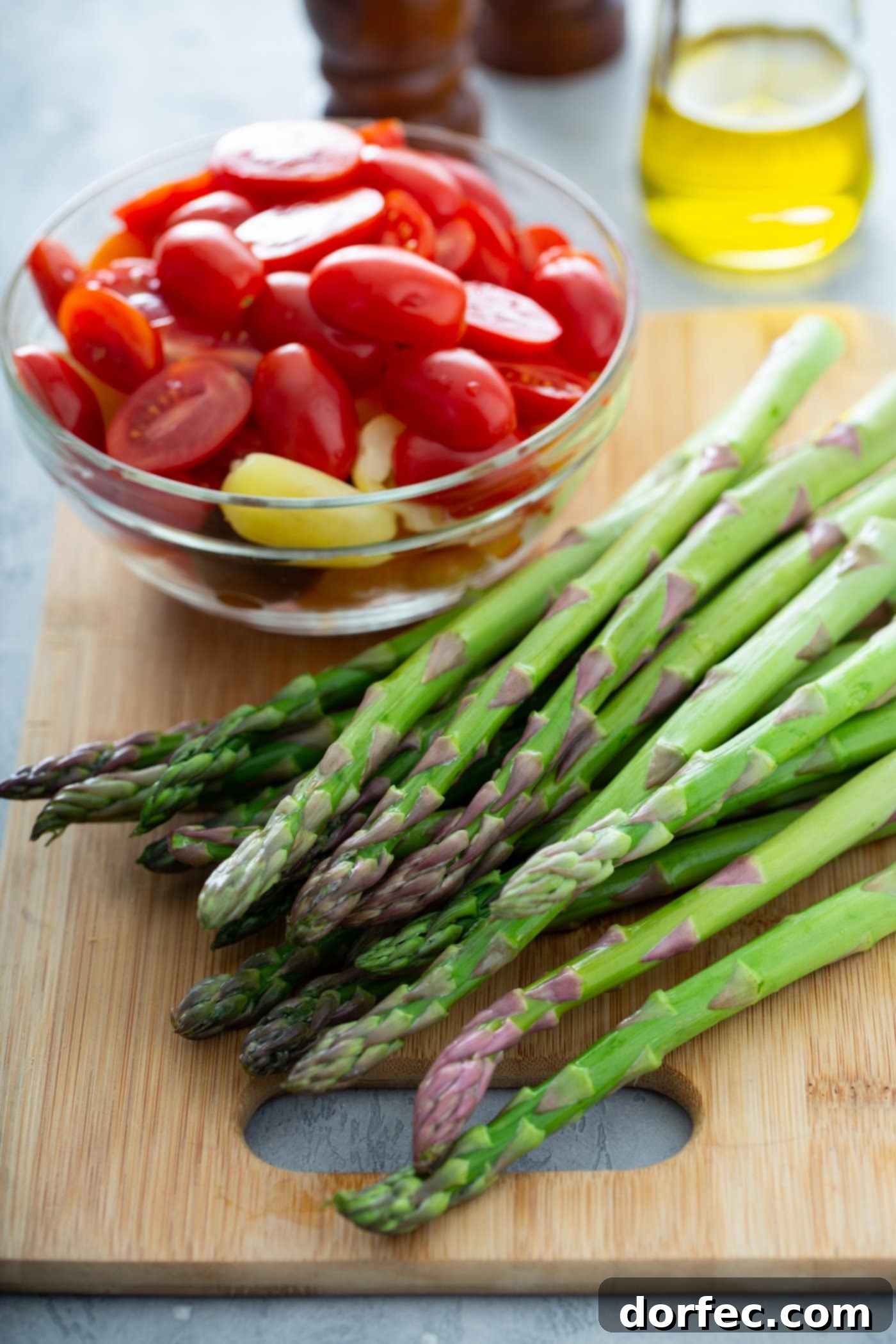
Essential Ingredients for Balsamic Glazed Roasted Tomato and Asparagus
One of the beauties of this recipe is its reliance on readily available ingredients that can be found in any grocery store, any time of the year. This makes it a go-to option for a quick, easy, yet beautiful and delicious side dish. Here’s what you’ll need, along with tips for selecting the best quality:
- Tomatoes: We absolutely adore using heirloom grape tomatoes for this dish. Their vibrant array of colors (reds, yellows, and even oranges) makes the finished plate visually stunning, and they often boast a richer, more complex flavor than standard grape tomatoes. If heirloom varieties aren’t available, any small, sweet grape or cherry tomatoes will work beautifully. Consider slicing larger cherry tomatoes in half for even cooking.
- Asparagus: Look for firm, bright green spears with tightly closed tips. Thinner spears tend to be more tender, but thicker ones will also roast well; just adjust cooking time accordingly. Trimming the woody ends is crucial for tenderness.
- Balsamic Vinegar: The star of the glaze! Opt for a good quality balsamic vinegar, as its flavor will be concentrated during reduction. A richer, aged balsamic will yield a more complex and flavorful glaze.
- Sugar: Just a touch of sugar is added to the balsamic vinegar to balance its acidity and help achieve a thicker, sweeter glaze. Granulated sugar or even a touch of brown sugar works well.
- Olive Oil: A good extra virgin olive oil is essential for coating the vegetables before roasting. It helps them caramelize, adds flavor, and prevents sticking.
- Salt and Pepper: Simple seasoning is all these fresh vegetables need to shine. Use freshly ground black pepper for the best aroma.
- Parmesan Cheese, Shredded: A sprinkle of freshly shredded Parmesan cheese adds a salty, umami kick and a lovely creamy texture when melted slightly by the warm vegetables.
- Fresh Basil (for garnish): A final flourish of chopped fresh basil leaves adds a fragrant, herbaceous note that perfectly complements the tomatoes and balsamic.
Step-by-Step: How to Achieve Perfectly Roasted Vegetables
The key to success with this dish lies in proper roasting techniques for both the asparagus and the tomatoes. While they share the same oven temperature, it’s important to give them enough space and understand their individual cues for doneness.
Crafting the Luscious Balsamic Glaze
The balsamic glaze is incredibly simple to make and can be prepared while your oven preheats or even a day ahead. Its rich, syrupy texture and concentrated flavor are what truly bring this dish to life.
- Combine & Whisk: In a small saucepan, combine 1/2 cup of balsamic vinegar and 1/2 teaspoon of sugar. Whisk them together thoroughly over medium heat until the sugar dissolves.
- Simmer & Reduce: Bring the mixture to a gentle simmer. Do not boil vigorously. Allow it to cook, stirring occasionally, until the vinegar has reduced by about one-third. It should be thick enough to coat the back of a spoon, resembling a light syrup. This typically takes about 5-10 minutes, depending on the heat and the width of your saucepan.
- Cool & Thicken: Remove the glaze from the heat and set it aside to cool. It will continue to thicken as it cools. If it becomes too thick, you can gently warm it again with a teaspoon of water to reach your desired consistency.
Roasting Asparagus to Perfection
The secret to perfectly roasted asparagus is surprisingly simple: give it space and let the oven do its job. This allows for optimal caramelization and a tender-crisp texture.
- Preheat Oven: Preheat your oven to 400 degrees Fahrenheit (200 degrees Celsius). A hot oven ensures a quick roast and prevents the asparagus from steaming.
- Prep & Season: Snap off the woody ends of your asparagus spears. A good trick is to bend a spear near the bottom; it will naturally break where the tough part ends. Toss the trimmed asparagus in 1 tablespoon of olive oil, then season generously with salt and pepper.
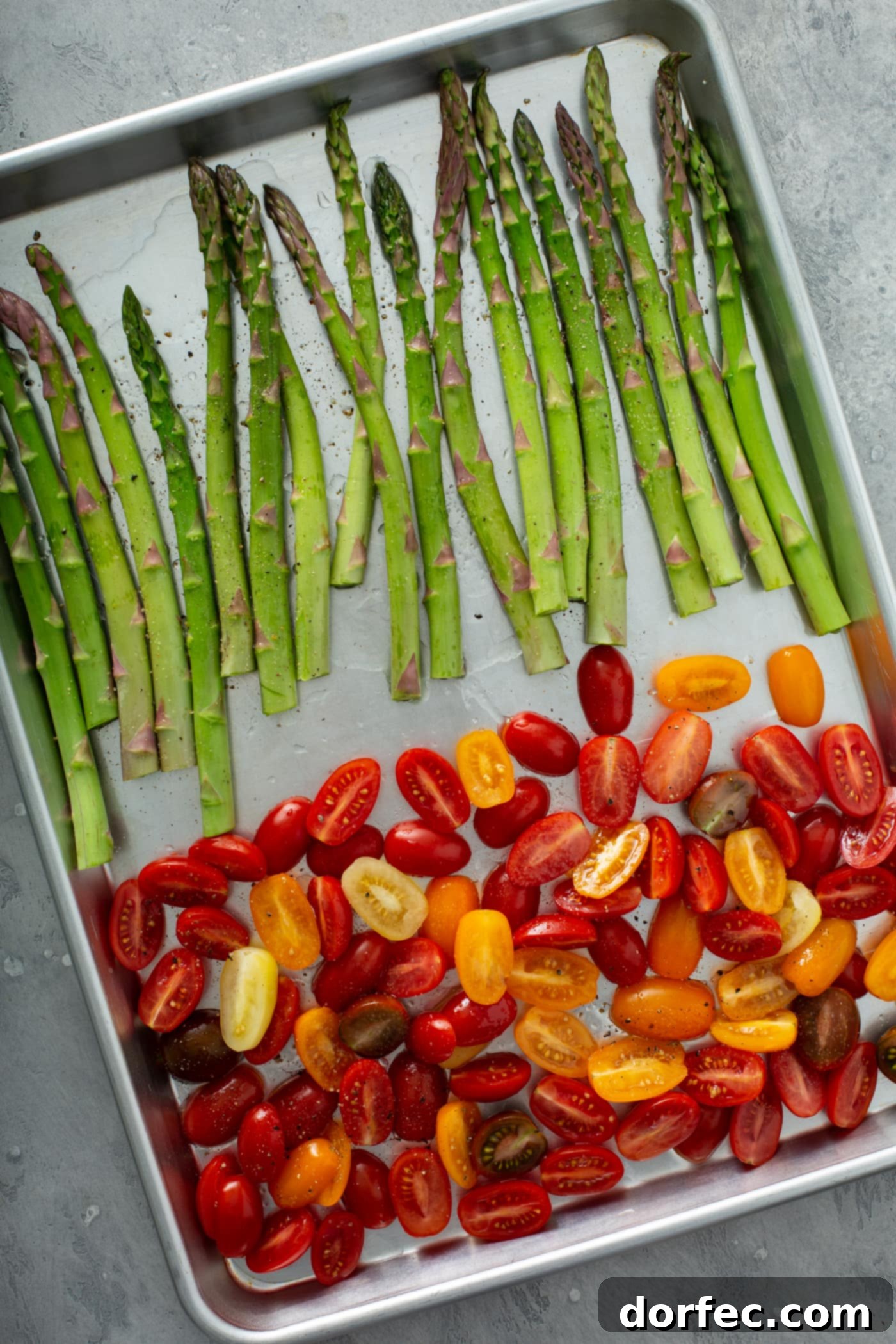
- Arrange Evenly: Spread the seasoned asparagus in a single layer on one side of a large baking sheet. Ensure the spears aren’t crowded, as this would cause them to steam instead of roast. Bake for 10-15 minutes, depending on the thickness of the spears and your desired tenderness.
How Do You Know When Asparagus Is Cooked?
Perfectly cooked roasted asparagus should be tender yet firm with a slight “snap” when bent. The tips should be slightly browned and crispy, and the stalks should be bright green. If you bend a spear and it flops over completely without any resistance, it’s likely overcooked. However, some, including myself, prefer it a little softer, so feel free to adjust to your personal preference! Aim for vibrant color and a delightful tenderness.
Roasting Tomatoes for Deep Flavor
Roasting tomatoes might seem daunting due to their delicate nature, but it’s a fantastic method for bringing out their inherent sweetness and deepening their flavor. The process concentrates their juices and creates a wonderful jam-like texture.
- Prep & Season: Halve your grape or cherry tomatoes. In a separate bowl, toss them with the remaining 1 tablespoon of olive oil, a pinch of salt, and pepper.
- Arrange & Separate: Arrange the seasoned tomatoes on the opposite end of the same baking sheet as the asparagus. Keeping the vegetables somewhat separated is important, as the tomatoes release juices during roasting, which could cause the asparagus to boil rather than roast if they’re too close.
- Roast Simultaneously: Roast the tomatoes for the same amount of time as the asparagus (10-15 minutes). They are done when you see them begin to wilt, their skins start to burst, and some dark, caramelized spots form. This indicates their sugars have concentrated beautifully.
Serving Suggestions for Your Roasted Asparagus and Tomatoes
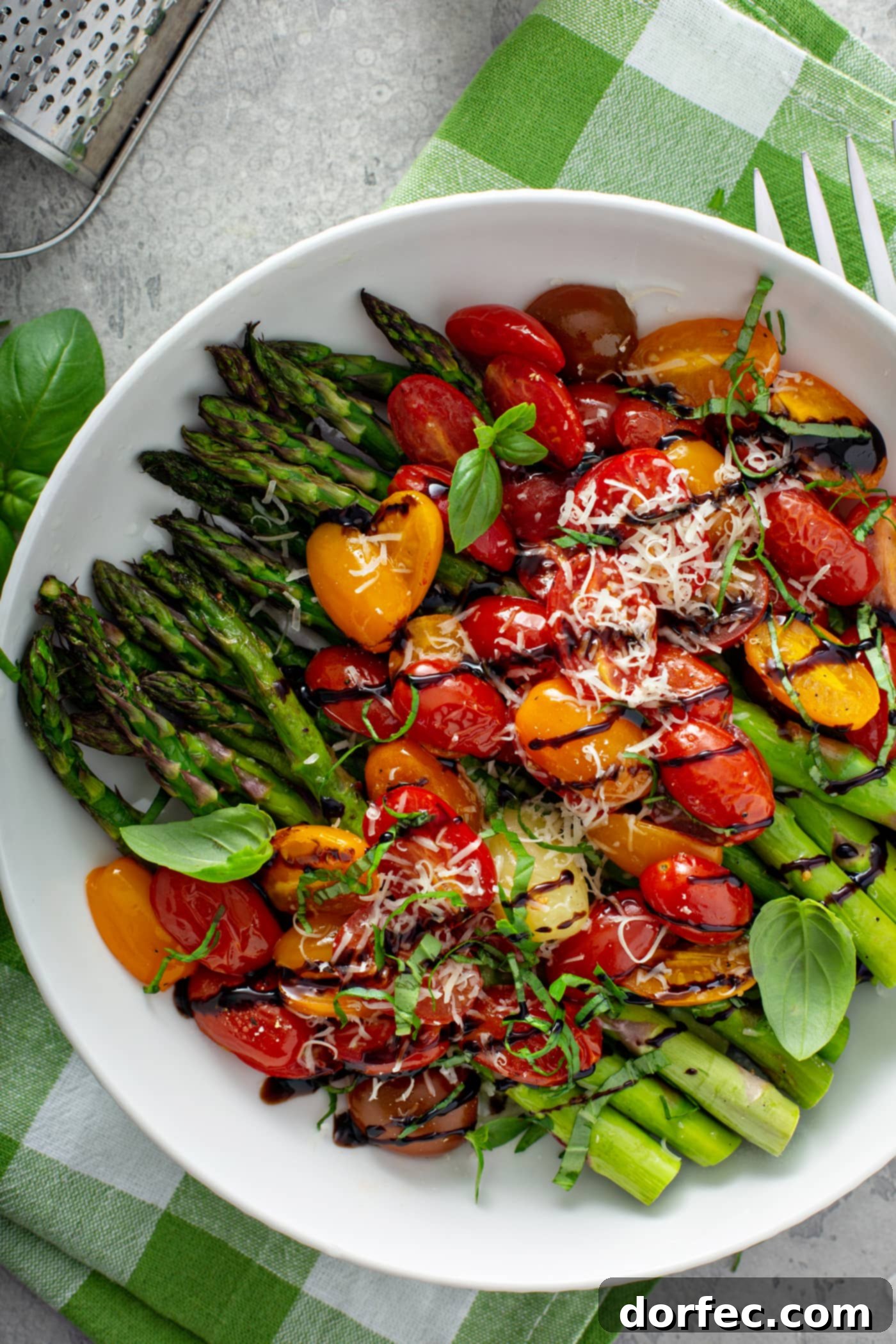
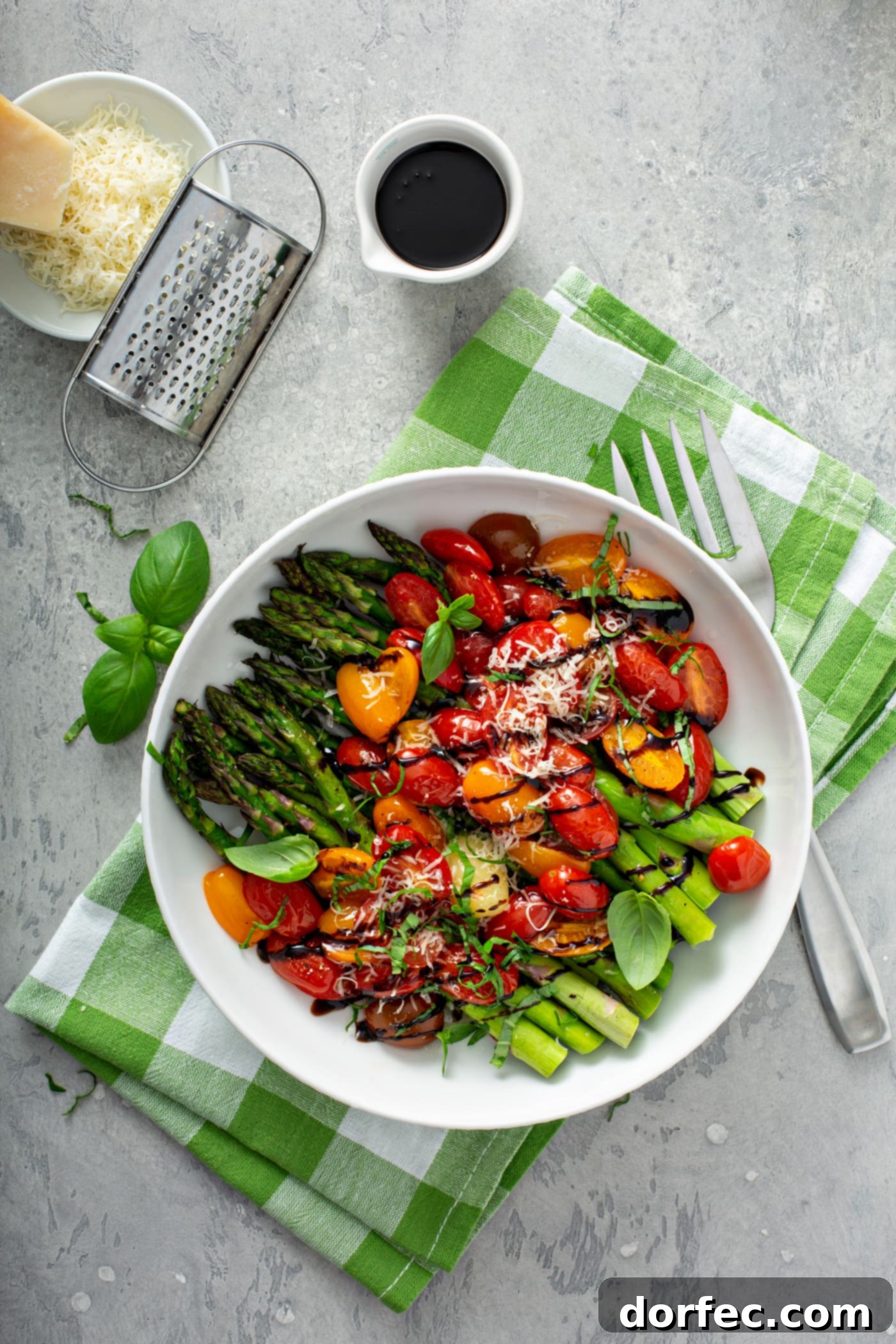
Once roasted, transfer the vegetables to a serving platter. Sprinkle generously with fresh shredded Parmesan cheese and a final drizzle of your homemade balsamic glaze. Garnish with fresh chopped basil for an aromatic finish. While this dish is incredibly satisfying served as is (which is how we enjoy it 99% of the time!), it’s also wonderfully versatile.
- As a Side: It pairs beautifully with almost any protein – grilled chicken, pan-seared fish, roasted pork loin, or a juicy steak.
- Light Main Course: Serve a generous portion over a bed of quinoa, couscous, or farro for a wholesome and satisfying vegetarian meal.
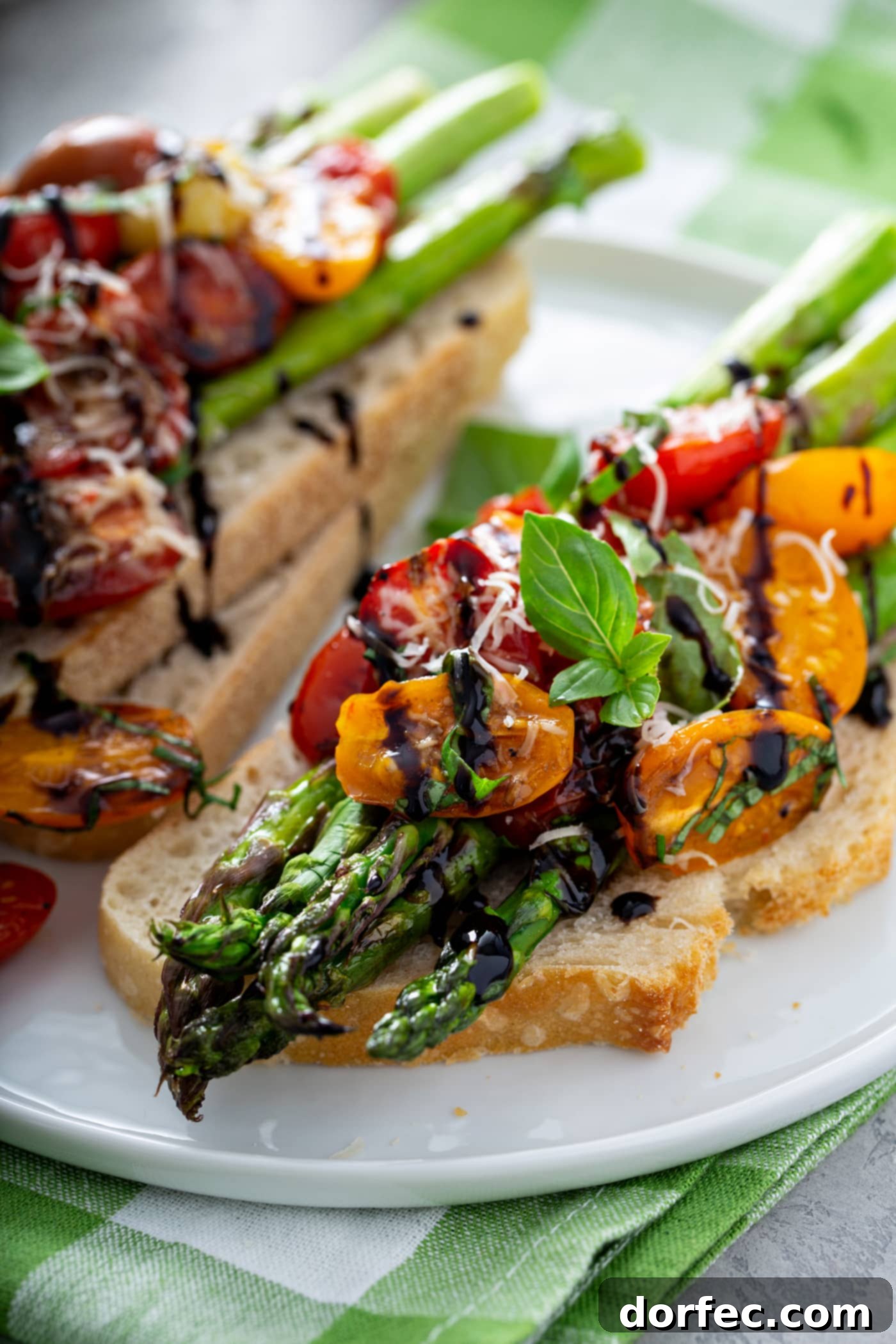
- Crostini & Appetizers: Spoon the warm mixture onto toasted baguette slices or crostini for an impressive appetizer. A dollop of creamy ricotta or goat cheese under the veggies makes it even more decadent.
- Salad Topper: Add to a fresh green salad for extra flavor and texture. The warm vegetables will slightly wilt the greens, creating a lovely contrast.
- Pasta Partner: Toss with freshly cooked pasta, a drizzle of olive oil, and extra Parmesan for a quick and flavorful pasta dish.
Tips for Success & Variations
While the basic recipe is fantastic on its own, don’t hesitate to get creative and customize it to your taste!
- Cheesy Caprese Twist: As mentioned, adding fresh mozzarella cheese cubes during the last few minutes of roasting can transform this into a caprese-style dish. The mozzarella will melt slightly, creating gooey pockets of deliciousness.
- Garlic & Herbs: Toss the vegetables with minced garlic, dried oregano, or a touch of rosemary along with the olive oil for an extra layer of aromatic flavor. Fresh thyme also works wonderfully.
- Spicy Kick: A pinch of red pepper flakes added with the seasonings can give the dish a subtle heat.
- Toasted Bread Crumbs: For added texture, sprinkle some toasted bread crumbs (panko works great!) over the dish just before serving. You can toast them briefly in a dry pan with a little olive oil until golden.
- Lemon Zest: A squeeze of fresh lemon juice or a sprinkle of lemon zest over the finished dish can brighten all the flavors.
- Add Other Vegetables: Bell peppers, zucchini, or red onion slices can be roasted alongside the asparagus and tomatoes for a more diverse vegetable medley. Just ensure they are cut into similar sizes for even cooking.
- Protein Boost: For a more substantial meal, add cooked chicken sausage, chickpeas, or halloumi cheese to the baking sheet during the last 10 minutes of roasting.
Storing and Reheating Your Roasted Vegetables
Proper storage ensures you can enjoy your fresh produce for longer, and handling leftovers correctly keeps them delicious for future meals.
How to Store Fresh Asparagus
I rarely buy asparagus the day I intend to cook it, which quickly taught me the best way to store it to maintain its freshness and crispness:
- Stand in Water: To store fresh asparagus, treat it like a bouquet of flowers. Trim a small amount off the bottom ends, then stand the spears upright in a glass jar or container with about 1-2 inches of water.
- Refrigerate: Cover the top loosely with a plastic bag to retain moisture (or simply place in the crisper drawer uncovered if space allows) and place it in the refrigerator. This method can keep asparagus fresh and crisp for up to a week.
Oh, Sweet Basil Pro Tip: The Grocery Store Method
Here’s a favorite tip from Oh, Sweet Basil that applies to almost all produce: All produce should be stored similarly to how you find it at the grocery store.
Think about it: grocery stores aim for food to look its best, taste its best, and last as long as possible to minimize waste. This means they’ve likely found optimal storage conditions. If a vegetable is chilled in the store (like asparagus, leafy greens, most fruits), keep it in your fridge at home. If it’s displayed in open bins at room temperature (like onions, potatoes, bananas), store it in a cool, dark, and dry location. This simple guideline can significantly extend the shelf life of your fresh produce.
Storing Leftover Roasted Asparagus and Tomatoes
Storing leftover roasted vegetables is straightforward:
- Airtight Container: Place cooled leftover balsamic glazed roasted tomatoes and asparagus in an airtight container with a lid.
- Refrigerate Promptly: Store in the refrigerator for up to 2-3 days. While they are still safe to eat beyond this, the texture and flavor might start to degrade.
How to Reheat Leftover Asparagus and Tomatoes
While reheated asparagus won’t be as crisp as freshly roasted, it can still be quite delicious:
- Oven Method: For the best results, spread the leftovers on a baking sheet and reheat in an oven preheated to 350-400 degrees Fahrenheit (175-200 degrees Celsius) for about 5-7 minutes, or until warmed through. This method helps restore some of the texture.
- Microwave Method: For a quicker reheat, place the leftovers in a microwave-safe dish and microwave in 30-60 second intervals until heated through. Be mindful that this method can make the asparagus softer.
- Repurpose Creatively: If you’re not keen on eating them straight, reheated roasted vegetables are excellent additions to omelets, frittatas, rice bowls, or grain salads. The slight softening of the asparagus works well in these contexts.
Frequently Asked Questions About This Recipe
Is Asparagus Good For You?
Absolutely! Asparagus is a nutritional powerhouse. It is low in calories, contains no fat, and is an excellent source of essential nutrients. It’s particularly rich in fiber, which aids digestion and promotes satiety. It also provides significant amounts of folate (important for cell growth), and vitamins A, C, and K. Additionally, asparagus contains antioxidants and boasts anti-inflammatory properties, making it a fantastic addition to a healthy diet.
What Are Heirloom Grape Tomatoes?
Heirloom tomatoes are special varieties of tomatoes whose seeds have been passed down through generations, often from small family farms, for their distinct flavors, colors, and textures. Unlike hybrid tomatoes bred for uniform appearance or disease resistance, heirlooms are celebrated for their unique characteristics. Heirloom grape tomatoes, specifically, offer an intense, rich, and often sweeter flavor profile that truly sets them apart as some of the best tomatoes available, in my opinion. Their varied colors add a beautiful visual appeal to any dish. If you can’t find heirloom tomatoes, don’t worry—regular grape or cherry tomatoes will still yield a delicious result.
Can I Make This Dish Ahead of Time?
While the balsamic glaze can certainly be made a day or two in advance and stored in the refrigerator, this dish is best enjoyed fresh from the oven. The roasting process yields the most vibrant colors and tender-crisp textures, which can soften upon sitting. However, if you need to prep, you can trim the asparagus and halve the tomatoes a day ahead, storing them separately in the fridge.
What Kind of Balsamic Vinegar Should I Use?
The quality of your balsamic vinegar will directly impact the depth of flavor in your glaze. While you don’t need the most expensive aged balsamic for everyday cooking, avoid very thin, watery, or overly acidic varieties. Look for balsamic vinegar that has a slightly thicker consistency and a balanced sweet-tangy flavor. Traditional balsamic vinegar from Modena or Reggio Emilia is an excellent choice if you want to splurge, but a good quality commercial balsamic will also work beautifully.
Delicious Pairing: Main Dish Suggestions
Looking for a main course to complement this flavorful side? Our Simple Garlic Butter Parmesan Chicken with Lemon Rice recipe makes an excellent choice, offering a harmonious blend of flavors that will complete your meal perfectly.
Explore More Recipes
Other Roasted Tomato Recipes You’ll Love:
- Hearty Roasted Tomato Soup with Mini Grilled Cheese
- Vegetarian Calzones with Roasted Tomatoes and Cheese
- Baked Caprese Savory Crepes
- Decadent Four Cheese Stuffed Tomatoes
More Asparagus Recipes to Brighten Your Plate:
- Easy Grilled Lemon Pepper Asparagus
- Zesty Cilantro Pesto Asparagus
- Refreshing Asparagus and Avocado Salad
- Spring Ham and Asparagus Lemon Cream Pasta
- Easy Pesto Asparagus Quinoa Bowl
Discover Over 200 More Delicious Side Dish Recipes to complement any meal!
Balsamic Glazed Roasted Tomato and Asparagus
Ingredients
- 1/2 Cup Vinegar, balsamic
- 1/2 teaspoon Sugar
- 1 Bunch Asparagus, trimmed
- 2 Cups Tomatoes, heirloom, grape, cut in half
- 2 Tablespoons Olive Oil, divided
- Salt and Pepper, to taste
- 1/3 Cup Parmesan, Shredded
- Basil, fresh, chopped, for garnish
Instructions
- In a saucepan over medium heat, whisk together the balsamic vinegar and sugar. Allow to come to a simmer and cook until reduced by 1/3. Set aside to cool.
- Heat the oven to 400 degrees Fahrenheit (200°C).
- Toss the asparagus and tomatoes separately in the olive oil, salt, and pepper. Place asparagus on one side of a baking sheet and tomatoes on the other to prevent tomato juices from affecting the asparagus.
- Roast for 10-15 minutes, or until vegetables are tender-crisp and lightly caramelized. Remove from oven and immediately transfer to a platter. Sprinkle with Parmesan cheese, drizzle with the cooled balsamic glaze, and garnish with fresh basil. Serve warm!
Recipe Notes
Leftovers can be kept in an airtight container in the refrigerator for 2-3 days.
Nutrition
Calories: 183kcal
Carbohydrates: 20g
Protein: 6g
Fat: 9g
Saturated Fat: 2g
Cholesterol: 6mg
Sodium: 140mg
Potassium: 404mg
Fiber: 3g
Sugar: 16g
Vitamin A: 1536IU
Vitamin C: 17mg
Calcium: 133mg
Iron: 3mg
Nutrition information is automatically calculated, so should only be used as an approximation.
Enjoyed this recipe? Share your thoughts below!