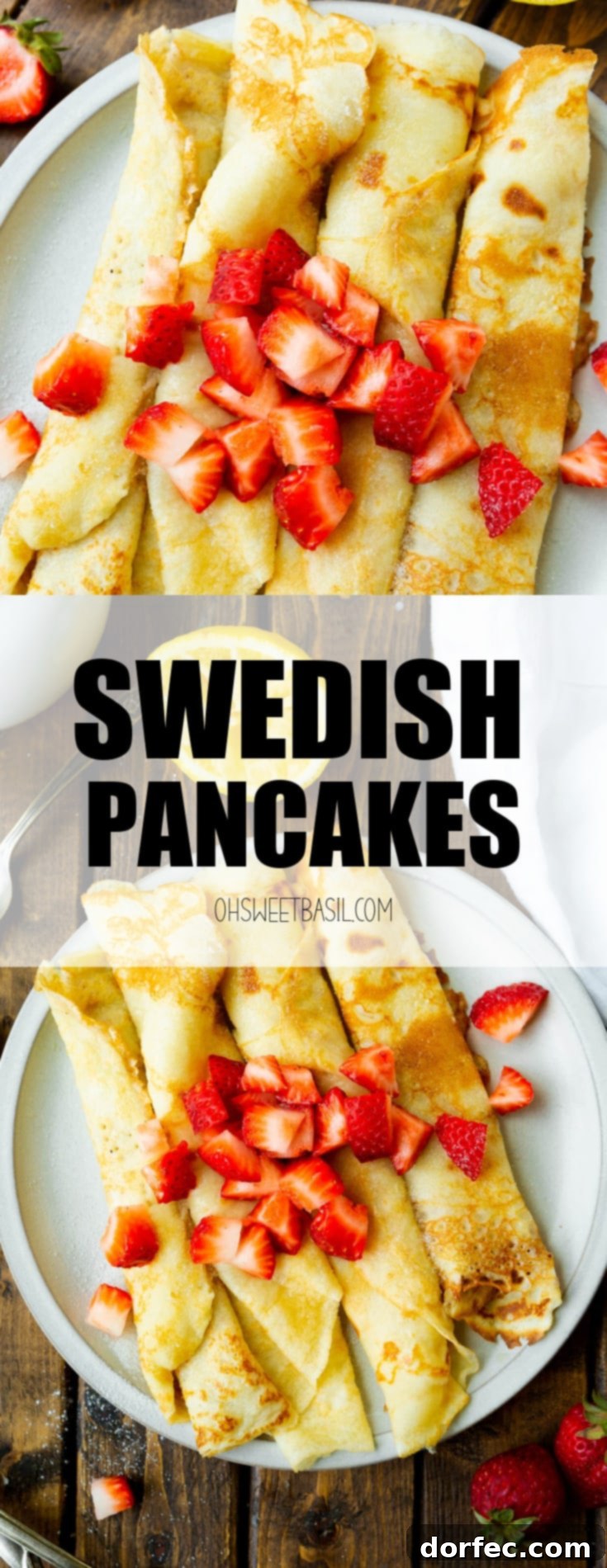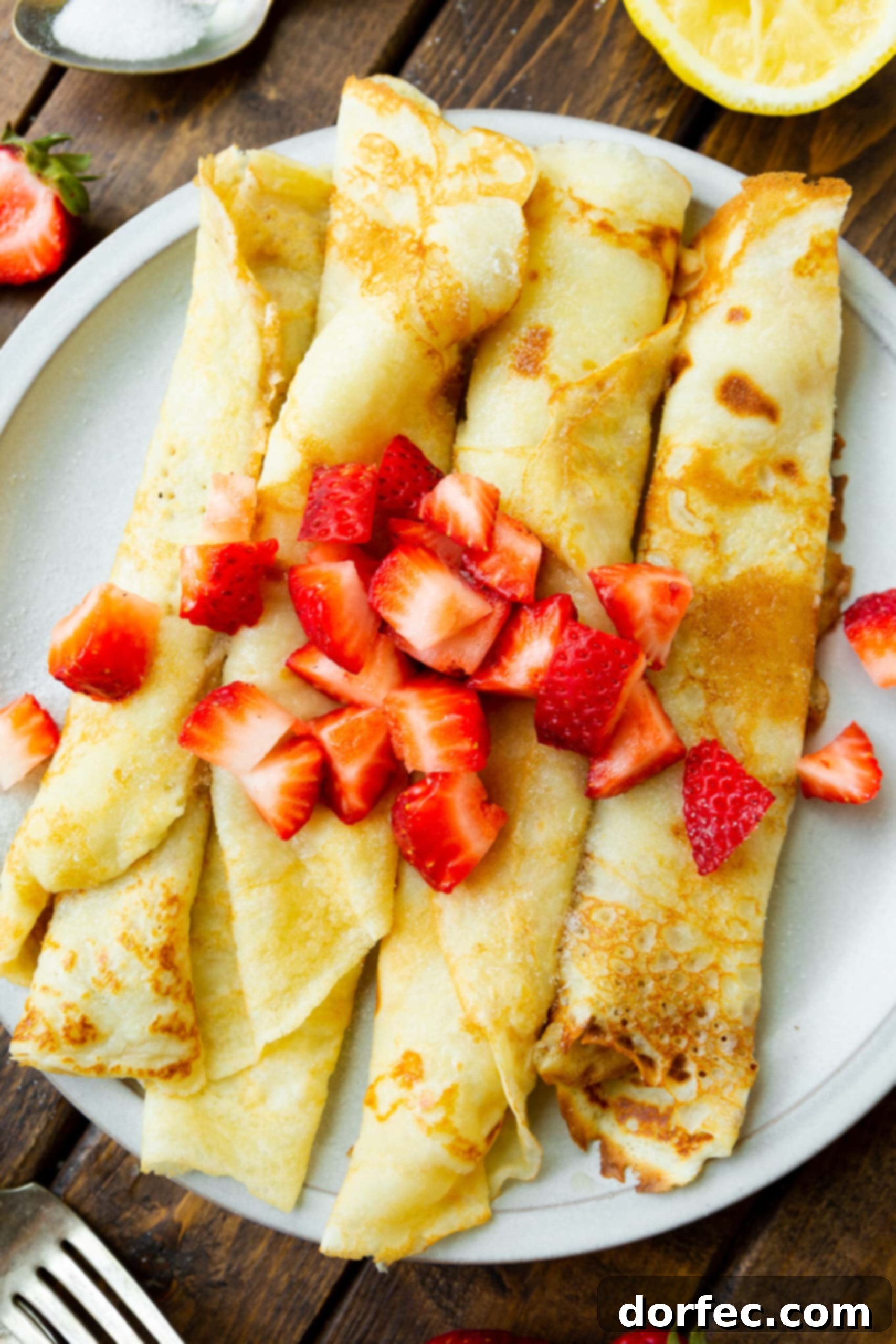
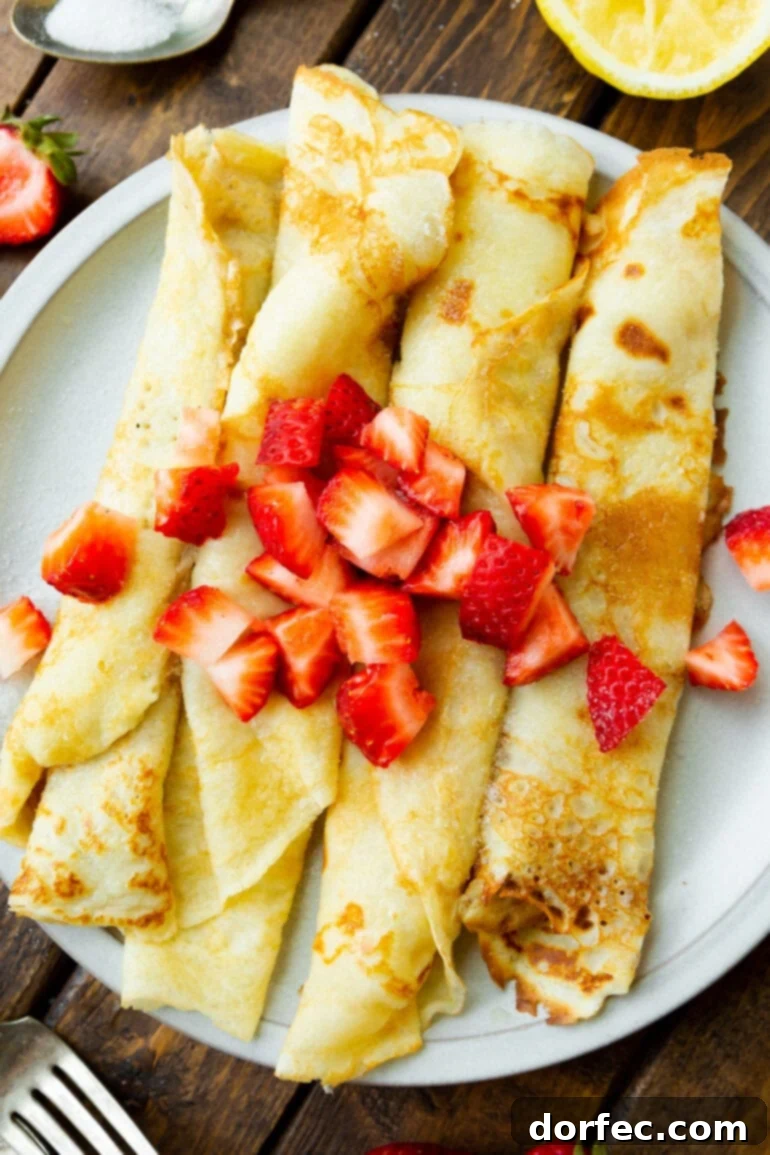
Swedish Pancakes offer a delightful culinary experience, gracefully bridging the gap between delicate French crepes and fluffy American pancakes. Renowned for their extraordinarily thin, tender, and lacy texture, these Swedish delights are a true breakfast marvel that captivates with every bite.
In the realm of breakfast recipes, it’s a bold claim, but many argue that Swedish pancakes stand in a class of their own, perhaps even superior to most crepe-like creations. Their delicate nature, combined with a rich, nuanced flavor, sets them apart. While traditional Swedish pancake recipes often emphasize milk, the local dairy in Sweden typically boasts a higher fat content. To replicate this rich taste and achieve that coveted tender texture in other regions, a touch of sour cream proves to be an ingenious addition, infusing the batter with an extra layer of depth and creaminess. However, for those who prefer, an all-milk base can still yield fantastic results, especially if using whole milk.
Exploring Culinary Heritage with Every Bite
There’s a profound connection between food and heritage, a delicious journey that allows us to explore our roots and appreciate the traditions passed down through generations. Lately, I’ve found myself captivated by the idea of understanding ancestral stories, not just through historical accounts but through the everyday experiences that shaped lives. Imagine the tales of resilience, like ancestors pulling handcarts across vast landscapes, enduring harsh blizzards with scarce food and rudimentary footwear, yet diligently journaling about faith and divine love. Such narratives inspire a desire to connect on a deeper, more personal level.
This yearning for connection often leads to thoughts of travel – envisioning a trip to Europe, to walk the very paths our ancestors trod, and, most importantly, to taste the foods that nourished them. It’s an immersive way to bridge centuries, understanding their daily lives through the simple, comforting act of sharing a meal. While an immediate European adventure might not always be possible, the kitchen offers a wonderful alternative. By recreating traditional recipes, we bring a piece of that history and culture right into our homes. These Swedish Pancakes are a perfect example, offering a tangible link to a rich culinary past and making heritage a delicious, accessible experience.
What Exactly is a Swedish Pancake?
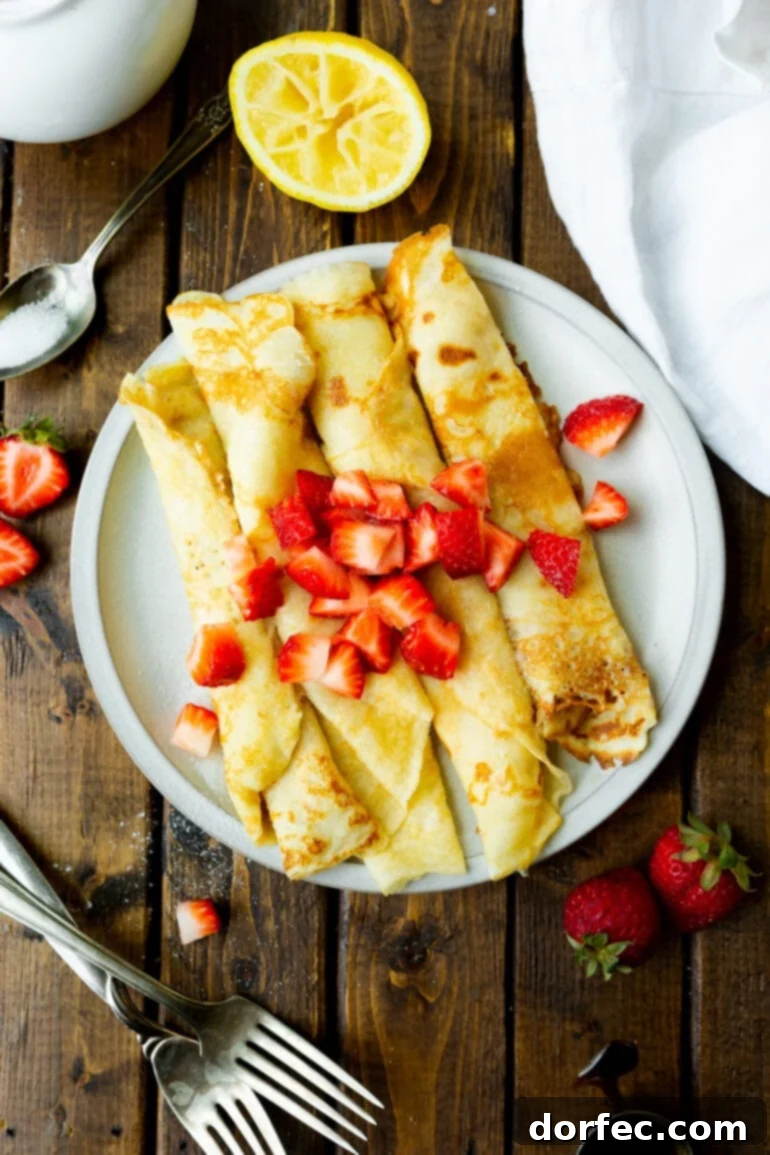
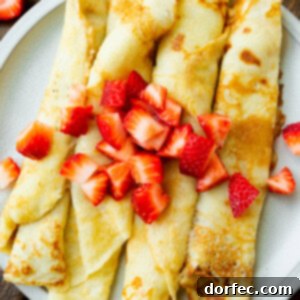
At its core, a Swedish pancake, or *pannkakor* as it’s known in Sweden, is a deliciously thin, delicate, and often lacy pancake. Imagine a texture that’s tender and almost melts in your mouth, a perfect blend between a traditional pancake and a very thin crepe. Historically, these pancakes are a staple in Swedish cuisine, deeply ingrained in their breakfast and fika (coffee break) culture. They are typically served rolled up or folded into quarters, making them easy to handle and enjoy with a variety of toppings.
The defining characteristics of Swedish pancakes lie in their ingredient ratios and cooking method. Unlike their thicker, fluffier American counterparts, Swedish pancakes boast a batter that is significantly thinner, allowing them to spread effortlessly across the pan to create that signature delicate texture. While often referred to as “Swedish crepes” due to their thinness, they possess a unique lightness and slight springiness that distinguishes them. The traditional accompaniment is tart lingonberry jam, which perfectly complements the pancake’s subtle sweetness. However, their versatility means they pair beautifully with almost any topping you desire, from fresh fruits and whipped cream to a simple dusting of powdered sugar.
Swedish Pancakes vs. Regular (American) Pancakes: A Delicious Comparison
While both are beloved breakfast staples, Swedish pancakes and what many refer to as “American pancakes” are distinct in several key aspects. Understanding these differences helps appreciate the unique charm of each.
Texture and Thickness:
- Swedish Pancakes: These are notably thinner and much more delicate. They have a lacy, almost translucent quality, designed to be rolled or folded. Their texture is smooth and tender, often described as “crepe-like.”
- American Pancakes: In contrast, American pancakes are thicker, fluffier, and typically served in stacks. Their texture is airy and sponge-like, thanks to a higher concentration of leavening agents.
Ingredients and Batter Consistency:
- Swedish Pancakes: The batter for Swedish pancakes contains a higher ratio of milk to flour, along with a generous amount of eggs and butter. This results in a very thin, pourable batter that spreads easily to form a large, delicate circle. The higher fat content from milk, eggs, and butter contributes to their rich flavor and tender crumb.
- American Pancakes: The batter for American pancakes is considerably thicker, often requiring it to be spooned or ladled onto the griddle. It contains more flour relative to liquid, and leavening agents like baking powder or baking soda are crucial for their characteristic rise and fluffiness.
Cooking Method:
- Swedish Pancakes: Cooked quickly in a lightly buttered crepe pan or nonstick skillet over medium heat. The goal is a thin, golden pancake that cooks evenly and lightly browns on both sides.
- American Pancakes: Cooked on a griddle, usually in smaller, thicker rounds. They are flipped once bubbles appear on the surface and the edges set, cooking until golden brown and puffed.
Serving Style:
- Swedish Pancakes: Traditionally rolled up with a filling or folded into quarters. Common accompaniments include lingonberry jam, fresh berries, a dusting of sugar, or a squeeze of lemon juice.
- American Pancakes: Typically served stacked high, often with butter, maple syrup, and sometimes fresh fruit or whipped cream.
Both styles offer a unique breakfast experience, but the Swedish pancake truly shines for those who appreciate a lighter, more elegant treat.
Are Swedish Pancakes the Same as Crepes? Unraveling the Similarities and Differences
It’s easy to confuse Swedish pancakes with French crepes, given their shared thinness and delicate nature. Indeed, Swedish pancakes are often lovingly referred to as “Swedish crepes.” However, despite their striking resemblances, there are subtle yet significant differences that give each its unique character.
Similarities:
- Thinness: Both are notably thin, much thinner than traditional American pancakes, designed to be rolled or folded rather than stacked.
- Delicate Texture: They both possess a tender, almost melt-in-your-mouth quality.
- Versatility: Both serve as excellent vehicles for a wide array of sweet and savory fillings.
Key Differences:
- Ingredient Ratio: While both use similar basic ingredients (flour, eggs, milk, butter), the proportions can vary. Swedish pancakes often use a slightly higher amount of eggs and fat (butter, full-fat milk, or even sour cream), contributing to a richer flavor and a slightly more robust, yet still delicate, structure. Crepe batters, particularly French ones, sometimes have a higher liquid-to-flour ratio, resulting in an even more pliable, almost elastic texture.
- Texture Nuance: This is where the distinction is most noticeable. Swedish pancakes tend to be a touch lighter and possess a subtle fluffiness or “spring” compared to French crepes, which are generally denser and chewier. This slight difference in texture means Swedish pancakes might not hold up as well to very wet fillings as a crepe would, which is designed for that pliability.
- Lacing: Authentic Swedish pancakes often exhibit a slight “lacy” quality around the edges when cooked, a visual characteristic less common in traditional French crepes.
So, while they are close cousins in the world of thin pancakes, a discerning palate will appreciate the distinct nuances that make Swedish pancakes a unique and cherished treat.
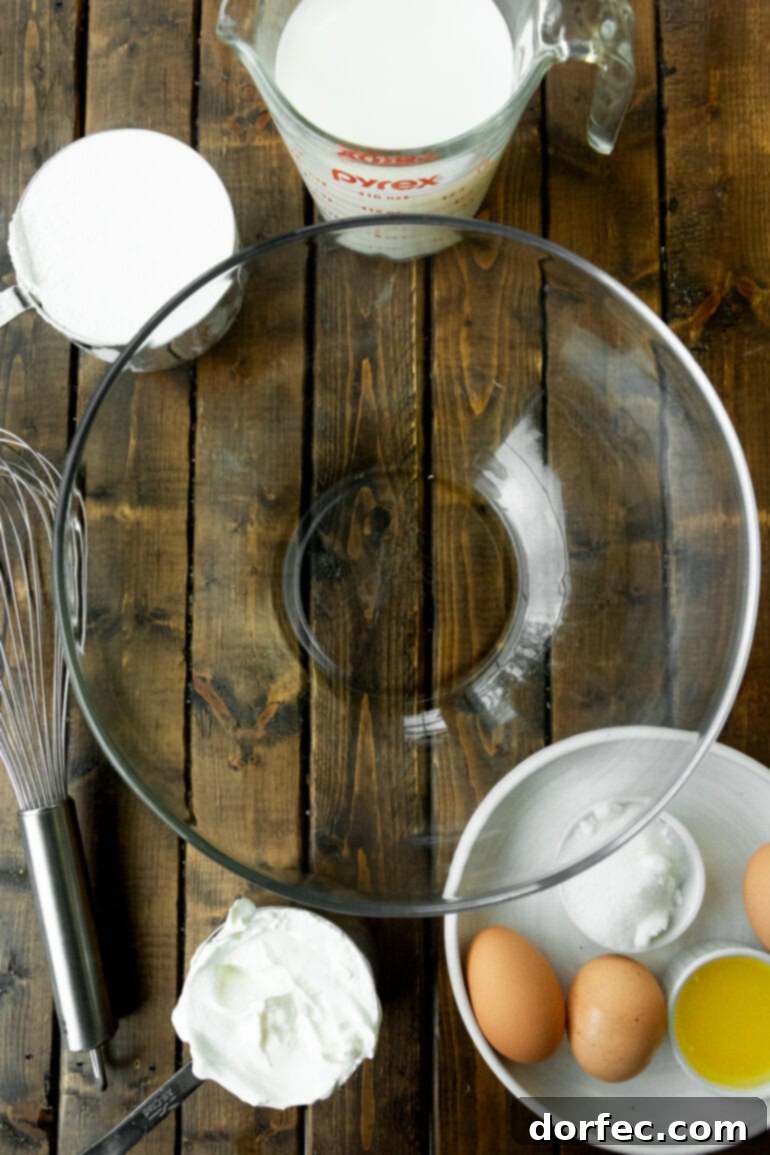
Essential Ingredients for Perfect Swedish Pancakes
One of the many joys of a classic Swedish pancake recipe is its reliance on readily available, pantry-friendly ingredients. You’ll likely find everything you need already in your kitchen, eliminating any excuses not to whip up a batch of these delectable treats. Just a fair warning: once your family tastes these, they might become a new weekend tradition!
- **All-Purpose Flour:** The foundation of our delicate pancakes. Regular all-purpose flour works perfectly to create that desired light and tender texture. No special flours are needed, keeping this recipe straightforward and accessible.
- **Baking Soda:** While Swedish pancakes are thin, a small amount of baking soda acts as a gentle leavening agent. This contributes to their characteristic lightness and a slight, desirable fluffiness, preventing them from being too dense.
- **Full-Fat Milk:** This is a non-negotiable ingredient for achieving authentic flavor and texture. The fat content in whole milk is crucial; it ensures the pancakes are rich, tender, and incredibly moist. Avoid skim or low-fat milk, as they will compromise the delicate structure and taste.
- **Sour Cream:** Our secret weapon for replicating the richness of traditional Swedish dairy. Adding sour cream introduces an exquisite tang and a velvety texture, boosting the overall flavor profile. If sour cream isn’t available or preferred, you can substitute with an equal amount of additional full-fat milk, though the depth of flavor will be slightly different.
- **Large Eggs:** Eggs play a vital role in both binding the batter and contributing to the richness and structure of the pancakes. Using large eggs ensures consistent results for the perfect batter consistency.
- **Granulated Sugar:** This ingredient allows you to customize the sweetness of your pancakes. For a sweeter breakfast treat, use the full amount specified in the recipe card. If you prefer a less sweet pancake, ideal for savory toppings or for letting the natural flavors shine, feel free to scale down to just a couple of teaspoons.
- **Melted Butter:** Butter adds incredible flavor and moisture to the pancakes. It’s essential to use unsalted butter to control the overall saltiness of the dish. Ensure it’s melted before incorporating it into the batter for a smooth, homogenous mix.
- **Salt:** A pinch of salt is crucial for balancing and enhancing all the other flavors in the batter. It brightens the sweetness and brings out the richness of the dairy and eggs.
For precise measurements of each ingredient, please refer to the comprehensive recipe card located at the conclusion of this post. This section provides a thorough overview of the components you’ll need to create these irresistible Swedish pancakes.
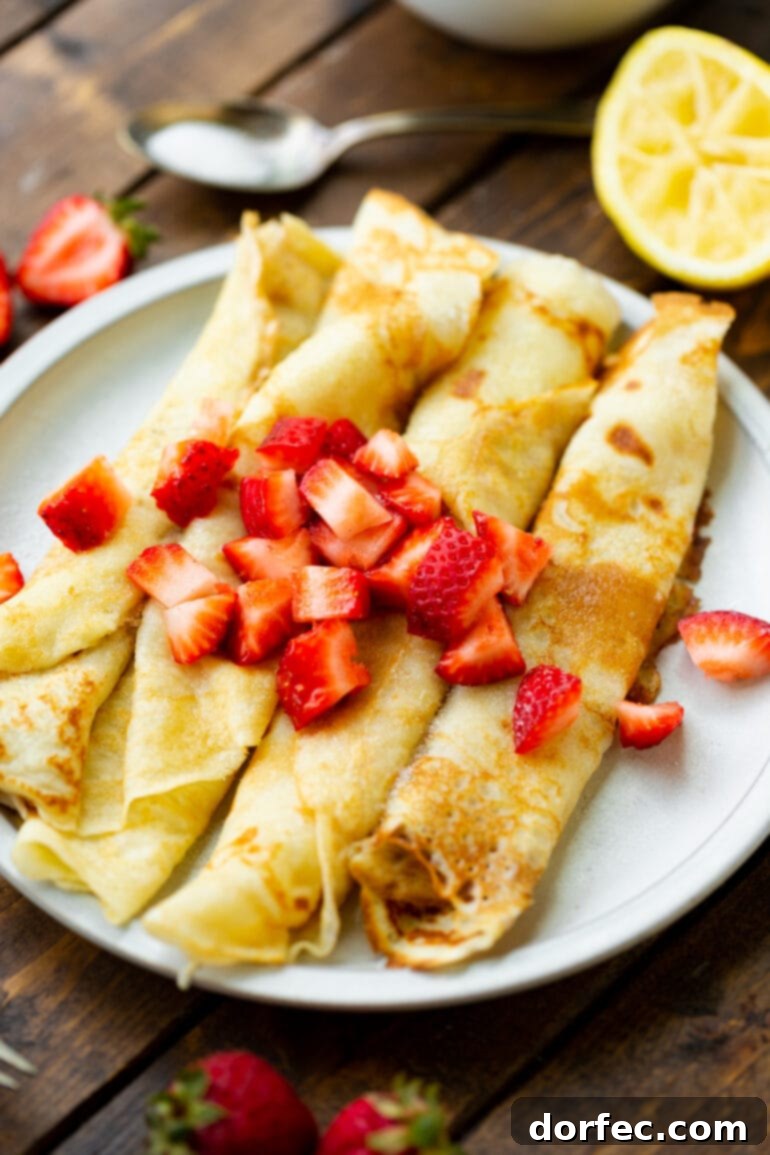
Mastering the Art of Making Swedish Pancakes
Crafting delicious Swedish pancakes is a surprisingly straightforward process that yields impressive results. Follow these steps for a perfect batch:
- Prepare the Batter: Begin by combining all your pre-measured ingredients – flour, baking soda, milk, sour cream, eggs, sugar, melted butter, and salt – into a large mixing bowl. Whisk everything together thoroughly until the batter is smooth and free of lumps. The consistency should be thin and pourable, much like heavy cream.
- PRO TIP: For an even quicker and smoother batter, you can combine all ingredients in a blender. Pulse a few times until just combined, being careful not to overmix, as this can develop the gluten too much and make the pancakes tough.
- Heat the Pan: Place a crepe pan or a good quality nonstick skillet over medium heat. It’s crucial to achieve the right temperature – hot enough to cook quickly, but not so hot that the butter burns or the pancake browns too rapidly. Lightly butter the pan for each pancake, ensuring a thin, even coat for perfect browning and to prevent sticking.
- Cook the Pancakes: Once the pan is hot and buttered, pour a small amount of batter into the center. Immediately tilt and rotate the pan to spread the batter thinly and evenly across the entire bottom surface. Cook for about 1-2 minutes until the edges appear set and slightly golden, and small bubbles begin to form on the surface.
- Flip and Finish: Carefully slide a thin spatula under the pancake and gently flip it over. Cook for another 30 seconds to 1 minute, or until the second side is lightly golden brown. Once flipped, lightly brush the cooked side with a little extra melted butter. This adds flavor and keeps the pancake moist.
- Serve Immediately: Transfer the cooked pancake to a plate. For traditional serving, brush the other side with melted butter, sprinkle with a dash of granulated sugar, and squeeze a little fresh lemon juice over it. Then, gently roll it up. Repeat the process for the remaining batter, stacking the finished pancakes on a warm plate until ready to serve. Enjoy them while they’re fresh and warm!
Remember, all specific measurements and detailed instructions are clearly outlined in the recipe card found further down the page. Keep scrolling for all the essential recipe information.
Creative Ways to Serve and Enjoy Swedish Pancakes
The beauty of Swedish pancakes lies not only in their delicate taste but also in their incredible versatility when it comes to serving. Whether you prefer traditional toppings or want to get creative, these thin pancakes are a perfect canvas for a delightful breakfast or dessert experience.
Traditional Swedish Serving:
Traditionally, Swedish pancakes are served quite simply to let their delicate flavor shine. The most authentic way involves a light dusting of granulated sugar and a squeeze of fresh lemon juice, which provides a lovely tart contrast to the pancake’s richness. The quintessential accompaniment is lingonberry jam. Lingonberries, similar to cranberries but slightly less tart, are a beloved staple in Nordic cuisine. If lingonberry jam is hard to find in your local grocery store (though often available at specialty European markets or even IKEA), you can substitute with cranberry sauce, raspberry jam, or a mix of red berries for a similar sweet-tart profile.
Modern & Creative Toppings:
Beyond tradition, the possibilities are endless. Here are some popular and delicious ideas:
- Fresh Fruit: Diced strawberries, blueberries, raspberries, or sliced bananas are excellent choices, adding natural sweetness and vibrant color.
- Whipped Cream: A dollop of freshly whipped cream adds a luxurious, airy texture.
- Powdered Sugar: A simple dusting of confectioners’ sugar is an easy and elegant finish.
- Maple Syrup or Honey: For those who love a classic pancake experience, a drizzle of warm maple syrup or golden honey is always a hit. Our buttermilk syrup, often called “syrup of the gods” by fans, would also be an incredibly decadent choice.
- Nut Butters & Spreads: A thin layer of peanut butter, almond butter, or even Nutella can transform them into a richer treat.
- Savory Options: While typically sweet, don’t shy away from savory fillings! Thin slices of ham and cheese, smoked salmon with dill cream cheese, or a light vegetable mixture can make for an intriguing brunch or light lunch.
Whether you keep it elegantly simple or load them up with your favorite flavors, Swedish pancakes are guaranteed to bring a smile to any breakfast or brunch table.
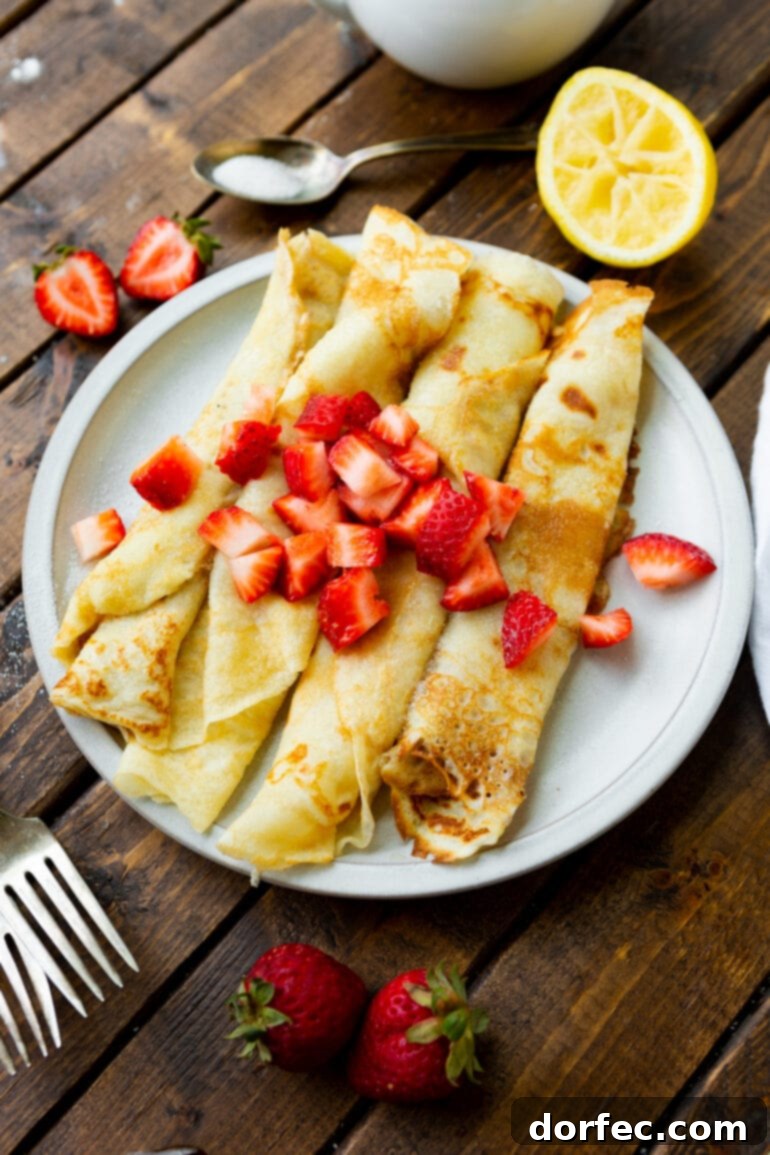
Are Swedish Pancakes a Healthy Choice?
When it comes to pancakes, the term “healthy” can be quite subjective, largely depending on individual dietary goals and what one considers a balanced meal. However, in comparison to some of their thicker, more calorie-dense counterparts, Swedish pancakes can be a surprisingly lighter option.
Let’s take a closer look at the nutritional breakdown of a single Swedish pancake and compare it to other popular pancake varieties:
- Swedish Pancakes (per pancake): Approximately 108 Calories; 6g Fat; 3g Protein; 11g Carbohydrates.
- Buttermilk Pancakes (per pancake): Approximately 204 Calories; 6g Fat; 7g Protein; 30g Carbohydrates.
- Dutch Baby Pancakes (per pancake): Approximately 231 Calories; 13g Fat; 9g Protein; 18g Carbohydrates.
- Finnish Pancakes (per pancake): Approximately 100 Calories; 4g Fat; 4g Protein; 12g Carbohydrates.
As you can see, Swedish pancakes generally offer fewer calories and carbohydrates per serving compared to many American-style or other regional pancakes. Their thinness means less batter and, often, fewer overall calories. This makes them a great option if you’re looking for a lighter breakfast that still satisfies that pancake craving.
To make them even “healthier,” consider these modifications:
- Reduce Sugar: Opt for the lower sugar amount in the recipe card or omit it entirely if serving with sweet toppings.
- Healthy Toppings: Load up on fresh fruits for natural sweetness and fiber, and go easy on excessive syrups or whipped cream.
- Whole Grains: While the classic recipe uses all-purpose flour, experimenting with a portion of whole wheat pastry flour could add more fiber, though it might slightly alter the delicate texture.
Ultimately, whether Swedish pancakes fit into your definition of “healthy” is a personal decision. But if your diet includes enjoying a truly delicious and satisfying breakfast, then this recipe is undeniably for you!
Storage Tips for Swedish Pancakes
One of the fantastic benefits of Swedish pancakes is how well they store, making them an excellent candidate for meal prep or enjoying leftovers. Here’s how to keep them fresh and delicious:
- Storing in the Refrigerator: Once your Swedish pancakes have completely cooled to room temperature, they can be stored in the refrigerator for 4-5 days. To prevent them from sticking together and to maintain their delicate texture, it’s best to layer them with parchment paper in between each pancake. Place the stacked pancakes in an airtight container or a large resealable plastic bag.
- Reheating from the Refrigerator: When you’re ready to enjoy your stored pancakes, they’re incredibly easy to reheat.
- Microwave: For a quick reheat, place 1-2 pancakes on a microwave-safe plate and warm for 15-30 seconds, or until heated through.
- Stovetop: For a slightly crispier edge, warm them in a nonstick skillet over medium-low heat for about 1-2 minutes per side, until soft and pliable.
- Freezing for Longer Storage: Swedish pancakes also freeze beautifully, making them perfect for a grab-and-go breakfast or a quick snack.
- Preparation: Allow the cooked pancakes to cool completely. Stack them with a piece of parchment paper between each pancake. This prevents them from freezing into a solid block and makes it easy to take out individual servings.
- Packaging: Place the stacked pancakes into a freezer-safe resealable bag or an airtight container. Remove as much air as possible to prevent freezer burn.
- Freezer Life: They will keep well in the freezer for up to 3 months.
- Thawing and Reheating: When you’re ready to eat, transfer the desired number of frozen pancakes to the refrigerator to thaw overnight. Once thawed, you can reheat them using the microwave or stovetop methods described above.
With these storage tips, you can always have a delicious Swedish pancake on hand, ready to enjoy whenever the craving strikes!
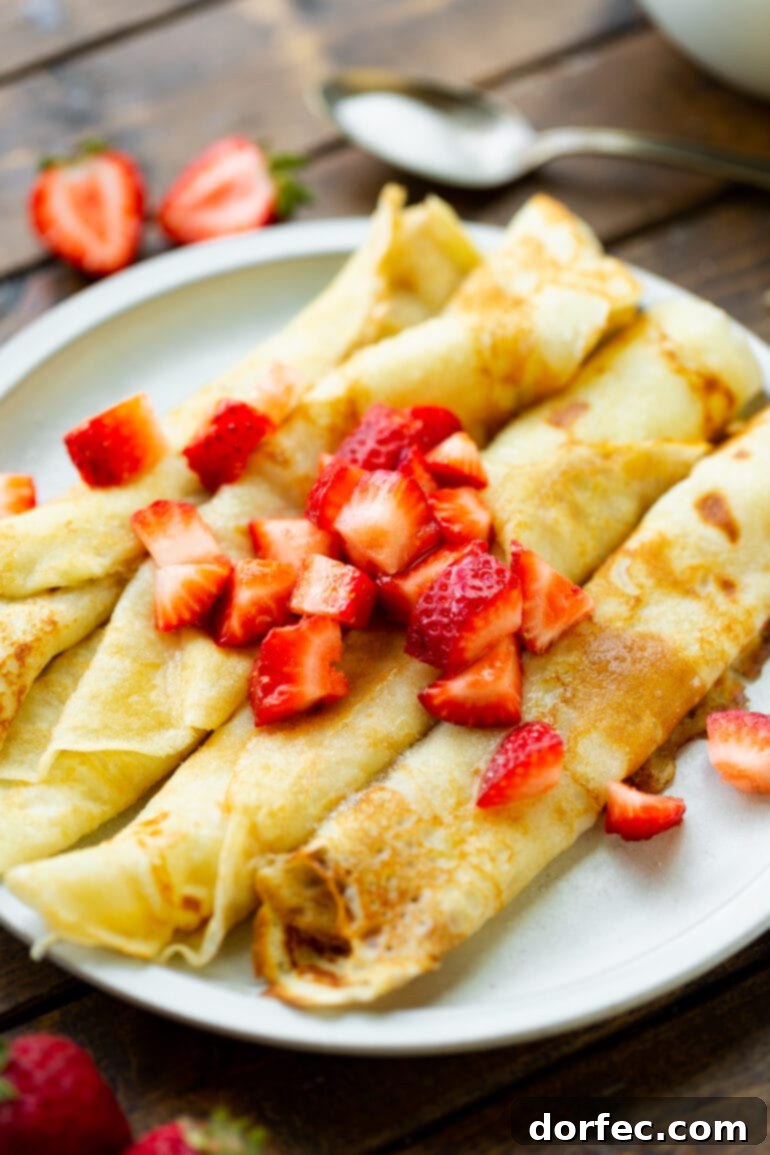
In all the extensive research and delicious experimentation for the best Swedish pancake recipe, one crucial element consistently emerges: the indispensable role of full-fat dairy. Whether it’s rich whole milk or the delightful tang of sour cream, this ingredient is undoubtedly the key to achieving that uniquely tender texture and profoundly delicious flavor that defines an authentic Swedish pancake. In our home, these pancakes have quickly become an obsession, evolving into a cherished new Saturday morning tradition that everyone eagerly anticipates. We invite you to discover the simple joy and unparalleled taste of these remarkable pancakes, and perhaps, they’ll become a beloved tradition in your household too!
More Delicious Pancake Recipes to Explore:
- Buttermilk Pancakes
- Dutch Baby Pancakes
- Finnish Pancakes
- German Pancakes
- Sheet Pan Pancakes
Swedish Pancakes
Ingredients
- 1 1/2 Cups Flour
- 1 teaspoon Baking Soda
- 2 Cups Milk
- 1 Cup Sour Cream, or 1 more cup of milk
- 3 Large Eggs
- 3 Tablespoons Sugar, 2 teaspoons for less sweet
- 4 Tablespoons Butter, melted
- 1 teaspoon Salt
- 1 Lemon, for squeezing over the top of the pancakes
Instructions
-
In a bowl, whisk together all the ingredients until smooth.
-
Butter a crepe pan or nonstick skillet, and pour a thin layer of batter into the pan, tilting to spread evenly.
-
Flip the pancake when bubbles start to form on top and the edges are set. Brush the cooked side with melted butter after flipping.
-
Then flip the pancake onto a plate and butter the other side. Sprinkle with sugar and squeeze fresh lemon over the top, then roll up!
Nutrition
, Calories: 108kcal
, Carbohydrates: 11g
, Protein: 3g
, Fat: 6g
, Saturated Fat: 3g
, Polyunsaturated Fat: 0.4g
, Monounsaturated Fat: 2g
, Trans Fat: 0.1g
, Cholesterol: 40mg
, Sodium: 211mg
, Potassium: 71mg
, Fiber: 0.3g
, Sugar: 3g
, Vitamin A: 217IU
, Vitamin C: 0.5mg
, Calcium: 48mg
, Iron: 1mg
Nutrition information is automatically calculated, so should only be used as an approximation.