
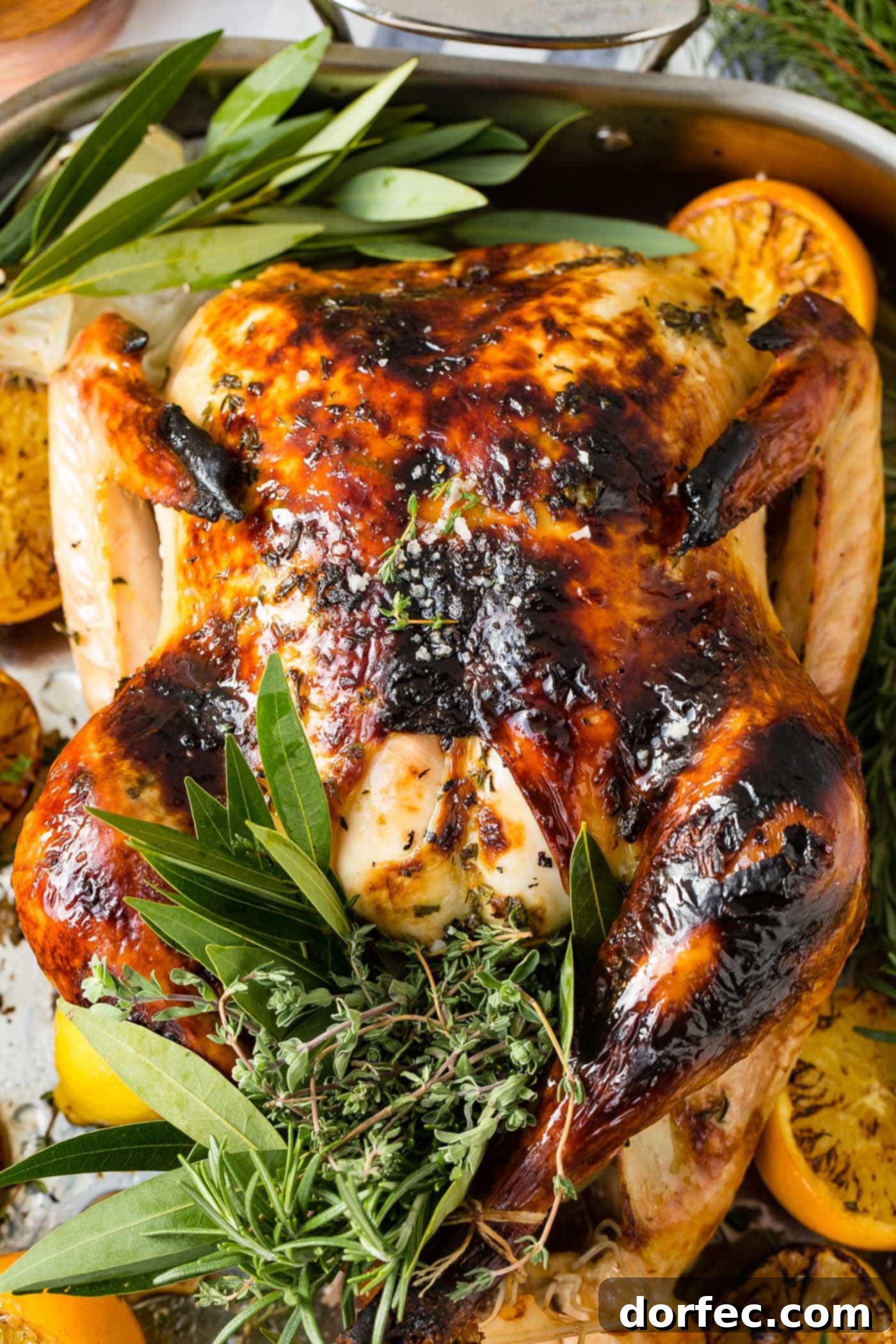
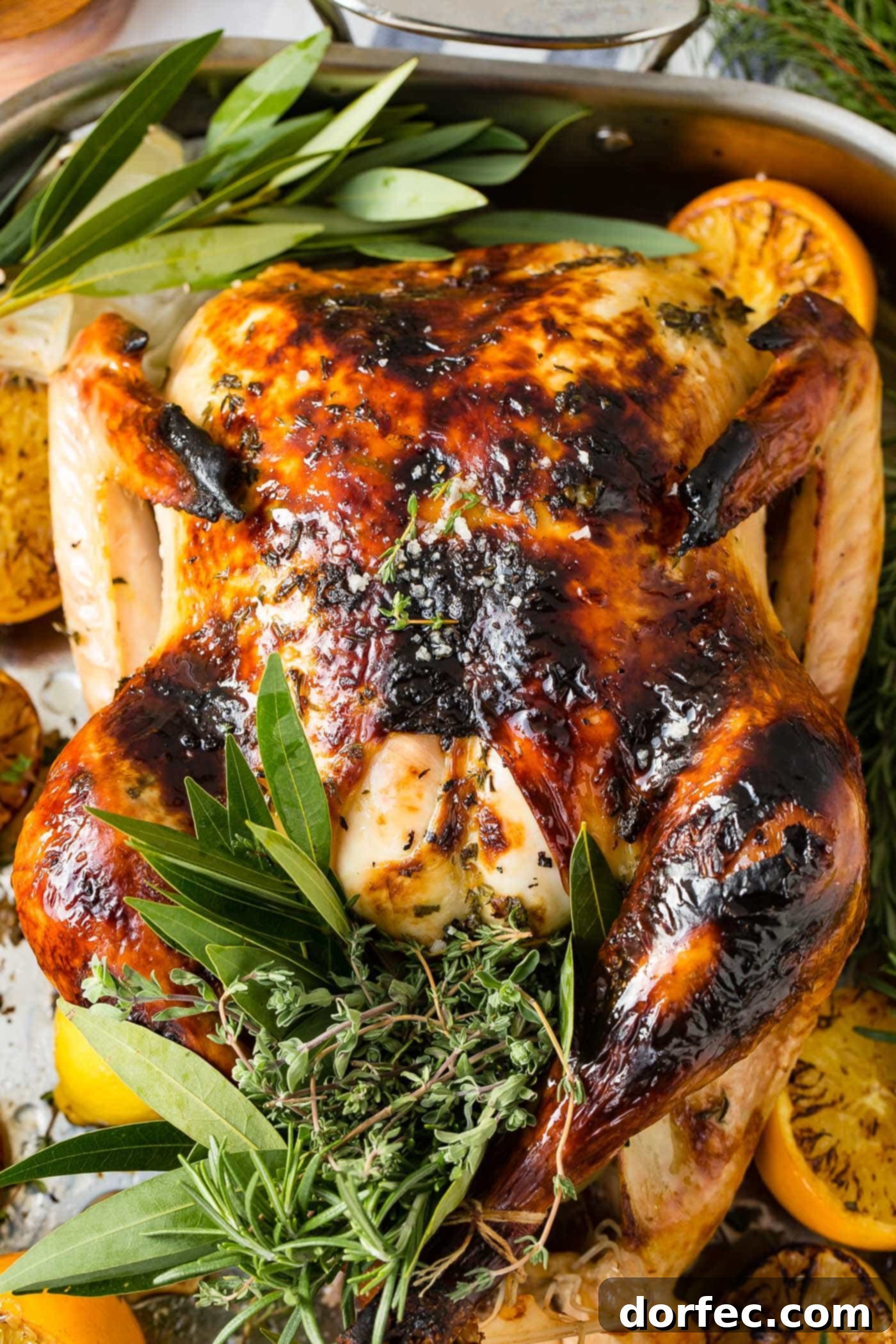
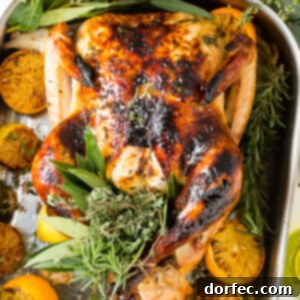
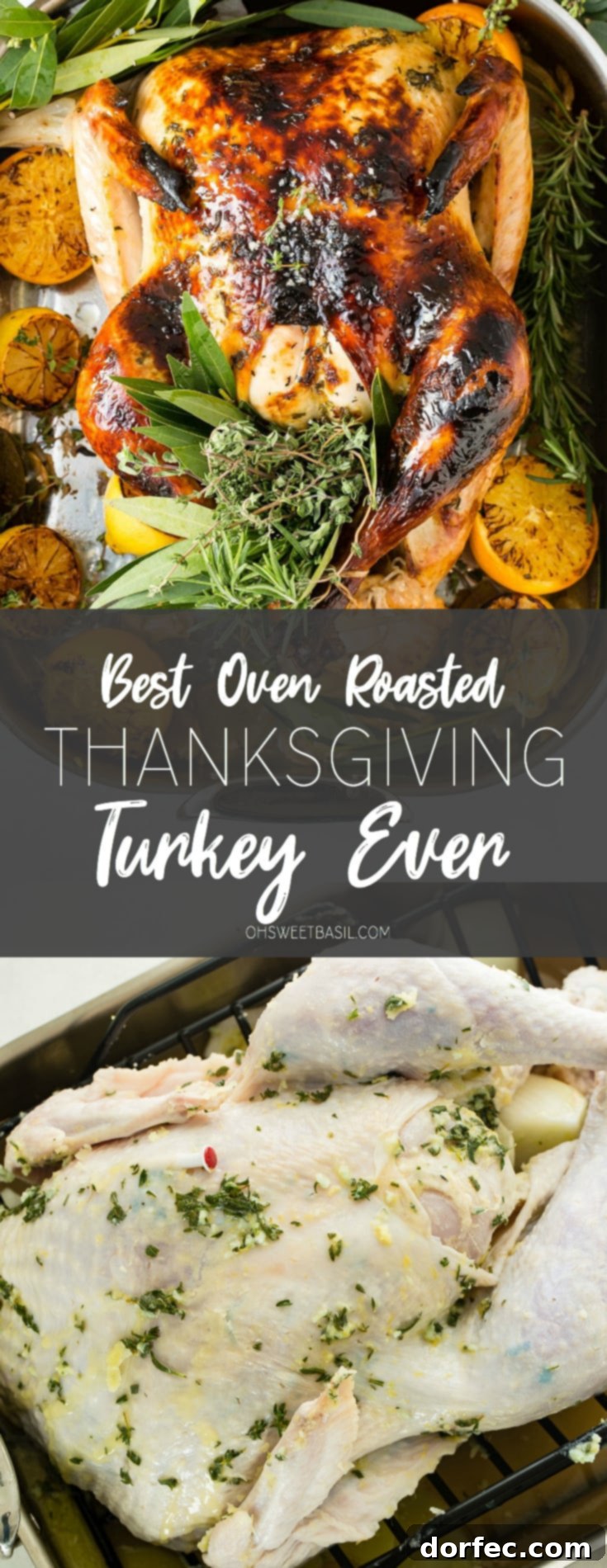
Master the art of crafting the best oven-roasted Thanksgiving turkey your family and friends have ever tasted. This comprehensive guide unveils the secrets to a truly unforgettable centerpiece, beginning with a flavorful turkey brine, followed by a rich lemon herb butter application, and culminating in a perfectly cooked, golden-brown whole turkey that’s tender, juicy, and packed with incredible flavor.
For years, my Thanksgiving turkey experiences were, to put it mildly, underwhelming. I’ve battled with dry, overcooked birds, undercooked portions, and turkeys so bland they barely registered on the taste buds. My favorite part of Thanksgiving often became the leftover sandwiches, where a slather of mayo and cheese could rescue the otherwise lackluster turkey. Whether it was on warm potato rolls or, more recently, with a decadent mix of cream cheese and poppyseed dressing, the leftovers always outshone the main event.
But that all changed. After dedicating more than 15 years to perfecting the ultimate Thanksgiving turkey recipe, I’ve finally cracked the code. This isn’t just another turkey recipe; it’s a revelation. The true secrets to achieving a consistently moist, flavorful, and show-stopping roasted turkey lie in three fundamental elements: meticulous brining, the judicious application of proper herbs, and an essential rest time after cooking. These three steps work in harmony to create a culinary masterpiece that will elevate your holiday feast from good to extraordinary.
Turkey Roasting Essentials: Understanding the Basics
Before we dive into the step-by-step process of preparing this magnificent roasted whole turkey, let’s establish a solid foundation with some critical turkey roasting basics. Adhering to these guidelines will ensure a safe, delicious, and stress-free cooking experience:
- Thawing Time: A frozen turkey requires approximately 24 hours of thawing for every 5 pounds of bird. This crucial step should always be done in the refrigerator to ensure food safety and even thawing.
- Cooking Duration: As a general rule, plan for your turkey to cook for about 13-15 minutes per pound. However, remember that actual cooking times can vary based on oven calibration, whether the turkey is stuffed, and its initial temperature.
- Safe Internal Temperature: Food safety is paramount. The safe internal temperature for a whole turkey is 175 degrees F in the thickest part of the thigh and 165 degrees F in the thickest part of the breast. Always use an instant-read meat thermometer, being careful not to touch any bones, which can give an inaccurate reading.
To illustrate the planning involved, let’s consider a hypothetical scenario: you’re preparing a 12-pound frozen turkey for a Thursday afternoon meal. Here’s a detailed timeline to guide your Thanksgiving preparations:
- Thawing (4.5 days ahead): Remove the frozen turkey from the freezer and place it in the refrigerator. For a 12-pound bird, this means moving it on Sunday morning to be fully thawed by Tuesday afternoon. This extended thawing time ensures complete defrosting and allows for the next essential step.
- Brining (24 hours): Begin the brining process on Tuesday afternoon. The turkey will soak in the brine for a full 24 hours, infusing it with flavor and moisture.
- Refrigeration for Drying (4-12 hours): After brining, the turkey needs to dry out in the refrigerator, uncovered. This typically takes overnight, from Wednesday evening to Thursday morning. This step is vital for achieving that coveted crispy skin.
- Room Temperature Rest (1 hour): On Thursday morning, remove the turkey from the refrigerator and let it sit at room temperature for one hour before roasting. This allows the bird to cook more evenly.
- Oven Roasting (Approximately 3 hours): The actual roasting time in the oven for a 12-pound turkey will be around 3 hours, but always rely on your meat thermometer.
- Post-Roast Resting (30 minutes): Once removed from the oven, the turkey must rest for at least 30 minutes before carving. This critical step redistributes the juices, ensuring a tender and moist result.
Following this precise timeline will ensure your turkey is perfectly thawed, flavored, and cooked to perfection, ready for carving and serving on Thursday afternoon!
The Definitive Guide to Roasting a Whole Turkey
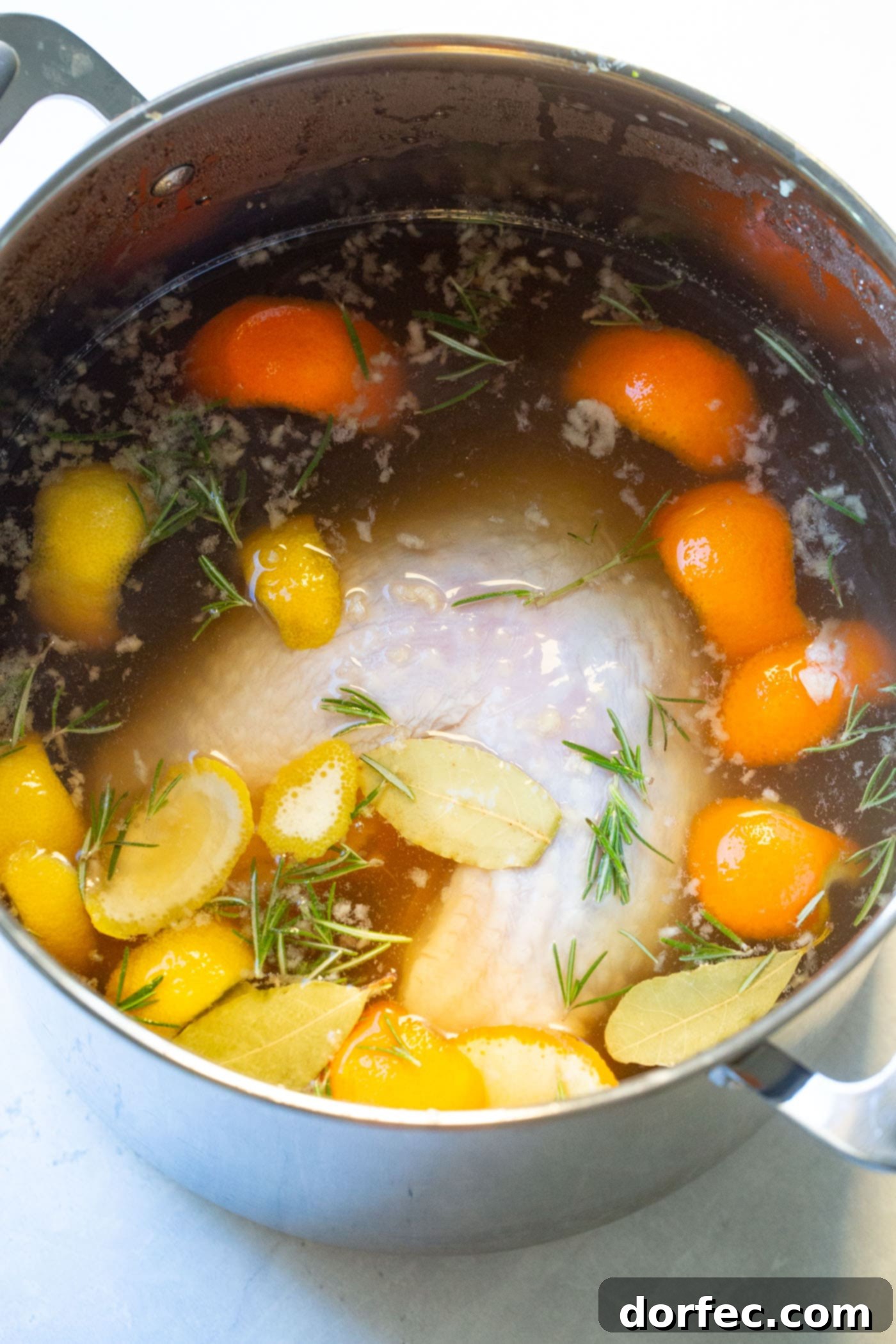
Embarking on the journey to roast a whole turkey begins with a non-negotiable step: a 24-hour brine. For an in-depth understanding of why brining is so effective, the science behind it, how to prepare the perfect brine solution, and the exact ingredients required, refer to our dedicated favorite turkey brine recipe. This foundational step is the cornerstone of a moist and flavorful turkey.
Essential Turkey Preparation After Brining
Once your turkey has completed its 24-hour brine, careful preparation is key to achieving that coveted crispy skin. Remove the turkey from the brine and thoroughly pat it dry with paper towels. Transfer the turkey to a baking sheet, leaving it uncovered, and place it back in the refrigerator for a minimum of 4 hours, and up to 12 hours. This extended drying period in the cold air dehydrates the skin, which is essential for it to crisp up beautifully during roasting. For longer periods, you can even let the turkey sit in the fridge for up to two days, flipping it every 12 hours to ensure even drying.
Approximately one hour before you plan to begin roasting, remove the turkey from the refrigerator. Allow it to rest at room temperature. This step is vital, especially for a large bird like a turkey. Just as with our acclaimed Best Prime Rib recipe, bringing the turkey to an even temperature before it enters the oven ensures that it cooks more uniformly. A cold turkey hitting a hot oven can lead to uneven cooking, with the exterior overcooked before the interior reaches the desired temperature. However, do not let the turkey sit out for longer than one hour for food safety reasons.
Setting Up Your Roasting Pan for Success
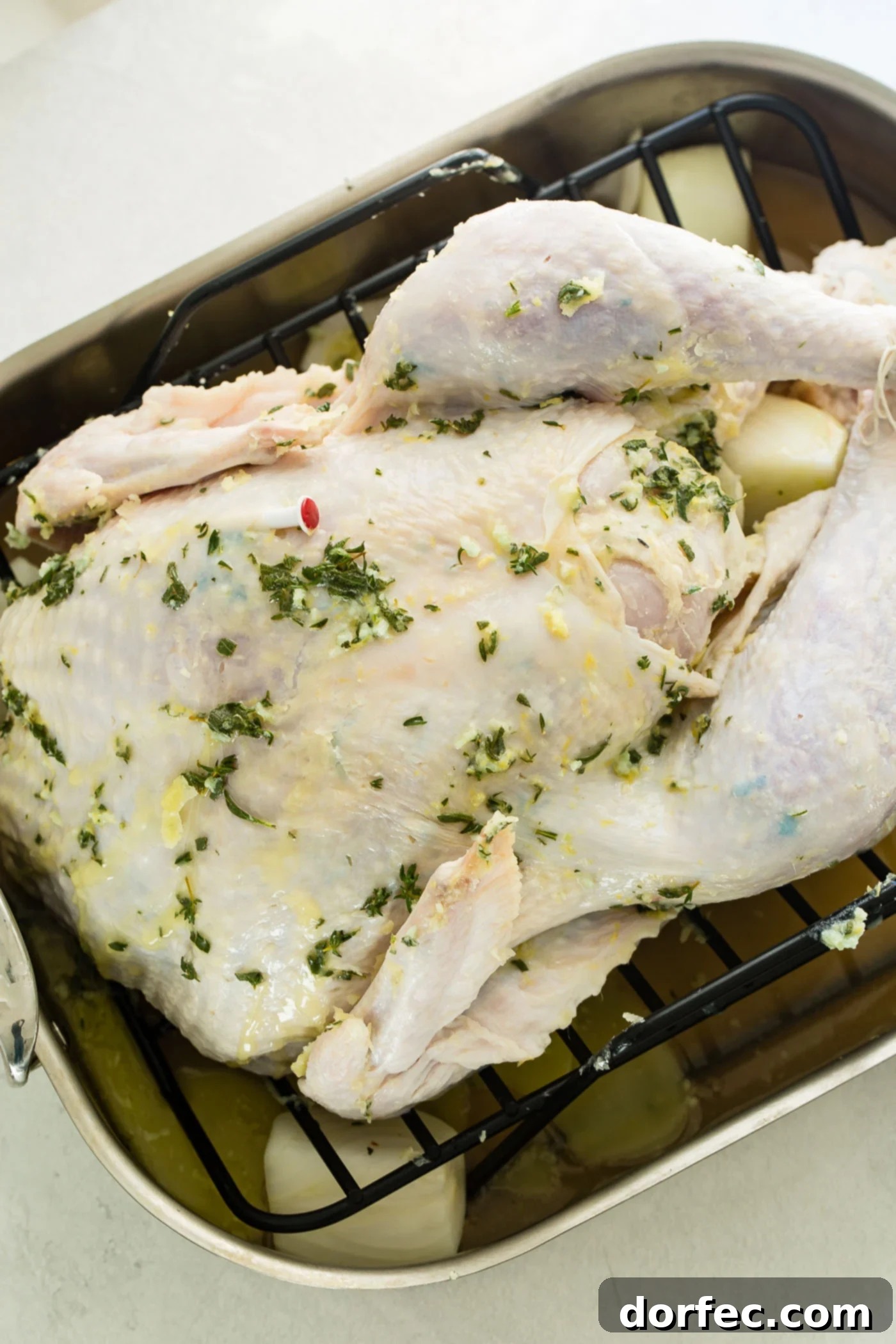
As your turkey approaches its hour of room temperature rest, preheat your oven to a robust 450 degrees F (232 degrees C). While the oven preheats, prepare your roasting pan. Choose a large, sturdy roasting pan that can comfortably hold your turkey. Pour in enough apple cider and cooking wine (or your preferred white wine) to create a 1/4-inch depth of liquid at the bottom of the pan. This aromatic liquid will not only add moisture to the oven environment, preventing the turkey from drying out, but it will also infuse the pan drippings with incredible flavor, forming the base for an exquisite gravy. Next, scatter half of your quartered onions, 6 cloves of garlic, and the bay leaves into the liquid. Your roasting pan is now perfectly prepped to welcome the star of your Thanksgiving feast.
Crafting and Applying the Zesty Lemon Herb Butter
The secret to infusing your turkey with unparalleled flavor and ensuring a golden, crispy skin lies in our vibrant lemon herb butter. Begin by melting your butter gently. Once melted, stir in the fresh lemon zest, minced garlic, finely chopped sage, thyme, and savory. Mix these fragrant ingredients thoroughly until well combined. Now, carefully loosen the skin over the turkey breast and thigh meat. Take a few generous tablespoons of the herb butter mixture and gently spread it directly onto the meat, beneath the skin. This direct contact allows the butter and herbs to deeply penetrate the flesh, resulting in incredibly juicy and flavorful meat. Finally, generously brush the entire exterior of the turkey skin with the remaining herbed melted butter. Don’t forget a liberal seasoning of kosher salt and freshly ground black pepper all over the outside of the bird to further enhance its flavor and encourage a beautiful crust.
The Perfect Roasting Method for a Golden Finish
With your turkey prepped and buttered, it’s time for the oven. Gently stuff the remaining onion quarters, fresh herb bunches, and lemon quarters into the turkey cavity. This aromatic filling will further enhance the turkey’s flavor from the inside out. Place the turkey, breast side up, on a roasting rack set inside your prepared roasting pan. Transfer the pan to your preheated 450-degree F (232-degree C) oven and roast for an initial 30 minutes. This high-heat blast helps to achieve a beautifully browned and crispy skin.
After the initial 30 minutes, carefully open the oven door and check on your turkey. If the skin is browning too quickly, loosely tent the turkey with aluminum foil to prevent scorching. Reduce the oven temperature to 350 degrees F (175 degrees C) and continue roasting. The remaining roasting time will typically be an additional 2 to 2.5 hours, depending on the size of your turkey. Crucially, continue roasting until an instant-read thermometer, inserted into the thickest part of a thigh (being careful not to touch any bone), registers between 160-165 degrees F (71-74 degrees C). While the USDA recommends 165°F, removing it at 160-165°F allows for carryover cooking, ensuring maximum juiciness without risking overcooking.
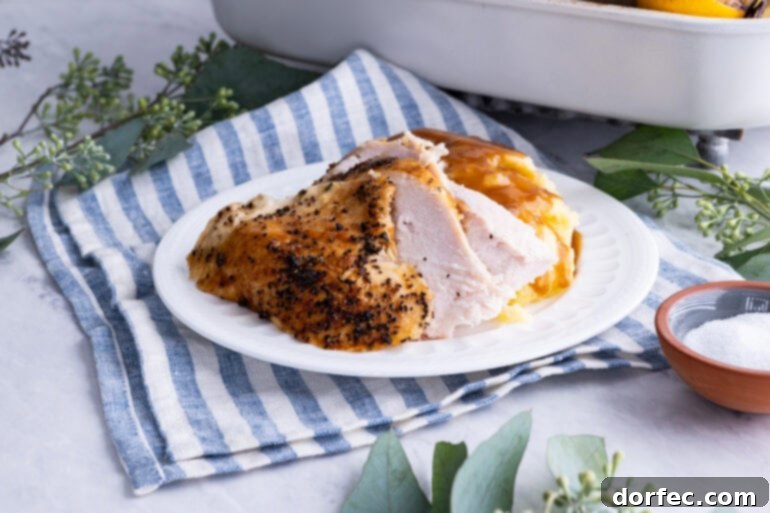
Once the turkey reaches the desired internal temperature, carefully transfer it from the roasting pan to a clean cutting board. This next step is just as vital as the cooking itself: allow the turkey to rest, uncovered, for a full 30 minutes before you begin carving. This resting period allows the juices to redistribute throughout the meat, ensuring every slice is incredibly moist and tender. Skipping this step will result in juices running out onto your cutting board, leaving you with a drier turkey.
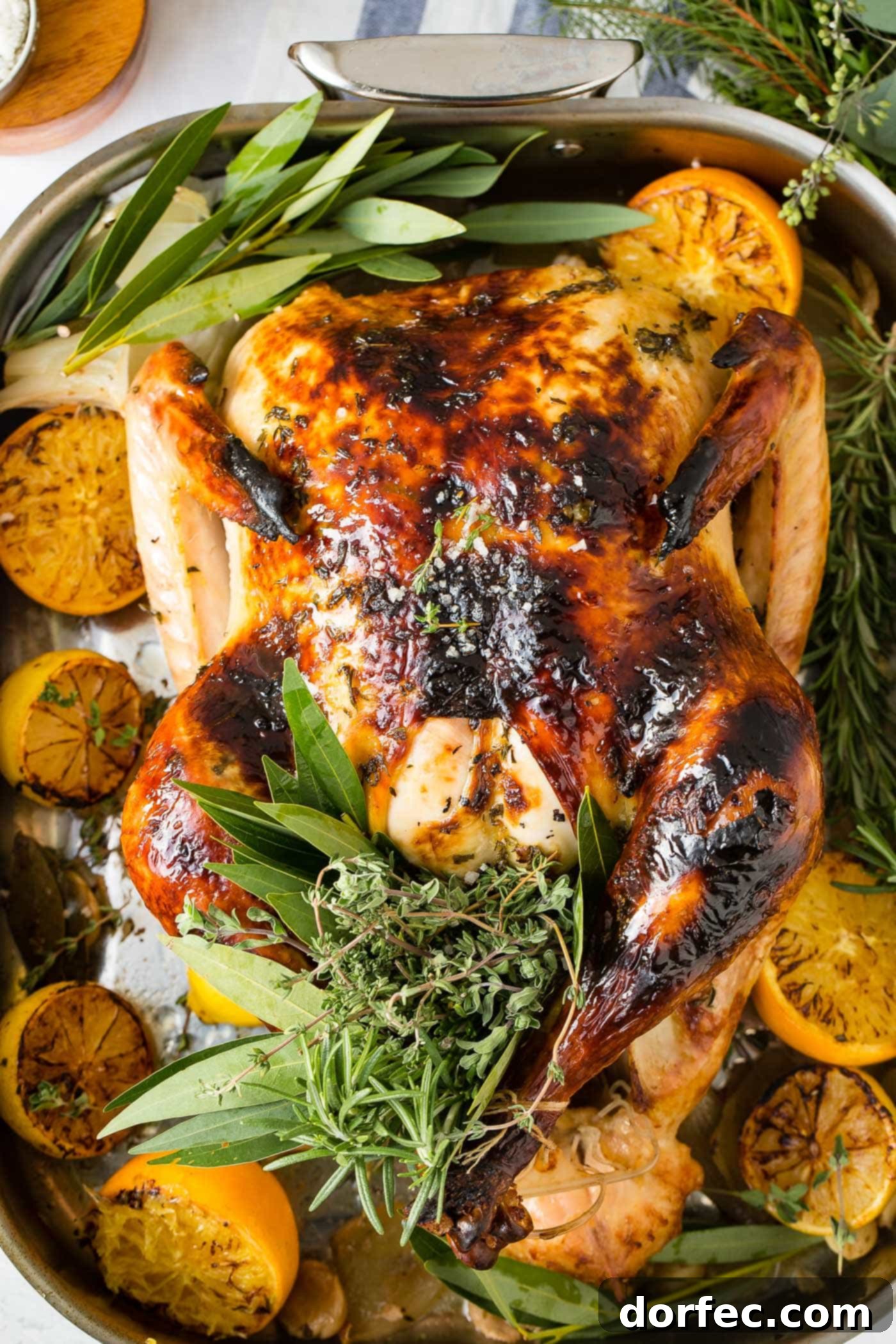
And just like that, you’ve achieved a stunning, flavorful, and incredibly juicy whole roasted Thanksgiving turkey. While it might appear fancy and complicated, the process, when broken down, is surprisingly simple and straightforward. With this tried-and-true method, you’ll never need another roasted turkey recipe again!
Enhance Your Experience: Watch the Turkey Roasting Video
For a visual guide and to see these steps brought to life, watch our detailed video on how to roast the perfect Thanksgiving turkey. Seeing the techniques firsthand can build confidence and ensure your roasting process is flawless.
Perfect Pairings: What to Serve with Roasted Thanksgiving Turkey
No Thanksgiving feast is complete without an array of delectable side dishes and decadent desserts that complement the star of the show. Here are some of our top recommendations for the best Thanksgiving side dishes to accompany your perfectly roasted turkey:
- The Creamiest Best Mashed Potatoes: A classic, comforting staple.
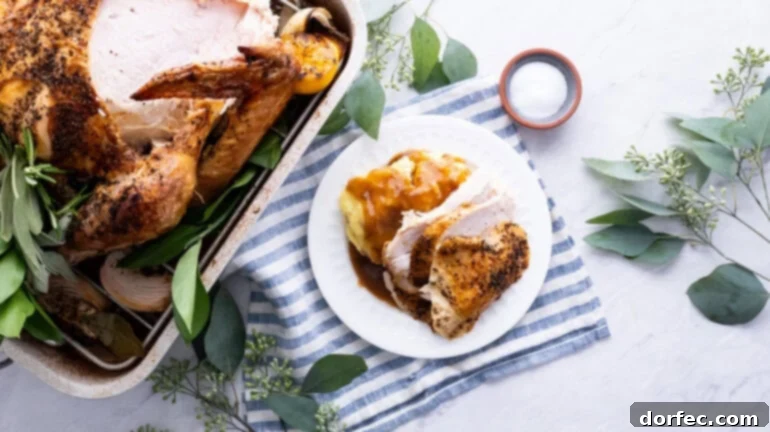
- Homemade Turkey Gravy: Rich and savory, made from those flavorful pan drippings.
- Fluffy Potato Rolls: Perfect for soaking up gravy or making incredible leftover sandwiches.
- Sweet Potato Souffle with Brown Sugar Topping: A sweet and savory delight.
- Classic Green Bean Casserole: A holiday must-have, redefined.
- Candied Pecan Bacon Brussel Sprouts: A surprisingly addictive vegetable side.
- Hearty Sausage Stuffing: The quintessential holiday stuffing.
- Homemade Cranberry Sauce: A bright and tangy counterpoint to the rich turkey.
And, of course, it simply wouldn’t be Thanksgiving without an abundance of pies! Here are a few of our all-time favorites to complete your holiday dessert spread:
- Perfectly Southern Pecan Pie: A rich, nutty, and sweet indulgence.
- Classic Pumpkin Pie: The iconic taste of autumn.
- Perfect Razzleberry Pie: A delightful blend of berries for a vibrant finish.
In fact, we have a vast collection of incredible Thanksgiving recipes, all conveniently available here, to help you plan your complete holiday menu!
Frequently Asked Questions About Roasting Turkey
Do You Have to Brine a Turkey?
While technically you don’t *have* to do anything, I wholeheartedly and highly recommend brining your turkey. It is an absolute game-changer for roasting turkey. Brining works by introducing moisture and salt into the turkey’s cells, which tenderizes the meat, keeps it from drying out during the long cooking process, and packs it full of incredible flavor. Skipping this step means missing out on a significant boost in both texture and taste, so for the best results, it absolutely should not be overlooked.
How Long Will a Fresh Turkey Keep in the Refrigerator?
A fresh, raw turkey should be handled with care and stored in the coldest part of your refrigerator for no more than 1-2 days after purchase. If you don’t plan to cook it within that timeframe, it’s best to freeze it immediately.
How Long Does It Take to Thaw a Turkey?
The safest and most recommended way to thaw a frozen turkey is slowly in the refrigerator. A good rule of thumb is to allow approximately 24 hours in the refrigerator for every 5 pounds of turkey. For example, a 15-pound turkey would need about 3 days to thaw. I always recommend checking its progress daily, as larger birds or colder refrigerators might require a little longer. If your turkey thaws earlier than planned, don’t worry! You have a buffer period: you can immediately begin the brining process, which adds another day or so of safe refrigeration time.
Do You Cover a Turkey When Roasting?
The answer to covering a turkey while roasting is both yes and no, depending on the stage of cooking. For the initial 30 minutes, you’ll roast the turkey uncovered at a high temperature (450°F) to promote a beautifully crispy and browned skin. For the remaining cooking time, you should cover the turkey loosely with aluminum foil *if* the skin appears to be browning too quickly or excessively. This tenting prevents the skin from burning while allowing the meat to continue cooking at a lower temperature (350°F) until the safe internal temperature of 160-165 degrees F is reached in the thigh.
At What Temperature Is Turkey Done?
According to the USDA, a whole turkey is safely cooked when it reaches an internal temperature of 165 degrees F (74 degrees C). For optimal juiciness, we prefer to pull our turkey out of the oven when an instant-read thermometer registers between 160 and 165 degrees F in the thickest part of the thigh (without touching bone). This slight variance accounts for “carryover cooking,” where the turkey’s internal temperature will continue to rise by a few degrees even after it’s removed from the oven, resulting in a perfectly cooked and incredibly moist bird.
How Do You Keep Turkey From Drying Out?
Preventing a dry turkey is achievable by following the precise steps in this turkey recipe. The key elements that collectively fight dryness are: brining, which infuses the meat with moisture and flavor; applying the aromatic lemon herb butter, which bastes the bird from within and without; strategically covering the turkey with foil during roasting to regulate browning and moisture; and, critically, allowing ample resting time after roasting, which lets the juices redistribute back into the meat, ensuring every slice is tender and succulent.
Can You Freeze Leftover Turkey?
Absolutely! Leftover turkey freezes exceptionally well, making it easy to enjoy the flavors of Thanksgiving long after the holiday. To freeze, remove all the meat from the bones and cut it into desired portions. Store the turkey in an airtight container or heavy-duty freezer bags to prevent freezer burn. Properly stored, leftover turkey can last in the freezer for up to 3 months. It’s fantastic for quick meals; we especially love using our leftover turkey in our savory Turkey Tetrazzini.
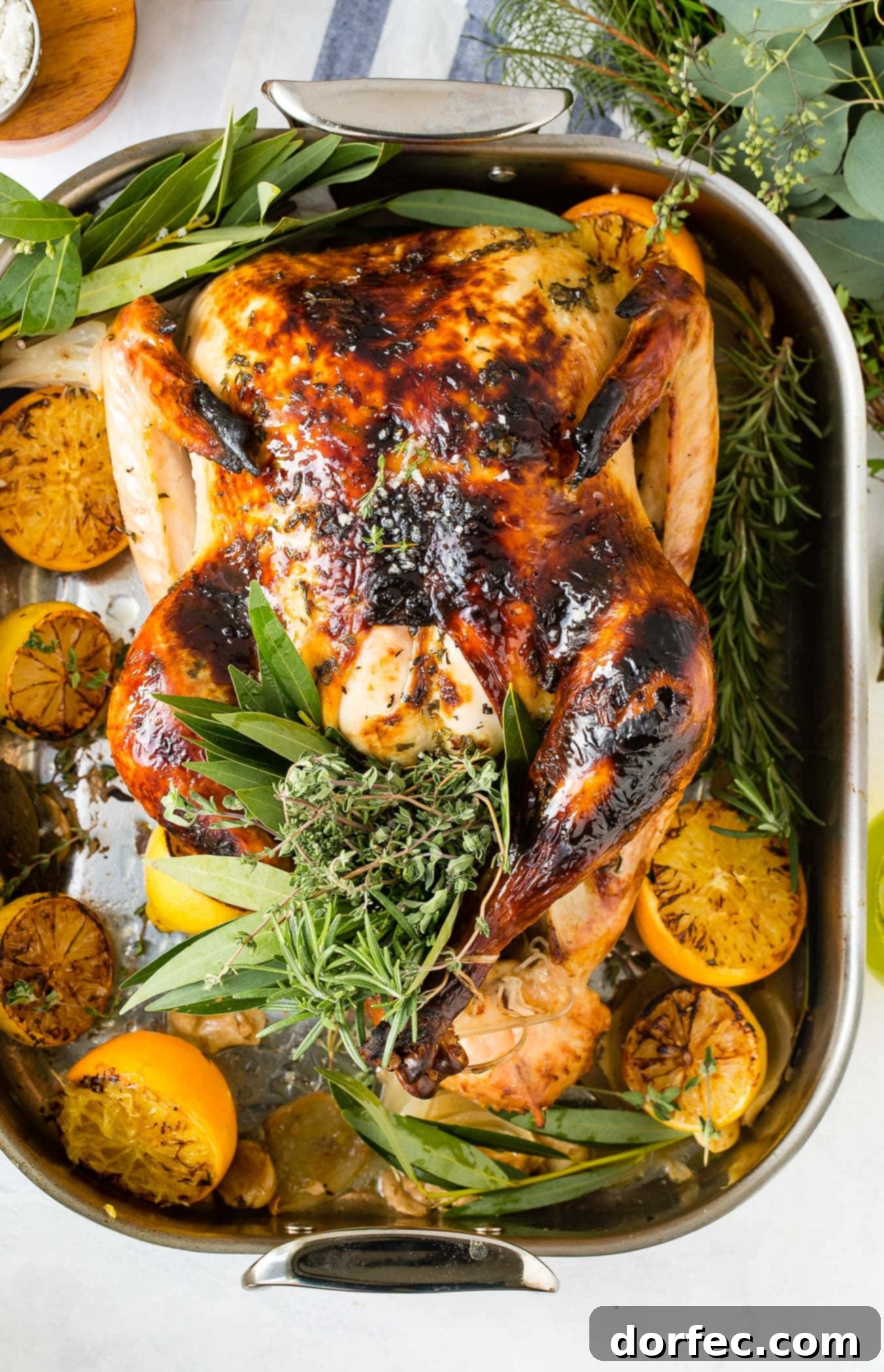
I’ve invested countless hours, conducted extensive testing, and indulged in numerous tastings to confidently declare that this truly is the best oven-roasted turkey recipe you will ever find! By following the simple yet crucial steps – brine, rest, generously butter, roast to perfection, rest again, and then carve – you will achieve a Thanksgiving turkey that is not just ready, but ready to impress. Serve it up with some Instant Pot green beans and potatoes, and dinner is magnificently served!
More Delicious Turkey Recipes You’ll Love:
- The Ultimate Deep Fried Turkey
- Turkey in a Bowl: A Unique Approach
- Flavorful Herb Roasted Turkey Breast
- Comforting Turkey Pot Pie Soup
- The Ultimate Leftover Turkey Club Sandwich
- Award-Winning Instant Pot Turkey Recipe
- Thanksgiving Leftovers Turkey Tetrazzini with Crunchy Honey Dijon Topping
- The Most Amazing Apple Pecan Smoked Turkey Breast
The Best Oven Roasted Thanksgiving Turkey Ever
Sweet Basil
1 day 4 hrs
3 hrs
1 day 7 hrs
8
Ingredients
Brine
- My Favorite Turkey Brine Recipe
Turkey
- 12-14 Pounds Turkey, fresh
- 3/4 Cup Butter, unsalted
- 1 Lemon Zest
- 4 Cloves Garlic, minced
- 1 teaspoon Sage, fresh, chopped
- 1 teaspoon Thyme, fresh, chopped
- 1 teaspoon Savory, fresh, chopped *see note
- 1 ½ Cups Apple Cider
- White Cooking Wine, or real wine
- 3 Onions, yellow, quartered
- 6 Cloves Garlic
- 6 Bay Leaves
- Kosher Salt
- Black Pepper, freshly ground
- 1 Bunch Thyme, fresh
- 1 Bunch Sage, fresh
- 1 Lemon, quartered
Instructions
Turkey Basics for Success
-
A frozen turkey will require 24 hours of thawing time for every 5 pounds of its weight, always in the refrigerator for safety.
-
Plan for your turkey to cook for approximately 13-15 minutes per pound, adjusting for individual oven variations.
-
Ensure the turkey reaches a safe internal temperature of 175 degrees F in the thigh and 165 degrees F in the breast, using an instant-read thermometer.
Detailed Turkey Preparation Timeline (for a 12lb frozen turkey)
-
Remove turkey from freezer to thaw in the fridge: Approximately 4 1/2 days ahead of your planned meal (e.g., Sunday morning for a Thursday meal).
-
Brine the turkey: For a full 24 hours (e.g., Tuesday afternoon to Wednesday afternoon).
-
Turkey rests in fridge, uncovered: 4-12 hours for skin drying (e.g., overnight Wednesday to Thursday morning).
-
Turkey rests at room temperature: 1 hour before roasting.
-
Turkey roasts in the oven: Approximately 3 hours (actual time varies).
-
Turkey rests post-roasting: A crucial 30 minutes before carving.
For The Brine
-
Follow the instructions as written in our My Favorite Turkey Brine Recipe (see link above for full details) to brine your 12-14 pound fresh turkey for 24 hours.My Favorite Turkey Brine Recipe,
12-14 Pounds Turkey
For The Turkey Roasting
-
After brining, remove the turkey and thoroughly pat it dry with paper towels. Place the turkey, uncovered, back onto a baking sheet. Return it to the refrigerator for at least 4 hours (up to 12 hours) to allow the skin to dry out completely. This is critical for crispy skin.
-
When you are ready to begin cooking, remove the turkey from the refrigerator and let it sit at room temperature for one hour. This ensures more even cooking.
-
Melt the 3/4 cup of unsalted butter. Stir in the zest from 1 lemon, 4 cloves of minced garlic, 1 teaspoon of fresh chopped sage, 1 teaspoon of fresh chopped thyme, and 1 teaspoon of fresh chopped savory. Mix well to combine.3/4 Cup Butter,
1 Lemon Zest,
4 Cloves Garlic,
1 teaspoon Sage,
1 teaspoon Thyme,
1 teaspoon Savory -
Preheat your oven to 450 degrees F (232 C). In the bottom of a large roasting pan, add 1 ½ cups of apple cider and enough white cooking wine (or real white wine) to fill the pan to a 1/4-inch depth. Place half of the quartered yellow onions, 6 cloves of garlic, and 6 bay leaves in the liquid. Stuff the remaining onion quarters, 1 bunch of fresh thyme, 1 bunch of fresh sage, and the quartered lemon into the turkey cavity.1 ½ Cups Apple Cider,
White Cooking Wine,
3 Onions,
6 Cloves Garlic,
6 Bay Leaves,
Kosher Salt,
1 Bunch Thyme,
1 Bunch Sage,
1 Lemon,
Black Pepper -
Carefully loosen the skin on the turkey, especially over the breast and thighs, and insert a few tablespoons of the lemon herb butter directly onto the meat, under the skin. Gently massage it around. Then, generously brush the entire exterior of the turkey skin with the remaining herbed melted butter. Season the outside of the turkey generously with kosher salt and freshly ground black pepper.
-
Place the turkey, breast side up, on a roasting rack set inside the roasting pan. Transfer the pan to the preheated oven and roast for 30 minutes at 450 degrees F (232 C). After 30 minutes, open the oven and, if the turkey breast is browning too quickly, loosely tent it with aluminum foil.
-
Reduce the oven temperature to 350 degrees F (175 C) and continue roasting. Cook until an instant-read thermometer inserted into the thickest part of a thigh (without touching bone) reaches a temperature of 160-165 degrees F (71-74 C). This will take approximately 2 to 2 1/2 hours more. Once done, transfer the turkey to a cutting board and allow it to rest for a full 30 minutes before carving to ensure maximum juiciness.
Recipe Notes
- If you are unable to find fresh savory at your grocery store, you can substitute it with an equal blend of fresh thyme, marjoram, and sage for a similar aromatic profile.
Nutrition
Serving:
1
lb
,
Calories:
866
kcal
,
Carbohydrates:
7
g
,
Protein:
105
g
,
Fat:
45
g
,
Saturated Fat:
18
g
,
Polyunsaturated Fat:
8
g
,
Monounsaturated Fat:
13
g
,
Trans Fat:
1
g
,
Cholesterol:
394
mg
,
Sodium:
684
mg
,
Potassium:
1161
mg
,
Fiber:
1
g
,
Sugar:
5
g
,
Vitamin A:
845
IU
,
Vitamin C:
5
mg
,
Calcium:
84
mg
,
Iron:
5
mg
Nutrition information is automatically calculated, so should only be used as an approximation.
REMEMBER TO SUBSCRIBE TO our FREE Oh Sweet Basil NEWSLETTER AND RECEIVE EASY RECIPES DELIVERED INTO YOUR INBOX EVERY DAY!
When you try a recipe, please use the hashtag #ohsweetbasil on INSTAGRAM for a chance to be featured in our stories! FOLLOW OH, SWEET BASIL ON FACEBOOK | INSTAGRAM | PINTEREST | TWITTER FOR ALL OF OUR LATEST CONTENT, RECIPES AND STORIES.