
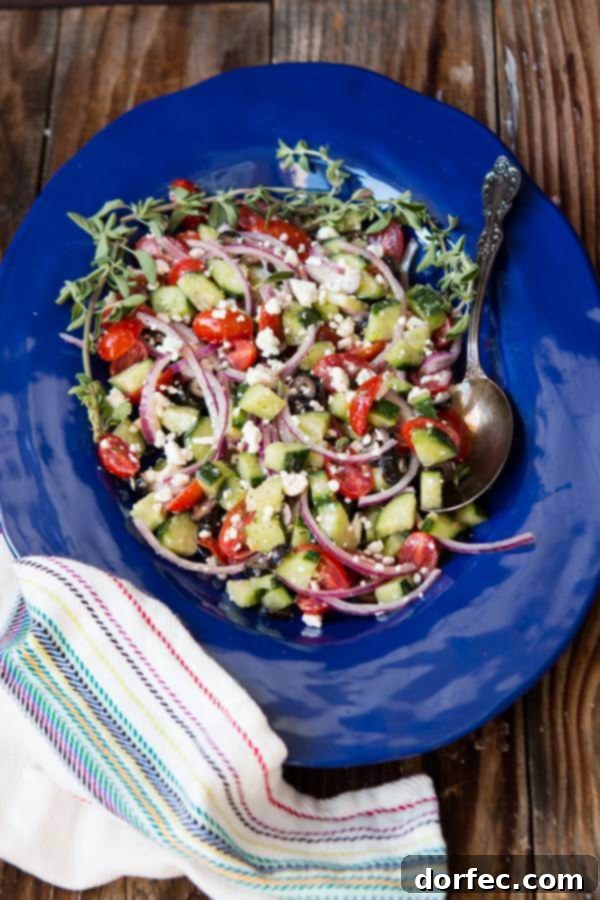
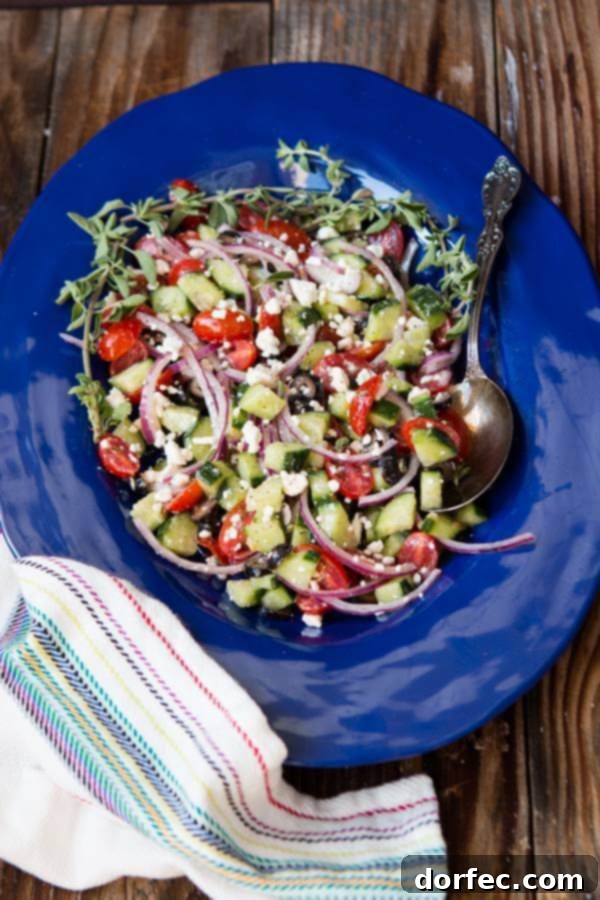
Authentic Greek Salad: A Taste of the Mediterranean Freshness
We apologize for the delay, but the wait is finally over! Our inboxes have been overflowing with requests for the delightful Greek salad recipe that graced the images accompanying our Greek Chicken Souvlaki post. We remember chatting about “My Big Fat Greek Wedding 2” in that same post, a movie we’re still absolutely dying to see! And for those wondering, don’t worry, we’re also planning to photograph and share the recipes for our incredible garlic roasted potato fries and creamy Tzatziki for dipping very soon.
Greek salad has been a beloved staple in our home for years, long before we even realized it carried such a distinguished name. For us, it was simply a delicious medley of fresh produce tossed together, occasionally elevated by a crumble of feta for that extra touch of cheesy goodness. As we prepared for our Greek Chicken Souvlaki feature, we started seeing authentic Greek salads popping up all over Pinterest (are you following us? We’ve been pinning an overload of house inspiration lately!). It was then we had our delightful “aha!” moment, realizing we had been making this classic dish all along.
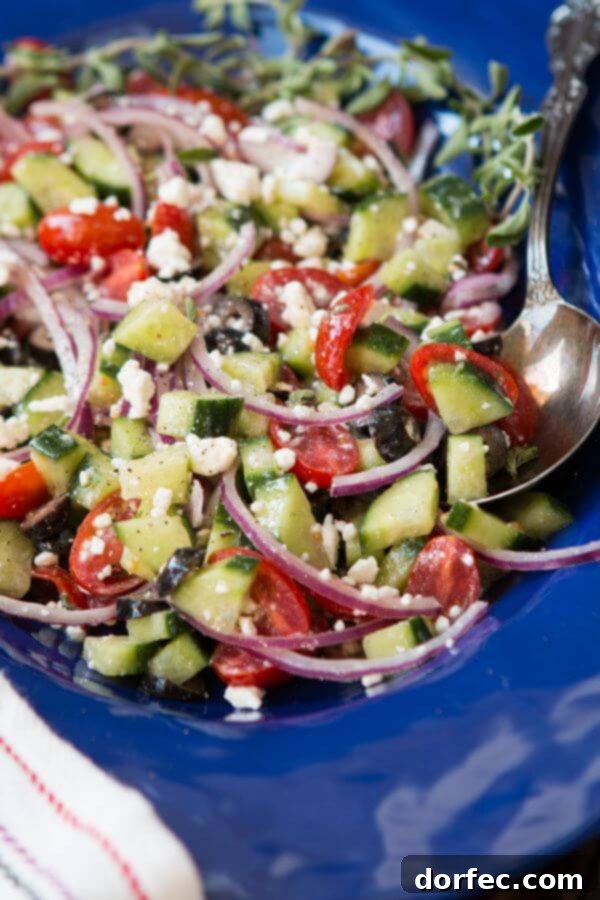
So, here it is in all its vibrant glory: a colorful symphony of fresh feta, juicy tomatoes, crisp cucumbers, briny olives, and thinly sliced red onions. This salad is more than just a side dish; it’s a celebration of fresh, wholesome ingredients that come together effortlessly. It’s incredibly quick to prepare, making it a perfect choice for weeknight meals or last-minute gatherings. While undeniably delicious, we must caution that it’s truly best enjoyed the day it’s made. In our humble opinion, everything tends to get a little too soggy if left to sit overnight, compromising its delightful texture.
The Essence of Authentic Greek Salad: What Makes It Unique?
Often, when people imagine a “salad,” their minds immediately conjure images of leafy greens like lettuce. However, a truly traditional Greek salad, known as Horiatiki Salata, stands apart by famously omitting lettuce or any other leafy greens. This isn’t an oversight; it’s a deliberate choice that places the spotlight squarely on the robust flavors and varied textures of the core Mediterranean vegetables. The goal is a rustic, hearty salad where each ingredient shines.
Instead of a leafy base, an authentic Greek salad typically features a generous mix of ripe cucumbers, juicy tomatoes, pungent red onions, tangy Kalamata olives, and crisp green bell peppers. These ingredients are often cut into substantial, rustic pieces, reflecting the salad’s peasant origins. The star of the show, of course, is the creamy, salty feta cheese, often served in a large block atop the vegetables, rather than crumbled. The dressing is typically a simple yet potent blend of high-quality extra virgin olive oil, a splash of red wine vinegar, and a sprinkle of dried oregano. This minimalist approach allows the natural flavors of the fresh produce to truly flourish, creating a vibrant and deeply satisfying dish.
Decoding the Delights: Key Ingredients of a Mediterranean Masterpiece
Every ingredient in a Greek salad plays a crucial role in building its distinctive flavor profile and appealing texture. Understanding each component not only helps in selecting the best quality but also in appreciating the harmonious balance of this classic dish.
Feta Cheese: The Crown Jewel of Greek Cuisine
Feta is a brined, white cheese originating from Greece, and it’s perhaps the most iconic ingredient in a Greek salad. Traditionally, it’s made from sheep’s milk, or a mixture of sheep’s and goat’s milk (with the latter not exceeding 30%). What truly sets authentic Feta apart is its Protected Designation of Origin (PDO) status, meaning only cheese produced in specific regions of Greece, using traditional methods, can be called Feta. This ensures its unique salty, tangy, and slightly crumbly yet creamy texture.
When selecting Feta, look for blocks stored in brine rather than pre-crumbled varieties, as these tend to be drier and less flavorful. The brine helps preserve its moisture and distinct taste. Its inherent saltiness means you often need less added salt in the rest of your salad, balancing the overall seasoning perfectly.
Ripe Tomatoes: The Sweet and Tangy Base
Tomatoes are the vibrant heart of any Greek salad. Their natural sweetness and slight tang provide a juicy contrast to the saltiness of the feta and olives. For the best flavor, choose ripe, firm tomatoes that are heavy for their size. Roma tomatoes are an excellent choice for their meaty texture and lower water content, preventing the salad from becoming too watery. Heirloom tomatoes can also add a beautiful splash of color and complex flavor. Cut them into substantial wedges or chunks rather than small dice, embracing the rustic character of the salad.
Crisp Cucumbers: The Refreshing Counterpoint
Cucumbers bring a much-needed crunch and refreshing coolness to the Greek salad. English cucumbers are often preferred due to their thin skin and fewer seeds, making them ideal for salads as they rarely require peeling or deseeding. If using standard garden cucumbers, you might consider peeling them and scooping out the watery seed core to prevent the salad from becoming overly moist. Slice them into substantial half-moons or chunks for a satisfying bite.
Kalamata Olives: The Briny, Earthy Gem
No Greek salad is complete without Kalamata olives. These distinct, almond-shaped, dark purple olives are brine-cured and have a rich, fruity, and slightly smoky flavor that is unparalleled. They are meatier and less bitter than other common olive varieties, providing a wonderful depth of flavor. Always opt for pitted Kalamata olives for convenience, or if you prefer a more authentic touch, buy them unpitted and pit them yourself for maximum flavor. Their robust taste is a cornerstone of the Mediterranean profile.
Red Onion and Green Bell Pepper: Zesty Accents
Thinly sliced red onion adds a sharp, pungent kick that brightens the salad and complements the other ingredients. For those sensitive to strong onion flavor, a quick soak in ice water for 10-15 minutes can mellow its intensity without sacrificing its crispness. Green bell peppers, typically sliced into rings or chunks, contribute a fresh, slightly bitter, and crisp element, adding another layer of texture and color to the mix.
The Dressing: Our Lighter, Creamier Take
While traditional Greek salads typically feature a simple dressing of olive oil and red wine vinegar, our recipe introduces a unique, lighter, and creamier alternative using Greek yogurt as its base. This variation still honors the spirit of Greek flavors while offering a delightful richness and tang. This creamy dressing blends dried oregano, garlic powder, black pepper, salt, lemon juice, honey, tahini (sesame-seed paste), and minced garlic. It’s a fantastic way to enjoy the classic flavors with a healthier twist, adding a luscious texture that beautifully coats every piece of the salad.
Health Benefits: Why Greek Salad is a Mediterranean Diet Champion
The Greek salad is not just delicious; it’s a powerhouse of nutrition, perfectly embodying the principles of the renowned Mediterranean diet. Rich in fresh vegetables, healthy fats, and lean protein (especially if you add chicken), it offers a multitude of health benefits:
- Rich in Antioxidants: Tomatoes are packed with lycopene, a potent antioxidant, while olives contain healthy monounsaturated fats and polyphenols, all contributing to cellular health and fighting oxidative stress.
- Fiber-Packed: The abundance of fresh vegetables provides a significant amount of dietary fiber, essential for digestive health, blood sugar regulation, and promoting a feeling of fullness.
- Heart-Healthy Fats: Extra virgin olive oil (or the tahini in our dressing) provides monounsaturated fats, known to help lower bad cholesterol levels and support cardiovascular health.
- Vitamins and Minerals: Cucumbers are hydrating and provide Vitamin K. Bell peppers are a fantastic source of Vitamin C. Feta cheese offers calcium and protein. Collectively, the ingredients deliver a wide spectrum of essential nutrients.
- Supports Weight Management: High in volume and nutrients, yet relatively low in calories (especially our yogurt-based dressing), Greek salad can be a satisfying meal that aids in weight management without compromising on flavor.
Crafting Your Own Greek Salad: A Simple Guide to Freshness
One of the greatest joys of making a Greek salad is its simplicity. It requires minimal cooking (unless you’re adding protein) and comes together in mere minutes, making it an ideal choice for a quick, healthy meal or a vibrant side dish. The key is to start with the freshest, highest-quality ingredients you can find.
To ensure every component contributes to the perfect texture and taste, pay attention to how you prepare each vegetable. Uniformly chopped or sliced ingredients not only look appealing but also ensure a consistent flavor in every bite. Whether you’re a seasoned chef or a kitchen novice, this recipe is incredibly forgiving and guarantees a deliciously fresh outcome every time.
Greek Salad Recipe
Greek Salad
By Sweet Basil
Total Time: 5 mins

Ingredients
For the Creamy Yogurt Dressing
- 1 teaspoon Dried Oregano
- 1/2 teaspoon Garlic Powder
- 1/2 teaspoon Black Pepper
- 1/2 teaspoon Salt
- 1 Tablespoon Lemon Juice (plus 2 Tablespoons reserved for the dressing)
- 1 Cup Low Fat Greek Yogurt
- 2 teaspoons Honey
- 1 teaspoon Tahini (sesame-seed paste)
- 1 teaspoon Minced Garlic
For the Salad
- 3/4 Head Romaine Lettuce, chopped (While traditional Greek salad doesn’t use lettuce, this recipe offers a delicious, lighter variation with it for added bulk and crunch)
- 3/4 English Cucumber, peeled and chopped
- 1 Cup Roma Tomatoes, chopped
- 1/2 Small Can Olives, sliced (Kalamata olives are highly recommended for authentic flavor)
- 1/4 Cup Crumbled Feta Cheese
- 3 Skinless, boneless chicken breasts, cut into 1-inch cubes (Optional: for a heartier, meal-sized salad; ensure chicken is fully cooked, grilled, or pan-fried, and cooled before adding)
Instructions
- In a small bowl, combine all the ingredients for the creamy yogurt dressing (dried oregano, garlic powder, black pepper, salt, 3 tablespoons lemon juice, low fat Greek yogurt, honey, tahini, and minced garlic). Whisk thoroughly until the dressing is smooth and well combined. Set aside.
- In a large serving bowl, add all the prepared salad ingredients: chopped Romaine lettuce, chopped English cucumber, chopped Roma tomatoes, sliced olives, and crumbled feta cheese. If you are making a meal-sized salad, add your cooked and cooled chicken breast cubes at this stage.
- Just before serving, drizzle the prepared creamy yogurt dressing generously over the salad. Gently toss all the ingredients to ensure everything is evenly coated. For a more personalized experience, you could also serve the dressing on the side, allowing each person to add their preferred amount. Serve immediately and enjoy!
Recipe Notes
This Greek salad is truly at its best when enjoyed immediately after preparation. Due to the fresh vegetables and the moisture from the dressing, storing leftovers can result in a soggy texture. We highly recommend making only what you plan to consume in one sitting for the optimal crispness and flavor.
Nutrition Information (Approximate per serving)
- Serving: 1g
- Calories: 232 kcal
- Carbohydrates: 15g
- Protein: 26g
- Fat: 8g
- Saturated Fat: 3g
- Polyunsaturated Fat: 1g
- Monounsaturated Fat: 2g
- Trans Fat: 1g
- Cholesterol: 92mg
- Sodium: 519mg
- Potassium: 755mg
- Fiber: 4g
- Sugar: 9g
- Vitamin A: 10881IU
- Vitamin C: 16mg
- Calcium: 187mg
- Iron: 3mg
Please note: Nutrition information is an approximation, typically calculated automatically, and should be used as a general guide. Actual values may vary based on specific ingredients and preparation methods.
Like this recipe? We’d love to hear from you! Leave a comment below and share your thoughts or any delicious modifications you’ve tried.
Serving Suggestions and Perfect Pairings
This versatile Greek salad can be enjoyed in a multitude of ways, whether as a refreshing side dish or a satisfying main course. Its bright flavors make it an ideal accompaniment to a wide range of meals, particularly those with Mediterranean influences. Pair it with grilled meats, such as our Greek Chicken Souvlaki or Citrus Greek Chicken, for a complete and balanced meal. It also complements roasted fish beautifully, adding a burst of freshness to rich, savory flavors. For a lighter meal, simply add some grilled shrimp, chickpeas, or a generous portion of cooked chicken to transform it into a robust main dish. Don’t forget a warm, crusty piece of pita bread or crusty artisanal bread to soak up any leftover dressing!
Tips for the Freshest and Most Flavorful Greek Salad
Achieving the perfect Greek salad is simple, but a few key tips can elevate your creation from good to extraordinary:
- Quality Ingredients are Key: Since the salad is all about fresh produce, invest in the best quality vegetables you can find. Farmers’ markets are excellent for ripe, in-season tomatoes and cucumbers.
- Chill Your Veggies: Keep your cucumbers and tomatoes in the refrigerator until just before preparation. This ensures maximum crispness and a refreshing coolness.
- Don’t Over-Mix: Toss the salad gently to avoid bruising the delicate ingredients, especially the tomatoes and lettuce (if using).
- Dress Just Before Serving: To prevent sogginess, always add the dressing right before you’re ready to serve. This maintains the crisp texture of the vegetables. If you expect leftovers, it’s best to dress individual portions.
- Mellow the Onions: If you find raw red onion too strong, slice it thinly and soak it in a bowl of ice water for 10-15 minutes before adding it to the salad. This mellows the flavor significantly.
- Experiment with Herbs: While dried oregano is traditional, don’t hesitate to experiment with fresh herbs like dill or mint for an extra layer of flavor complexity.
Conclusion: Embrace the Mediterranean Freshness in Your Kitchen
The Greek salad is a testament to the idea that simple, fresh ingredients can create something truly extraordinary. It’s a dish that brings the vibrant flavors and wholesome goodness of the Mediterranean right to your table, offering a refreshing escape with every bite. Whether you’re pairing it with grilled meats, enjoying it as a light lunch, or serving it as a colorful side, this salad is sure to impress with its irresistible blend of creamy feta, juicy tomatoes, crisp cucumbers, and zesty dressing.
So, gather your ingredients, embrace the simplicity, and prepare to fall in love with this classic that’s as healthy as it is delicious. We encourage you to try our unique creamy yogurt dressing, a delightful twist on a beloved favorite, and discover how easy it is to bring a touch of Greek sunshine into your daily meals. Opa!

Pair with Our Greek Chicken Souvlaki

Or Try Our Citrus Greek Chicken