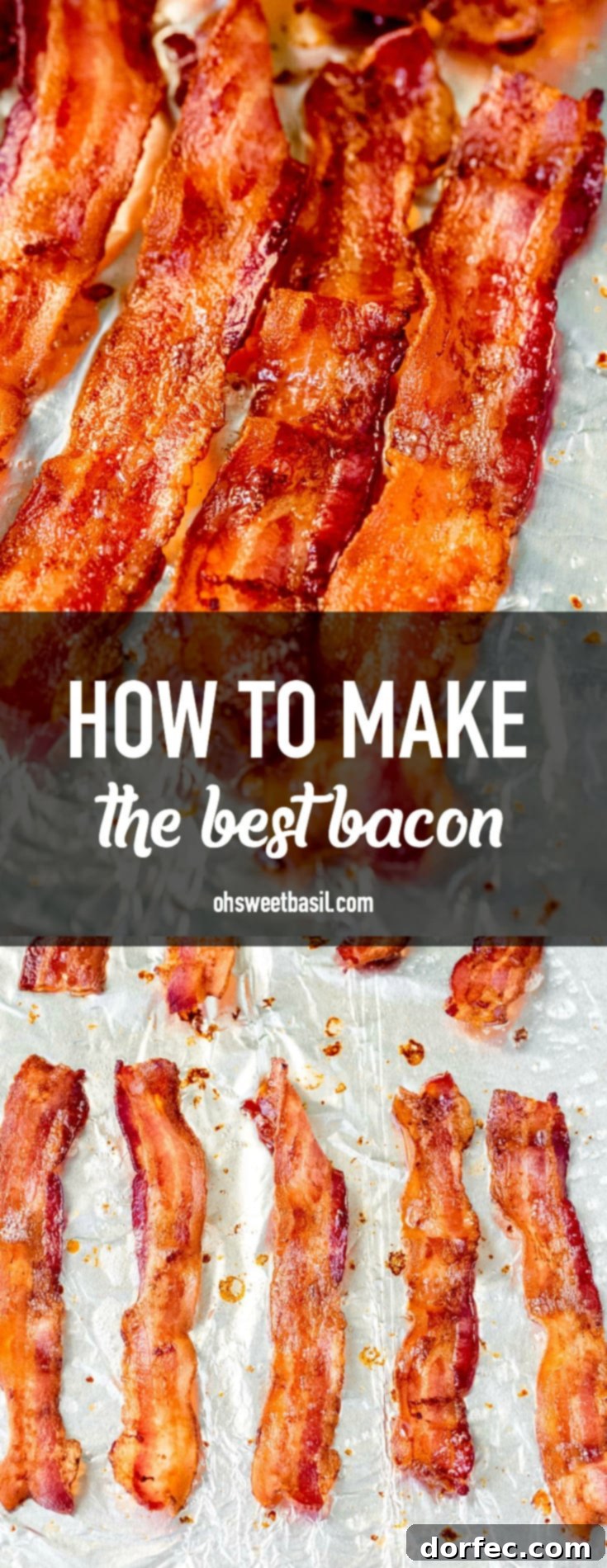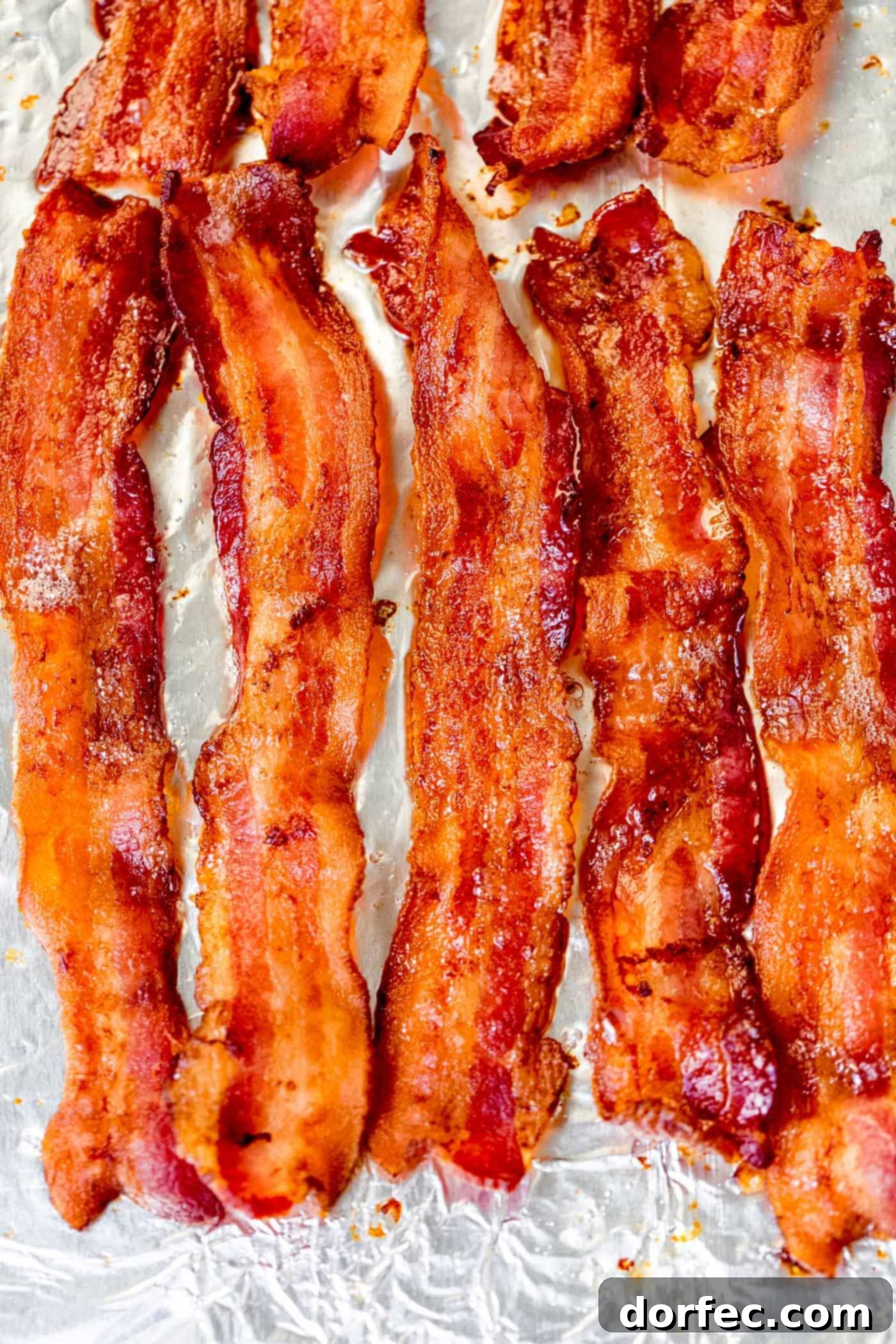
Welcome to the ultimate guide on How to Cook Bacon perfectly, every single time. If you think you already know the best method, prepare to have your mind (and your taste buds) transformed. There’s a secret trick that unlocks unparalleled crispness and flavor, and we’re here to share it with you.
The Unmistakable Allure of Bacon
Bacon holds a special place in the hearts (and on the plates) of many. It’s an ingredient that truly engages all the senses: the irresistible aroma that wafts through the kitchen, the delightful sizzle as it cooks, the satisfying crackle and pop of the fat rendering under heat, and finally, the glorious crunch that precedes its savory melt-in-your-mouth experience. It’s a culinary masterpiece that elevates breakfast, enhances sandwiches, and adds depth to countless dishes.
Despite its universal appeal, bacon wasn’t always a favorite for everyone. Believe it or not, as a child, I couldn’t stand it. My early encounters often involved greasy, either overcooked to a brittle crisp or undercooked to a flabby chewiness. It was usually too fatty, lacking the perfect balance that makes bacon truly shine. “No thank you,” I’d politely decline, much to the bewilderment of family members who couldn’t fathom a world without bacon.
A Life-Changing Bacon Revelation
My aversion to bacon persisted until a memorable morning during a church campout when I was about nine years old. The air was crisp, carrying the scent of pine and damp earth. I remember waking up in our tent, the canvas slightly dewy from the morning chill. My mom had taught me a clever trick: sleeping with your clothes at the bottom of your sleeping bag ensures they’re warm when you put them on. It was pure genius, making the chilly morning transition much more bearable.
After wiggling into my warm, acid-wash jeans and a cozy sweatshirt, I unzipped the tent flap, letting in the cool morning air and the distinct, tantalizing sounds of breakfast. Forget Christmas morning; the symphony of breakfast cooking is far more enchanting!
I wandered over to a large fire pit where a boy, no older than me, bundled in a puffy coat, was helping his dad prepare breakfast for the hungry campers. He held out a piece of bacon. “Want any bacon?” he asked, surprisingly polite for his age. My ingrained childhood dislike kicked in, and I firmly responded, “Nah, I don’t like bacon.”
His eyes widened in disbelief. “What?! Who doesn’t like bacon?!”
At nine years old, I dug my heels in, as only a picky eater can. “Me. I don’t.” And that, I thought, was that. Little did I know, my bacon journey was far from over, and a true awakening awaited me in college, when I would discover the glorious secret to truly irresistible, perfectly cooked bacon.
Decoding Bacon: What to Look For
It wasn’t until my college years that I truly understood the glory of bacon, and the shocking realization that many people, myself included, had been cooking it incorrectly for so long. But before we dive into the transformative cooking techniques, let’s explore what makes for great bacon in the first place.
Choosing the right bacon at the grocery store is the first step towards achieving that ultimate crispness and flavor. Not all bacon is created equal, and understanding the different types and cuts can significantly impact your cooking experience and the final dish.

Top Bacon Recommendations for Optimal Flavor
When selecting bacon, consider these tried-and-true favorites known for their exceptional taste and quality:
- Our Top Pick: Sweet and Smoky Perfection – For a bacon that delivers a fantastic balance of sweet and smoky notes, Wright Hickory Smoked Bacon is consistently outstanding. Its robust flavor stands up well in any dish or as a standalone side.
- For Simple and Pure Ingredients – If you prioritize a cleaner label with fewer additives, Wellshire Classic Sliced Dry Rubbed Bacon is an excellent choice. It offers a straightforward, savory bacon experience without compromise.
- A Reader Favorite & Reliable Choice – We also wholeheartedly recommend Oscar Mayer Naturally Hardwood Smoked. This widely available brand consistently delivers a delicious, classic bacon flavor that’s hard to beat.
Thick-Cut vs. Thin-Cut Bacon: The Great Debate
The thickness of your bacon slices might seem like a minor detail, but it can profoundly influence both cooking time and the texture of the final product. In our household, this is a topic of friendly debate: some prefer the substantial bite of extra thick-cut, while others gravitate towards the delicate crispness of thin-cut bacon.
Both have their merits, depending on your culinary goals. Thick-cut bacon, with its higher fat-to-meat ratio, renders beautifully, offering a chewy interior and crisp edges. It’s perfect for a hearty breakfast plate, nestled alongside eggs and pancakes, or as the star in a robust sandwich like a BLT, where its texture won’t get lost. However, for applications like crumbling over a creamy potato soup or into a fresh salad, thick bacon can be a bit too heavy and tends to sink rather than sprinkle elegantly.
Thin-cut bacon, on the other hand, cooks faster and achieves an all-over crispness more readily. Its delicate structure makes it ideal for crumbling, ensuring each bite of your salad or soup gets a light, crispy burst of bacon flavor. For wrapping around appetizers or adding to delicate quiches, thin bacon offers a less overwhelming presence. While delicious, it might not offer the same satisfying chew when served as a standalone side.
Ultimately, the choice between thick and thin-cut bacon depends on the intended use. But regardless of your preference, the most crucial factor remains quality. Always opt for bacon that offers a good meat-to-fat ratio and isn’t excessively thin or transparent, as this often indicates lower quality and can lead to uneven cooking.
The Secret to Truly Perfect Bacon: The Cold Pan Method
The single most important tip for achieving perfectly crisp, evenly cooked bacon every time is surprisingly simple: start with a cold pan. This might seem counterintuitive if you’re used to preheating your pans, but it’s the game-changer you’ve been missing. This technique allows the bacon fat to render slowly and gradually as the pan heats up, rather than shocking the meat and fat with intense heat. Slow rendering ensures that the fat melts away, bathing the bacon strips in their own flavorful oil, which leads to incredibly crispy results without burning the meat.
How to Cook Bacon Stovetop for Unbeatable Crispness
For the ultimate crispy bacon experience, the stovetop method, employing the cold pan trick, is truly superior. While oven baking is convenient for large batches, nothing beats the stovetop for that perfect, crisp snap. Invest in a good quality skillet – a cast iron pan is ideal, though an expensive one isn’t necessary. Its even heat distribution is perfect for bacon.
- Place your cast iron skillet (or heavy-bottomed pan) on the stove. Ensure it’s completely cold.
- Lay the bacon strips in the cold pan in a single layer, making sure they do not overlap or touch. This allows for even cooking and proper fat rendering.
- Turn the heat to low or medium-low. This gradual heating is crucial for the cold pan method. Cook the bacon slowly, flipping the strips often to promote even crisping on both sides. This process typically takes about 8-10 minutes. If you’re in a hurry, you can increase the heat to medium, but be aware that the fat may not render out as thoroughly, potentially leading to less crispy results.
- Once the bacon reaches your desired level of crispness, transfer it to a plate lined with paper towels to absorb any excess grease.
Don’t discard that rendered bacon fat! Strain it into a heat-safe jar and store it in the refrigerator. It’s liquid gold for adding incredible flavor to eggs, sautéed vegetables, cornbread, and more.
How to Cook Bacon in the Oven: Best for Crowds
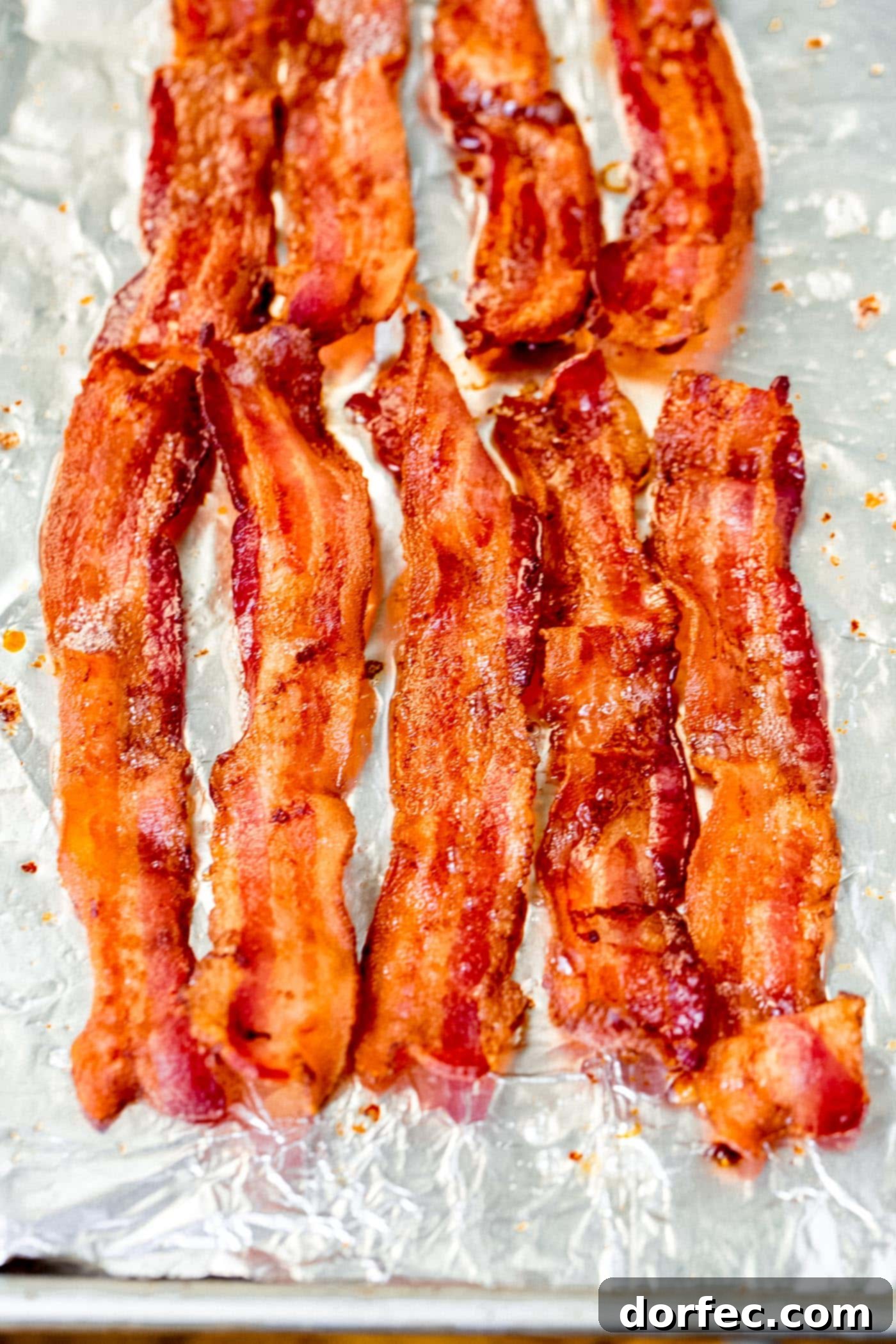
While the stovetop reigns supreme for achieving individual perfection, cooking bacon in the oven is undoubtedly the best method when you need to feed a crowd. It’s incredibly hands-off, allowing you to prepare other breakfast items simultaneously. While oven-cooked bacon might not achieve the exact same nuanced crispness as its pan-fried counterpart, it still yields delicious results, especially with a few tricks.
Oven-baked bacon typically cooks at a higher, more consistent temperature, sitting on a baking sheet where the heat envelops it from all sides. This slower process is excellent for rendering out a good amount of fat, which can be saved for later use, but it requires a bit more care to ensure it crisps up properly.
Achieving Extra Crisp Oven Bacon: Two Methods
Here are two effective ways to cook bacon in the oven, with options for maximizing crispness:
- For Ultimate Oven Crispness with a Rack: If your priority is super crisp bacon, utilize an oven-safe wire rack placed on top of a baking sheet. I highly recommend lining the baking sheet with aluminum foil underneath the rack for remarkably easy cleanup. The rack allows hot air to circulate completely around each bacon strip, promoting even cooking and superior crisping. Be aware that bacon can sometimes stick to the rack, and cleaning the rack itself can be a bit more cumbersome than a flat sheet.
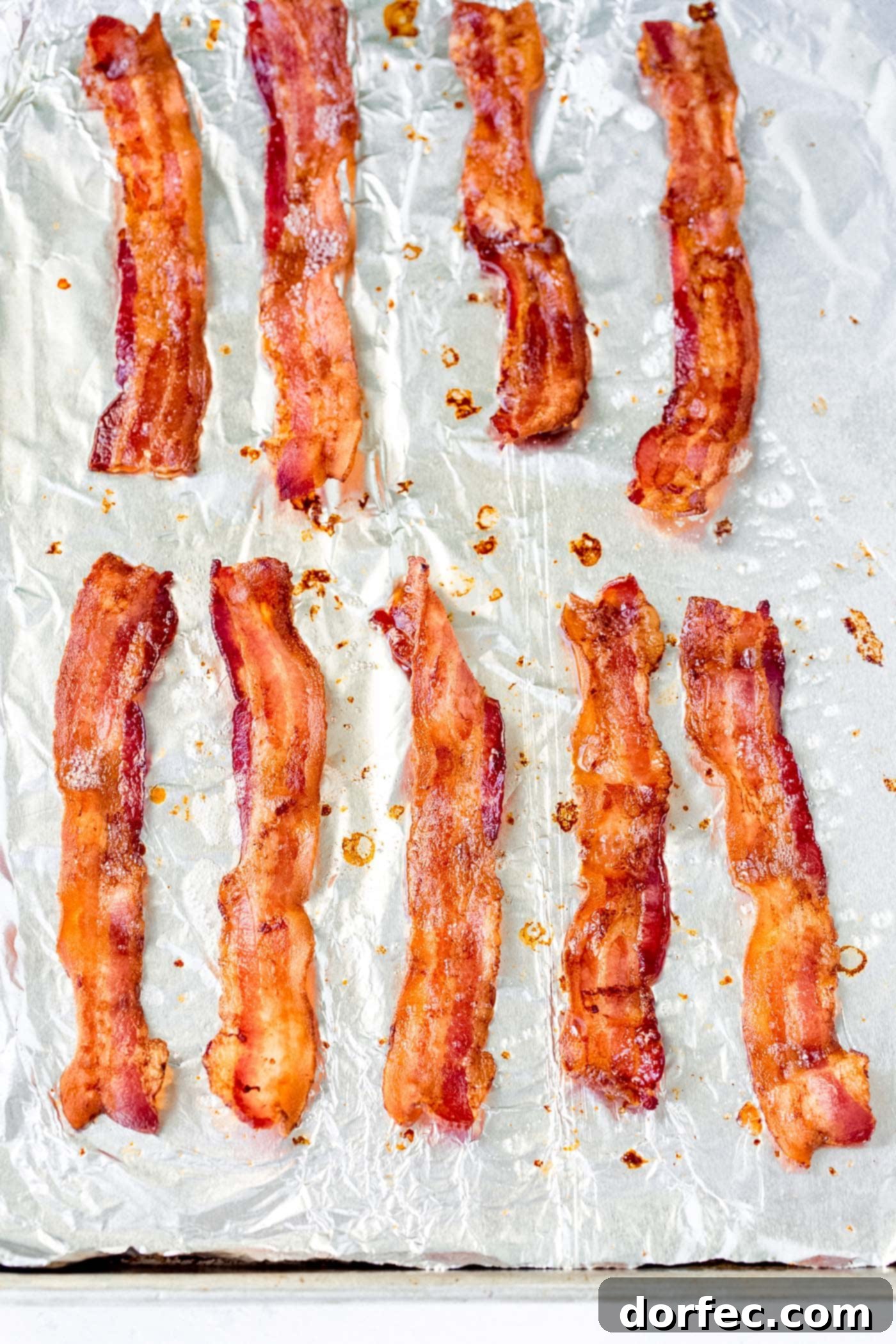
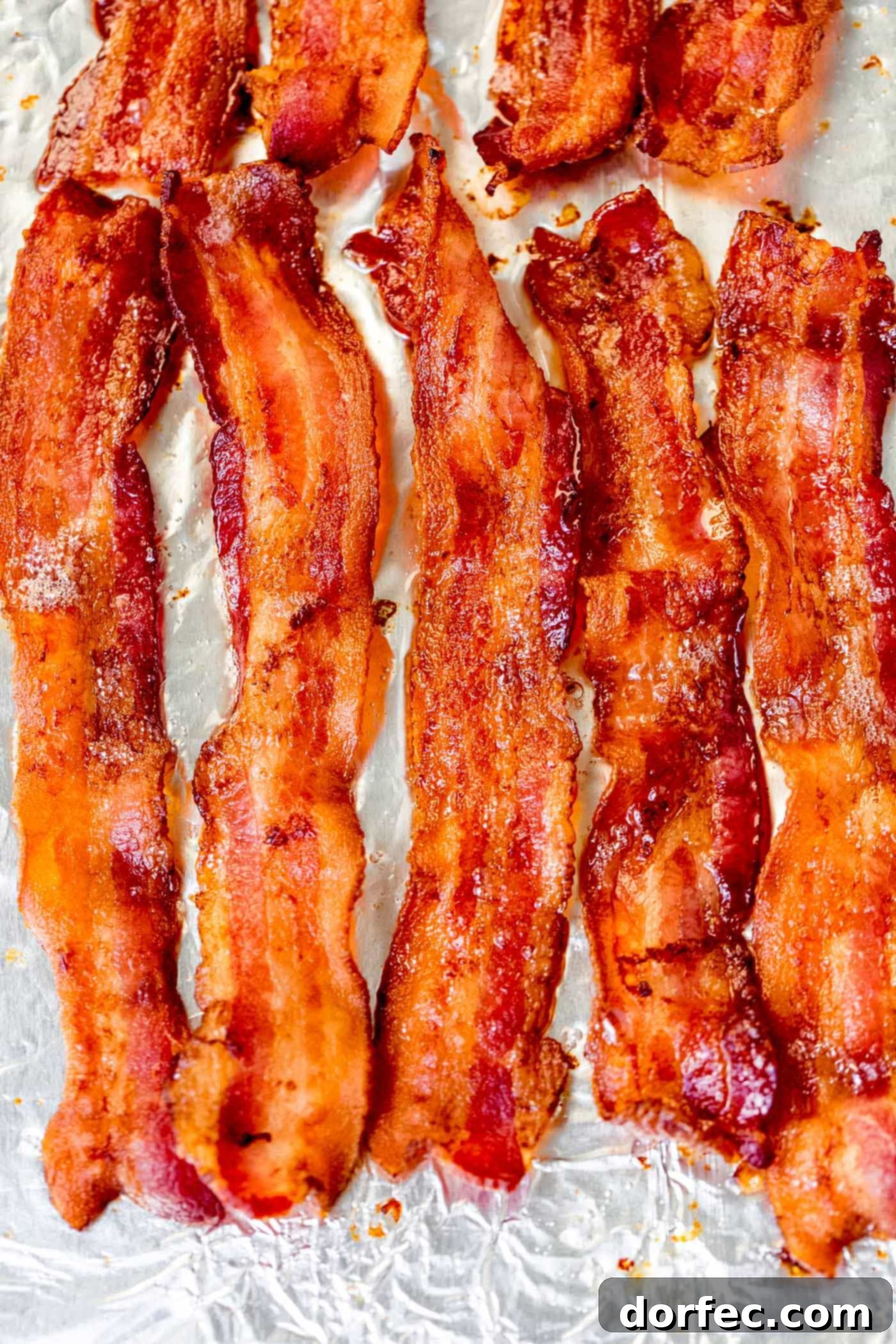
- The Convenient Flat Sheet Method: For a simpler approach that still yields great results, place aluminum foil directly on a cookie sheet with an edge (often called a half sheet pan). This method is my go-to for its minimal fuss, delivering delicious bacon with easier cleanup compared to using a wire rack.
Oven Baking Instructions
Here’s how to cook bacon in the oven, ensuring flavorful results with minimal effort:
- Line 2 baking sheets with aluminum foil for straightforward cleanup.
- Preheat your oven to 400 degrees Fahrenheit (200 degrees Celsius).
- Carefully arrange half of the bacon strips on each lined baking sheet, ensuring they are in a single layer without overlapping or touching. This is key for even cooking.
- Bake for 15-20 minutes. For optimal crispness and even browning, I like to flip the bacon strips for the last 5 minutes of baking.
- Once cooked to your liking, remove the bacon from the oven and transfer the crispy strips to a plate lined with paper towels to absorb any excess grease. Serve immediately!
How to Cook Bacon in the Air Fryer
The air fryer has become a popular appliance for quickly achieving crispy results, and bacon is no exception. However, air fryer bacon involves a few variables to consider, including the specific model and size of your air fryer, the thickness of your bacon, and your desired level of crispness. Generally, here’s what we’ve found works best for cooking bacon in an air fryer:
- Preheating your air fryer isn’t strictly necessary for bacon, but you can if desired. Set your air fryer to 350°F (175°C).
- Arrange bacon slices in a single layer in the air fryer basket. Avoid overcrowding to ensure proper air circulation and even cooking. You may need to cook in batches.
- For regular-cut bacon, air fry for 7 minutes for softer bacon, or 8-9 minutes for deliciously crispy bacon.
- For thick-cut bacon, air fry for 9 minutes for softer results, and 10-12 minutes for extra crispy bacon.
- Monitor closely during the last few minutes, as air fryers can cook quickly, and bacon can go from perfectly crisp to burnt in a flash.
- Transfer cooked bacon to a paper towel-lined plate to drain any excess fat before serving.
Tip: Placing a slice of bread at the bottom of the air fryer basket can help absorb excess grease and reduce smoke.
To Chop or Not to Chop: Before or After Cooking?
The question of whether to chop bacon before or after cooking is a common one, and as with many culinary queries, the answer is “it depends!” It truly hinges on what you intend to use the bacon for and the texture and flavor profile you’re aiming to achieve in your final dish.
Chop Before Cooking: If your primary goal is to infuse a dish with rich bacon flavor and utilize the rendered fat, chopping bacon before cooking is the way to go. This method is ideal for recipes where the bacon bits are an integral part of the dish’s foundation, such as chili, soups, or sautéed vegetables. Cooking pre-chopped bacon ensures that each small piece crisps up evenly, and the rendered fat becomes readily available to build flavor. For instance, in our award-winning Instant Pot chili recipe, we chop the bacon first to maximize flavor extraction into the pot.
Chop After Cooking: Conversely, if you want perfect, uniform crumbles for a topping, it’s best to cook the bacon first and then chop it. This method allows you to achieve your desired level of crispness across the entire strip before breaking it down. This is the preferred technique for garnishing salads or creamy soups, where consistent texture and visual appeal are important. We use this approach for dishes like our broccoli salad, loaded cowboy salad, cheesy bacon ranch corn dip, or potato broccoli corn chowder, where the bacon acts as a delightful, crispy textural contrast. While there are exceptions, I find myself almost always chopping bacon after it’s cooked for most of my recipes.
BACON FAQs: All Your Burning Questions Answered
Let’s address some of the most common questions about this beloved breakfast staple.
Pork belly is essentially uncured, unsmoked, and unsliced bacon. It’s a much thicker cut of meat and is often used in restaurants for dishes like savory pork belly tacos or incredibly thick, rich BLT sandwiches. Bacon, on the other hand, undergoes a curing and smoking process, which gives it its distinct flavor and texture, and is then typically sliced thinly.
The distinction between cured and “uncured” bacon can be a bit confusing.
Cured Bacon: Traditional cured bacon involves the addition of artificial nitrates and nitrites, along with salt and brine, to preserve the meat and develop its characteristic color and flavor.
“Uncured” Bacon: For those looking to minimize artificial nitrates and nitrites in their diet, “uncured” bacon might seem like the natural choice. However, it’s important to note that virtually all supermarket brands labeled “uncured” bacon still contain naturally occurring nitrites. These typically come from natural sources like celery powder, sea salt, and other plant-based ingredients that are rich in nitrates, which then convert to nitrites. The scientific debate about the health implications of artificial vs. naturally occurring nitrites is ongoing and not yet conclusive.
When kept in its original, unopened, sealed package, uncooked bacon will last for approximately 1 week in the refrigerator. To extend its shelf life significantly, we highly recommend freezing bacon. Properly frozen bacon can last for several months.
Leftover cooked bacon, when stored properly in an airtight container in the refrigerator, will remain fresh and delicious for 4-5 days. This makes it a great ingredient for meal prepping or quick additions to dishes throughout the week.
Absolutely! The best ways to reheat bacon to regain some of its crispness are in the oven or a toaster oven.
Oven Method: Place the bacon in a baking pan and cover it loosely with foil. Heat at 350 degrees Fahrenheit (175°C) for about 10 minutes, or until warmed through and re-crisped to your liking.
Microwave Method: For a quicker option, wrap the bacon in paper towels and microwave for 30-45 seconds. While faster, this method usually results in less crispy bacon.
Beyond Breakfast: Versatile Bacon Recipes for Every Occasion
Where does one even begin to extol the virtues of bacon? Its incredible versatility and unparalleled flavor make it a cherished ingredient in kitchens worldwide. Firstly, there’s the irresistible flavor – that unique blend of salty, smoky, and savory notes that instantly makes almost any dish better. Then, consider the texture: when cooked properly, the perfect level of crispiness or chewiness provides an essential textural contrast that elevates a simple meal into a memorable culinary experience. Bacon is truly a culinary chameleon, adapting beautifully to a wide array of dishes.
Let us show you just a few of the countless ways we incorporate bacon to create truly fabulous and flavorful recipes, proving its worth far beyond the breakfast plate:
- Bacon Wrapped Avocados – A fantastic appetizer featuring creamy avocado slices wrapped in savory-sweet brown sugar bacon, then baked to perfection.
- Baked Maple Mustard Bacon Salmon – Elevate your fish course with a delicious twist! Salmon fillets are wrapped in bacon and baked, infusing the fish with smoky flavor and adding a crispy exterior.
- Cheesy Bacon BBQ Chicken – Bacon serves as a delectable topping, adding a layer of savory goodness to juicy, barbecue-glazed chicken.
- Wedge Salad – A classic, hearty salad where crispy bacon crumbles are a must-have topping, with some of the rendered bacon grease often incorporated into the tangy dressing.
- Green Beans and Bacon – A simple yet incredibly flavorful vegetable side dish, where bacon adds a smoky, salty depth that makes even the pickiest eaters enjoy their greens.
And these are just a handful of examples! The unique flavors bacon brings to the table are unmatched. But let’s not forget, bacon doesn’t always need to be part of a complex recipe. Sometimes, the purest joy comes from simply enjoying perfectly cooked bacon as a side. Paired with a stack of fluffy melt-in-your-mouth buttermilk pancakes or alongside a fabulous Liege waffle, a few strips of crispy bacon are truly a taste of heaven.
So, to recap, bacon truly is life! If you’re preparing a large quantity to feed a crowd, the oven cooking method offers unparalleled convenience. But for that truly perfectly crispy bacon, the kind that snaps with every bite, I now exclusively turn to the stovetop, starting with a cold pan.
More Delicious Recipes Featuring Bacon:
- Jalapeno Bacon Elote Mexican Corn Salad
- Bacon Chicken Ranch Pasta Salad
- Honey Avocado Turkey Bacon Sandwiches
- Bacon Ranch Corn Dip
- Bacon Tomato and Avocado Crostini
- Jack Chicken
- Apple Bacon Waffles
- BBQ Chicken Bacon Pizza
How to Cook Bacon
By Sweet Basil
Prep 5 mins
Cook 20 mins
Total 25 mins
Servings 8
Crisp and chewy bacon always matters. I love bacon but it’s only recently that I learned an important mistake I was making in preparing PERFECT bacon.

Ingredients
- 1 Pound Bacon
US Customary – Metric
Instructions
Stovetop
- Put a cast iron pan on the stove.
- Place bacon in the pan without touching the pieces together and turn the heat to low or medium low.
- Cook the bacon, flipping often to promote even cooking on both sides until done, about 8-10 minutes. If you need to cook it faster you can move it up to medium heat but the fat will not have time to render out.
Bacon in the Oven
- Line 2 baking sheets with tinfoil.
- Heat the oven to 400 degrees.
- Carefully lay out each sheet with half of the bacon, do not allow them to overlap or touch.
- Bake for 15-20 minutes. I like to flip mine for the last 5 minutes.
- Place the cooked bacon on a paper towel lined plate.
- Serve!
Recipe Notes
Left-over cooked bacon will keep for 4-5 days in the refrigerator.
Nutrition
Serving: 2 slices, Calories: 236kcal, Carbohydrates: 1g, Protein: 7g, Fat: 23g, Saturated Fat: 8g, Cholesterol: 37mg, Sodium: 375mg, Potassium: 112mg, Vitamin A: 21IU, Calcium: 3mg, Iron: 1mg
Nutrition information is automatically calculated, so should only be used as an approximation.