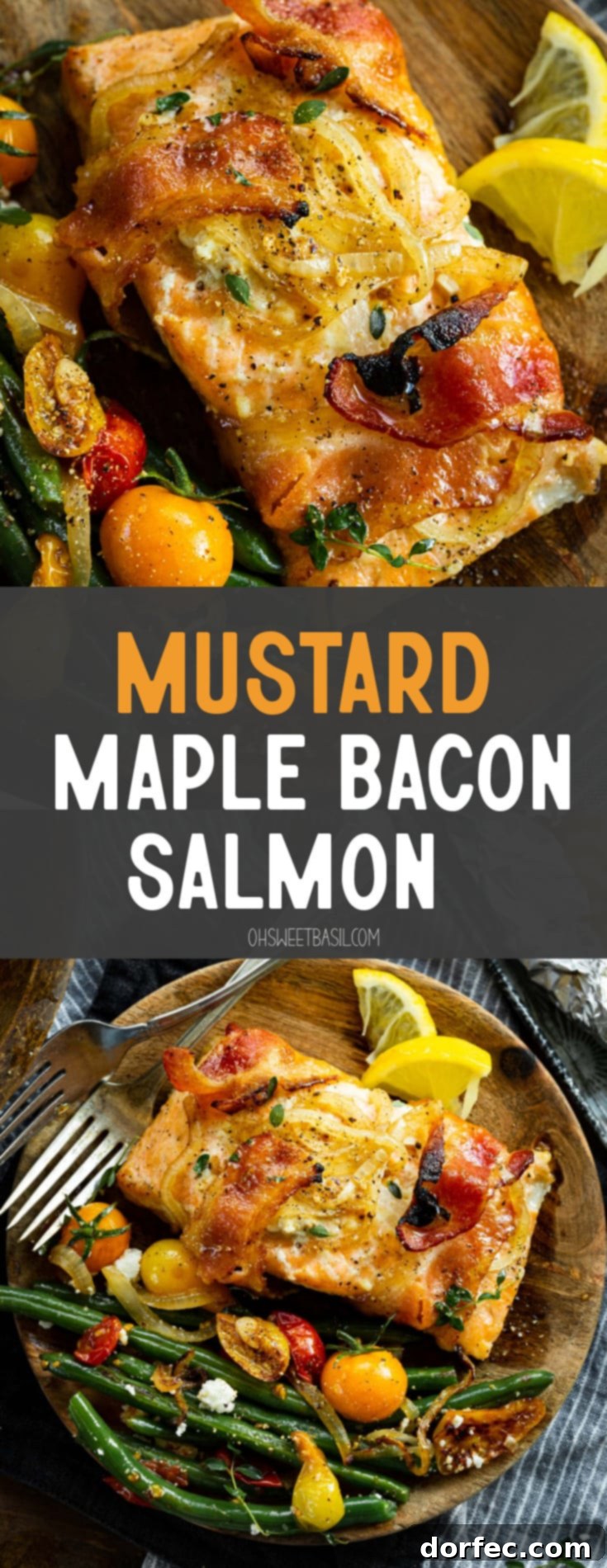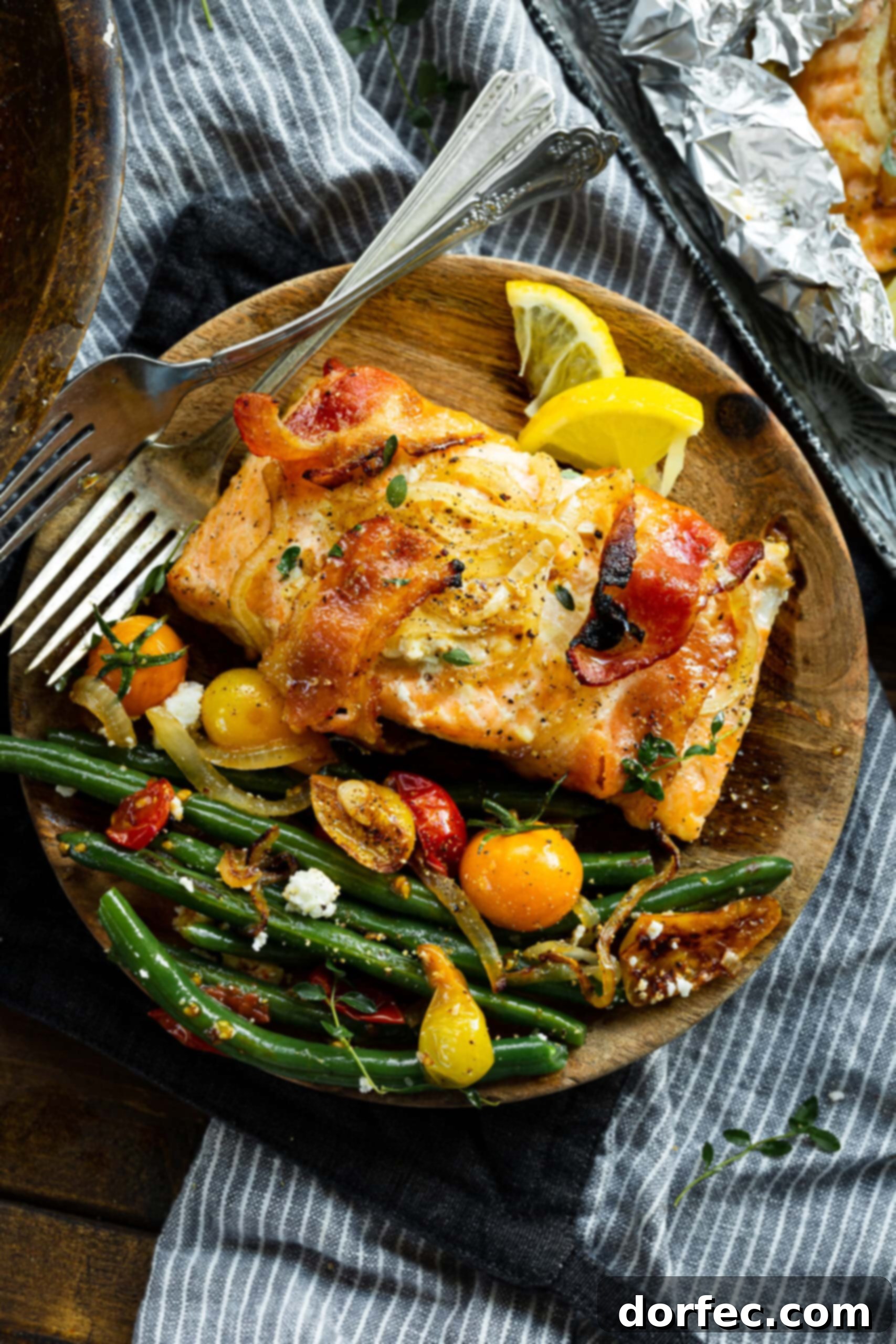
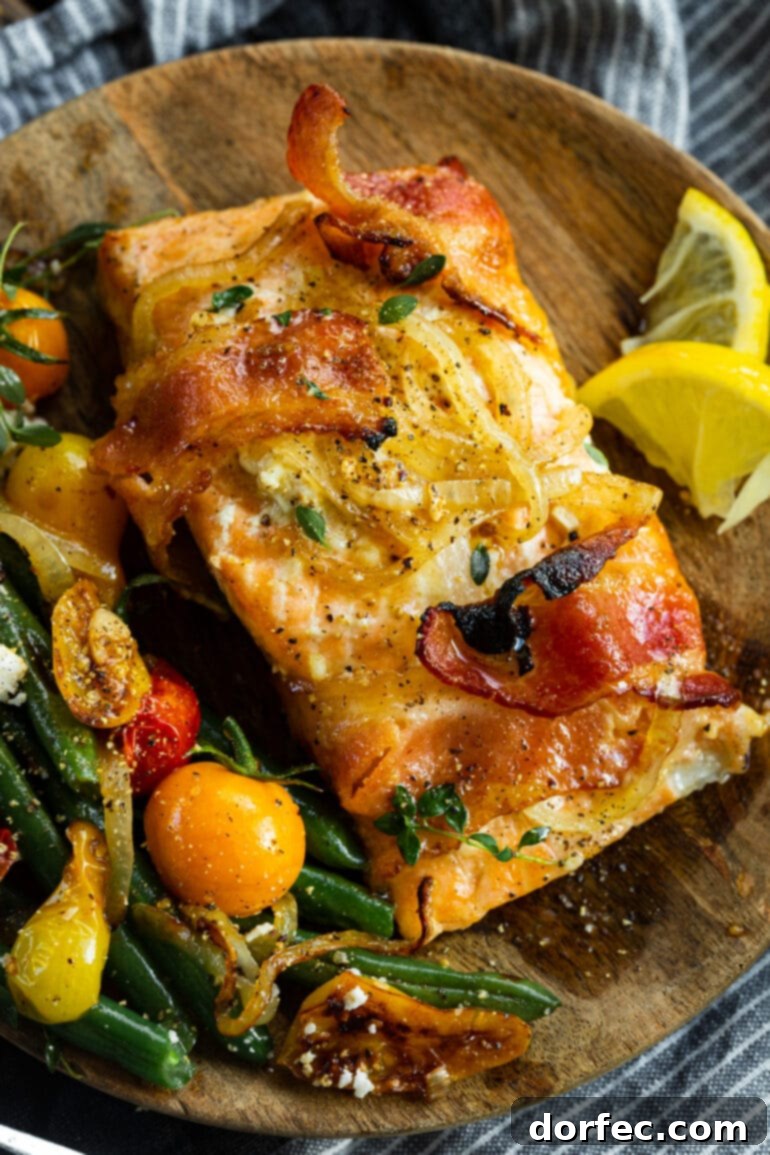
Prepare to be amazed by this truly sensational dish: foil-baked maple mustard bacon-wrapped salmon. Imagine tender, flaky salmon fillets, lovingly embraced by crispy bacon, and glistening with a vibrant garlic maple mustard glaze. This isn’t just a meal; it’s an experience that promises to elevate your dinner routine and delight even the most discerning palates. Whether you’re a seasoned seafood lover or, like many, sometimes find fish a challenge, the irresistible combination of savory bacon, sweet maple, and tangy Dijon in this recipe is guaranteed to win you over. Get ready to discover your new go-to salmon recipe!
For years, I approached salmon with a cautious optimism, always seeking that perfect recipe that could truly transform my perception of fish. My journey took a delicious turn thanks to friends like Megan, whose father’s salmon and bacon dish sounded incredibly intriguing. It’s no secret that a good piece of bacon has the power to elevate almost any dish, and when it comes to fish, it’s nothing short of a culinary superhero! While I’ve enjoyed our own Salmon Bowls and Asian Sticky Salmon, the idea of wrapping delicate salmon in smoky bacon and glazing it with a sweet and savory sauce immediately captured my imagination. This baked maple mustard salmon proved to be the game-changer I’d been searching for, turning a skeptic into an enthusiast!
Why This Maple Mustard Bacon Salmon is a Must-Try
This recipe truly stands out, offering a perfect blend of flavors and textures that make it an instant classic. Here’s why you’ll absolutely adore this bacon-wrapped salmon:
- Unforgettable Flavor Profile: The sweet and savory maple mustard glaze, infused with aromatic garlic, perfectly complements the rich, buttery salmon. The bacon adds a smoky, salty crunch that ties all the flavors together in a harmonious bite. It’s a flavor explosion that will have you coming back for more.
- Effortless Preparation: Don’t let the gourmet taste fool you; this dish is incredibly easy to make. With minimal prep and a simple baking process, it’s perfect for busy weeknights or when you need a quick yet impressive meal. The foil baking method also ensures quick and even cooking with virtually no cleanup!
- Healthy and Wholesome: Salmon is a powerhouse of nutrition, packed with omega-3 fatty acids, high-quality protein, and essential vitamins. This recipe keeps it light and wholesome, offering a fantastic balance of macros (40g protein, 11g carbs per serving), making it a smart choice for a balanced diet. It’s also naturally gluten-free and dairy-free!
- Quick Cook Time: From start to finish, you can have this delectable baked salmon dinner on your table in just 20 minutes. Salmon cooks remarkably fast, making it an ideal option for those evenings when time is of the essence but you still crave something extraordinary.
- Surefire Success: Whether you’re a novice cook or an experienced chef, this recipe is designed for success. The clear, step-by-step instructions ensure that your salmon turns out perfectly tender and flavorful every single time.
Selecting the Best Salmon for Your Recipe
Choosing fresh, high-quality salmon is key to the success of this dish. Don’t be intimidated by the fish counter; a few simple tips will guide you to the perfect fillet:
- Smell: Fresh salmon should have a mild, oceanic scent, not a strong or “fishy” odor. If it smells distinctly fishy, it’s likely past its prime.
- Color: Look for vibrant, deep shades of red, coral, or pink. The color should be uniform throughout the fillet, with no dull or brown spots. The flesh should appear moist and glistening.
- Appearance: The fish should look moist, firm, and resilient, never dried out or discolored. If you see gaping in the flesh (where the muscle flakes apart), it’s a sign that the fish isn’t as fresh as it could be or hasn’t been handled gently.
- Texture (Touch): Gently press the salmon with your finger. It should spring back immediately, leaving no indentation. This indicates firm, fresh flesh. If it feels soft or mushy, steer clear.
- Type of Salmon: While any good quality salmon will work, certain varieties offer different textures and fat content. Atlantic Salmon (often farmed) is widely available and has a rich, buttery flavor. Sockeye is leaner with a deeper red color and robust flavor. Coho is milder, and King (Chinook) salmon is highly prized for its high fat content and rich taste. Choose what’s available and fresh, keeping sustainability in mind if possible.
Essential Ingredients for Your Foil-Baked Salmon
This baked salmon recipe relies on a handful of easily accessible ingredients that come together to create an unforgettable flavor. Here’s what you’ll need to gather:
- Salmon Fillets: Fresh, skin-on or skin-off. Choose fillets that are roughly equal in thickness for even cooking.
- Lemon: Fresh lemon juice adds brightness and acidity to cut through the richness of the salmon and bacon.
- Kosher Salt & Pepper: Simple seasonings to enhance the natural flavors of the fish.
- Olive Oil Mayonnaise: Forms the creamy base of our delicious glaze, adding richness and helping the sauce adhere to the salmon.
- Maple Syrup (Grade A): Provides the essential sweetness and a distinct, rich flavor that balances the mustard. Opt for Grade A for the best quality and taste.
- Garlic: Minced fresh garlic infuses the glaze with a pungent, aromatic kick.
- Dijon Mustard: Offers a sharp, tangy counterpoint to the sweetness of the maple syrup, creating that signature maple mustard flavor.
- Yellow Onion: Sliced thinly, these caramelize beautifully atop the salmon during baking, adding another layer of sweet and savory flavor.
- Bacon: Thinly sliced bacon is crucial for wrapping the salmon, providing a crispy, smoky exterior and locking in moisture.
- Thyme or Parsley: Fresh herbs for garnish, adding a touch of color and a fresh finish.
You’ll find precise measurements for each ingredient in the comprehensive recipe card below, which you can easily print for your convenience.
Simple Steps to Make Baked Maple Mustard Salmon
Making this incredible bacon-wrapped salmon is straightforward and yields impressive results. Follow these steps for a perfectly cooked, flavorful dinner:
- Preparation is Key: Begin by preheating your oven to the specified temperature (425°F or 220°C). While the oven heats, prepare your foil packets. Tear off four sheets of heavy-duty aluminum foil, ensuring each piece is large enough to fully enclose a salmon fillet. Lay two slices of bacon vertically on each piece of foil, creating a bed for your salmon. Pat your salmon fillets dry with paper towels to ensure a crispy exterior where possible, then season them generously with kosher salt, freshly ground black pepper, and a squeeze of fresh lemon juice. Place each seasoned fillet horizontally on top of the bacon strips.
- Craft the Irresistible Glaze: In a small bowl, combine the olive oil mayonnaise, maple syrup, minced garlic, and Dijon mustard. Whisk these ingredients thoroughly until you achieve a smooth, well-combined glaze. This sauce is the heart of the recipe, providing that unique sweet and tangy flavor. Evenly pour and spread this delectable glaze over the top of each salmon fillet.
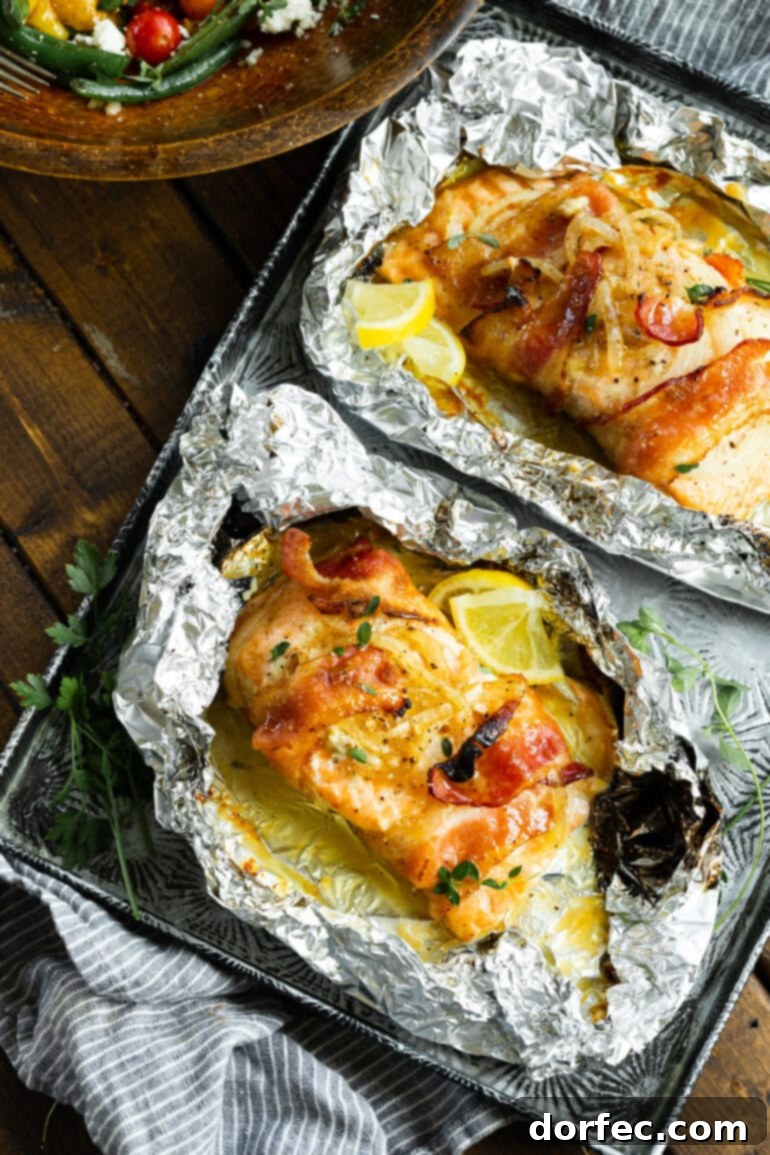
- Assemble and Wrap: Distribute the sliced yellow onion evenly over the glazed salmon fillets. Now, take the ends of the bacon slices and carefully wrap them over the top of each fillet, securing the salmon within its bacon blanket. Bring the long sides of the foil up and over the salmon, rolling the edges together to seal the packet tightly. Repeat for the ends, creating a secure, sealed package that will steam the salmon to perfection.
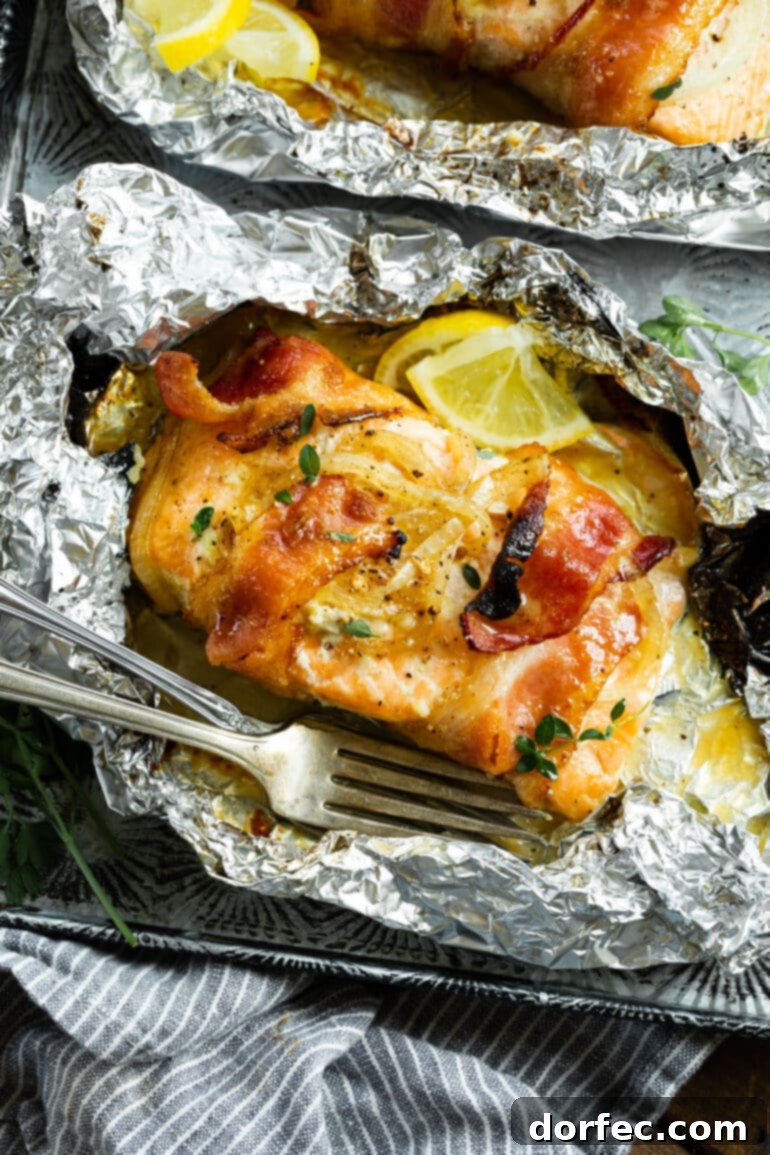
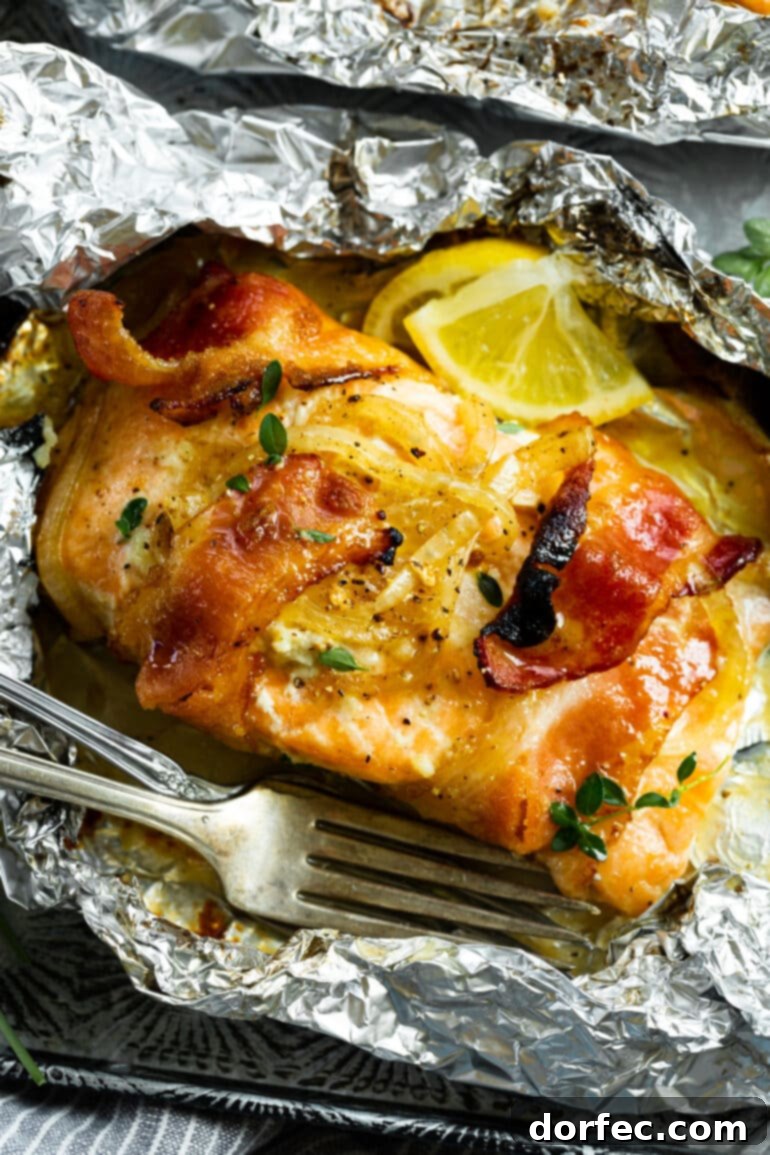
- Bake to Perfection (and Broil for Crispiness): Place your foil-wrapped salmon packets on a baking sheet. Transfer the baking sheet to the preheated oven and bake for 9-12 minutes, depending on the thickness of your fillets. The foil will trap the moisture and flavors, ensuring the salmon cooks through beautifully. Once baked, carefully open the foil packets, peeling back the top layer to expose the salmon. Change your oven setting to broil. Broil the salmon for just about a minute (watch carefully!) to crisp up the bacon and slightly caramelize the glaze on top, giving it a delightful texture.
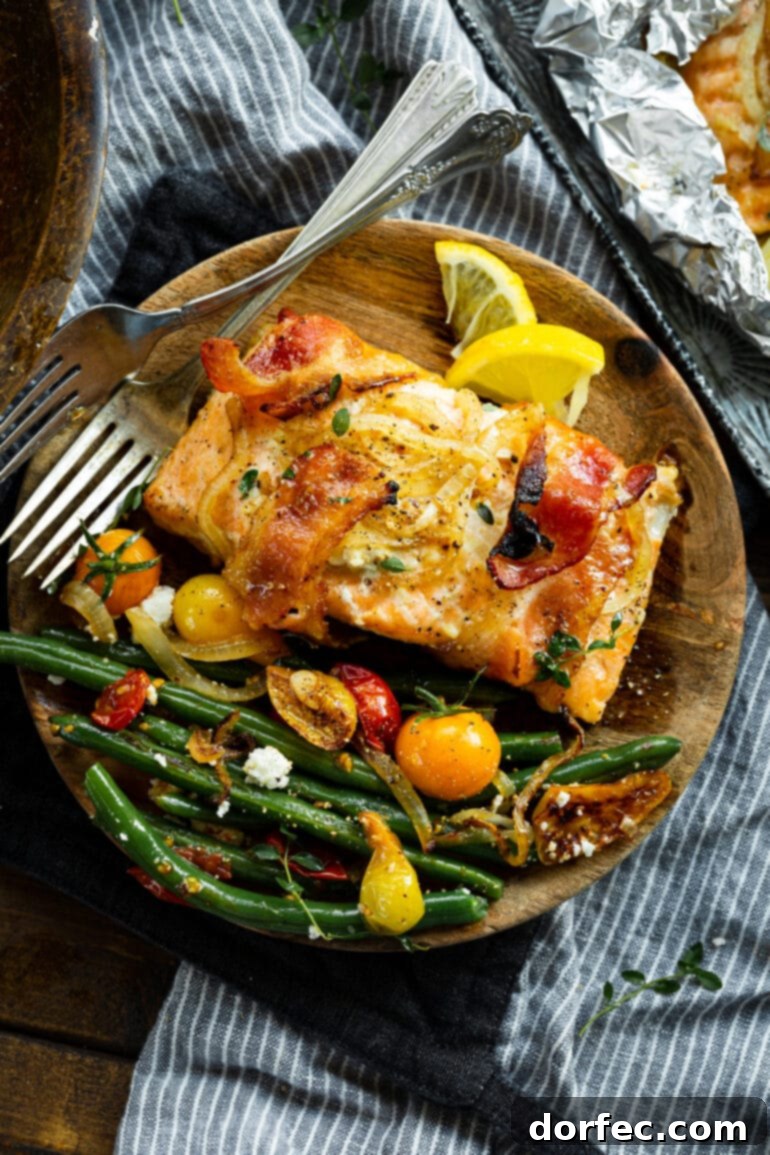
- Garnish and Serve: Remove the baking sheet from the oven. Carefully transfer each foil baked salmon fillet to a plate. Sprinkle with fresh thyme or chopped parsley for a pop of color and herbaceous freshness. Serve immediately and savor every bite of this incredibly flavorful and easy dinner!
Frequently Asked Questions About Baking Salmon
Can I use frozen salmon for this recipe?
Absolutely! If using frozen salmon, ensure it is completely thawed before proceeding with the recipe. Pat it very dry to remove any excess moisture that may have accumulated during thawing. While fresh salmon often provides the best texture and flavor, high-quality frozen salmon is a convenient and perfectly acceptable alternative, especially when fresh isn’t readily available.
Is it better to bake salmon covered or uncovered?
For most of the baking process, covering the salmon, especially in foil, is highly recommended. Baking salmon covered helps to lock in moisture, ensuring the fillets remain tender and juicy. The foil also creates a steaming effect that helps the fish cook more evenly and quickly. Finishing it with a brief broil once uncovered is the trick to adding a beautiful crispness to the bacon and a slight caramelization to the glaze without drying out the fish.
What temperature should you bake salmon?
Salmon fillets cook best at a relatively high temperature to ensure they cook through quickly while staying moist. For this recipe, we recommend baking at 400°F (200°C) or 425°F (220°C) for 10-15 minutes. The exact time will depend on the thickness of your salmon fillets and your oven’s calibration.
How do you know when salmon is done?
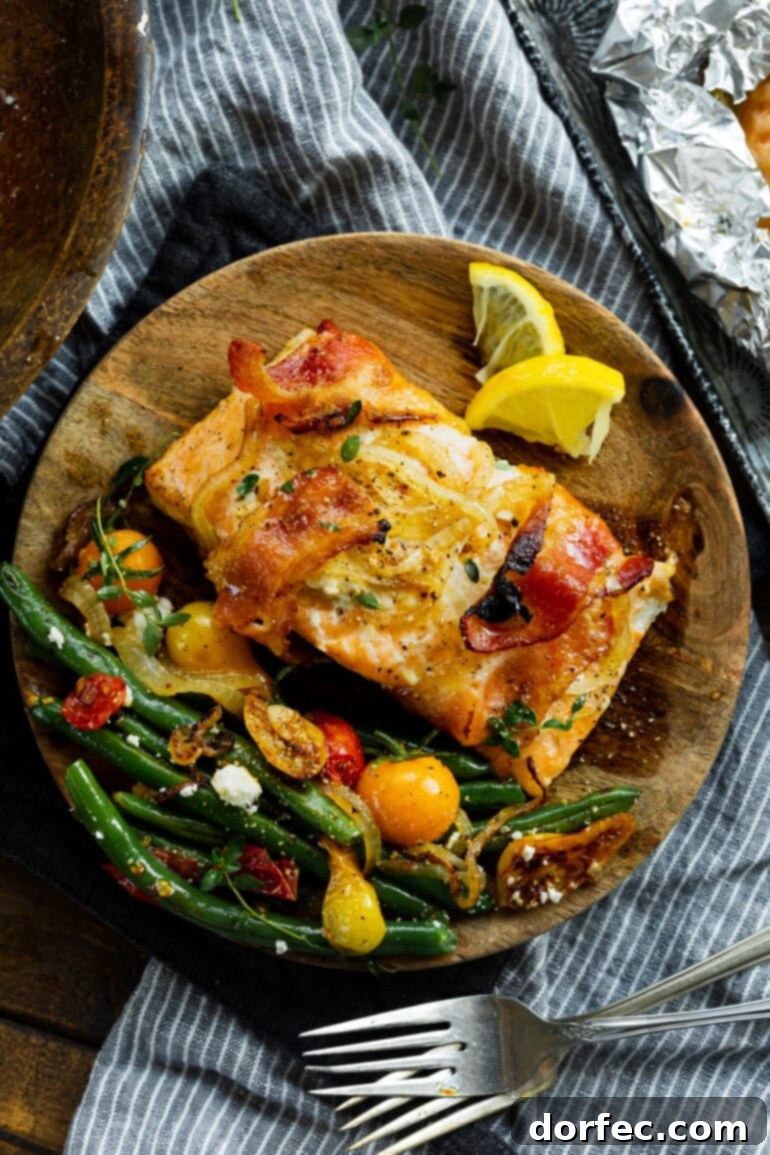
Perfectly cooked salmon will flake easily with a fork when tested at its thickest part. The flesh will change from translucent and reddish to opaque and pink throughout. For the most accurate measure of doneness and food safety, use a meat thermometer. Insert it into the thickest part of the fillet; the internal temperature should reach 145°F (63°C). Be careful not to overcook, as dry salmon is a common culinary disappointment!
What is the white stuff coming out of the salmon when it cooks?
Occasionally, you might notice a white, creamy substance seeping out of the salmon as it cooks. This is perfectly normal and completely safe to eat! This substance is called albumin, a natural protein that is liquid in raw salmon. As the salmon’s muscle fibers contract during cooking, the albumin is pushed to the surface and coagulates into a semi-solid, white mass. While harmless, if you prefer to minimize its appearance, ensure your salmon is cooked at a slightly lower temperature or very gently to prevent the muscle fibers from contracting too rapidly.
Recommended Equipment
- Baking Sheet: Essential for supporting your foil packets in the oven.
- Whisk: For effortlessly combining the glaze ingredients until smooth.
- Meat Thermometer: Your best friend for ensuring perfectly cooked salmon every time.
What to Serve with This Delicious Salmon
This versatile maple mustard salmon pairs beautifully with a wide variety of side dishes, making it easy to create a complete and satisfying meal. Here are some of our favorite accompaniments:
- Roasted Fingerling Potatoes: Their crisp exterior and creamy interior are a fantastic contrast to the salmon.
- Tomato Cucumber Salad: A light, refreshing, and tangy salad that provides a wonderful balance.
- Grilled Asparagus: Simple, elegant, and the perfect green vegetable to complement fish.
- Creamy Mashed Potatoes: A comforting classic that soaks up the delicious glaze.
- Roasted Mixed Vegetables: A medley of seasonal veggies offers an easy and nutritious side.
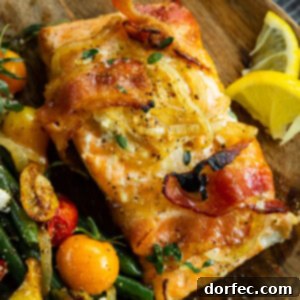
In the accompanying photos, you’ll see this delectable salmon served alongside our delightful sautéed green beans and cherry tomatoes, a quick and colorful option.
Storing and Reheating Baked Salmon
Proper storage and reheating ensure your leftovers remain as delicious as the freshly cooked meal. Here’s how to handle your bacon-wrapped salmon:
- Refrigeration: Leftover baked salmon should be stored in an airtight container in the refrigerator within two hours of cooking. It will remain fresh and safe to eat for 2-3 days.
- Freezing: If you plan to keep leftovers longer, salmon freezes well. Wrap individual fillets tightly in plastic wrap, then place them in an airtight freezer-safe bag or container. It can be frozen for up to 2 months. Thaw frozen salmon overnight in the refrigerator before reheating.
- Reheating: To best preserve the texture and flavor, I recommend reheating salmon in the oven. Preheat your oven to 350°F (175°C). Place the salmon in an oven-safe dish, cover it loosely with foil to prevent drying, and bake for 15-20 minutes, or until just heated through. Avoid reheating in the microwave, as it can make the salmon rubbery and dry.
This foil-baked maple mustard bacon-wrapped salmon is more than just a recipe; it’s a testament to how simple ingredients, when combined thoughtfully, can create extraordinary results. Each bite offers tender, flaky salmon infused with the robust flavors of garlic, maple, and Dijon, beautifully contrasted by the smoky crispness of bacon. It’s a dish that’s rich, satisfying, and remarkably easy to prepare. Whether you’re cooking for a weeknight dinner or entertaining guests, this easy salmon dinner promises to impress and quickly become a cherished favorite in your culinary repertoire. Don’t hesitate – give it a try and experience the magic yourself!
Explore More Tasty Salmon Recipes:
- Baked Citrus Salmon
- Healthy Salmon Bowls
- Sweet and Spicy Orange Salmon
- Asian Sticky Salmon
- Garlic Butter Salmon
- Apricot Lemon Salmon
- Maple Glazed Salmon
Foil Baked Mustard Maple Bacon Salmon
Sweet Basil
5 minutes
15 minutes
20 minutes
4
Ingredients
-
4
Salmon Fillets -
1/2
Lemon - Kosher Salt
- Pepper
-
1/2
Cup
Olive Oil Mayonnaise -
2
Tablespoons
Maple Syrup,
grade A -
2
Cloves
Garlic,
minced -
2
Tablespoons
Dijon Mustard -
1
Yellow Onion,
sliced -
8
Slices
Bacon -
Thyme,
or parsley as garnish
Instructions
-
Heat the oven to 425°F (220°C).
-
Grab four sheets of foil big enough to wrap each fillet. Lay 2 slices of bacon vertically on each piece of foil. Place one salmon fillet horizontally on each set of bacon slices. Sprinkle with salt and pepper and a squeeze of lemon.
-
In a small bowl, whisk together the mayonnaise, Dijon mustard, minced garlic, and maple syrup until well combined. Pour and spread this sauce evenly over each of the salmon fillets.
-
Spread the sliced yellow onion evenly over each glazed fillet. Take the four ends of the bacon and wrap them over the top of the salmon to secure.
-
Bring up the long sides of the foil and roll closed, then repeat for the ends to create a tightly sealed packet. Place the foil packets on a sheet pan and bake for 9-12 minutes.
-
Carefully open the foil on each end, then gently pull from one end to begin opening the top, allowing steam to escape.
-
Fold the foil down a little to expose the salmon. Change the oven to broil. Broil the tops of the bacon until crispy and lightly caramelized, about 1 minute. Watch carefully to prevent burning.
-
Sprinkle with fresh herbs (thyme or parsley) and serve immediately. Enjoy!
Nutrition
,
Calories: 660kcal
,
Carbohydrates: 11g
,
Protein: 40g
,
Fat: 49g
,
Saturated Fat: 11g
,
Polyunsaturated Fat: 20g
,
Monounsaturated Fat: 16g
,
Trans Fat: 0.1g
,
Cholesterol: 134mg
,
Sodium: 629mg
,
Potassium: 1007mg
,
Fiber: 1g
,
Sugar: 7g
,
Vitamin A: 109IU
,
Vitamin C: 4mg
,
Calcium: 51mg
,
Iron: 2mg
Nutrition information is automatically calculated, so should only be used as an approximation.