
The Ultimate Guide to Butter Substitutes in Chocolate Chip Cookies
For many home bakers, the chocolate chip cookie is more than just a dessert; it’s a nostalgic comfort, a perfect balance of chewy, crispy, and utterly delicious. But what happens when you run out of butter, or simply wonder if another fat could achieve a similar or even superior result? This is one of the most frequently asked questions we encounter in the world of baking. The choice of fat in your cookie recipe is not just a minor detail; it’s a critical ingredient that dictates everything from the cookie’s texture and spread to its overall flavor profile. Understanding the nuances of different fats can transform your baking results from good to truly exceptional.
This comprehensive guide aims to demystify the science behind fat substitution in chocolate chip cookies. We’ve conducted extensive tests, baking batches with various fats using the exact same base recipe, to show you precisely what to expect. Our goal is to equip you with the knowledge to make informed decisions, whether you’re seeking to replicate the classic butter cookie or explore new textures and flavors. Prepare to unlock the secrets to your perfect cookie, and discover why, for many, butter remains the unrivaled champion.
Why Fat Matters: The Science Behind Your Perfect Cookie
Fat plays a multifaceted and indispensable role in cookie chemistry. It’s not merely a source of richness; it’s a fundamental building block that influences the cookie’s structure, moisture, flavor, and browning. Different fats behave uniquely due to their distinct compositions, including their melting points, water content, and fatty acid profiles. These characteristics directly impact how your cookie dough spreads in the oven, how tender or crisp the final product becomes, and even how long it stays fresh.
When fat melts during baking, it creates air pockets, contributing to a lighter, more tender crumb. It also inhibits gluten development, preventing the cookies from becoming tough. Furthermore, fat is a carrier of flavor, enriching the overall taste experience. Without sufficient or appropriate fat, cookies can turn out dry, crumbly, or excessively chewy in an undesirable way. Understanding these fundamental principles is the first step toward mastering the art of cookie baking, especially when contemplating substitutions.
Deep Dive into Different Fats and Their Impact on Cookies
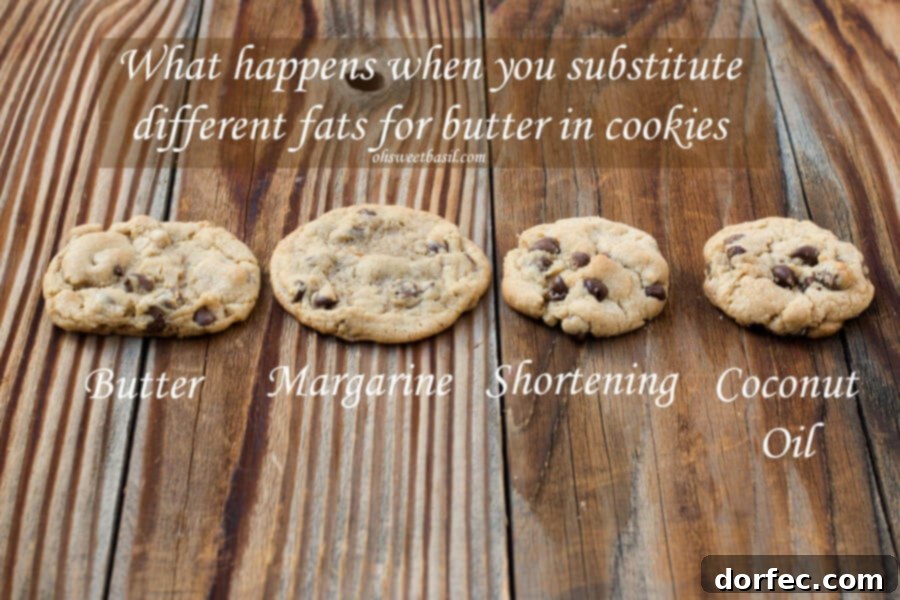
To illustrate the dramatic differences various fats can make, we baked several batches of chocolate chip cookies, each using the identical recipe but swapping out the primary fat. The results, as you’ll see, were distinct and eye-opening.
Butter: The Gold Standard for Classic Cookies
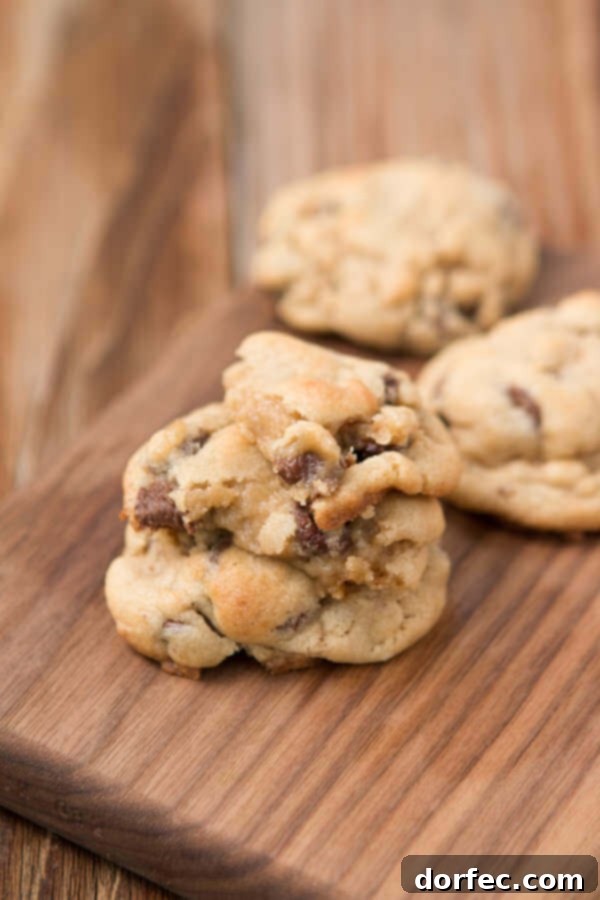
For many, butter is synonymous with the perfect chocolate chip cookie. It’s the ingredient that delivers that coveted balance of flavor, texture, and appearance. Our butter cookies consistently emerged as the favorites, embodying all the characteristics we associate with an ideal cookie:
- Texture: Butter cookies boast a delightful chewiness around the edges, gradually transitioning to a wonderfully soft and slightly gooey center. They are moist without being greasy.
- Flavor: The rich, dairy notes of butter infuse the cookie with an unparalleled depth of flavor that is both comforting and sophisticated. This natural richness is hard to replicate with other fats.
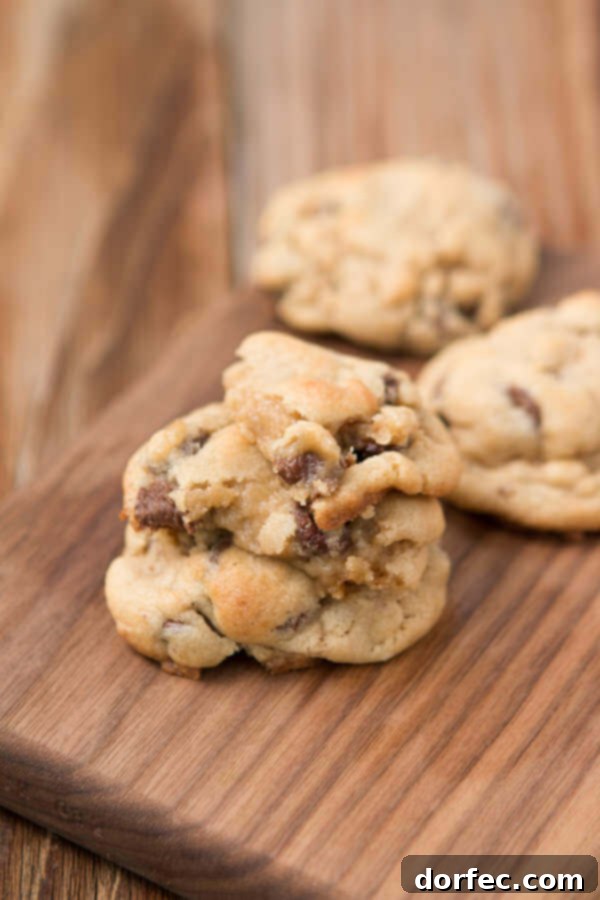
- Appearance: As shown in our initial images, butter cookies can achieve a beautiful golden-brown exterior. The variation in flatness (puffy vs. flatter) often comes down to the temperature of the butter and the dough. We found that starting with softened butter and then chilling or even freezing the dough before baking yields a superior shape and texture, preventing excessive spread and concentrating the flavor. This technique creates a cookie that is both visually appealing and perfectly structured.
- Versatility: Butter, whether unsalted or salted (though unsalted is generally preferred for controlled seasoning), provides consistent results across a wide range of recipes, making it a reliable choice for bakers.
Our strong preference for butter, especially when combined with a chilled or frozen dough, stems from its ability to produce cookies with perfect flavor, an ideal blend of soft and chewy textures, and a consistently beautiful appearance.
Margarine: The Compromise on Texture and Flavor
Margarine is often considered a direct substitute for butter, but in the context of chocolate chip cookies, its performance tells a different story. Margarine is typically made from a blend of vegetable oils, water, and emulsifiers, and its composition differs significantly from butter’s.
- Texture: Our margarine cookies were noticeably flatter and spread considerably more during baking. This is often due to margarine’s higher water content and lower melting point compared to butter. As the water evaporates quickly, it can lead to a crisper cookie. While not inherently bad, this crispness can be quite pronounced, resulting in a cookie that lacks the desired chewiness and softness of a classic butter-based cookie.
- Flavor: The flavor of the margarine cookie was acceptable but lacked the richness and depth that butter provides. It often had a more neutral or even slightly artificial taste, failing to deliver the beloved buttery notes integral to a traditional chocolate chip cookie.
- Appearance: Their increased spread and flatter profile often give margarine cookies a less robust and more delicate appearance.
While margarine can be a viable option for those avoiding dairy or seeking a lower-cost alternative, be prepared for a distinct difference in texture and a less complex flavor profile. Adjustments in flour or baking time might be necessary to mitigate its effects.
Shortening: The Texture Transformer (But At What Cost?)
Shortening, typically hydrogenated vegetable oil, is 100% fat and contains no water. Its high melting point and solid consistency at room temperature lead to some interesting, though often undesirable, effects in cookies.
- Texture: Our shortening cookies had a deceptively nice height, appearing quite puffy. However, upon tasting, the texture was profoundly disappointing – extremely dry and crumbly, almost cake-like rather than chewy. The lack of water in shortening means there’s nothing to keep the cookie moist, leading to a parched mouthfeel.
- Flavor: Shortening is notoriously flavorless. While this can be an advantage in certain applications where you want other flavors to shine, it means the cookie relies entirely on the chocolate chips and vanilla for its taste, lacking any inherent richness from the fat itself.
- Appearance: Shortening cookies tend to hold their shape very well and can be quite uniform, often thicker than butter or margarine cookies. This visual appeal, however, does not translate to a satisfying eating experience in a chocolate chip cookie.
Unless you specifically desire a very dry, cakey cookie, or are making a recipe designed specifically for shortening, it’s generally not recommended as a direct substitute for butter in classic chocolate chip cookies without significant recipe modifications (e.g., adding extra moisture).
Coconut Oil: The Flavor Changer (and a Faster Drying Cookie)
Coconut oil has gained popularity as a healthier fat alternative, but its use in chocolate chip cookies yields a very distinct result, primarily due to its unique flavor and melting point.
- Texture: Our coconut oil cookies were surprisingly tender, initially offering a pleasant softness. However, this tenderness came with a caveat: they tended to dry out much faster than their butter counterparts, quickly losing their desirable chewiness and becoming crumbly.
- Flavor: The most significant characteristic of coconut oil is its strong, distinct flavor. While some enjoy the tropical notes, it fundamentally alters the classic chocolate chip cookie profile. In our opinion, it creates a cookie that is unmistakably a “coconut oil cookie,” rather than a “classic chocolate chip cookie.” For those who love coconut, this might be a pleasant variation, but it deviates significantly from the traditional taste experience.
- Appearance: Coconut oil cookies generally spread similarly to butter cookies, sometimes a bit more, resulting in a decent appearance but one that doesn’t quite match the golden hue of a butter cookie.
Refined coconut oil can offer a more neutral flavor, making it a better choice if you want to avoid the coconut taste. However, the quicker drying time remains a challenge to achieve that perfect chew.
Key Considerations When Substituting Butter in Cookies
When you decide to venture beyond butter, understanding the critical differences between fats will help you predict and manage the outcome:
- Water Content: Butter contains about 15-18% water, while shortening and pure oils are 100% fat. Margarine can vary but often has more water than butter. Higher water content can lead to more spread and crispier cookies, while lower water content can result in denser or drier cookies.
- Melting Point: Fats melt at different temperatures. Butter melts at a relatively low temperature, allowing cookies to spread nicely. Shortening has a higher melting point, causing cookies to spread less and retain more height. Coconut oil’s melting point is also relatively low but can behave differently in dough.
- Flavor Contribution: Butter brings a rich, nuanced flavor. Shortening is flavorless. Margarine can be bland or have an artificial taste. Coconut oil imparts a distinct tropical flavor.
- Emulsification: Butter naturally contains emulsifiers that help create stable batters. Some margarines contain emulsifiers, but pure oils do not, which can affect the dough’s consistency and structure.
Expert Tips for Baking with Different Fats
If you’re experimenting with butter substitutes, keep these tips in mind to achieve the best possible results:
- Start with Small Adjustments: Don’t just swap 1:1 without expecting changes. If a recipe calls for butter, it’s formulated for butter’s specific properties.
- Adjust Liquid Content: If using a fat with less water (like shortening), you might need to add a touch more liquid (milk, an extra egg yolk) to compensate for dryness. Conversely, if using a high-water fat like some margarines, you might need a tiny bit more flour or slightly less liquid.
- Chill Your Dough: Regardless of the fat, chilling your cookie dough for at least 30 minutes (or even overnight) can significantly improve the texture and prevent excessive spread, especially with softer fats.
- Understand Your Desired Outcome: Are you aiming for chewy, crispy, or cakey? Each fat will lean towards a particular texture. Embrace the differences, or know which fat to choose for your preferred result.
- Taste Test and Adjust: Baking is an art as much as a science. Don’t be afraid to experiment with small batches, taking notes on what works and what doesn’t.
Conclusion: Choosing Your Cookie Fat Wisely
As our extensive testing demonstrates, the choice of fat is paramount in determining the outcome of your chocolate chip cookies. While alternatives like margarine, shortening, and coconut oil can yield edible cookies, they fundamentally alter the texture and flavor profile, often leading to results that diverge significantly from the classic ideal. The very first photo in this guide, depicting our beloved butter cookie, stands as a testament to why butter remains our top recommendation for unparalleled flavor and texture.
For that perfectly balanced, soft-in-the-middle, chewy-on-the-edges, and richly flavored chocolate chip cookie, butter—especially when combined with the technique of chilling or freezing the dough—is truly the gold standard. While other fats can serve specific dietary needs or create interesting variations, they require a clear understanding of their properties and often call for recipe adjustments to achieve a desirable result.
Ultimately, the best fat for your cookies depends on your personal preferences and dietary requirements. However, if you’re seeking to recreate that timeless, comforting taste and texture that defines a classic chocolate chip cookie, we wholeheartedly recommend sticking with high-quality butter. Happy baking!