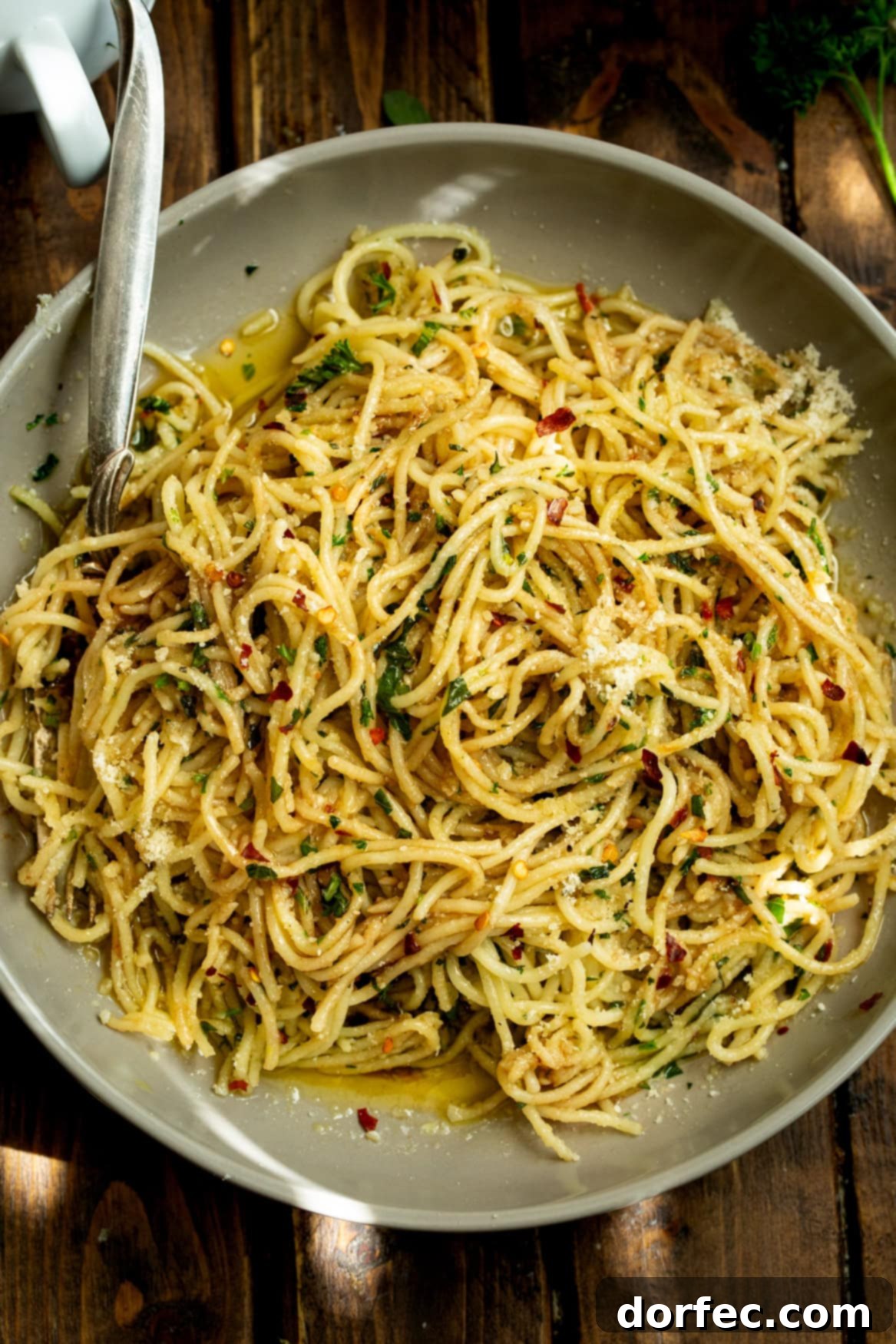
Welcome to the world of classic Italian simplicity! Today, we’re diving into the delightful and incredibly easy realm of Spaghetti Aglio e Olio. This timeless dish, translating to “spaghetti with garlic and oil,” is a testament to how a few high-quality ingredients can create an extraordinary culinary experience. Forget complicated recipes and lengthy cooking times; this flavorful pasta dish is designed for those busy weeknights when you crave something satisfying, authentic, and on the table in under 20 minutes.
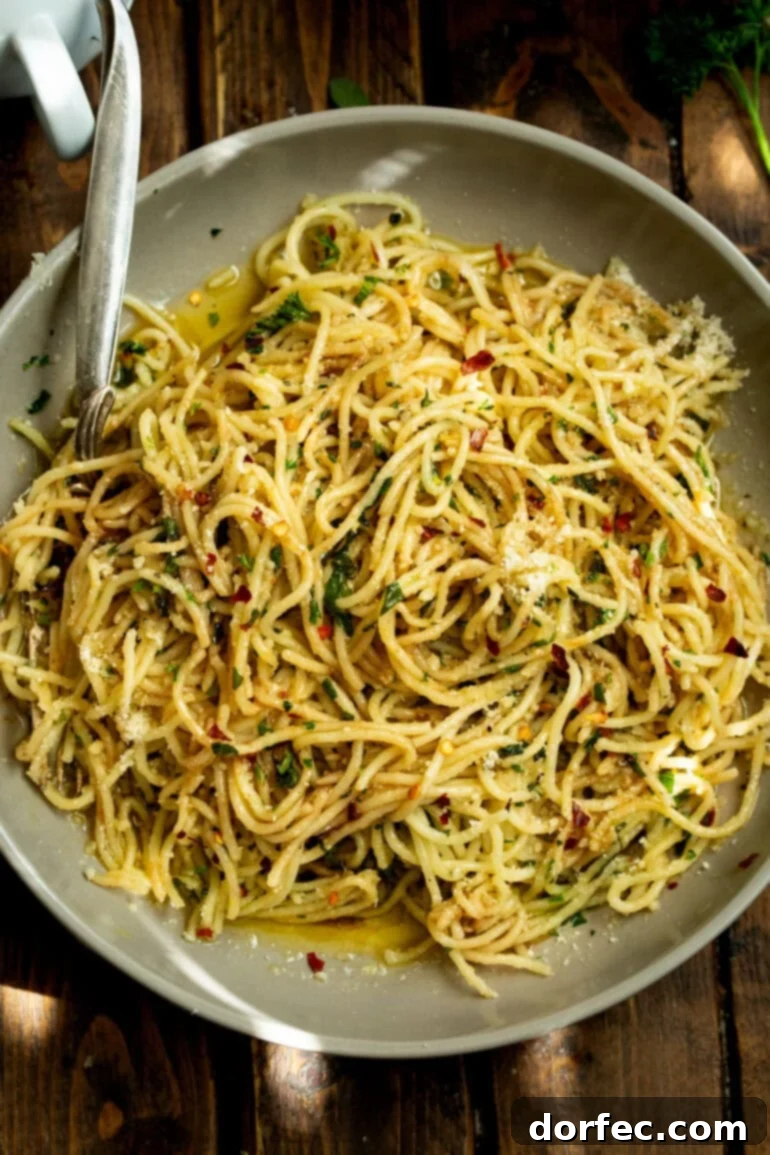
The inspiration for this recipe came from our incredibly popular sizzling Italian dipping oil, which captivated so many on social media. It sparked a simple idea: what if this aromatic, herbaceous oil was tossed with freshly cooked pasta? The result, as it turns out, was nothing short of amazing! Our family instantly fell in love with this vibrant dish, and it has quickly become a regular feature in our dinner rotation. We’re confident you’ll adore its captivating flavors and effortless preparation just as much as we do.
Imagine, a truly delicious and authentic Italian meal ready in a mere 20 minutes! This makes it an absolute lifesaver for busy parents, students, or anyone looking for a quick yet gourmet-quality dinner without the fuss. Let’s delve into what makes this simple dish so incredibly special.
What is Spaghetti Aglio e Olio? A Dive into Italian Simplicity
At its core, “Spaghetti Aglio e Olio” is a celebration of minimalism and fresh ingredients. Directly translated from Italian, “aglio” means garlic and “olio” means oil, so the name perfectly describes this humble yet profoundly flavorful pasta dish. It originates from Naples in Southern Italy and is considered a staple of “cucina povera,” or “poor kitchen” cooking, relying on readily available and inexpensive ingredients to create something truly delicious.
Often referred to as “midnight spaghetti,” this dish gained its nickname due to its lightning-fast preparation, making it a perfect late-night snack or impromptu meal. The beauty of Aglio e Olio lies in its delicate balance: the pungent warmth of garlic, the rich fruitiness of good olive oil, and a subtle hint of spice from red pepper flakes, all coating perfectly al dente spaghetti. It’s a dish that highlights the quality of its components rather than masking them with heavy sauces. It’s an elegant reminder that sometimes, the simplest things in life are indeed the most satisfying.
Essential Ingredients for the Perfect Aglio e Olio
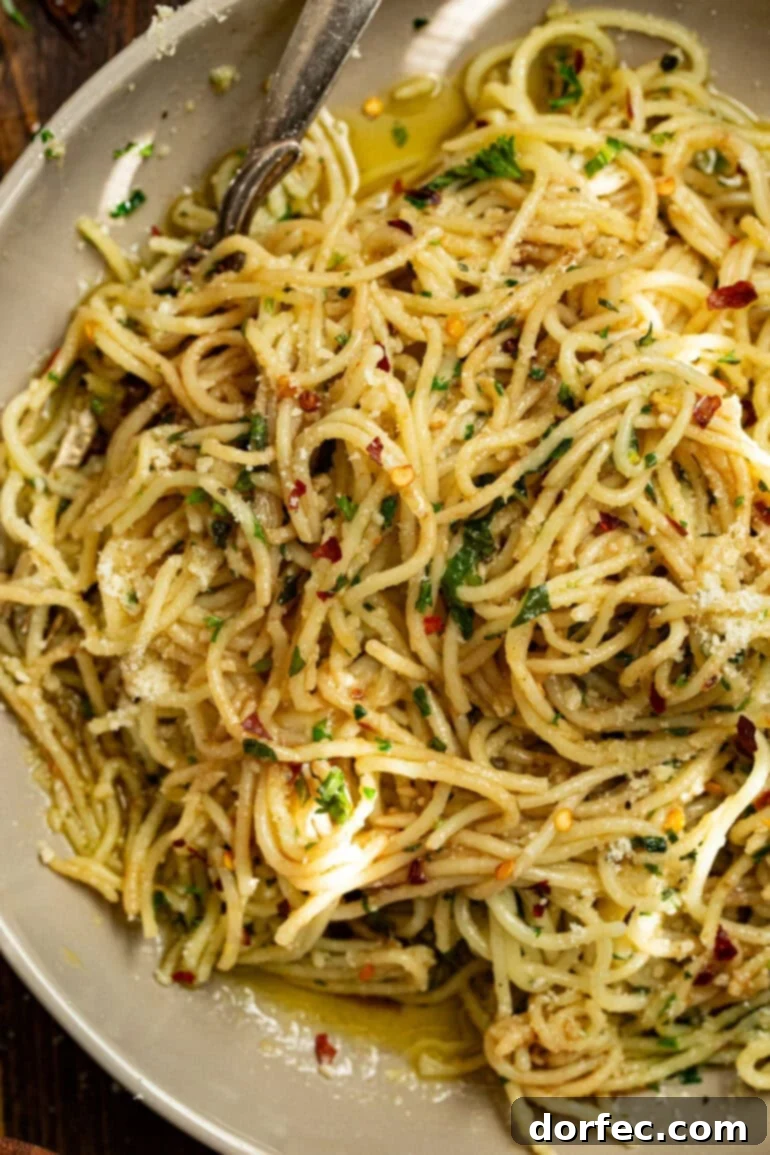
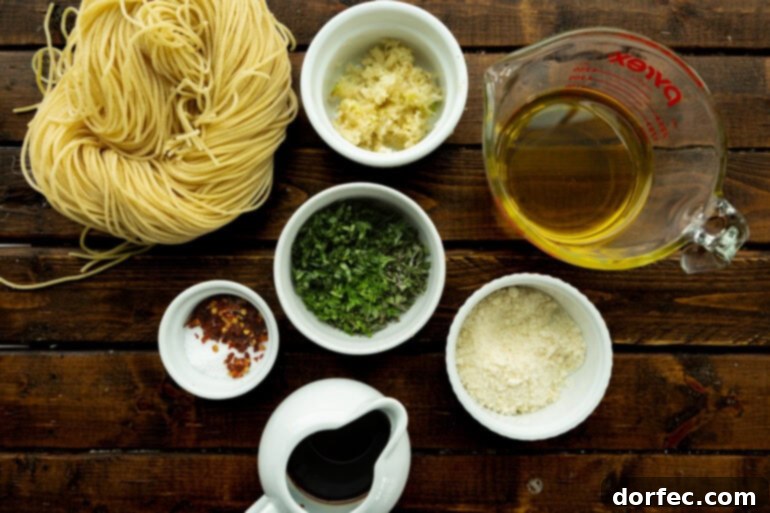
The magic of this spaghetti recipe truly shines through when you use fresh, high-quality ingredients. A trip to your local market’s produce section for vibrant herbs and a good bottle of olive oil is all it takes to embark on this journey to a simple pasta dinner. Here’s a closer look at the key components:
- Extra Virgin Olive Oil: This is the backbone of your sauce. Choose a high-quality extra virgin olive oil with a robust, fruity flavor. It not only helps cook the garlic but also acts as the luxurious coating for your pasta, infusing every strand with its golden essence.
- Fresh Garlic: Absolutely non-negotiable! Fresh garlic provides that distinct pungent aroma and savory depth that defines Aglio e Olio. Minced garlic releases its flavors beautifully into the hot oil. Avoid pre-minced garlic for the best results.
- Fresh Herbs: A vibrant medley of fresh herbs elevates this dish beyond mere garlic and oil. Parsley, Oregano (or Marjoram for a slightly sweeter note), Rosemary, and Basil are classic choices. Finely chopping them allows their fragrant oils to mingle wonderfully with the hot olive oil, creating an aromatic symphony. If fresh herbs are unavailable, dried herbs can be used, but use half the amount as their flavor is more concentrated.
- Red Pepper Flakes: These tiny flakes are responsible for the delightful “sizzle” and a subtle kick of heat that awakens the palate. Adjust the amount to your preferred spice level, adding more for a bolder flavor or less for a milder experience.
- Kosher Salt: Essential for seasoning both the pasta water and the sauce itself. It brings out the natural flavors of all the ingredients, ensuring a well-balanced taste. Always season to taste.
- Balsamic Vinegar: A small drizzle of balsamic vinegar adds a touch of acidity and a hint of sweetness, brightening the overall flavor profile of the dish and providing a delightful contrast to the richness of the olive oil.
- Fresh Spaghetti: While dried spaghetti is perfectly acceptable and widely used, fresh spaghetti offers a superior texture and tenderness that truly elevates this dish. If you have the time, making your own fresh pasta is a rewarding experience, but a good quality store-bought fresh pasta works wonders too. Cook it until it’s perfectly al dente.
- Parmesan Cheese: A final sprinkle of freshly grated Parmesan cheese adds a salty, umami-rich finish, making the pasta even more irresistible. While not strictly traditional for Aglio e Olio in some regions, it’s a popular and delicious addition that enhances the overall experience.
The exact measurements for each of these wonderful ingredients are detailed in the comprehensive recipe card, conveniently located at the end of this post. Keep scrolling to find all the specifics!
Crafting Your Aglio e Olio: Two Distinct Approaches
The beauty of this hot sizzling oil spaghetti lies not only in its simplicity but also in its versatility. There are two primary ways to prepare the “aglio” (garlic) in your Aglio e Olio, each yielding a subtly different yet equally delicious flavor profile. Both methods are incredibly quick, ensuring dinner is on the table in just 20 minutes. Before you begin either technique, remember to get a pot of generously salted water boiling for your pasta and cook it to a perfect al dente.
Method 1: Toasted Garlic for Depth and Sweetness
This method brings out a deeper, slightly sweeter, and nutty flavor from the garlic, transforming it into golden, aromatic morsels that add a delightful texture to the dish. If you enjoy the richness of roasted garlic, this approach is for you.
- Prepare Herb Blend: In a shallow, heat-proof bowl, combine all your finely chopped fresh herbs, red pepper flakes, and a portion of the kosher salt. Mix them gently to distribute the flavors. This aromatic base awaits the sizzling oil.
- Infuse the Oil with Garlic: Pour the extra virgin olive oil into a small saucepan or a butter warmer. Heat the oil over medium heat. Once the oil begins to shimmer, indicating it’s hot but not smoking, add your minced fresh garlic. Allow the garlic to gently toast, stirring occasionally, until it turns a beautiful golden brown.
- PRO TIP: This step requires your full attention. Garlic can go from perfectly golden to burnt in a matter of seconds, leading to a bitter taste. Keep a close eye on it and remove it from the heat as soon as it reaches that desirable golden hue.
- Combine and Season: Carefully pour the hot, garlic-infused oil over the prepared herb mixture in your bowl. The oil will sizzle as it hits the herbs, releasing their vibrant aromas. Stir thoroughly to ensure all ingredients are well combined. Drizzle in a splash of balsamic vinegar for a bright, acidic counterpoint and sprinkle with additional salt to taste.
- Toss and Serve: Transfer your perfectly cooked al dente spaghetti to a large serving bowl. Pour the aromatic oil and herb mixture over the pasta. Toss vigorously to ensure every strand is beautifully coated. Finish with a generous sprinkle of freshly grated Parmesan cheese and serve immediately while the pasta is still warm and fragrant.
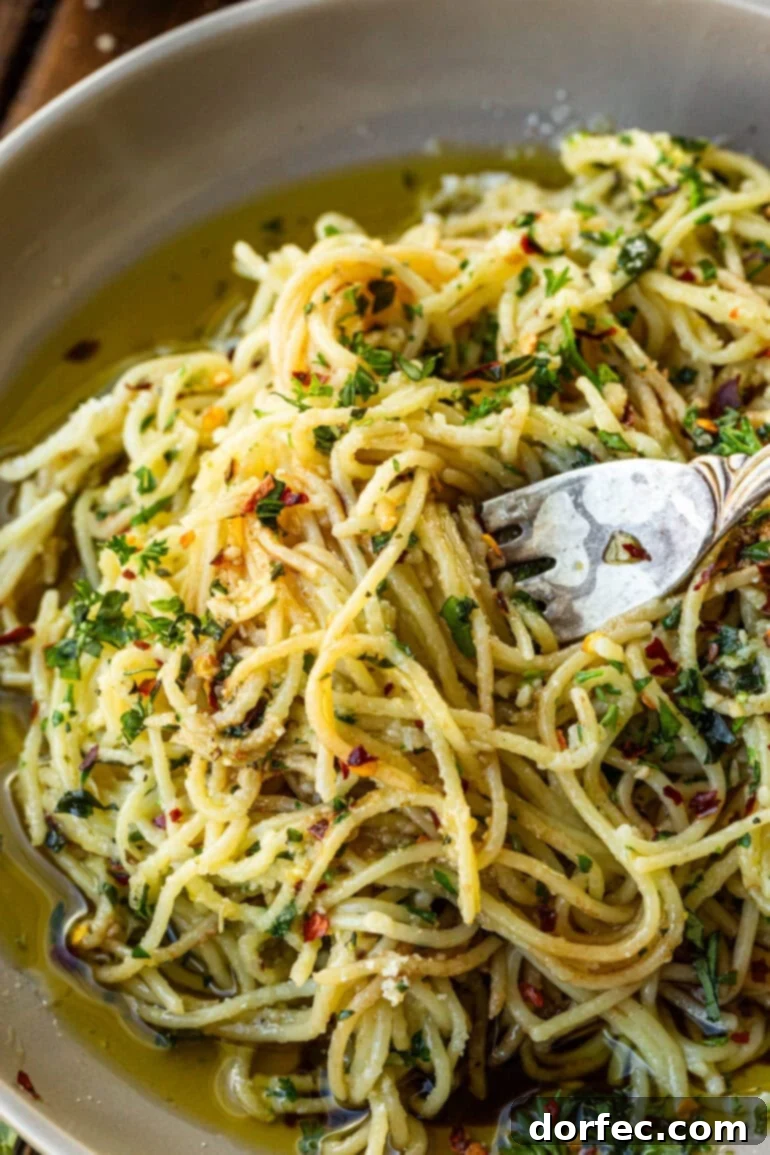
Method 2: Fresh Garlic for Pungency and Zest
For those who prefer a brighter, more pungent garlic flavor with a raw, zesty edge, the fresh garlic method is ideal. This technique preserves the sharp, vibrant essence of the garlic, which mellows slightly when hit with the hot oil but retains more of its fresh character.
- Prepare Aromatic Base: In a shallow, heat-proof bowl, combine your minced fresh garlic, all the finely chopped herbs, red pepper flakes, and a portion of the kosher salt. Gently mix them together.
- Heat the Olive Oil: Add the extra virgin olive oil to a small saucepan and heat it over medium heat until it shimmers. There’s no need to add garlic to the pan in this method; the oil is simply heated to its optimal temperature for infusing the raw aromatics.
- Sizzle and Season: Carefully pour the shimmering hot oil directly over the garlic and herb mixture in the bowl. You’ll hear an immediate sizzle as the oil gently cooks the garlic and blooms the herbs, releasing their intense fragrances. After a moment, add a drizzle of balsamic vinegar and sprinkle with additional salt to taste, stirring well.
- Toss and Serve Immediately: Transfer your cooked al dente spaghetti into a large serving bowl. Pour the sizzling oil and garlic mixture over the pasta. Toss thoroughly to coat every strand. Finish with a generous sprinkle of freshly grated Parmesan cheese and serve this vibrant dish immediately to enjoy its fresh, pungent flavors.
While the difference between these two preparations might seem subtle on paper, the resulting flavors are quite distinct. The toasted garlic offers a mellower, slightly sweeter, and more complex taste, whereas the fresh garlic provides a bolder, sharper, and more piquant kick. Ultimately, your choice depends on your preference! We love both variations equally, and our decision often comes down to our mood. Whichever method you choose, you’re guaranteed a sensational Italian meal.
For a precise breakdown of ingredients and step-by-step instructions, make sure to consult the complete recipe card available further down on this page.
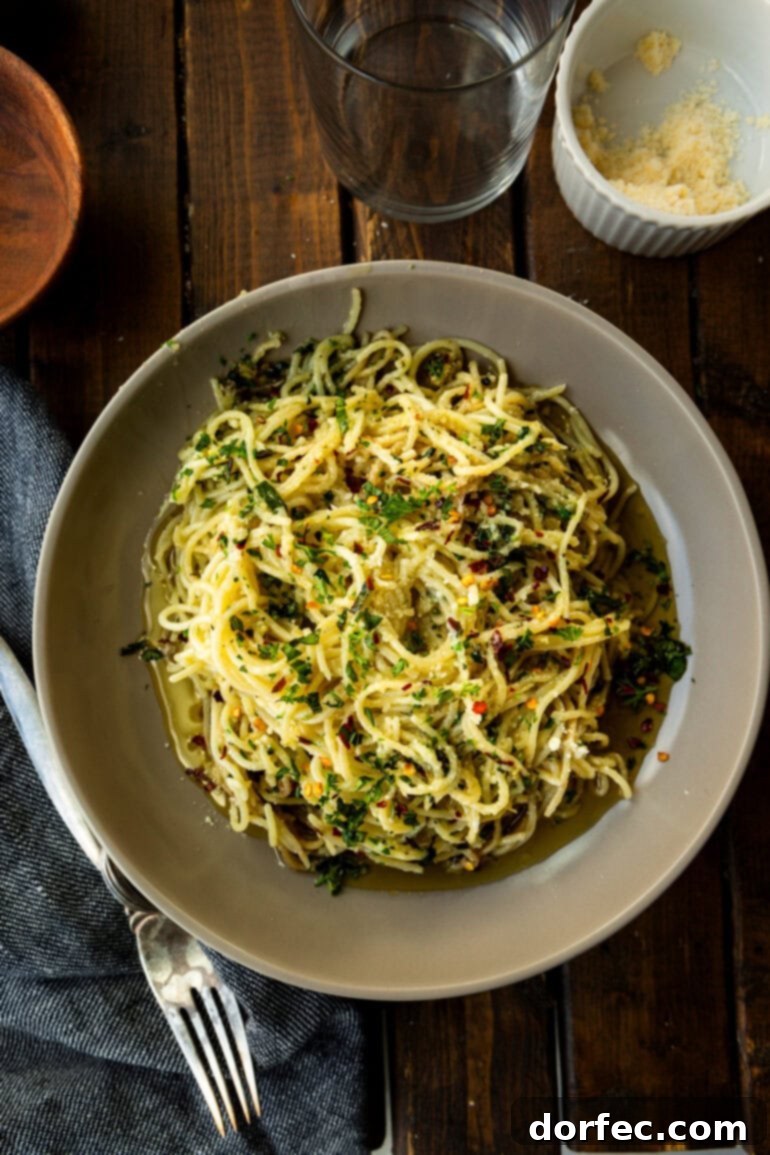
Pasta Perfection: Can I Use Regular Spaghetti?
Absolutely, you can! While fresh spaghetti offers a wonderfully tender texture that truly shines in this minimalist dish, dried spaghetti is a perfectly acceptable and widely available option. In fact, it’s the more traditional choice for many home cooks. The key is to select a good quality durum wheat spaghetti and, most importantly, cook it to a perfect al dente. This means cooking it until it’s firm to the bite, not mushy, allowing it to absorb the flavors of the garlic and oil without losing its structural integrity.
Beyond spaghetti, this recipe is remarkably forgiving when it comes to pasta shapes. Feel free to experiment with what you have on hand or what you prefer. Angel hair pasta, with its delicate strands, will absorb the oil quickly for a lighter feel. Penne or bowtie pasta can also work, offering different textures for the sauce to cling to. The essence of Aglio e Olio lies in its aromatic oil, which beautifully coats any pasta, transforming it into a delicious meal. However, for a truly authentic and superior experience, especially with so few ingredients, the texture and flavor of fresh pasta are undeniably worth the extra effort or expense.
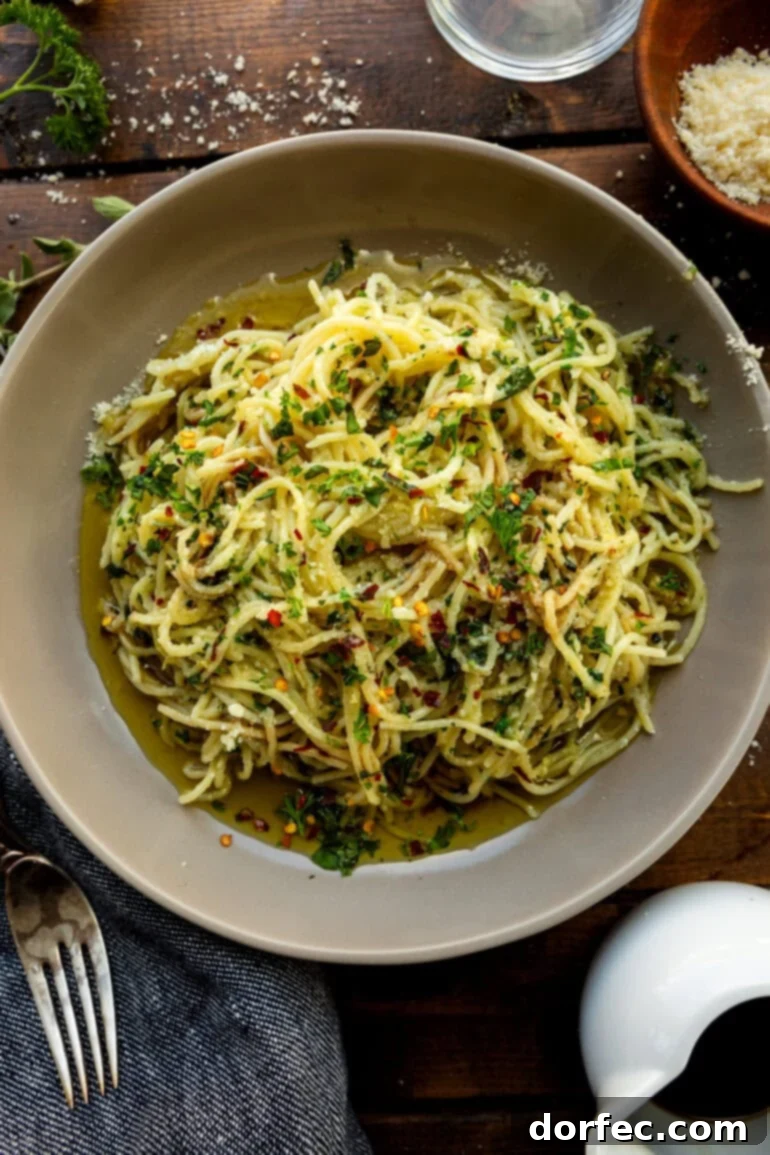
Customizing Your Aglio e Olio: Substitutions and Flavorful Variations
One of the many charms of Spaghetti Aglio e Olio is its adaptability. While delicious in its classic form, it also serves as an excellent canvas for various additions and modifications, allowing you to tailor it to your taste or what you have available. Here are some popular ideas to spark your culinary creativity:
For a Creamier Sauce: If you desire a slightly richer and more cohesive sauce, simply reserve about 1/2 cup of the starchy pasta water just before draining your spaghetti. After combining the pasta with the hot oil and herb mixture, gradually add a tablespoon or two of this reserved pasta water, tossing constantly. The starch in the water will emulsify with the olive oil, creating a wonderfully smooth and creamy texture that beautifully coats the pasta strands.
Incorporate More Vegetables: Elevate the nutritional value and add extra layers of flavor by tossing in your favorite vegetables. Sautéed mushrooms or bell peppers can be added directly to the hot oil with the garlic. Peas, asparagus florets, or chopped cherry tomatoes (which burst with flavor when warmed) can be stirred in with the pasta at the very end. Even blanched broccoli florets or spinach that wilts into the hot pasta are fantastic additions, offering both color and freshness.
Boost with Protein: To transform Aglio e Olio into a more substantial meal, consider adding a protein element. Cooked chicken breast (shredded or diced), succulent shrimp, or thinly sliced steak can be prepared ahead of time and gently tossed into the finished pasta dish. The rich flavors of the garlic and oil will complement any of these proteins beautifully. For a vegetarian protein boost, consider adding cannellini beans or chickpeas.
Nutty Crunch: For an unexpected texture, lightly toast some breadcrumbs in a separate pan with a little olive oil until golden brown and crispy. Sprinkle these over the finished dish for a delightful crunch that contrasts with the tender pasta.
Citrus Brightness: A squeeze of fresh lemon juice at the end can add an invigorating zest, enhancing the brightness of the dish, especially when paired with seafood or fresh vegetables.
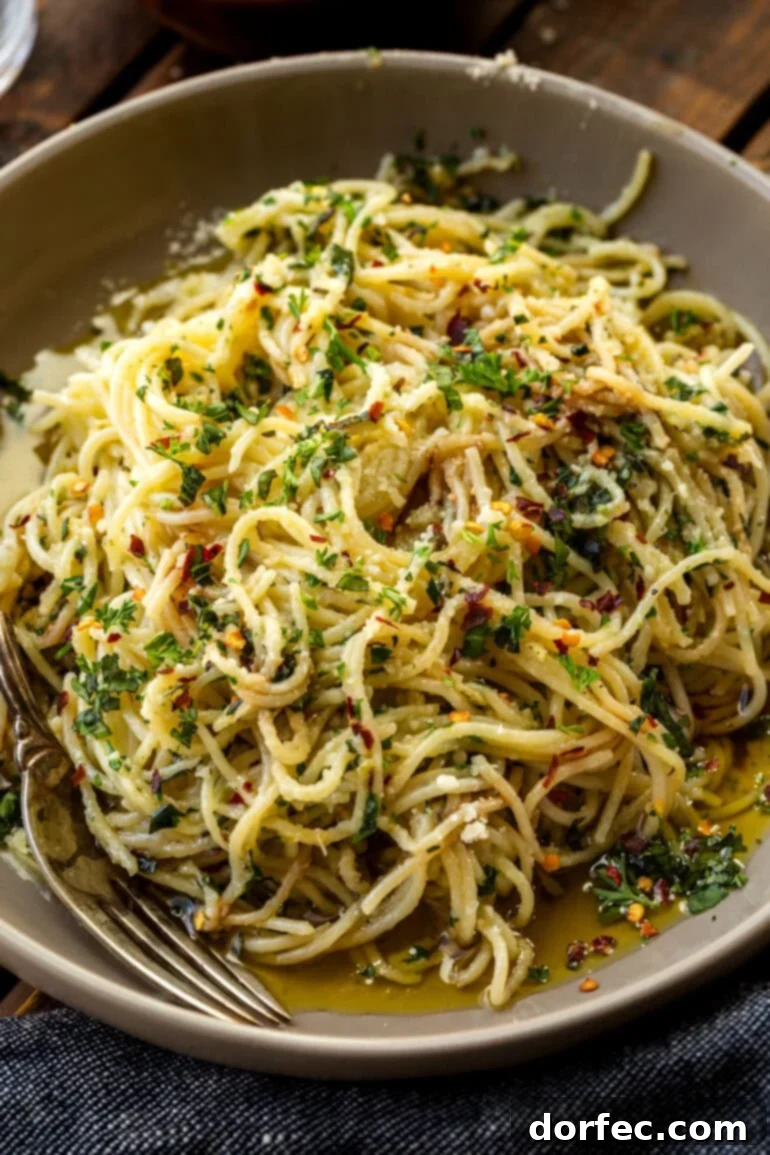
Storing and Reheating Your Aglio e Olio Leftovers
While Spaghetti Aglio e Olio is undeniably best enjoyed fresh, you can certainly store and reheat leftovers to savor its flavors another day. Proper storage is key to maintaining its quality and ensuring food safety.
For refrigerating, allow the pasta to cool completely to room temperature before transferring it to an airtight container. Stored in the refrigerator, your Aglio e Olio will remain fresh and delicious for up to 5 days. This makes it an excellent option for meal prepping or having a quick lunch ready to go.
This dish also freezes surprisingly well, making it a fantastic candidate for longer-term storage. Once the pasta has completely cooled, portion it into freezer-safe ziploc bags or airtight containers, ensuring as much air as possible is removed to prevent freezer burn. It will keep beautifully in the freezer for up to 3 months. When you’re ready to enjoy it, simply thaw it overnight in the refrigerator.
When it comes to reheating, you have a couple of convenient options. For a quick reheat, the microwave works, but be mindful not to overcook the pasta, which can make it rubbery. For the best results, we recommend reheating on the stovetop. Add a little extra olive oil to a non-stick pan over medium-low heat. Once warm, add your leftover Aglio e Olio and gently toss until heated through. To prevent the pasta from drying out and to help revitalize the sauce, a splash of water, chicken broth, or even more olive oil can be added during reheating. This will help bring back that fresh, glossy texture.
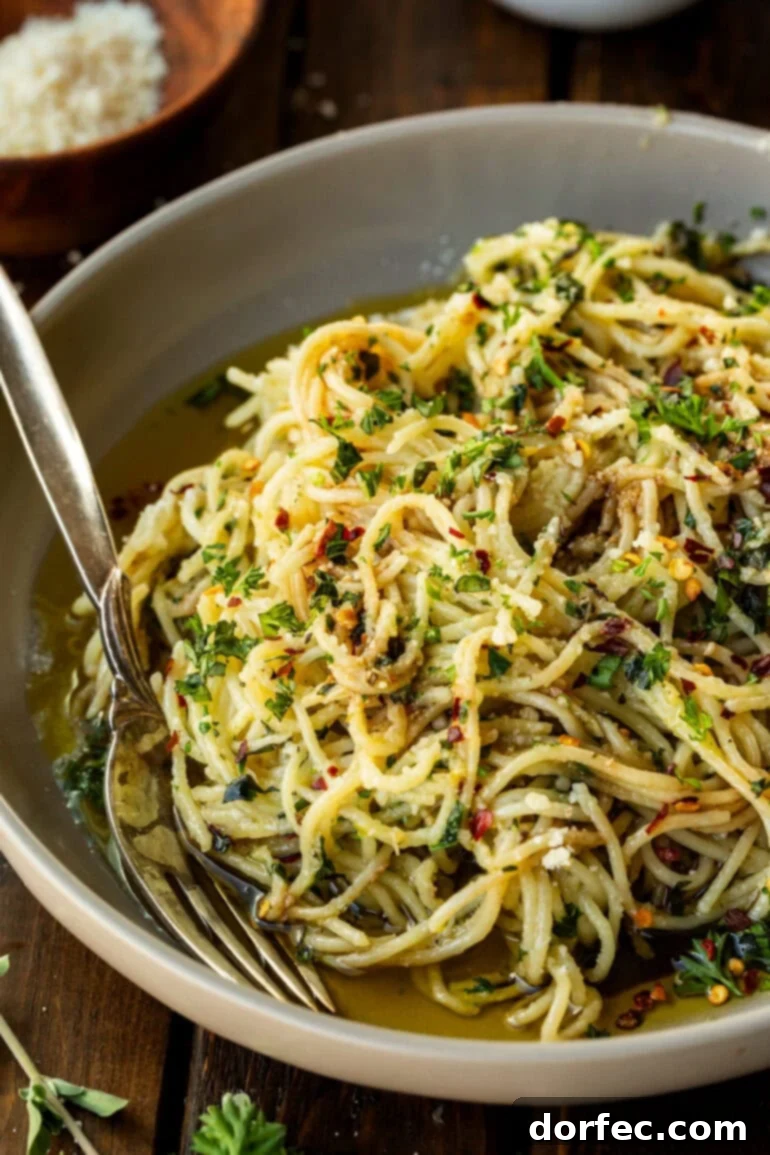
Adorned with a final flourish of freshly grated Parmesan, this classic spaghetti aglio e olio stands as a powerful testament to the beauty of bold, unpretentious ingredients. It’s an elegant, deeply satisfying, and utterly irresistible dish that consistently proves the timeless adage: less is truly more. Whether you’re seeking a quick weeknight dinner solution or a comforting meal to share with loved ones on a cozy evening, this recipe delivers on all fronts, inviting you to savor the authentic taste of Italy with every flavorful bite.
More Deliciously Easy Pasta Recipes to Explore
- Tomato Basil Angel Hair Pasta
- Lemon Orzo with Parmesan and Peas
- 15 Minute Pesto Pasta
- Italian Sausage and Peppers Penne
- Instant Pot Hamburger Helper
- Creamy Garlic Parmesan Orzo
- Ham and Asparagus Lemon Cream Pasta
Italian Spaghetti Aglio e Olio
Ingredients
- 2/3 Cup Olive Oil, extra virgin
- 8 Cloves Garlic, minced
- 3 teaspoons Fresh Parsley, finely chopped *see notes
- 3 teaspoons Fresh Oregano, or Marjoram, finely chopped
- 1 ½ teaspoon Fresh Rosemary, finely chopped
- 4 teaspoons Fresh Basil, finely chopped
- 2 teaspoon Red Pepper Flakes
- 2 teaspoon Kosher Salt, or to taste
- Balsamic Vinegar
- 1 Pound Fresh Spaghetti, cooked al dente
- 1-2 Tablespoons Parmesan, fresh, grated
Instructions
-
You can make this oil 1 of 2 ways. See both below.
Toasted Garlic
-
Place all herbs and spices in a shallow bowl.3 teaspoons Fresh Parsley, 3 teaspoons Fresh Oregano, 1 ½ teaspoon Fresh Rosemary, 4 teaspoons Fresh Basil, 2 teaspoon Red Pepper Flakes, 2 teaspoon Kosher Salt
-
In a very small saucepan heat the oil over medium heat. Add the garlic once shimmering. Watch it so closely as garlic browns quickly.2/3 Cup Olive Oil, 8 Cloves Garlic
-
Pour the hot oil and garlic over the top of the herbs and spices and stir thoroughly. Drizzle in some balsamic vinegar and sprinkle salt on top.Balsamic Vinegar, 2 teaspoon Kosher Salt
-
Place the cooked spaghetti in a large serving bowl. Pour the hot oil over the pasta and toss to coat. Sprinkle with Parmesan cheese and serve immediately.1-2 Tablespoons Parmesan
Fresh Garlic
-
Place all herbs, garlic and spices in a shallow bowl.3 teaspoons Fresh Parsley, 3 teaspoons Fresh Oregano, 1 ½ teaspoon Fresh Rosemary, 4 teaspoons Fresh Basil, 2 teaspoon Red Pepper Flakes, 8 Cloves Garlic
-
Heat the oil over medium heat until shimmering. Quickly pour the hot oil over the herbs, and wait a second then add a drizzle of balsamic vinegar. Top with salt.2/3 Cup Olive Oil, 2 teaspoon Kosher Salt, Balsamic Vinegar, 1 Pound Fresh Spaghetti
-
Place the cooked spaghetti in a large serving bowl. Pour the hot oil over the pasta and toss to coat. Sprinkle with Parmesan cheese and serve immediately.1-2 Tablespoons Parmesan
Recipe Notes
- Use double the herbs if you’re using dried.
- Any variation of fresh herbs works great!
Nutrition
Nutrition information is automatically calculated, so should only be used as an approximation.