
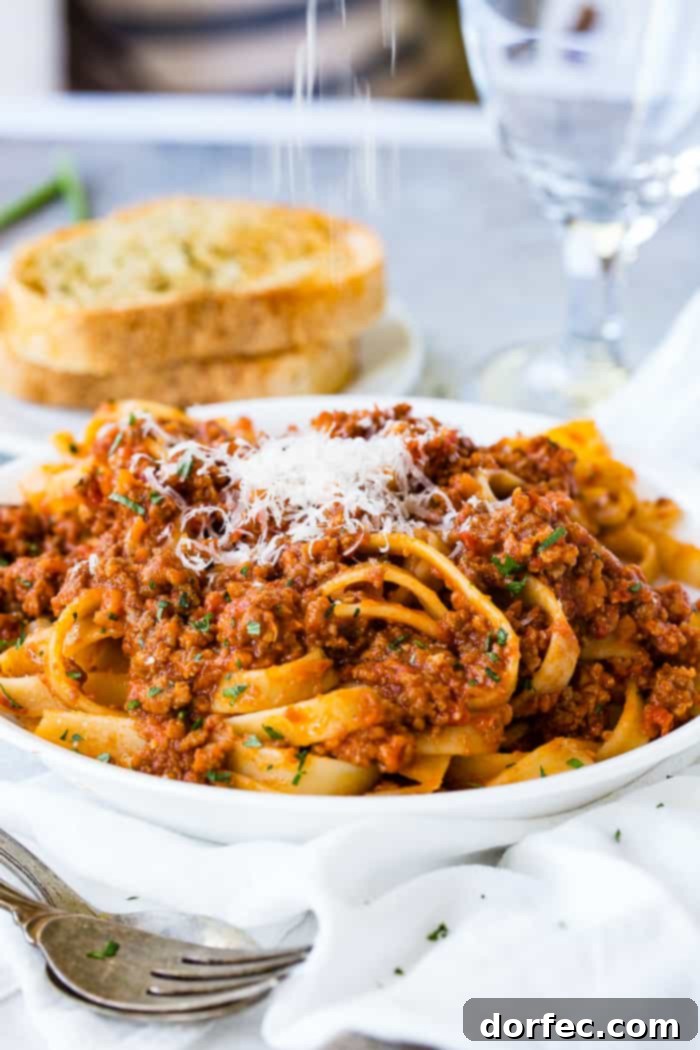
Embark on a culinary journey to the heart of Italy with our definitive guide to crafting the most **authentic Italian Bolognese Sauce**. This isn’t just any meat sauce; it’s a rich, slow-simmered masterpiece that embodies centuries of Italian tradition and flavor. While we originally planned to share this treasure trove of knowledge last year after our inspiring trip to Italy, we believe some secrets are worth the wait!
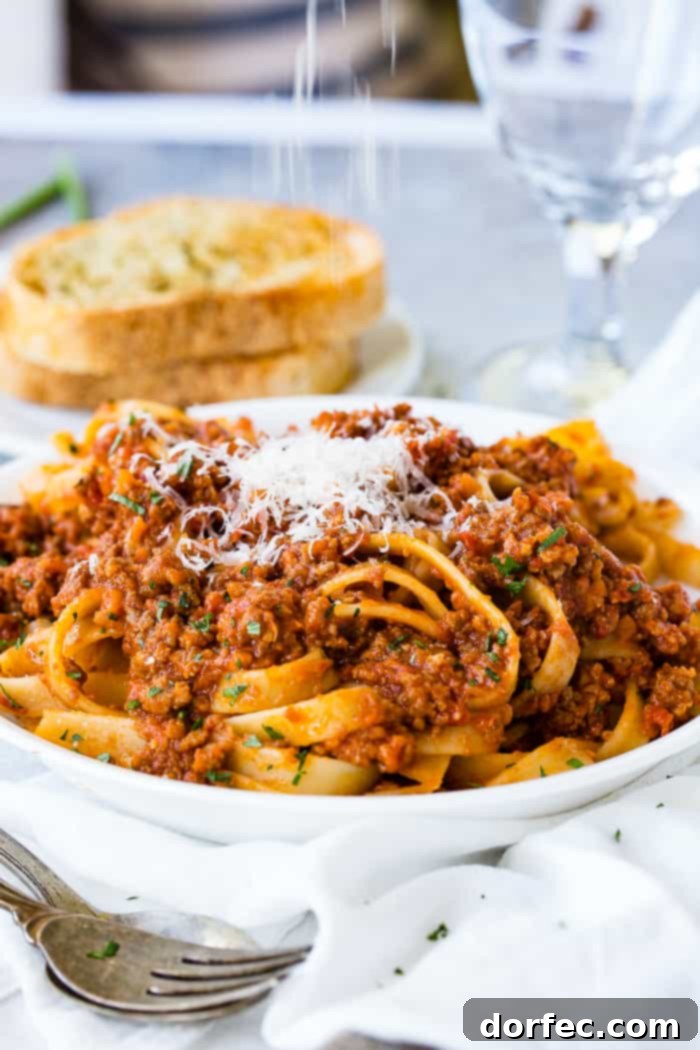
Our passion for Italian cuisine took us straight to the source, including an immersive cooking class in Italy. To be entirely candid, the instructional aspect of the class didn’t quite meet our expectations. The chef, though clearly talented, rushed through techniques with minimal interaction, leaving us feeling more like observers than active participants. It wasn’t until the very end, during a swift pasta-making session, that we truly got our hands dirty, and by then, our enthusiasm was waning.
However, amidst this whirlwind, one revelation stood out: the unparalleled secret to an authentic **Italian Bolognese Sauce**. The moment we tasted it, a profound understanding washed over us. It was a depth of flavor, a richness, and a comforting warmth that defied comparison. It was so utterly delicious, we immediately knew this was a recipe we had to master and share. This wasn’t just food; it was an experience, a memory encapsulated in every spoonful.
You might be wondering, what’s all the fuss about “spaghetti sauce”? And rightfully so! Many associate Bolognese with a basic tomato-meat sauce. But prepare to have your culinary perceptions transformed. We’re about to delve deep, guiding you through each ingredient and every step of the process, before finally unveiling the unexpected secret that elevates this sauce from merely good to truly unforgettable.
And no, it’s not just about copious amounts of cheese or a medley of fresh herbs, though those certainly enhance the experience. The true magic lies elsewhere, in a subtle yet transformative element you might never guess!
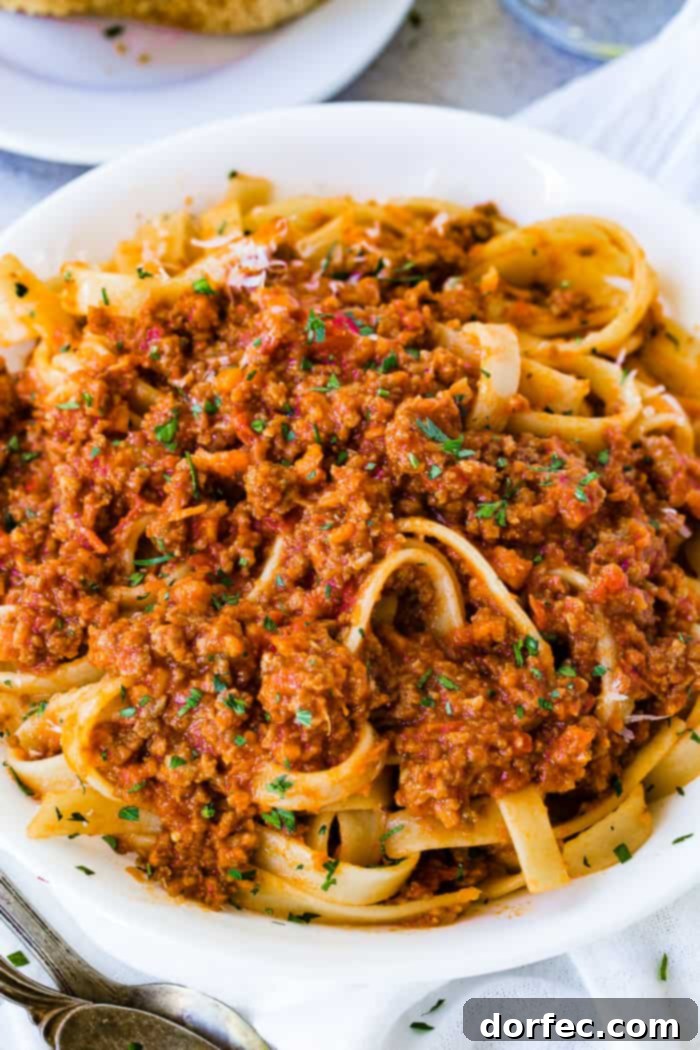
Decoding the Difference: Bolognese vs. Marinara
A common misconception in the world of Italian cuisine revolves around the terms “spaghetti sauce” and “Bolognese.” While they might appear similar in color and aroma, their flavor profiles and traditional preparations are vastly different. To truly appreciate **authentic Bolognese sauce**, it’s essential to understand its distinctions from what is more commonly known as marinara sauce.
What is Marinara Sauce?
Marinara sauce is a vibrant, quick-cooking tomato sauce that originated in Naples. At its core, it’s a simple, light, and fresh sauce, primarily featuring tomatoes—often canned San Marzano for their balanced sweetness and acidity—along with garlic, onions, and herbs like basil and oregano. It’s typically simmered for a shorter period, allowing the bright, fresh tomato flavors to shine. Marinara is versatile, often served with pasta, as a dipping sauce, or as a base for pizzas and seafood dishes. It’s characterized by its clean, acidic, and herbaceous notes, putting the spotlight firmly on the tomato.
What is Authentic Bolognese Sauce?
In stark contrast, **Bolognese sauce** (or Ragù alla Bolognese) hails from Bologna in the Emilia-Romagna region of Italy. It is unequivocally a meat-based sauce, a rich and hearty ragù crafted for slow cooking. Unlike marinara, tomatoes play a supporting role in Bolognese, offering depth and color rather than being the dominant flavor. The true essence of Bolognese comes from a meticulously prepared soffritto (a flavorful base of finely diced carrots, celery, and onion), a generous blend of ground meats (traditionally beef, pork, and sometimes veal), and a combination of liquids like wine and milk or cream. This medley is then simmered for several hours, allowing the flavors to meld and the meat to become incredibly tender, resulting in a sauce that is deeply savory, complex, and unctuously rich. It’s a sauce designed to cling to wide, flat pasta, providing a satisfying, luxurious mouthfeel.
Dishes Featuring Classic Bolognese Sauce
Given its robust and clinging texture, Bolognese sauce is perfectly suited for specific types of pasta and preparations. It’s most famously paired with wide, flat egg pastas like tagliatelle or pappardelle, which offer ample surface area for the rich, meaty sauce to adhere to. It’s also the quintessential filling for traditional lasagne al forno, where layers of pasta, Bolognese, and béchamel sauce create a truly comforting and indulgent dish. The substantial nature of **authentic Bolognese** means it’s designed to be the star, providing a satisfying meal that lingers on the palate.
Ragù vs. Bolognese: Unraveling the Italian Sauce Family
The terms “ragù” and “Bolognese” are often used interchangeably, leading to some confusion. The simplest way to understand their relationship is this: **Bolognese is a specific type of ragù.** The word “ragù” in Italian broadly refers to a meat-based sauce that is slow-cooked. Just as there are many different types of curry, there are various regional ragùs across Italy, each with its unique characteristics and traditional ingredients.
Ragù alla Bolognese, for example, is distinguished by its precise balance of meat, a delicate amount of tomato, and the crucial addition of milk or cream, along with white wine (though some regional variations might use red). Other famous ragùs include Ragù alla Napoletana from Naples, which typically features larger cuts of meat (often beef and pork ribs) that are slow-cooked until falling apart, resulting in a darker, more intensely tomato-rich sauce often served with paccheri or ziti. Ragù Pugliese, from the Puglia region, might incorporate lamb or even horse meat, demonstrating the incredible diversity within the ragù family.
For our **authentic Bolognese sauce recipe**, while some traditions might call for white wine, its primary function is to deglaze the pan and add a subtle layer of complexity. For those who prefer to avoid alcohol, cooking wine (alcohol-free) or even a rich beef broth can be substituted, though the flavor profile will shift slightly. The key is the long, slow simmer, which transforms humble ingredients into a deeply flavorful and satisfying sauce. Perhaps a return trip to Italy for a comprehensive ragù research tour is in order!
The Core Ingredients of Our Authentic Bolognese Sauce
Crafting the perfect Bolognese requires a careful selection of ingredients, each playing a vital role in achieving that rich, complex flavor profile. For this truly **authentic Bolognese sauce recipe**, you’ll need:
- **Fats:** A combination of butter and olive oil for sautéing the foundational vegetables and enhancing flavor.
- **The Soffritto Base:** Finely diced carrots, onion, and celery, which are gently cooked to create the aromatic cornerstone of the sauce. We highly recommend a red onion for its nuanced sweetness.
- **Tomatoes for Depth:** A blend of fresh roasted tomatoes (for an intensified, slightly smoky sweetness) and high-quality canned tomato sauce, along with fire-roasted tomatoes, to provide the perfect balance of tomato flavor without overwhelming the meat.
- **Hearty Meats:** A combination of ground beef (preferably a higher fat content for richness) and Italian sausage. This blend offers a complexity and depth that single-meat versions often lack.
- **Rich Liquids:** Heavy cream and milk are essential for tenderizing the meat, adding a luxurious creaminess, and mellowing the acidity of the tomatoes.
- **A Splash of Wine:** Cooking white wine (or a good quality dry white wine) is used to deglaze the pan and add a layer of sophisticated flavor.
- **Subtle Seasoning:** Bay leaves provide a gentle, earthy aroma, while a dash of nutmeg adds an unexpected warmth and traditional Italian touch. Salt and pepper are, of course, essential for seasoning to perfection.
- **Our Secret Ingredient:** The element that truly sets this Bolognese apart, unveiled in due time!
To ensure the best possible outcome for your homemade Bolognese, we strongly advise sticking to the exact ingredients specified in the recipe card below. Our rigorous testing has confirmed that this precise combination yields the world’s most delicious and **authentic Italian Bolognese**.
Selecting the Perfect Meats for Your Bolognese
The choice of meat is paramount in defining the character of an **authentic Italian Bolognese sauce**. Traditionally, a true Ragù alla Bolognese often features a blend of minced beef, pork, and sometimes even veal or pancetta. The fat content of the meat is crucial, as it renders during the long simmering process, infusing the sauce with incredible flavor and contributing to its luxurious texture.
In our rendition, we find that a combination of ground beef and Italian sausage delivers a wonderfully rich and complex flavor that is both traditional in spirit and practical for home cooks. While sourcing specific traditional blends of minced meats can be a challenge outside of Italy, this pairing offers the perfect balance of savory beefiness and the aromatic spices inherent in Italian sausage. The higher fat content in ground beef is beneficial here, as it gradually melts into the sauce, creating a deeply satisfying mouthfeel. This thoughtful selection ensures that every spoonful of your homemade Bolognese is packed with authentic taste and texture.
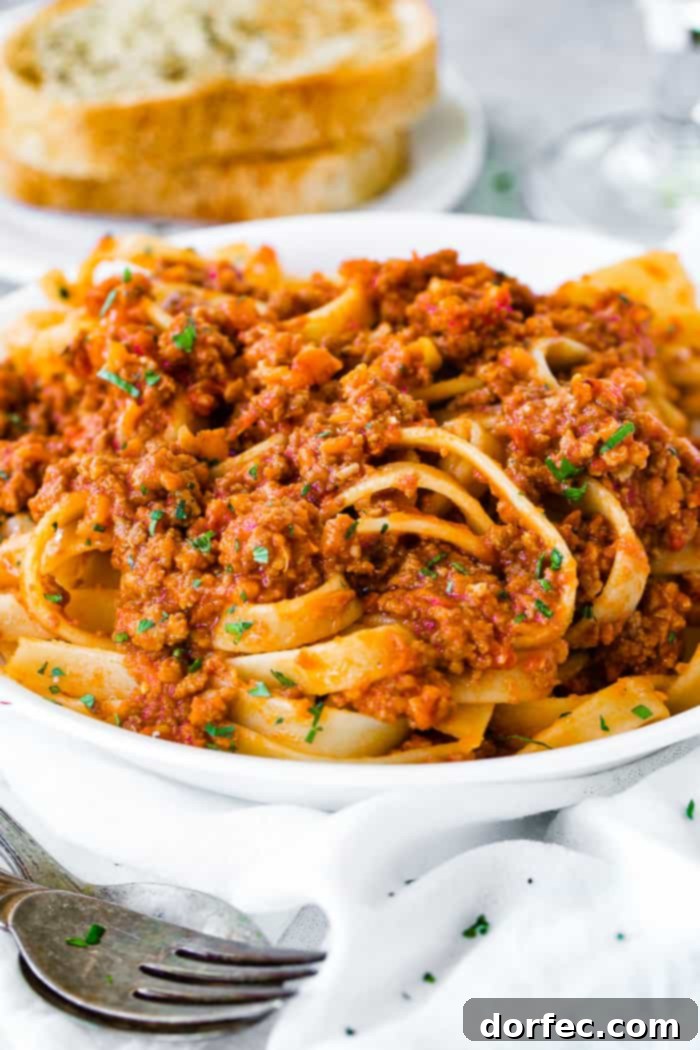
Crafting the Perfect Authentic Bolognese Sauce: A Step-by-Step Guide
The journey to a truly **authentic Bolognese sauce** is more about patience than complex techniques. Indeed, the most challenging part of this recipe is allowing