
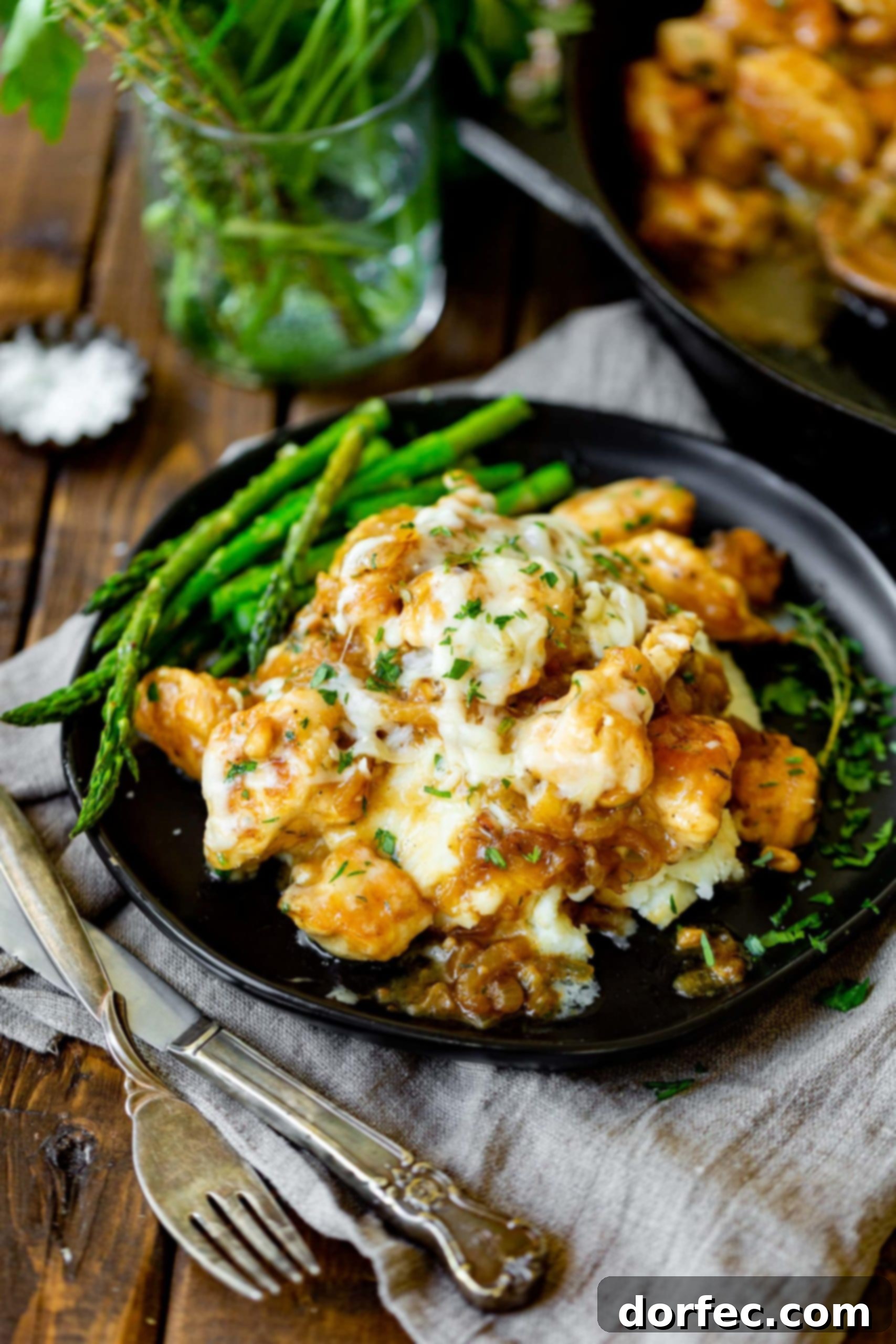
Welcome to the ultimate guide for creating the best One-Pan Cheesy French Onion Chicken Skillet – a delightful dish that captures all the comforting essence of classic French onion soup, but with the added heartiness of tender chicken and the convenience of a single skillet. This recipe is designed to bring a gourmet experience to your dinner table without the fuss, making it a perfect family-friendly meal that even the most discerning eaters will adore.
The inspiration for this incredible skillet creation stemmed from our profound love for the rich, savory, and deeply satisfying flavors of traditional French Onion Soup. After countless bowls of that cozy classic, the idea sparked to transform its beloved components into a more substantial, protein-packed meal. The result? A fantastic one-pan chicken dish that delivers all the iconic tastes – the sweet, jammy caramelized onions, the savory broth, and a glorious blanket of melted cheese – now perfectly paired with succulent chicken.
This dish stands wonderfully on its own, offering a complete and satisfying meal. However, it truly shines when served alongside creamy mashed potatoes, which eagerly soak up every last drop of that dreamy caramelized onion sauce. For a lighter touch, consider pairing it with fiber-rich roasted green beans, crispy Brussels sprouts, or lemony roasted broccoli to complete a well-rounded and nutritious dinner.
Unlocking the Flavor: Essential Ingredients for French Onion Chicken
Crafting this flavorful French onion chicken skillet requires a selection of straightforward ingredients, many of which you likely already have in your pantry. Each component plays a vital role in building the dish’s signature depth and warmth, ensuring a truly unforgettable culinary experience.
For the Perfectly Caramelized Onions
The soul of any French onion dish lies in its beautifully caramelized onions. This step requires patience but promises immense flavor rewards.
- Butter: Essential for sautéing the onions to a golden perfection, providing a rich base. Olive oil can be a suitable alternative if preferred.
- Yellow Onions: Our top choice for their balanced sweetness and ability to caramelize wonderfully, developing a deep, complex flavor. While white onions can be used in a pinch, yellow onions offer superior results.
- Water: A crucial aid in the caramelization process, helping the onions soften and preventing them from burning prematurely.
- Brown Sugar: A touch of brown sugar enhances the natural sweetness of the onions, accelerating caramelization and contributing to that desirable jammy texture.
- Garlic: Adds an aromatic pungency that complements the sweet onions beautifully, building another layer of flavor.
- Fresh Thyme: The vibrant, earthy notes of fresh thyme are indispensable here, infusing the onions with an aromatic freshness that elevates the entire dish.
For the Hearty Chicken Skillet
Beyond the onions, the remaining ingredients come together to form the savory sauce and succulent chicken that define this incredible skillet meal.
- Chicken Breasts: Boneless, skinless chicken breasts cut into 1-inch pieces are ideal for quick cooking and even distribution throughout the sauce. Chicken thighs or tenders also work wonderfully for a slightly different texture and richness.
- Flour: Used to lightly coat the chicken pieces, this helps create a beautiful golden sear and contributes to thickening the rich sauce.
- Olive Oil: Perfect for searing the chicken, adding a fruity depth of flavor and ensuring a fantastic crust.
- Beef Broth: Forms the foundational base of the rich, savory sauce, imparting a deep, robust flavor reminiscent of French onion soup.
- Chicken Broth: Complements the beef broth, adding another layer of savory depth and balancing the overall liquid base for simmering the chicken.
- Worcestershire Sauce: A secret weapon for umami, this sauce adds a tangy, savory richness that enhances all the other flavors.
- Bay Leaf: Infuses the simmering sauce with subtle, aromatic notes, which are discarded before serving.
- Gruyere Cheese: The star cheese of this dish! Gruyere melts incredibly well, offering a creamy, nutty flavor that pairs exquisitely with caramelized onions and savory broth.
- Parmesan Cheese: A final sprinkle of grated Parmesan adds a salty, sharp finish and an extra layer of cheesy goodness.
For precise measurements of each ingredient, please refer to the detailed recipe card provided below.
The Art of Caramelizing Onions: A Step-by-Step Guide
Caramelizing onions is a fundamental skill for this recipe, and mastering it unlocks a world of flavor. Here’s how to achieve that perfect golden, sweet, and jammy texture:
- Choose Your Skillet: I highly recommend using a heavy-bottomed skillet, such as a cast iron pan, for caramelizing onions. Its even heat distribution is key to preventing scorching and ensuring consistent browning.
- Start with Butter: Begin by melting butter in your chosen skillet over medium heat. Once it’s shimmering, add your thinly sliced yellow onions along with a pinch or two of salt. The salt helps draw out moisture, aiding the caramelization process.
- Initial Softening: Reduce the heat to medium-low. Cook the onions for about 5 minutes, stirring occasionally, until they begin to soften and become translucent.
- Sweetness and Moisture: At this point, add the brown sugar and a splash of water. This is where the magic truly happens! The sugar helps deepen the caramelization, while the water prevents the onions from drying out and encourages them to break down.
- Patience is Key: Continue cooking over medium-low heat, stirring occasionally. Resist the urge to rush this process. Caramelization takes time, typically 20-25 minutes, until the onions transform into a rich, deep golden-brown color with a wonderfully soft and jammy consistency.
- Aromatic Finish: Once the onions have reached their perfect caramelized state, stir in the minced garlic and fresh thyme. Cook for another minute or until their fragrant aromas fill your kitchen.
- Set Aside: Carefully transfer the caramelized onion mixture to a plate and set aside. Wipe the skillet clean – it’s now ready for cooking the chicken!
This methodical approach ensures that your onions are perfectly sweet, tender, and deeply flavored, forming the rich foundation for your French Onion Chicken Skillet.
Cooking Your One-Pan Cheesy French Onion Chicken Skillet
With your onions perfectly caramelized, the rest of the cooking process is incredibly straightforward, culminating in an outrageously delicious meal. Follow these steps for a truly kid-friendly and satisfying chicken dinner:
- Prepare the Chicken: In a large bowl, season your 1-inch chicken pieces generously with salt and pepper, then toss them with flour until each piece is evenly coated. This flour coating is essential for a beautiful golden sear and helps thicken the sauce later.
- Sear the Chicken: Heat a tablespoon of olive oil in your cleaned skillet over medium-high heat. Add the chicken pieces in batches, taking care not to overcrowd the pan. Cook until they are beautifully golden brown on all sides and nearly cooked through, typically about 8 minutes per batch. Remove the browned chicken and set aside.
- Build the Flavorful Sauce: Return all the browned chicken to the skillet. Pour in the beef broth, chicken broth, Worcestershire sauce, and add the bay leaf. Now, gently fold in the glorious caramelized onions you prepared earlier. Bring the mixture to a boil, then reduce the heat to a gentle simmer.
- Simmer to Perfection: Let the chicken simmer in this aromatic liquid for about 10 minutes, or until the chicken is fully cooked through and the broths have reduced slightly, concentrating their flavors into a rich, savory sauce.
- The Cheesy Finale: Generously sprinkle the shredded Gruyère cheese evenly over the chicken and onion mixture in the skillet. Cover the skillet with a lid for 2-3 minutes, allowing the residual heat to melt the cheese into a bubbly, irresistible layer.
- Serve with a Flourish: Remove the skillet from the heat. Finish by garnishing with a sprinkle of freshly grated Parmesan cheese and chopped fresh parsley for a burst of color and herbaceous freshness. Serve immediately and watch it disappear!
These detailed instructions, along with precise ingredient quantities, can be found in the comprehensive recipe card at the conclusion of this post. You can also easily save or print the recipe from there for future culinary adventures.
Perfect Pairings: What to Serve with Your French Onion Chicken
This One-Pan Cheesy French Onion Chicken is the epitome of cozy comfort food, and its rich, savory profile pairs beautifully with a variety of sides. The key is choosing accompaniments that can either complement the flavors or soak up that incredible caramelized onion sauce.
- Creamy Mashed Potatoes: An absolute classic pairing! The smooth, buttery texture of mashed potatoes provides the perfect canvas for absorbing every drop of the luscious sauce, creating a truly indulgent experience.
- Buttery Egg Noodles: Similar to mashed potatoes, egg noodles are fantastic for capturing the savory broth and cheesy goodness, offering a comforting and hearty complement.
- Crusty Bread or Sourdough: A warm, crusty baguette or a slice of artisan sourdough is practically non-negotiable. It’s ideal for mopping up the last bits of cheesy, oniony sauce – a pure delight!
- Roasted Green Beans or Asparagus: For a touch of freshness and a vibrant crunch, roasted green beans or asparagus spears make an excellent addition. Their slight bitterness and crisp texture cut through the richness of the chicken and cheese.
- Steamed or Roasted Broccoli: Lightly steamed or lemon-roasted broccoli offers a nutritious and colorful contrast, ensuring a well-balanced meal.
- Simple Green Salad: A crisp green salad with a light vinaigrette can provide a refreshing counterpoint, cleansing the palate between savory bites.
- Wild Rice or Quinoa: For a wholesome, gluten-free option, a serving of wild rice or quinoa can provide a hearty base that absorbs the sauce wonderfully.
Whether you’re aiming for an elegant dinner spread or a fuss-free weeknight meal, these versatile side dishes ensure your French Onion Chicken Skillet is a guaranteed crowd-pleaser that will have your family asking for more.
Storing and Reheating Your Cheesy French Onion Chicken
One of the many advantages of this delicious skillet meal is how well it stores, making it an excellent option for meal prep or enjoying leftovers. Proper storage ensures you can savor its comforting flavors for days to come.
Refrigeration: Allow the French onion chicken to cool completely before transferring it to an airtight container. Stored in the refrigerator, it will maintain its quality and delicious flavor for 3-4 days.
Freezing: For longer storage, this dish freezes beautifully. Once cooled, transfer the chicken and sauce to freezer-safe containers or heavy-duty freezer bags. It can be frozen for up to 3 months. When ready to enjoy, simply thaw overnight in the refrigerator.
Reheating: For best results, reheat the chicken on the stovetop over medium-low heat, adding a splash of chicken or beef broth if the sauce has thickened too much. Stir gently until heated through. Alternatively, you can reheat it in the microwave in short intervals until warm. Be mindful that the texture of the melted cheese might change slightly after freezing and reheating, becoming a bit less gooey, but the overall flavors will remain absolutely delicious.
Exploring Onion Varieties: Beyond Yellow Onions
While yellow onions are my go-to for this French Onion Chicken Skillet due to their perfect balance of sweetness and savory depth for caramelization, you absolutely can experiment with other types. However, some are definitely better suited than others for achieving that signature flavor profile:
- Red Onions: While visually appealing, red onions are generally not recommended for this dish. They possess a milder flavor that lacks the deep, robust notes desired in caramelized onions, and their vibrant color tends to fade during the long cooking process, resulting in a less appealing aesthetic.
- White Onions: If you find yourself without yellow onions, white onions can serve as a decent substitute in a pinch. They are sharper and more pungent when raw but mellow out and soften beautifully as they cook. Just be prepared for a slightly bolder, less subtly sweet onion flavor in your final dish.
- Vidalia Onions: These sweet gems are celebrated for their natural sweetness and low sulfur content, making them exceptional for caramelizing. Vidalia onions will create an even richer, sweeter depth of flavor, adding a luxurious touch if you’re looking to enhance the sweetness of the dish.
Ultimately, yellow onions remain the ideal choice for this recipe because they strike that perfect balance between savory and sweet, developing into a jammy, intensely flavored base that defines the classic French onion taste. Their caramelization creates a depth that’s hard to beat.
Cheese Please! Delicious Gruyère Substitutions
Gruyère cheese is a classic choice for French onion dishes, celebrated for its nutty flavor and superb melting qualities that create that irresistible gooey topping. However, if Gruyère isn’t available or you prefer an alternative, several other cheeses can provide a wonderfully creamy, cheesy finish to your skillet:
- Provolone: A fantastic melting cheese with a mild, slightly smoky flavor that complements the savory chicken and onions without overpowering them. It creates a smooth, stretchy layer similar to Gruyère.
- Mozzarella: Known for its incredible stretch and melt, mozzarella offers a very mild, milky flavor. While it won’t add the same nutty depth as Gruyère, it will deliver a wonderfully gooey, comforting cheese pull.
- Swiss Cheese: With its distinctive holes and slightly nutty, sweet flavor, Swiss cheese is a natural fit. It melts beautifully and has a flavor profile that’s quite complementary to French onion flavors, making it an excellent substitute.
- Comté: A French cheese very similar to Gruyère, offering rich, complex, nutty notes and excellent melting characteristics. If you can find it, Comté is a premium alternative.
- Emmental: Often used in fondue, Emmental is another Swiss cheese that melts well and offers a sweet, buttery flavor that works perfectly.
Any of these substitutes will contribute a delightful cheesy component, ensuring your French Onion Chicken Skillet is utterly delicious, even without traditional Gruyère.
Can You Bake This Skillet for an Extra Crispy Topping?
Absolutely! If you’re a fan of the gloriously golden, bubbly, and slightly crispy cheese topping that often graces classic French onion soup, baking your skillet is the perfect method to achieve this desired texture. This technique not only intensifies the flavors but also creates a delightful crust that adds a fantastic dimension to every mouthwatering bite.
Here’s how to do it:
Once you’ve completed the stovetop cooking and sprinkled your generous layer of Gruyère (or your chosen substitute) over the chicken and onion mixture, ensure your skillet is oven-safe. Most cast iron or stainless steel skillets are suitable for oven use. Then, simply transfer the finished cheesy French onion chicken skillet directly into a preheated oven at 350°F (175°C).
Let it bake for a few minutes, typically between 5 to 10 minutes, or until the cheese is beautifully melted, bubbly, and has developed those desirable golden-brown edges. Keep a close eye on it to prevent over-browning. This baking step elevates the dish, giving it that signature French onion gratinée finish.
Expert Tips for the Best French Onion Chicken Skillet
Achieving restaurant-quality results with your French Onion Chicken Skillet is easier than you think with a few expert tips:
- Patience with Caramelization: This cannot be stressed enough. True caramelization of onions takes time, usually 20-25 minutes. Rushing this step by increasing the heat will result in burnt or unevenly cooked onions, rather than the sweet, jammy, golden brown perfection that forms the backbone of this dish. Keep the heat medium-low and stir occasionally.
- Use a Heavy-Bottomed Skillet: A cast iron skillet or any other heavy-bottomed pan ensures even heat distribution, which is crucial for both caramelizing onions without scorching and browning the chicken perfectly.
- Don’t Overcrowd the Pan: When searing the chicken, work in batches if necessary. Overcrowding the pan lowers the temperature and steams the chicken instead of browning it, preventing that delicious golden crust.
- Pat Your Chicken Dry: Before seasoning and flouring the chicken, pat it thoroughly dry with paper towels. This helps the flour adhere better and promotes a superior sear, resulting in more flavorful and tender chicken.
- Adjust Sauce Consistency: If your sauce is too thin after simmering, you can let it reduce further on the stovetop uncovered. If it becomes too thick, simply add a splash more beef or chicken broth until it reaches your desired consistency.
- Fresh Herbs Make a Difference: While dried thyme can be used, fresh thyme truly elevates the aroma and flavor of this dish, especially when cooked with the caramelized onions.
- Quality Cheese Matters: The type of cheese greatly impacts the final flavor and texture. Opt for good quality Gruyère or your chosen substitute, and ideally, shred it yourself from a block for the best melt.
Frequently Asked Questions (FAQ)
Here are answers to some common questions about making this One-Pan Cheesy French Onion Chicken Skillet:
- Q: Can I use chicken thighs instead of breasts?
A: Absolutely! Chicken thighs are an excellent alternative. They tend to be more flavorful and forgiving, remaining juicy even if slightly overcooked. Adjust cooking times slightly as thighs may take a bit longer to cook through than breasts. - Q: How can I make the sauce thicker?
A: The flour coating on the chicken helps thicken the sauce. If it’s still too thin, you can simmer it for a few more minutes uncovered to allow it to reduce. Alternatively, you can create a quick cornstarch slurry (1 tablespoon cornstarch mixed with 1 tablespoon cold water) and stir it into the simmering sauce until it reaches your desired thickness. - Q: Is this recipe gluten-free?
A: As written, the recipe uses all-purpose flour for coating the chicken. To make it gluten-free, you can substitute the all-purpose flour with a gluten-free all-purpose flour blend or simply omit the flour. If omitting, be aware the sauce may be thinner, but it will still be delicious. Ensure your broths and Worcestershire sauce are also gluten-free. - Q: What if I don’t have fresh thyme?
A: While fresh thyme offers the best flavor, you can substitute it with dried thyme. Use about 1/2 to 1 teaspoon of dried thyme for every 2 teaspoons of fresh thyme, adding it when you add the bay leaf to allow its flavors to infuse.
Oh, French onion soup, how I adore you! And now, with the incredible addition of tender chicken pieces and that irresistibly gooey Gruyère cheese, my love for you has expanded to new culinary heights! This truly is the best one-pan comforting cheesy French onion skillet you’ll ever make. It’s an absolute must-add to your rotation of chicken dinner ideas, promising a meal that’s both elegant and effortlessly delicious.
Discover More Delicious Chicken Dinner Recipes
If you loved this comforting French Onion Chicken Skillet, you’ll surely enjoy these other fantastic chicken dinner ideas:
- Creamy Herb Chicken with Sun-Dried Tomatoes
- Citrus Greek Chicken
- Braised Dijon Chicken and Potatoes
- Creamy Chicken Stroganoff
- Sun Dried Tomato Chicken Pasta
- Stuffed Mediterranean Chicken
One-Pan French Onion Skillet
By Carrian Cheney
Prep Time: 10 mins
Cook Time: 50 mins
Total Time: 1 hr
Servings: 4
The Best One-Pan Cheesy French Onion Skillet delivers all the joy of French onion soup without the hassle or long hours. With the addition of tender chicken, it’s packed with protein, making it a family-friendly dinner that even picky eaters will love.
Ingredients
For the Onions
- 2 Tablespoons Butter (or olive oil if you prefer)
- 1 Large Yellow Onion, sliced thin
- 1/2 teaspoon Brown Sugar
- 1/4 Cup Water
- 1 Clove Garlic, minced
- 2 teaspoons Fresh Thyme Leaves
For the Dish
- 2 Pounds Boneless, skinless Chicken breasts, cut in 1″ pieces
- Salt and Pepper, to taste
- 2 Tablespoons Flour
- 1 Tablespoon Olive Oil
- 3/4 Cup Beef Broth
- 3/4 Cup Chicken Broth
- 1 teaspoon Worcestershire Sauce
- 1 Bay Leaf
- 1 Cup Gruyere Cheese, shredded
- 1 Tablespoon Parmesan Cheese, grated
Instructions
- In a large skillet, melt the butter over medium heat. Once melted, add the onions and season them with a pinch of salt. Lower the heat to medium-low and cook for about 5 minutes, stirring occasionally. Then, add the brown sugar and water. Continue cooking, stirring occasionally, until the onions are caramelized and golden brown, which will take about 25 minutes.
- Add the garlic and thyme to the skillet, stirring them in, and cook for about 1 minute until fragrant. Then, turn off the heat and transfer the onion mixture to a plate. Wipe the skillet clean to prepare it for the next steps.
- In a large bowl, season the chicken with salt, pepper, and flour, tossing to coat evenly. In the same skillet, heat oil over medium-high heat. Add the chicken in batches and cook until golden brown on all sides and nearly cooked through, about 8 minutes.
- Add the beef broth, chicken broth, Worcestershire sauce, and bay leaf to the skillet, then return the caramelized onions to the mixture. Bring everything to a boil, then reduce the heat and let it simmer until the chicken is fully cooked and the sauce has reduced slightly, about 10 more minutes.
- Sprinkle the Gruyère cheese generously over the chicken and onion mixture, then cover the skillet with a lid to trap the heat. Cook for about 2 minutes, or until the cheese is melted and bubbly. Remove from heat and garnish with freshly grated Parmesan and chopped parsley before serving.
Nutrition
Serving: 1 Cup, Calories: 521kcal, Carbohydrates: 8g, Protein: 60g, Fat: 26g, Saturated Fat: 12g, Polyunsaturated Fat: 2g, Monounsaturated Fat: 9g, Trans Fat: 0.3g, Cholesterol: 198mg, Sodium: 917mg, Potassium: 982mg, Fiber: 1g, Sugar: 3g, Vitamin A: 618IU, Vitamin C: 8mg, Calcium: 383mg, Iron: 2mg
Nutrition information is automatically calculated, so should only be used as an approximation.