
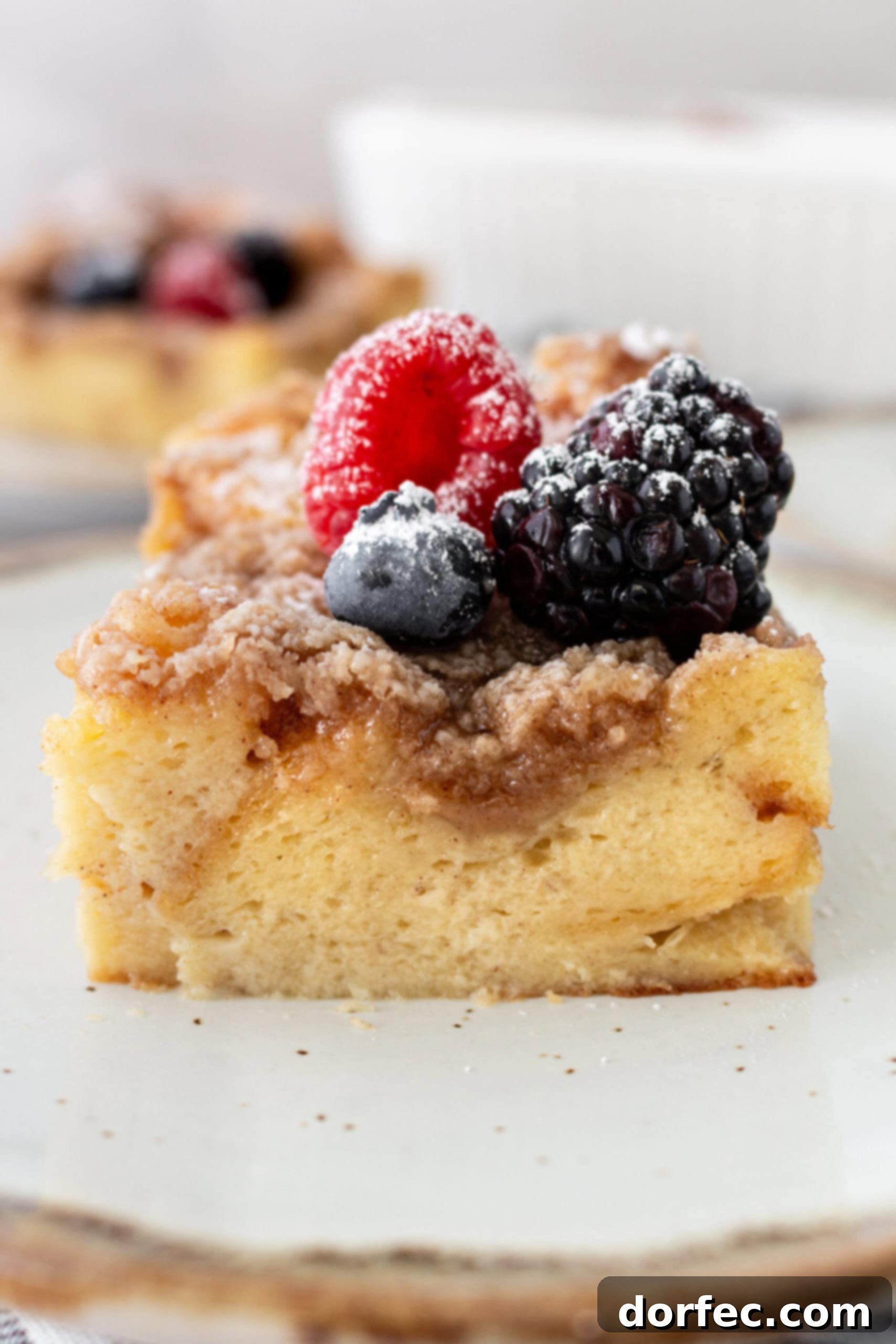
Unlock the secret to the ultimate breakfast or brunch centerpiece with our incredible Easy French Toast Casserole! This beloved recipe is a true game-changer, especially when planning a festive holiday morning or a relaxed weekend gathering. Imagine waking up to the irresistible aroma of cinnamon-spiced bread pudding, ready to be baked to golden perfection, all thanks to a little overnight magic. What truly sets this dish apart is its sensational cinnamon crumb topping – a crunchy, sweet layer that perfectly complements the rich, custardy French toast beneath. It’s an experience your taste buds will thank you for!
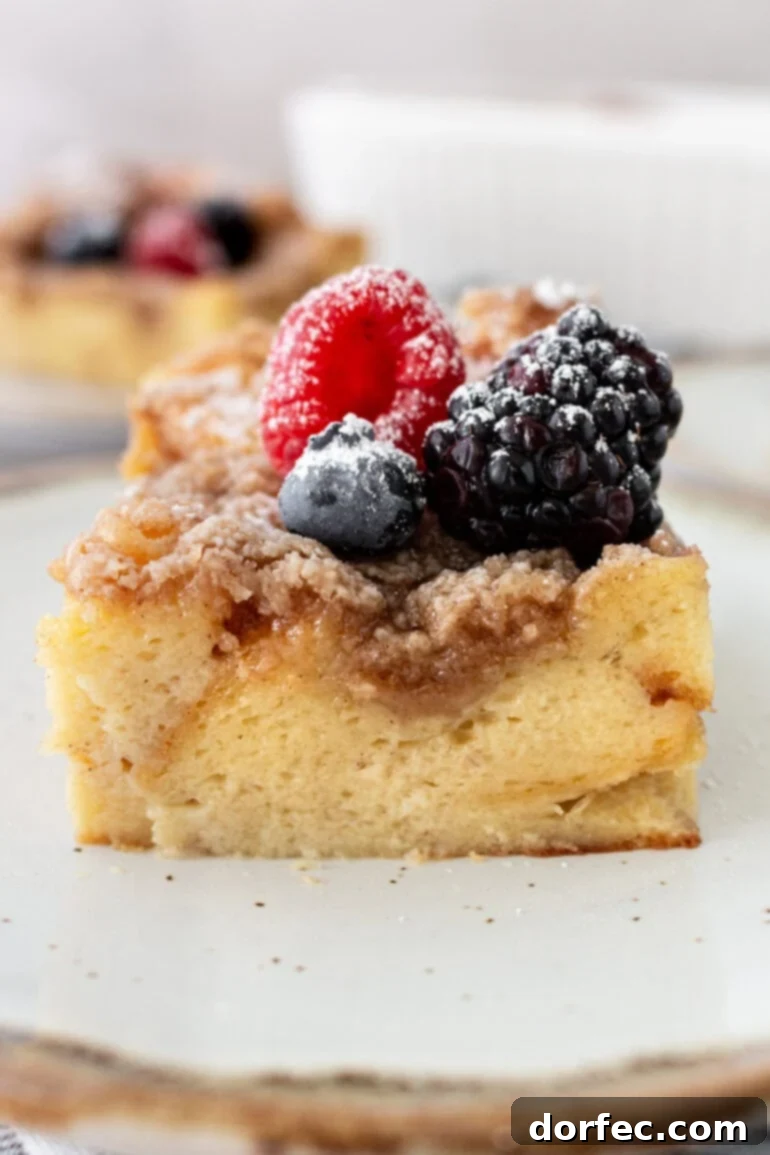
There are some recipes so cherished, so deeply ingrained in family traditions, that losing them feels like losing a piece of culinary history. For years, our simple yet spectacular French Toast Bake has been a cornerstone of our most special breakfasts, from bustling Christmas mornings to leisurely Sunday brunches. However, a recent blog mishap regrettably led to the loss of a few beloved older posts, including this very one. Rest assured, we’ve poured our hearts into meticulously recreating and enhancing this recipe, ensuring it returns better than ever. It’s more than just a dish; it’s a nostalgic journey back to warm, comforting mornings, and we’re thrilled to share this perfected version of our favorite baked French toast, truly the quintessential holiday breakfast.
Essential Ingredients for Your Perfect French Toast Casserole
Crafting a truly memorable French toast casserole begins with a foundation of quality ingredients. While most items are likely staples in your pantry, the choice of bread is paramount and makes all the difference in achieving that perfect texture. Here’s a detailed breakdown of what you’ll need, along with some insights to help you select the best for your breakfast masterpiece:
- Challah, Brioche, or Sourdough Bread: The secret to a non-soggy, delightfully textured casserole lies in using a dense, sturdy bread. Challah and brioche are exceptional choices, offering a rich, slightly sweet flavor and a tender crumb that holds up beautifully to soaking. Sourdough provides a wonderful tang that balances the sweetness. Crucially, aim for day-old bread. Slightly stale bread has lost some moisture, making it more absorbent and less prone to turning mushy when soaked in the custard. You can also use Texas toast or a good French bread for equally delicious results.
- Eggs: These are the heart of your custard base. Large eggs are typically standard, but if you’re using medium, you might need an extra one to ensure enough liquid for proper soaking. Conversely, extra-large eggs may require a slight reduction to maintain the right balance in the custard. Eggs bind the ingredients and create that luscious, creamy texture we all love.
- Milk: Avoid fat-free milk, as it lacks the richness necessary for a truly indulgent French toast casserole. Any other milk fat percentage will work, but we find 2% milk strikes a perfect balance between creaminess and lightness. Whole milk will yield an even richer, more decadent result, while skim milk might make the casserole a bit too thin.
- Heavy Cream: This ingredient is absolutely non-negotiable for the custard base. Heavy cream contributes unparalleled richness, depth of flavor, and a luxurious mouthfeel that elevates the casserole from good to extraordinary. It ensures a velvety, indulgent interior that melts in your mouth.
- Granulated Sugar: Standard granulated sugar provides essential sweetness to the custard, balancing the richness of the eggs and cream. It helps in the caramelization process, adding to the overall golden-brown crust.
- Brown Sugar: Beyond sweetness, brown sugar brings a deeper, more complex molasses flavor to the casserole. Its moist texture also contributes to a tender interior and a lovely, subtle caramel note throughout the dish.
- Cinnamon: This warm, aromatic spice is a hallmark of classic French toast. Any good quality cinnamon will infuse your casserole with comforting flavor.
- NOTE: For an extra layer of warmth, especially during the festive season, consider adding a small pinch of freshly grated nutmeg. It pairs beautifully with cinnamon and evokes a wonderful holiday spirit.
- Vanilla Extract: Always opt for real vanilla extract over artificial. Its complex floral and sweet notes enhance all the other flavors, adding a gourmet touch to your breakfast casserole.
The Irresistible Cinnamon Crumb Topping Ingredients
The crumb topping is what takes this French toast casserole from simply delicious to absolutely divine. It adds a textural contrast—a delightful crispiness against the soft, custardy interior—and an extra burst of spiced sweetness. Here’s what you’ll need to create this irresistible topping:
- Cold Butter: Chilled and cut into small (about ½-inch) cubes, butter is the fat component that binds the topping ingredients and creates those signature crispy clumps. Using cold butter is essential for achieving a crumbly texture rather than a pasty one.
- All-Purpose Flour: This provides the structure for the crumb topping, ensuring it holds its shape and browns beautifully in the oven.
- Brown Sugar: More brown sugar for the topping adds another layer of rich, caramel-like sweetness and helps create a wonderfully chewy, caramelized crust. It’s truly a secret weapon for flavor!
- Cinnamon: Combined with the brown sugar, cinnamon in the topping intensifies that comforting, aromatic spice profile, making every bite a fragrant delight.
- Salt: A tiny pinch of salt in the topping is crucial. It doesn’t make the topping salty but rather enhances all the sweet and spiced flavors, preventing it from tasting flat.
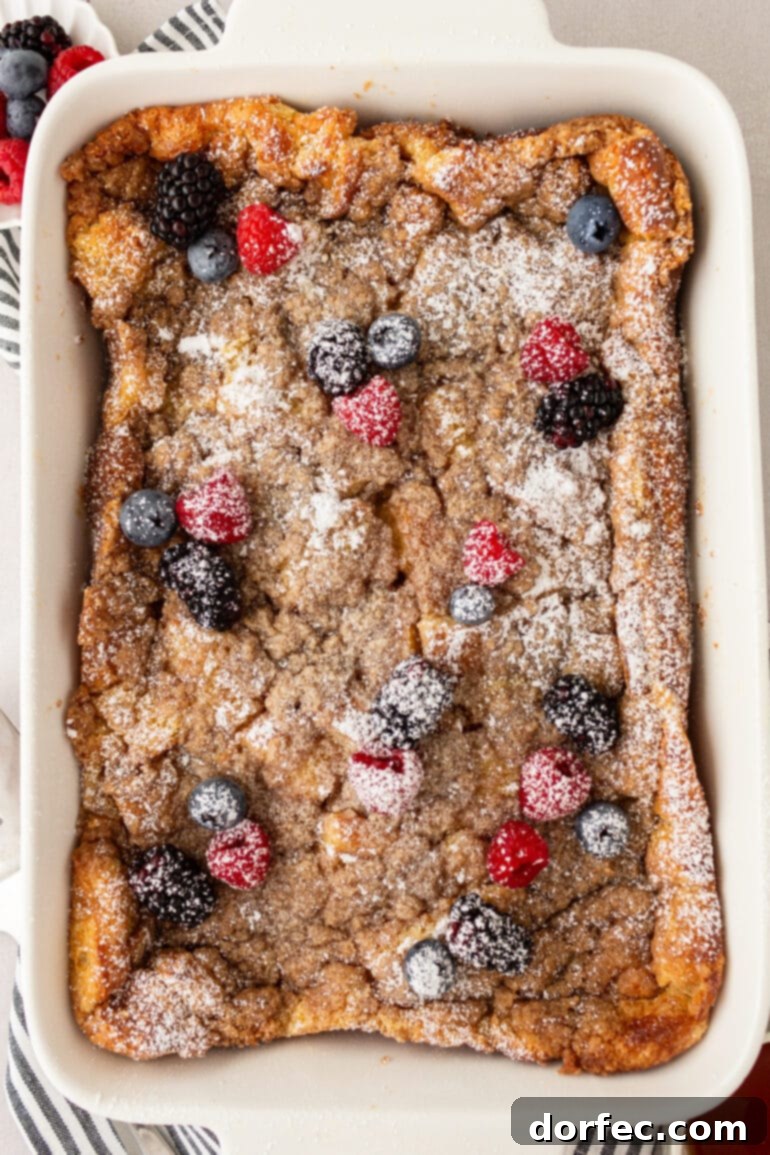
- Optional Garnishes: Once baked, a dusting of powdered sugar and a generous scattering of fresh berries (raspberries, blueberries, strawberries, blackberries, etc.) add a vibrant touch, a pop of color, and a refreshing counterpoint to the rich casserole.
How to Prepare Your Easy French Toast Casserole
This Easy French Toast Casserole recipe is an absolute dream for busy mornings, especially during the holidays. Its make-ahead nature allows you to prepare everything the night before, then simply pop it into the oven when you wake up. In fact, an overnight soak isn’t just convenient; it’s essential for achieving the best flavor and texture! This truly makes breakfast on Christmas morning effortless and stress-free. Here are the simplified steps to create this delightful breakfast casserole:
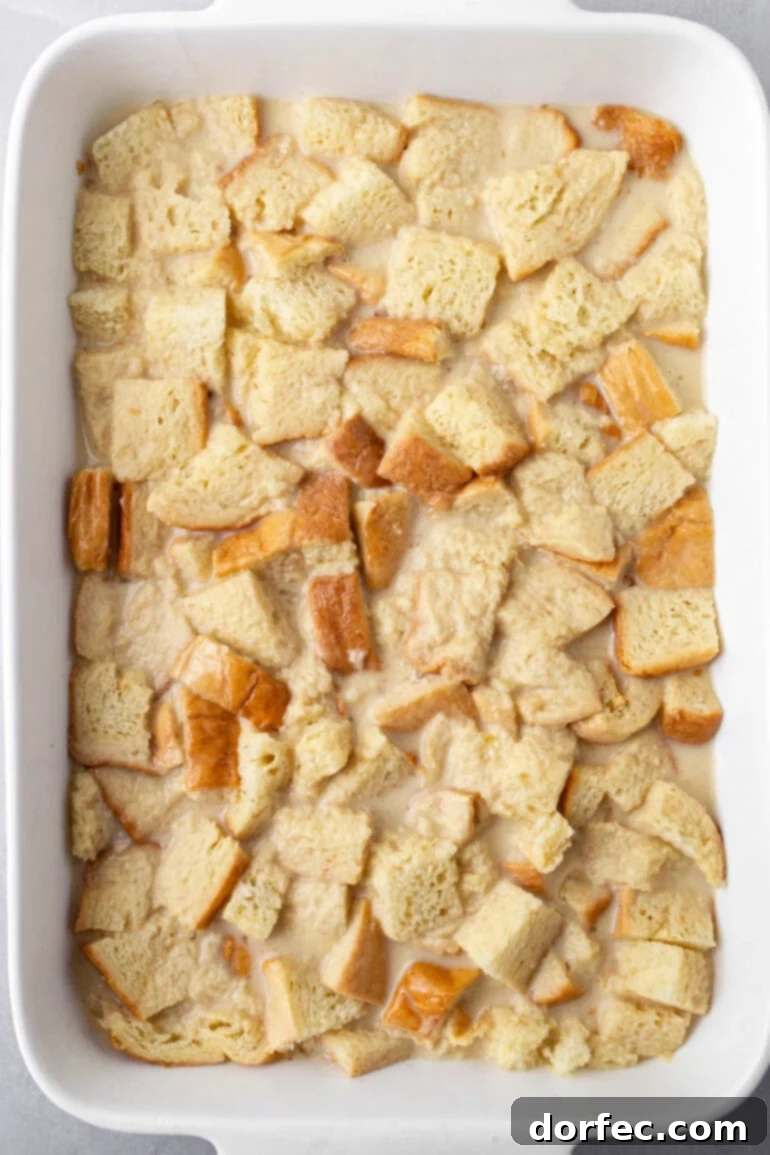
- Prepare the Bread and Dish: Begin by tearing or slicing your chosen bread into roughly 1 to 2-inch bite-sized pieces. These larger pieces will absorb the custard without becoming soggy. Thoroughly grease a 9×13 inch baking dish with cooking spray or butter, ensuring easy release after baking. Arrange the bread pieces evenly in the prepared pan.
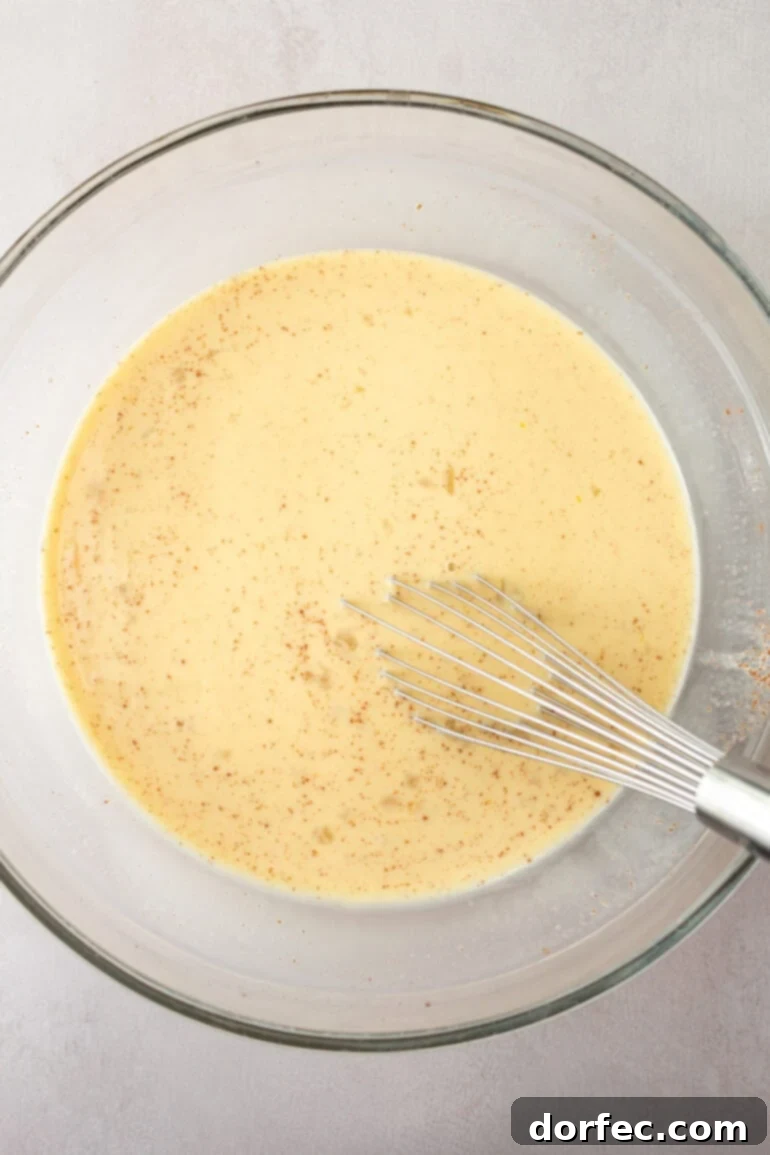
- Whisk the Custard Mixture: In a large bowl, whisk together the eggs, milk, and heavy cream until well combined and smooth. This forms the rich, custardy base of your casserole. Next, add the granulated sugar, brown sugar, cinnamon, and vanilla extract to the mixture. Whisk everything together thoroughly until all the sugars are dissolved and the mixture is uniform. Pour this luscious custard evenly over the bread in the baking dish, making sure every piece is coated. Gently press the bread down occasionally to help it fully absorb the liquid.
- The Overnight Rest (Crucial Step!): This step is the key to a truly incredible French toast casserole. Once the bread is soaked, tightly cover the baking dish with plastic wrap and transfer it to the refrigerator. Allow it to rest overnight, ideally for 8-12 hours. This extended soaking time ensures the bread fully absorbs the custard, preventing a dry interior and creating a tender, flavorful final product.
- NOTE: If time is short and you need to bake it the same day, ensure the casserole rests for at least 1 hour at room temperature before baking. This gives the bread some time to soak up the custard.
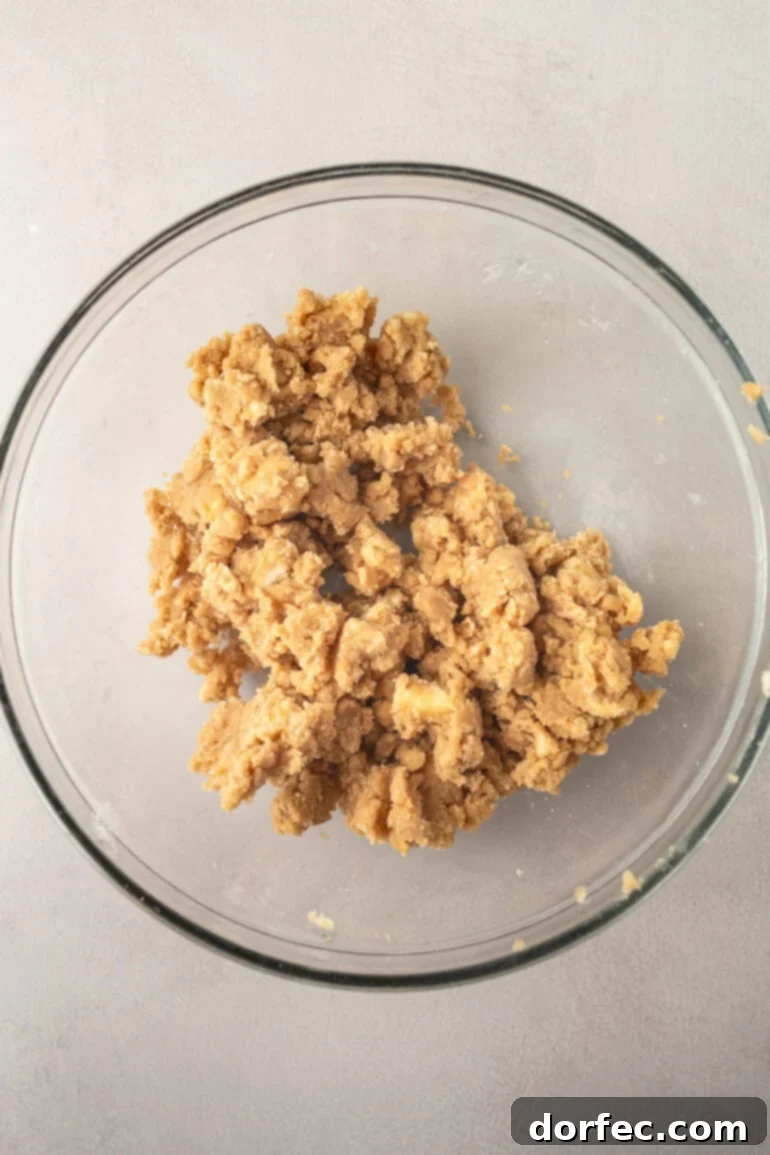
- Prepare the Crumb Topping: While the casserole is resting (or just before baking), make your irresistible crumb topping. In a medium bowl, combine the flour, brown sugar, cinnamon, and a pinch of salt. Whisk these dry ingredients together. Add the cold, cubed butter to the dry mixture. Using a pastry cutter, your fingertips, or a fork, “cut in” the butter until the mixture resembles coarse crumbs with some larger, pea-sized clumps. Transfer the topping to an airtight container or a resealable plastic bag and refrigerate until you’re ready to bake. This keeps the butter cold and the crumbs distinct.
- Preheat the Oven: When you’re ready to bake, preheat your oven to 350°F (175°C). This ensures the oven is at the correct temperature for even baking once the casserole goes in.
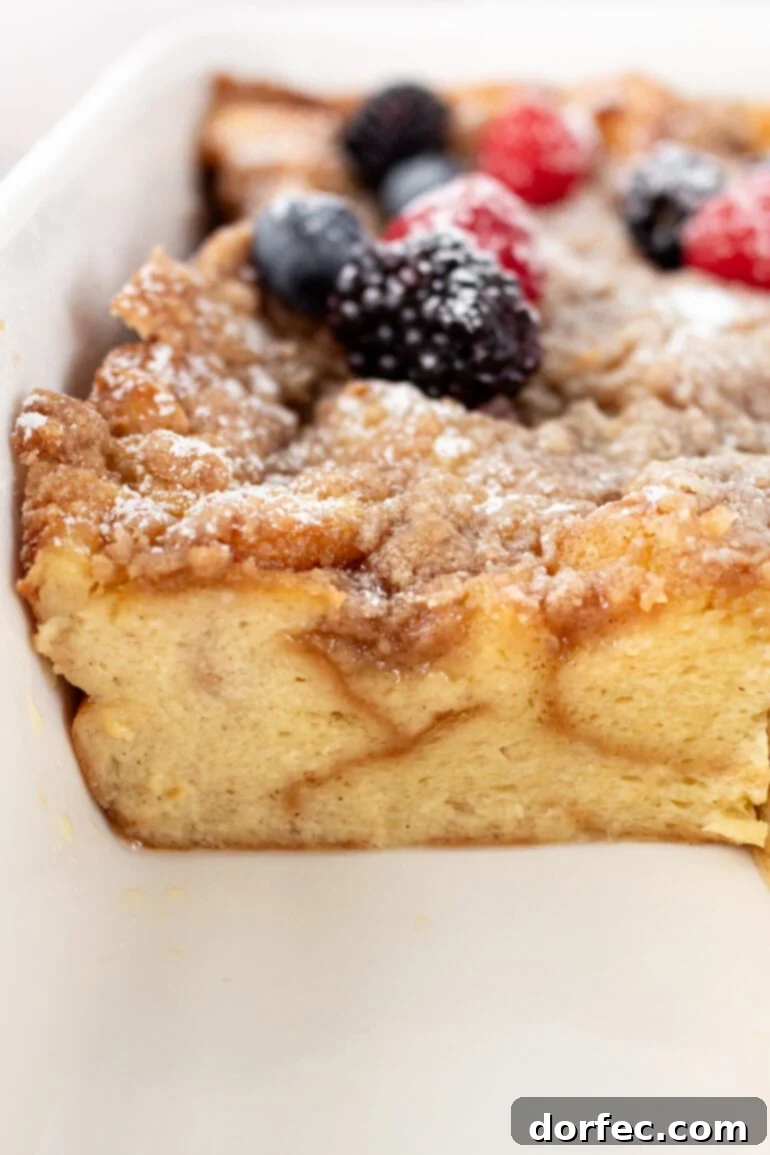
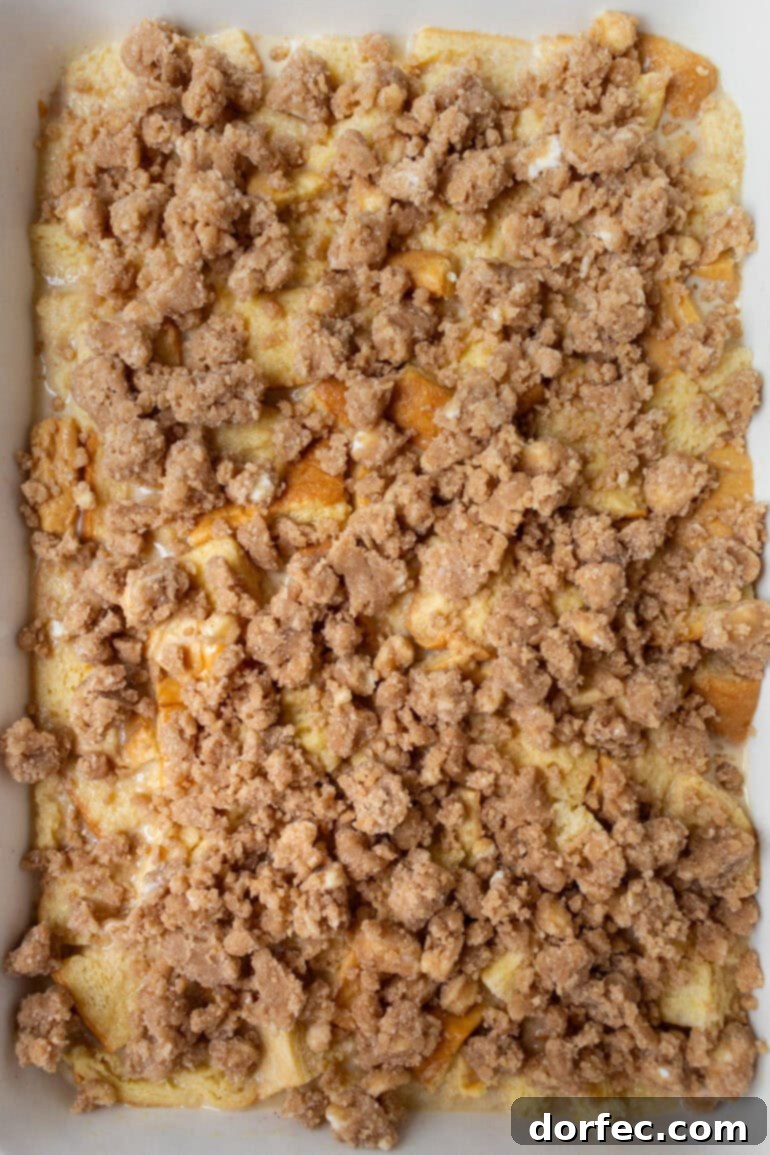
- Bake to Perfection: Remove the French toast casserole from the refrigerator and discard the plastic wrap. Evenly sprinkle the prepared cinnamon crumb topping all over the soaked bread. Place the dish in the preheated oven and bake for approximately 45-60 minutes. Baking time can vary depending on your oven; look for a golden-brown top and a custardy yet set interior. For a softer middle, bake closer to 45 minutes; for a slightly drier, firmer casserole, go for 60 minutes.
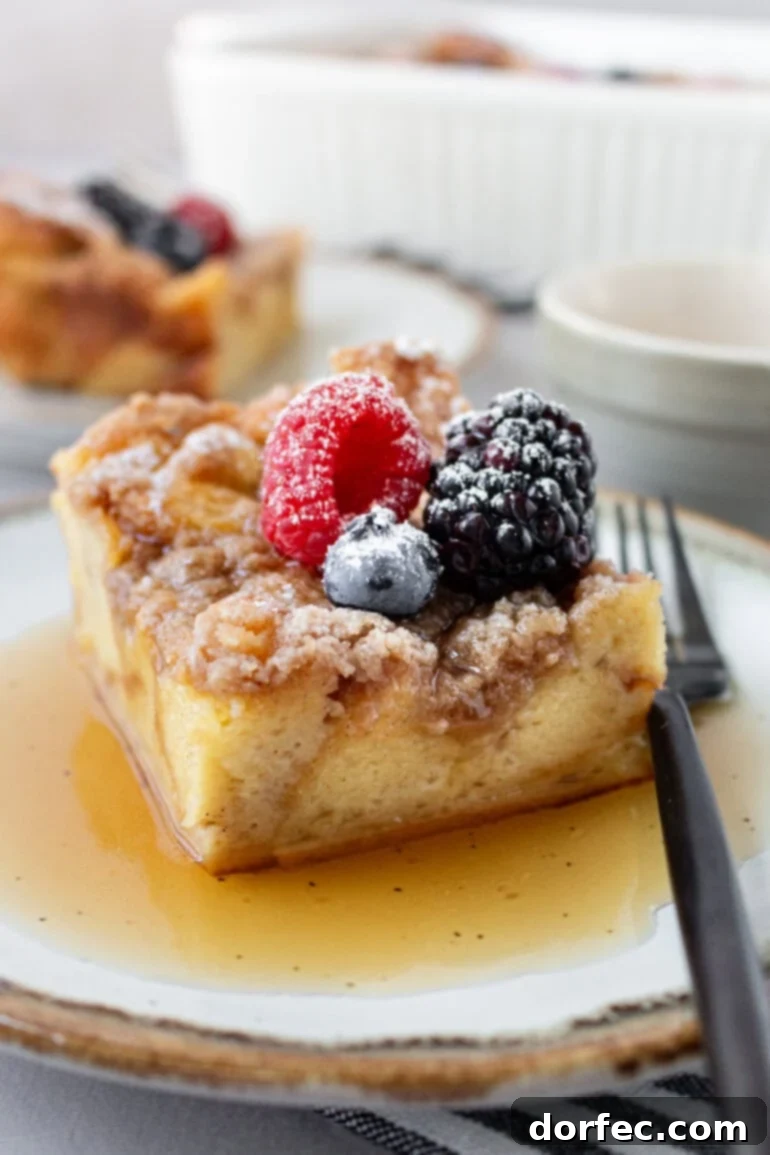
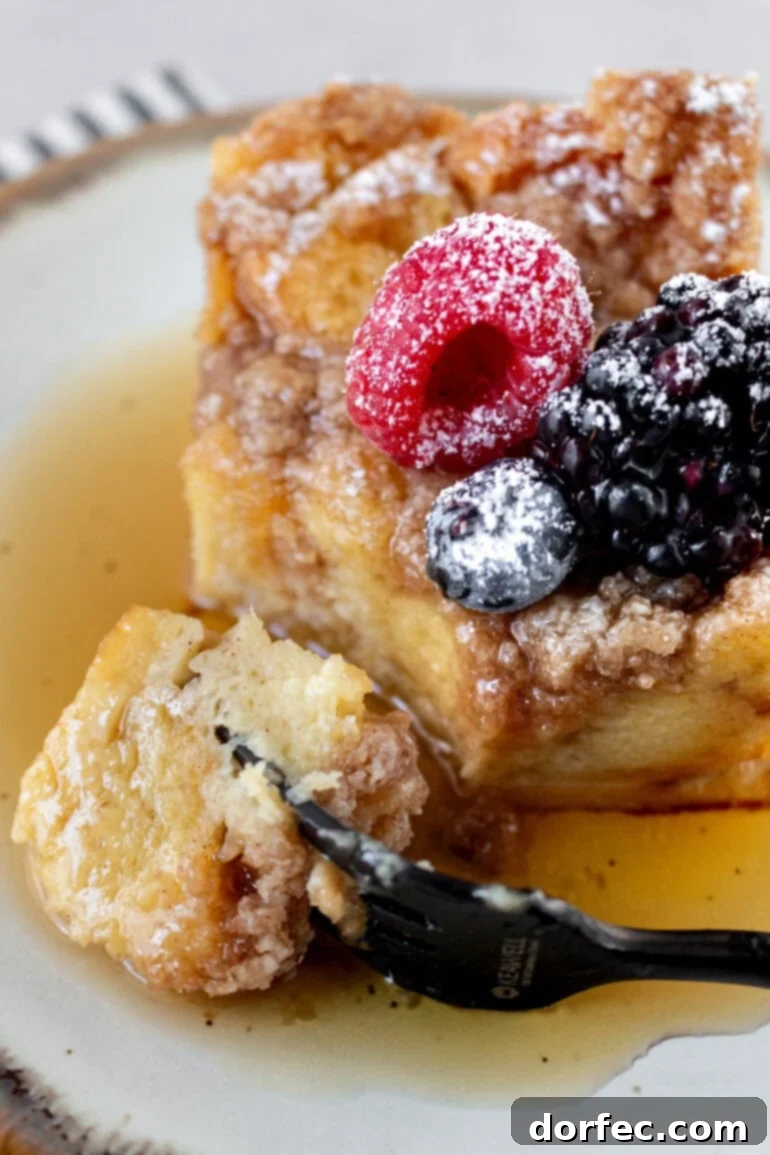
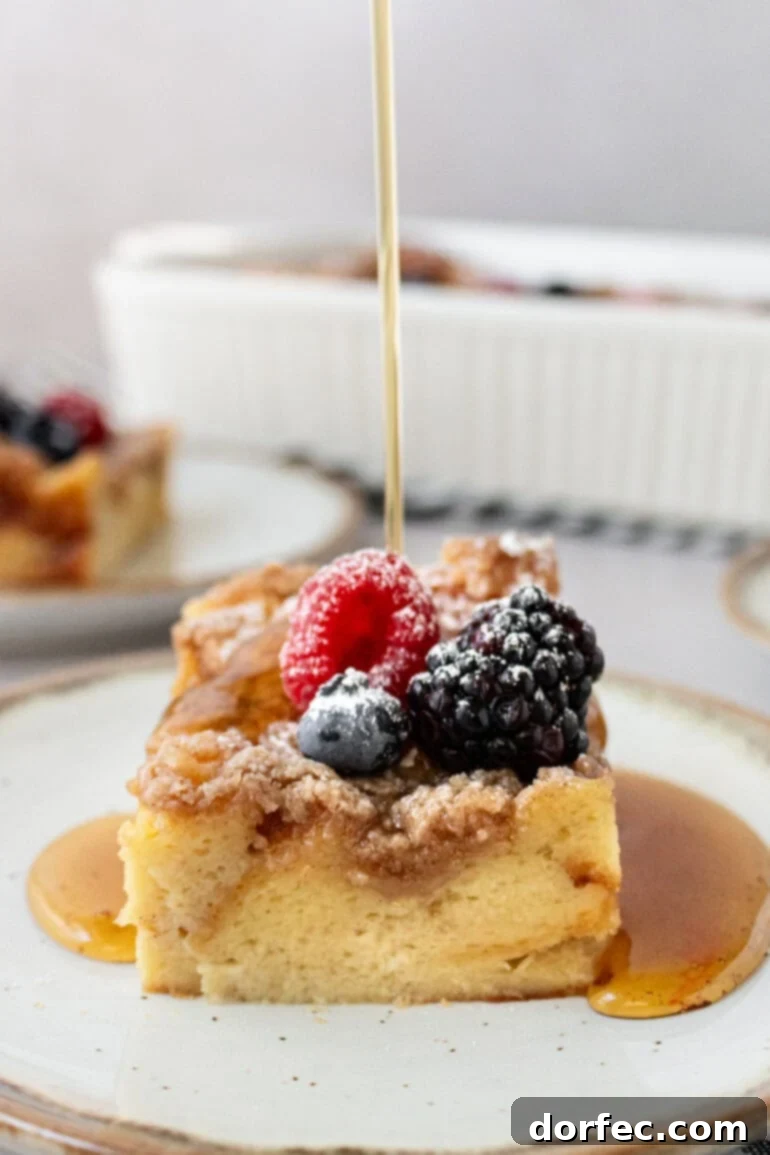
- Garnish and Serve: Once baked, remove the casserole from the oven. For a beautiful finish, dust it generously with powdered sugar. For added freshness and a pop of color, sprinkle fresh berries (such as raspberries, blueberries, or strawberries) over the top. Serve immediately with a drizzle of buttermilk syrup, traditional maple syrup, or your favorite syrup of choice. This dish is best enjoyed warm, right out of the oven!
Selecting the Best Bread for French Toast Casserole
The type of bread you choose is paramount to the success of your French toast casserole. You need a bread that is substantial enough to absorb the rich egg custard mixture without disintegrating or becoming mushy. Ideally, look for a dense, slightly dry, or day-old bread. My top recommendations are:
- Brioche: This rich, buttery bread is incredibly tender and flavorful. Its slight sweetness makes it a natural fit for French toast, absorbing the custard beautifully and lending a luxurious texture.
- Challah: A traditional Jewish egg bread, Challah is known for its beautiful braided crust and soft, slightly sweet interior. It’s incredibly sturdy and soaks up the custard perfectly, resulting in a wonderfully moist and flavorful casserole.
- Sourdough: For those who prefer a hint of tang, sourdough offers a fantastic contrast to the sweet custard and topping. Its robust crust and chewy crumb hold up exceptionally well during soaking and baking.
- French Bread (Baguette): A day-old baguette, with its crisp crust and airy interior, can be surprisingly good. Slice it into thick rounds or cube it to maximize surface area for absorption.
- Texas Toast: This thicker-sliced white bread is designed to be hearty and absorbent, making it a convenient and effective choice for French toast casserole, especially if you’re looking for a softer, more classic French toast texture.
Regardless of your choice, ensure the bread is at least a day old. This allows it to dry out slightly, enhancing its ability to soak up the custard without becoming soggy. Fresh bread, with its higher moisture content, tends to fall apart easily once soaked.
How to Prevent a Soggy French Toast Casserole
Nobody wants a soggy French toast casserole! Achieving that perfect balance of a golden, slightly crispy exterior and a soft, custardy interior is key. Here are the most important factors to prevent sogginess:
- Use the Right Bread: As mentioned, starting with a good, dense, and sturdy bread is absolutely crucial. Varieties like Challah, Brioche, or Sourdough are ideal because they can absorb the liquid without collapsing. Avoid soft, fluffy sandwich breads that tend to fall apart.
- Day-Old Bread is Best: Always use bread that is at least a day old. Slightly stale bread has less moisture, making it much more absorbent. If your bread is fresh, you can dry it out by tearing/cubing it and leaving it uncovered on your counter for several hours or toasting it lightly in the oven for 10-15 minutes at a low temperature (around 250°F / 120°C).
- Cut into Thick Cubes or Slices: Cutting the bread into generous 1 to 2-inch cubes or thick slices provides enough structure for each piece to maintain its shape while soaking. Smaller or thinner pieces are more likely to become waterlogged.
- Overnight Soaking is Essential: This is perhaps the most critical step. Allowing the casserole to soak overnight in the refrigerator gives the bread ample time to fully and evenly absorb the egg mixture. This deep saturation helps the bread cook through uniformly, resulting in a perfectly custardy texture rather than a wet, unbaked interior. When the bread is adequately soaked, it bakes beautifully, creating that desirable texture.
- Gently Press the Bread Down: After pouring the custard over the bread, gently press the bread down into the mixture a few times. This ensures that every piece gets thoroughly coated and submerged, promoting even absorption.
- Avoid Over-Soaking: While overnight soaking is great, don’t let it sit for more than 24 hours, especially if your bread isn’t super dense. Too long can still lead to a mushy texture.
By following these tips, you’ll ensure your French toast casserole comes out perfectly textured every time—custardy on the inside, with a lovely golden-brown exterior, and never soggy!
Do You Eat French Toast Casserole with Syrup?
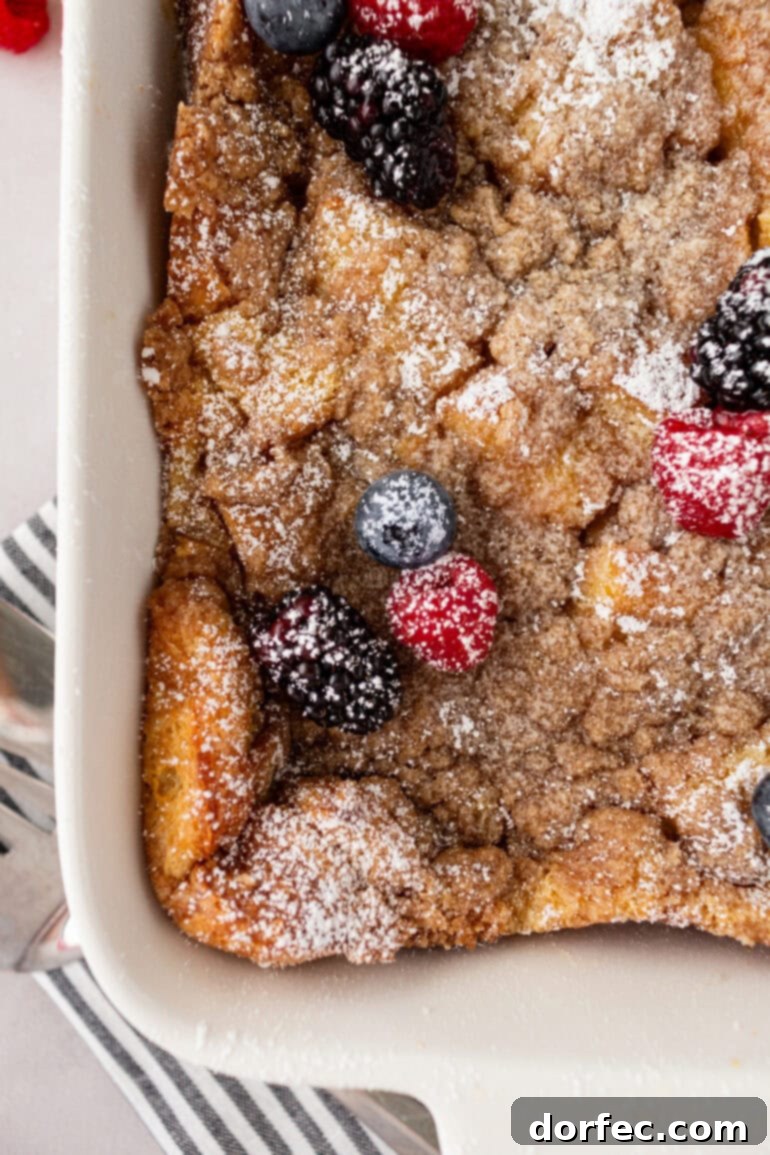
Absolutely! While the casserole itself is wonderfully flavorful and moist (especially if you don’t overbake it), the addition of syrup takes it to another level of indulgence. Think of it as the perfect crowning glory for your breakfast masterpiece. We are particularly fond of serving it with our homemade buttermilk syrup, which offers a unique tangy sweetness that beautifully complements the rich French toast. Our coconut buttermilk syrup is another fantastic option for those who enjoy a tropical twist.
If you’re craving an even thicker, more caramel-infused experience, simply add an extra cup of brown sugar to our buttermilk syrup recipe. This creates a luxurious, rich syrup that cascades over each custardy piece of French toast, making every bite pure heaven. While it’s perfectly delicious on its own, a generous drizzle of your favorite syrup truly elevates this casserole into an unforgettable treat.
What to Serve with French Toast Bake
While this hearty French toast casserole is certainly substantial enough to be a stand-alone meal, I love to create a balanced breakfast spread by pairing sweet with savory. Here are some fantastic side dish ideas that will complement your French toast bake beautifully:
- Eggs: A classic pairing! Fluffy scrambled eggs or perfectly cooked fried eggs offer a protein-rich contrast to the sweet casserole.
- Crispy Bacon or Sausage: Salty, savory bacon or breakfast sausage links provide a satisfying crunch and a rich flavor that cuts through the sweetness of the French toast.
- Breakfast Potatoes: Whether it’s classic hash browns or something with more flair, potatoes are always a welcome addition. Our easy 3-ingredient chorizo potatoes would be an especially delicious and flavorful side, adding a bit of spice to your meal.
- Fresh Fruit Salad: A light and refreshing fruit salad (like a mix of berries, melon, and grapes) adds a healthy element, vibrant color, and a juicy contrast to the rich casserole.
- Yogurt Parfaits: For a lighter, creamy option, a simple yogurt parfait with granola and fruit can be a great accompaniment.
No matter what you choose, this versatile casserole makes building a delicious breakfast or brunch feast a breeze!
Storing, Reheating, and Freezing French Toast Casserole
One of the many benefits of this French toast casserole is how well it adapts to meal prep and future enjoyment. Here’s how to best handle leftovers:
- Storing Leftovers: Any leftover French toast casserole stores exceptionally well in the refrigerator. To keep it fresh, cover the baking dish tightly with plastic wrap or transfer individual portions to an airtight container. Properly stored, it will maintain its delicious flavor and texture for up to 5 days.
- Reheating: For a single serving, a quick zap in the microwave is usually sufficient. Place a slice on a microwave-safe plate and heat for 30-60 seconds, or until warmed through. If you wish to reheat the entire casserole, cover it loosely with foil to prevent drying out and warm it in a preheated oven at 350°F (175°C) for about 15-25 minutes, or until it’s heated through to the center.
- Freezing: This dish also freezes beautifully, making it an excellent option for future breakfasts or brunches.
- To Freeze an Entire Casserole (Baked): Bake the casserole as per the instructions and allow it to cool completely to room temperature. Ensure you baked it in a freezer-safe dish (aluminum foil pans work wonderfully for this). Once cool, wrap the entire dish tightly in plastic wrap, followed by a layer of heavy-duty aluminum foil. This double-layer protection prevents freezer burn. Label with the date. It will keep in the freezer for up to three months.
- To Freeze Individual Portions (Baked): After the casserole has cooled, cut it into individual servings. Wrap each piece tightly in plastic wrap, then place them in a freezer-safe bag or container. This allows you to grab just one serving at a time.
- Thawing and Reheating from Frozen: To enjoy a frozen casserole, transfer it from the freezer to the refrigerator to thaw overnight. Once thawed, warm it up in a preheated oven at 350°F (175°C) for approximately 20-30 minutes, or until heated through. Individual slices can be reheated in the microwave or toaster oven from frozen or thawed, adjusting time as needed.
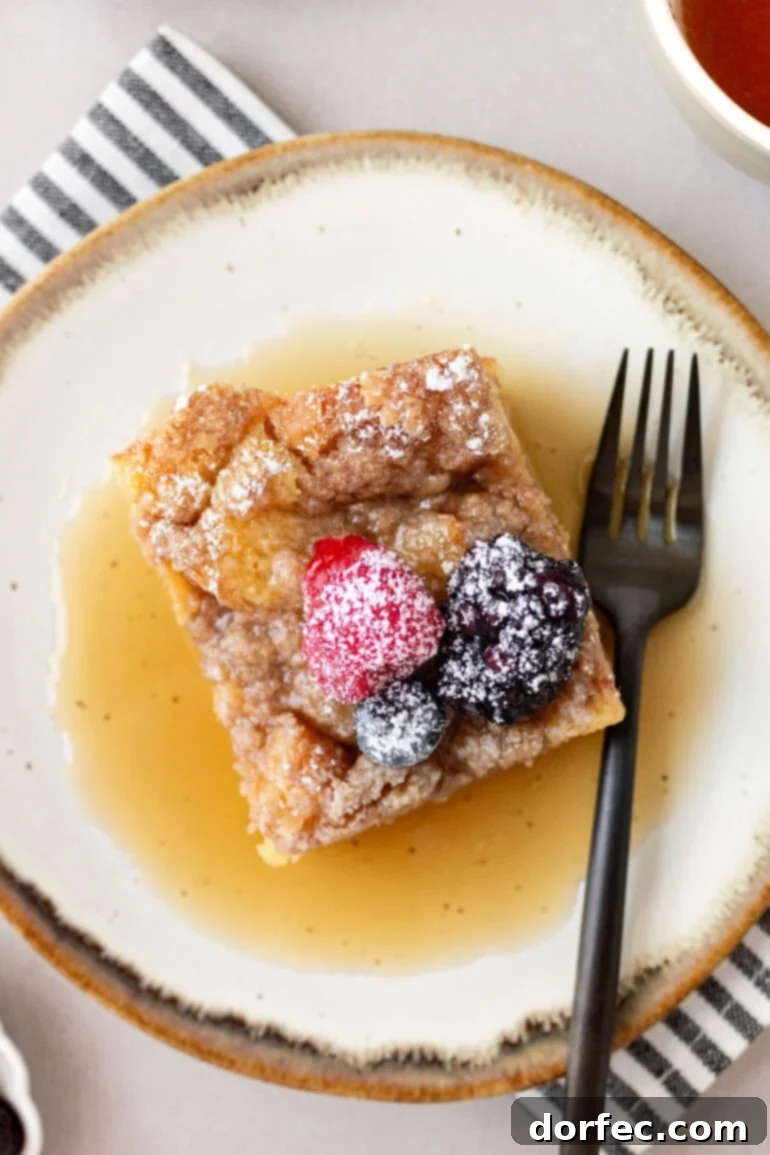
If you’re seeking an easy, stress-free, and utterly delicious make-ahead breakfast that will be devoured by everyone, then this French Toast Casserole recipe is precisely what you need. Its delightful flavors and convenient preparation make it not only the perfect start to any morning but also an exceptional choice for a fun and comforting breakfast for dinner!
More Delicious Breakfast Casseroles to Try:
Looking for more amazing breakfast casserole ideas? Here are some other fantastic recipes that are sure to become family favorites:
- Savory Hash Brown Casserole
- Cinnamon Roll French Toast Casserole
- Sausage Monterey Jack Souffle
- Cheesy Sausage Hash Brown Casserole
- Apple French Toast Casserole
- Eggnog French Toast Casserole
French Toast Casserole
Carrian Cheney
15 minutes
45 minutes
8
Saved
Pin
Ingredients
-
1
Loaf
Challah Bread,
day old, Brioche or Sourdough can be used as well -
8
Eggs,
large -
2
Cups
Milk,
2%, see note -
1/2
Cup
Heavy Cream -
3/4
Cup
Sugar
-
1/4
Cup
Brown Sugar
-
1/2
teaspoon
Cinnamon
-
1
Tablespoon
Vanilla
Topping
-
1/2
Cup
Flour
-
1/2
Cup
Brown Sugar
-
1
teaspoon
Cinnamon
-
1
Pinch
Salt -
1/2
Cup
Unsalted Butter,
cold and cubed
Metric
Instructions
-
Tear or cube the bread into 1-2″ pieces and grease a 9×13″ baking dish. Pile all of the bread into the pan.1 Loaf Challah Bread
-
Whisk the eggs, milk and heavy cream. Add the sugars, cinnamon and vanilla extract in a bowl until smooth. Pour the custard all over the bread, occasionally pressing the bread down a little. Wrap the entire dish in saran wrap and place in the fridge overnight. If you need to bake it the same day, set the pan out to absorb the custard for 1 hour before baking.8 Eggs,
2 Cups Milk,
1/2 Cup Heavy Cream,
3/4 Cup Sugar,
1/4 Cup Brown Sugar,
1/2 teaspoon Cinnamon,
1 Tablespoon Vanilla -
Prepare the topping by adding to a bowl the flour, brown sugar, cinnamon and salt whisking to combine. Cut in the butter with a pastry cutter and squeeze the mixture together in clumps. Place in a ziploc bag and refrigerate to keep the mixture held together.1/2 Cup Flour,
1/2 Cup Brown Sugar,
1 teaspoon Cinnamon,
1 Pinch Salt,
1/2 Cup Unsalted Butter -
Preheat the oven to 350 degrees F.
-
Remove the saran wrap and sprinkle the top with clumps of the topping. Place in the oven for 45-60 minutes. I like it somewhere in between but if you like it extra dry and not soft in the middle then go for 60 minutes.
-
Remove from the oven and dust with powdered sugar. Serve with Buttermilk Syrup (see note)
Recipe Notes
To make the syrup like a caramel syrup just add 1 cup of brown sugar to the white sugar.
Nutrition
Serving:
1
cup
,
Calories:
601
kcal
,
Carbohydrates:
76
g
,
Protein:
14
g
,
Fat:
27
g
,
Saturated Fat:
14
g
,
Polyunsaturated Fat:
2
g
,
Monounsaturated Fat:
8
g
,
Trans Fat:
1
g
,
Cholesterol:
250
mg
,
Sodium:
322
mg
,
Potassium:
261
mg
,
Fiber:
2
g
,
Sugar:
43
g
,
Vitamin A:
1030
IU
,
Vitamin C:
1
mg
,
Calcium:
182
mg
,
Iron:
3
mg
Nutrition information is automatically calculated, so should only be used as an approximation.