
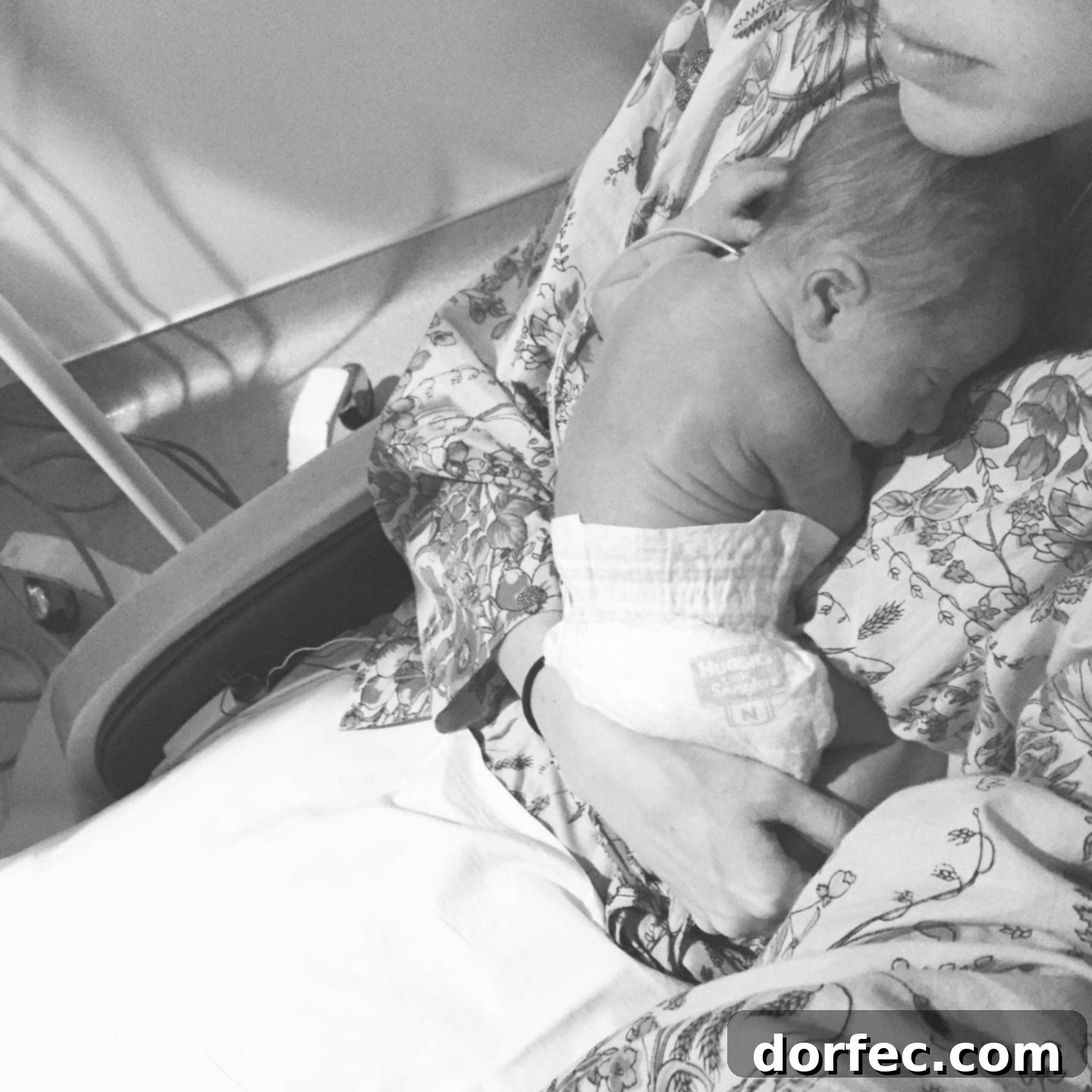
I found myself perched on the edge of my hospital bed, legs crossed in a familiar, comforting position, savoring a simple parfait of fruit, yogurt, and granola. The crisp, thin hospital sheets, a constant battle against the room’s perpetually fluctuating temperature—one moment a frozen tundra, the next a sweltering desert—were drawn up around me. My phone, habitually silenced, began its insistent vibration, a silent demand for attention that always somehow managed to cut through the quiet.
Carefully, I pulled the small bedside table closer, mindful not to disturb my large hospital mug, its crinkle-fry straw protruding at an angle, threatening a spill. It was Cade. His call typically brought a sense of reassurance, an update that all was well. In those initial moments, I couldn’t fathom anything otherwise. My mind, quick to spin narratives, had already circled through a myriad of thoughts. I felt, deep in my heart, that we had navigated through the most arduous challenges. While not entirely free of hardship, a profound sense of peace assured me that things were now settling into place. My resolve to continue in gratitude and patience remained firm, my eyes fixed on the horizon, certain that the end of our ordeal was finally in sight.
I answered, “Hey B! (A curious nickname I often used for him.) I just got back to the room for a moment to eat. I’ve been craving fresh fruit and yogurt for so long, yet I still feel sick to my stomach. I can’t believe this nausea is persisting.” I could almost hear Cade’s pause on the other end, his voice eventually cutting through, “Everything good?”
A moment of unsettling silence followed, heavy with unspoken news.
Cade then explained the unexpected: our home’s entire air conditioning system was beyond repair. Completely dead, necessitating a full replacement. To complicate matters further, the old unit’s placement was found to be against current building codes. The only feasible location for the new, up-to-code installation was on the opposite side of the house, precisely where a large tree had once stood. A tree whose removal, at a time when we could ill afford such an undertaking, had seemed a random, inspired decision. The sheer improbability of it struck me.
What were the odds? At the time, taking on tree removal felt like an insurmountable burden. Yet, a quiet prompting, a subtle intuition, had guided me to clear that space, a decision framed as a future “blessing.” Now, with the AC crisis upon us, that blessing manifested itself in the exact spot needed. The thought was both astonishing and strangely comforting, a testament to unforeseen preparations.
Hanging up, I made my way back to the Neonatal Intensive Care Unit (NICU). The familiar scan of my wrist, the gentle click as the door unlocked, allowed me to push through. Every step felt like a prayer, a desperate hope that somehow, we would find a way to navigate this complex journey and finally bring our precious baby home. The weight of the AC news, though significant, paled in comparison to the miracle unfolding within those sterile walls.
Rounding the corner, I paused, simply breathing him in. There he was: a tiny, perfect baby, nestled amidst a tangle of even tinier monitors. It was a sight that simultaneously filled me with immense love and fragile apprehension.
Then, without warning, those tiny monitors began to shriek an alarm! My heart leaped into my throat, a horrifying explosion of fear as I watched the line on the screen go flat. Two nurses, moving with trained precision, rushed to his bedside. All I could do was stand, fingers pressed lightly against my lips, frozen in disbelief and terror.
It’s a strange phenomenon, but in moments of profound crisis, time truly does seem to come to a screeching halt. You become hyper-aware of every minute detail, every person in the room, yet simultaneously, it all blurs into a fast-as-lightning sensation, an incomprehensible cascade of events where nothing truly registers. The world shrinks to a singular, terrifying focal point.
That shade of blue-gray, an unnatural pallor spreading across his tiny form, is undoubtedly the worst color in the world. I had no prior comprehension of how drastically and swiftly one’s complexion could change when breathing ceases and a heart stops beating. In that suspended moment, I questioned if I, too, was still drawing breath.
What struck me most was the absence of immediate panic, of a frantic leap to crisis mode that one might expect. There was no screaming, no chaotic orders, only a quiet, urgent frenzy of action. It served as a powerful reminder of the incredible composure exhibited by first responders. In life-saving situations, they maintain an extraordinary calm, a precise and deliberate approach. They don’t react; they act. This profound lesson resonated deeply within me, inspiring a fervent desire to embody that same controlled response in my own life, especially when facing challenges with my children, family, and friends.
Four skilled hands worked in unison, lifting an airway, gently but firmly rubbing our baby’s fragile body as if he were a potato being scrubbed clean in a sink. Then, “Beep, beep, beep!” The monitors miraculously sprang back to life. In that instant, my irritation with the constant symphony of beeps in the NICU vanished forever. Each sound now represented the powerful, resilient beats of fighting warriors, a testament to the life-affirming courage of my son and the dedicated team caring for him.
A gentle hand pressed upon my shoulder, a comforting anchor amidst the swirling chaos, guiding me towards my rocking chair. As I sank into its familiar embrace, my hands began to tremble subtly as she placed that fragile body, housing an incredible spirit of a little boy, into my arms. The full weight of what had just transpired began to settle upon me.
I felt eyes urging mine to look up. The nurse knelt, bringing herself to my eye level, her gaze piercing me with unwavering exactness. “That might happen again,” she stated calmly, yet with profound seriousness. “Sometimes preemies lose touch with us, but we will always be watching, and we will always come to the rescue.” I believe that was my first true inhale since the alarm, my first genuine breath. The powerful reminder returned, resonating deep within my soul: I never stand alone. Angels, both seen and unseen, were ever-present, guarding our fragile world.
One of the very first nights in the NICU, a nurse was preparing to weigh our little man so I could feed him. That was the established rhythm, the intricate dance of neonatal care.
Suddenly, the old corded phone at my bedside shrieked its shrill, insistent ring. It was a sound foreign to children of today, a relic from a time when waiting for your big sister to finish her call was a common childhood trial, or hurrying to call a best friend before school to coordinate outfits. When you’re sound asleep, it’s the kind of sound that rattles your bones, sending your heart racing, palpitating in a way that jolts you awake and throws you into a three-millisecond panic until you fully register your surroundings and the source of the noise. It was well past 1 AM, and I was utterly exhausted, having left his room less than an hour ago, rushing to pump and collapse into sleep. Yet, in that dazed state, I found myself trying to clear my sleep-hoarse voice, “Eeehhhheeeem, hello?”
“Carrian, he’s stirring,” the nurse’s calm voice explained. “You’d probably better pump and come in to feed him as he will likely be up again soon.”
I pulled my soft robe, the one that became my uniform in the NICU—a practical necessity in a place where self-care, let alone outfit choices, was a luxury—around my shoulders. The familiar, almost robotic routine began its predictable cycle.
The rhythmic hum of the pump always evoked a strange, almost absurd image in my mind: that of a mama cow in line at a dairy, though the end product would certainly not be ice cream. The act was purely functional, a testament to dedication rather than culinary delight.
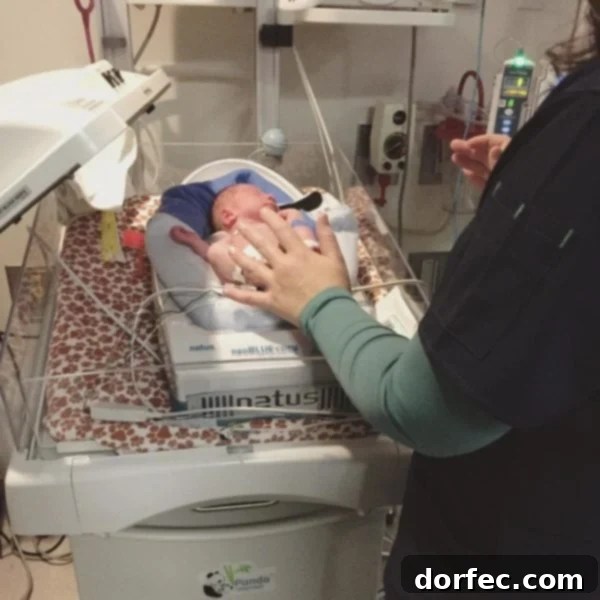
I walked into the NICU, and the nurse was just gently lifting him. My world had its routine—pumping, a quick snack, stolen moments of sleep. But there was a more profound, more intricate routine within the NICU itself, a sacred sequence of care.
Our baby was gently roused, sweetly spoken to, and cooed over as I carefully changed his impossibly tiny diaper—a newborn size that still seemed to engulf his small frame. His warm, fragile body was then carefully lifted onto a scale, weighed with meticulous precision, before we nestled back into the rocking chair for his feeding. This entire process, with its delicate balance of science and tenderness, would be repeated after each feeding, even the soiled diapers weighed before being discarded. Every gram, every milliliter, every breath was accounted for, a constant vigil over his delicate progression.
As I cradled him, observing the monitors, I knew it was coming. My eyes fixed on the screen, seeing the little line begin to slow, a subtle but unmistakable harbinger of the fragility that defined our existence within those walls, and the constant, heartbreaking need for vigilance.