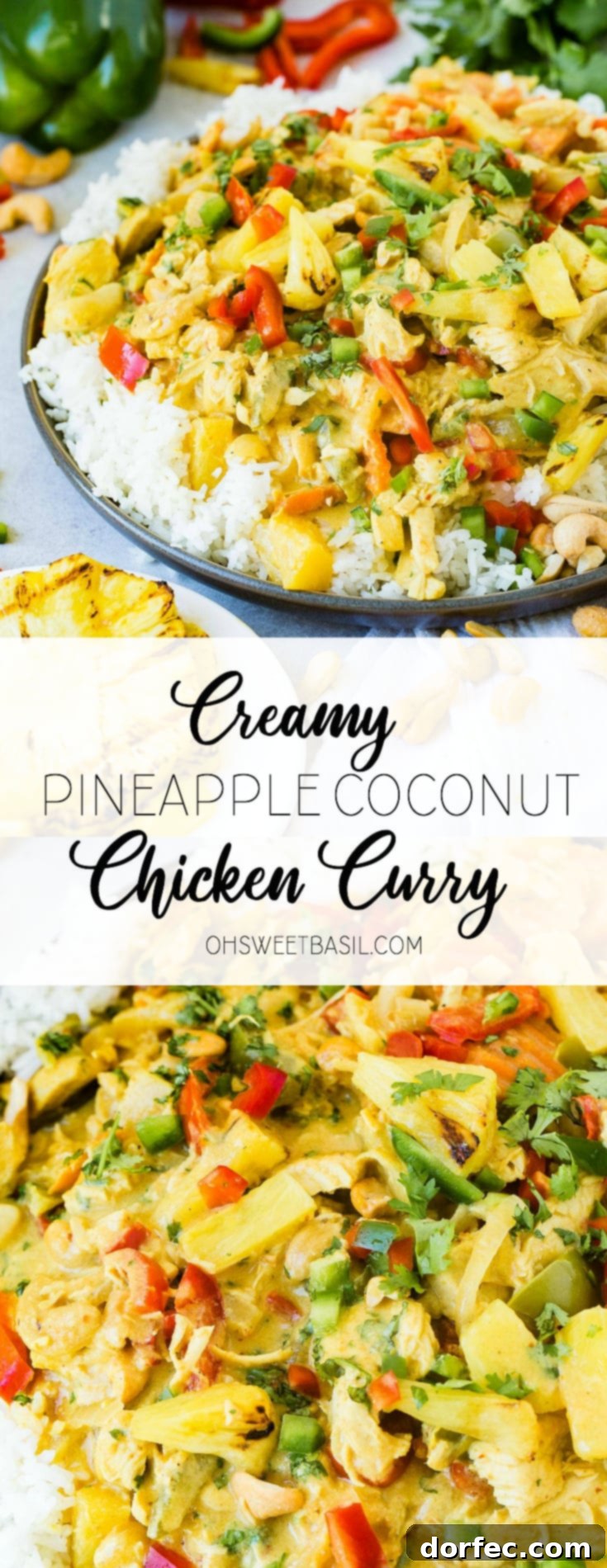
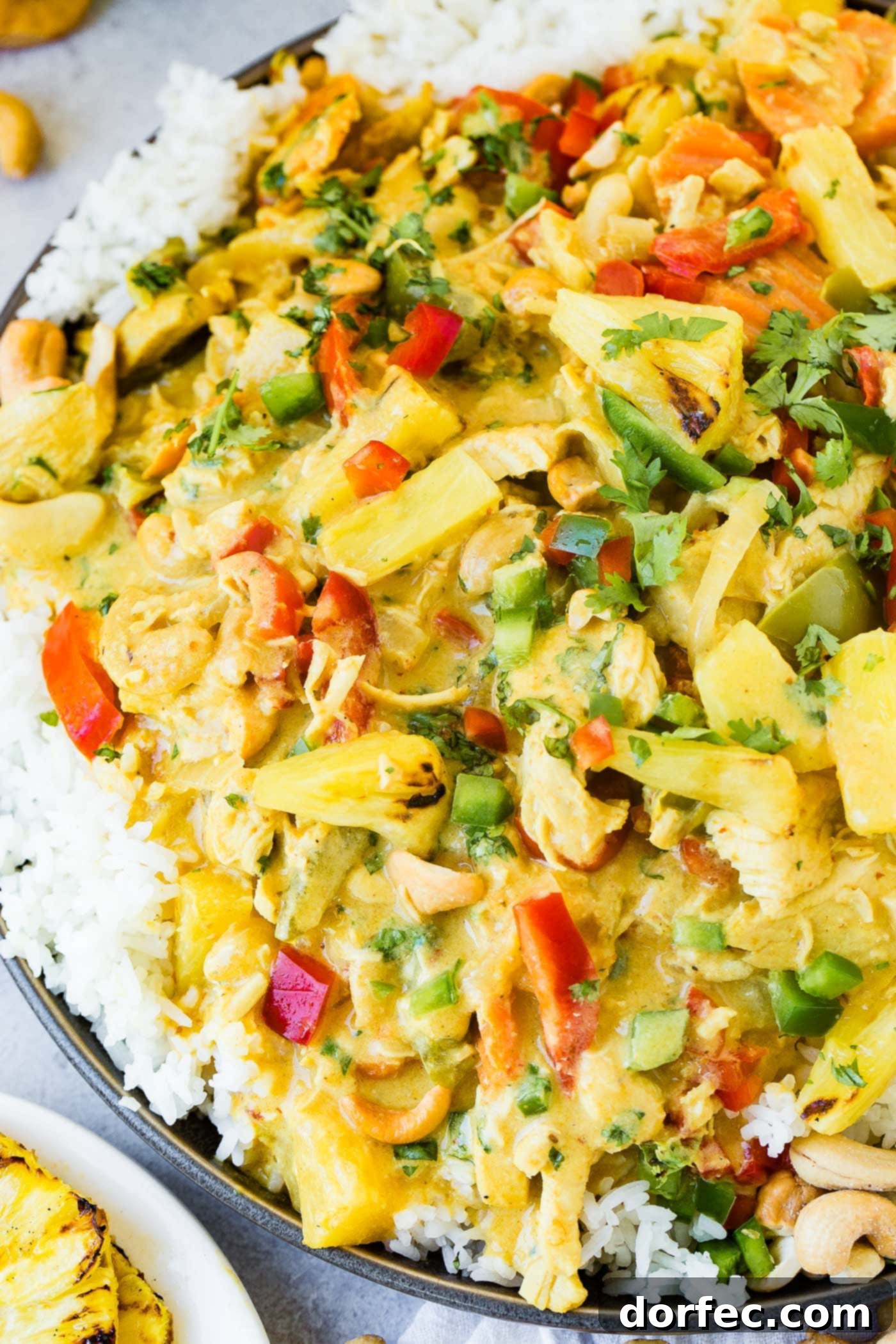
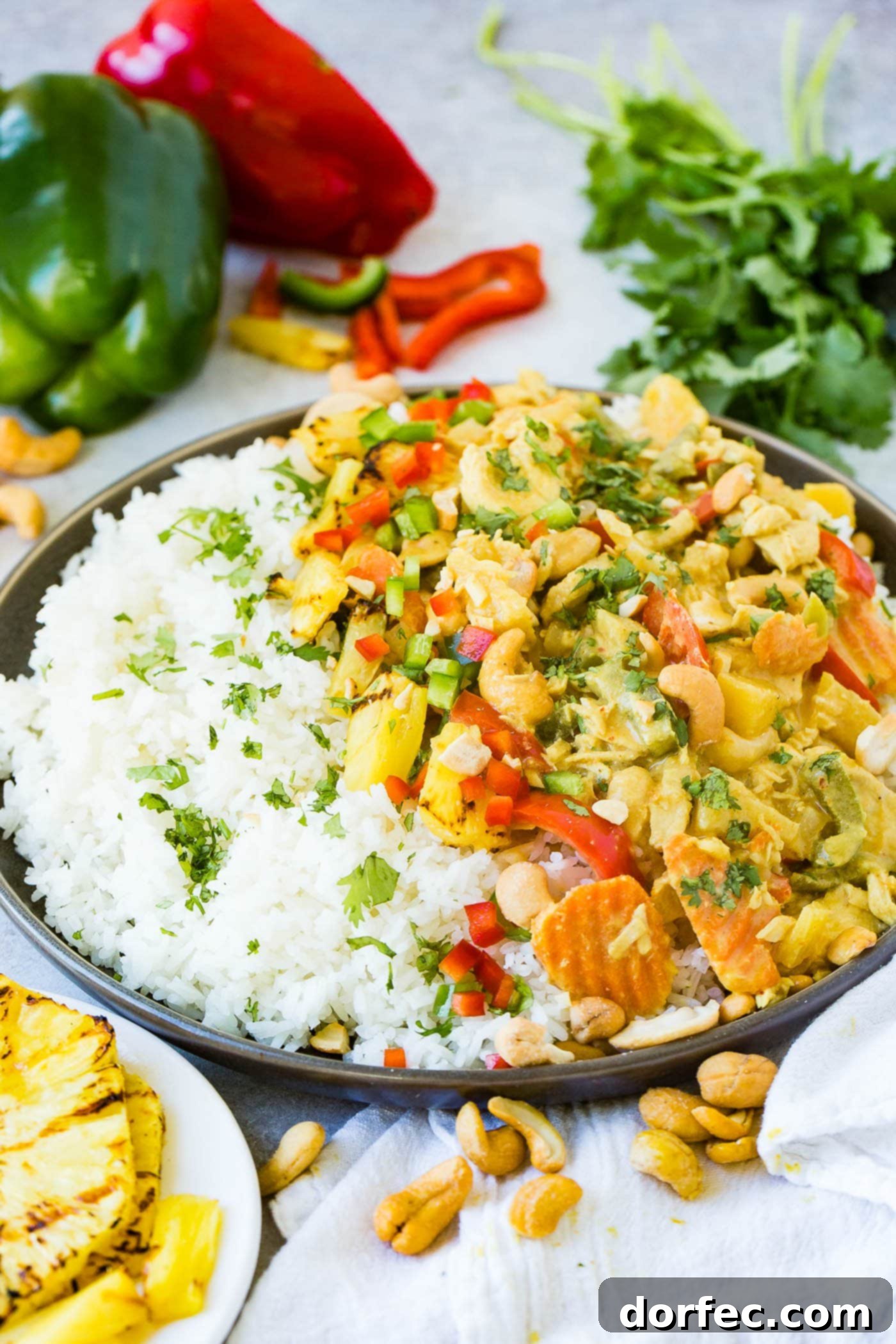
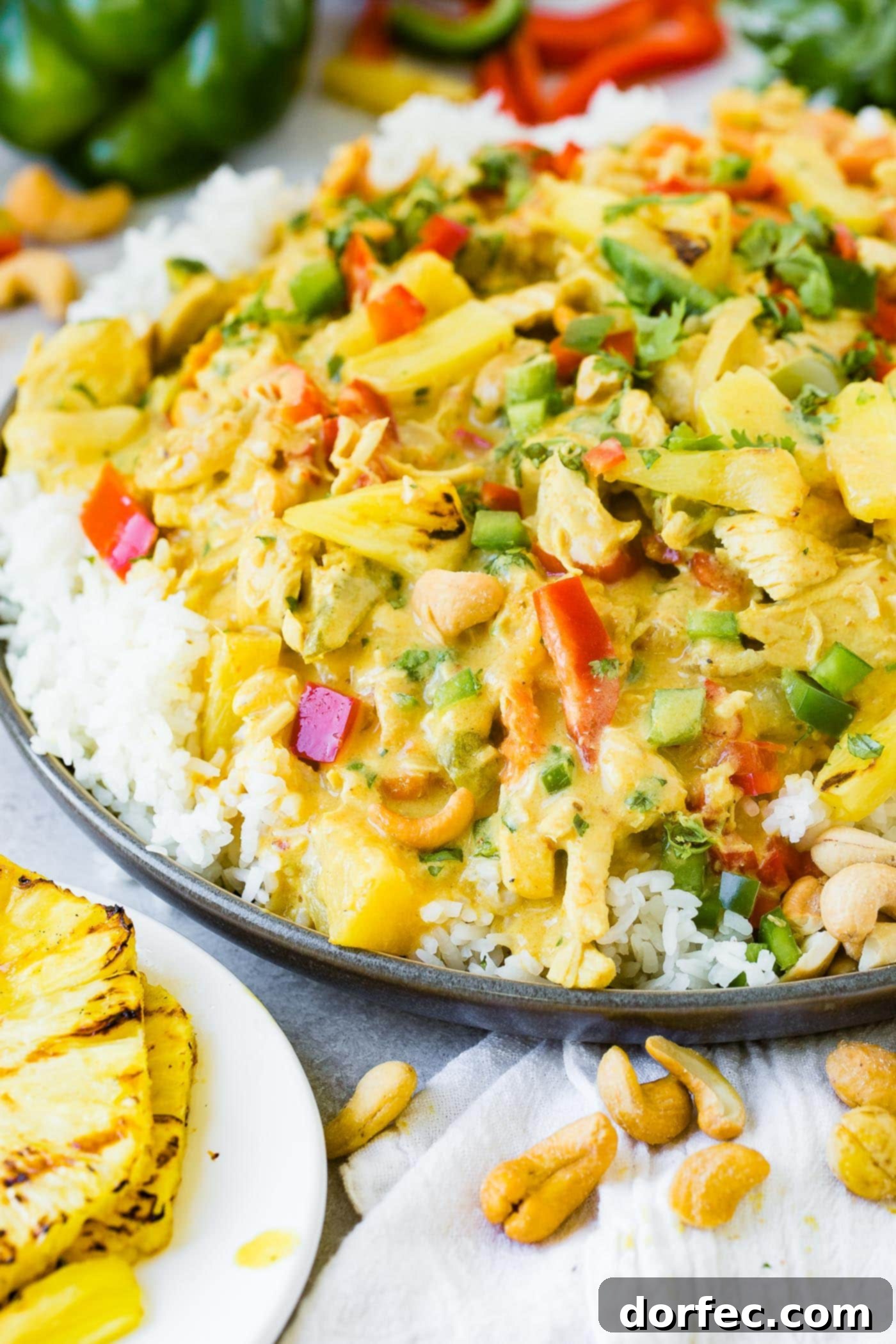
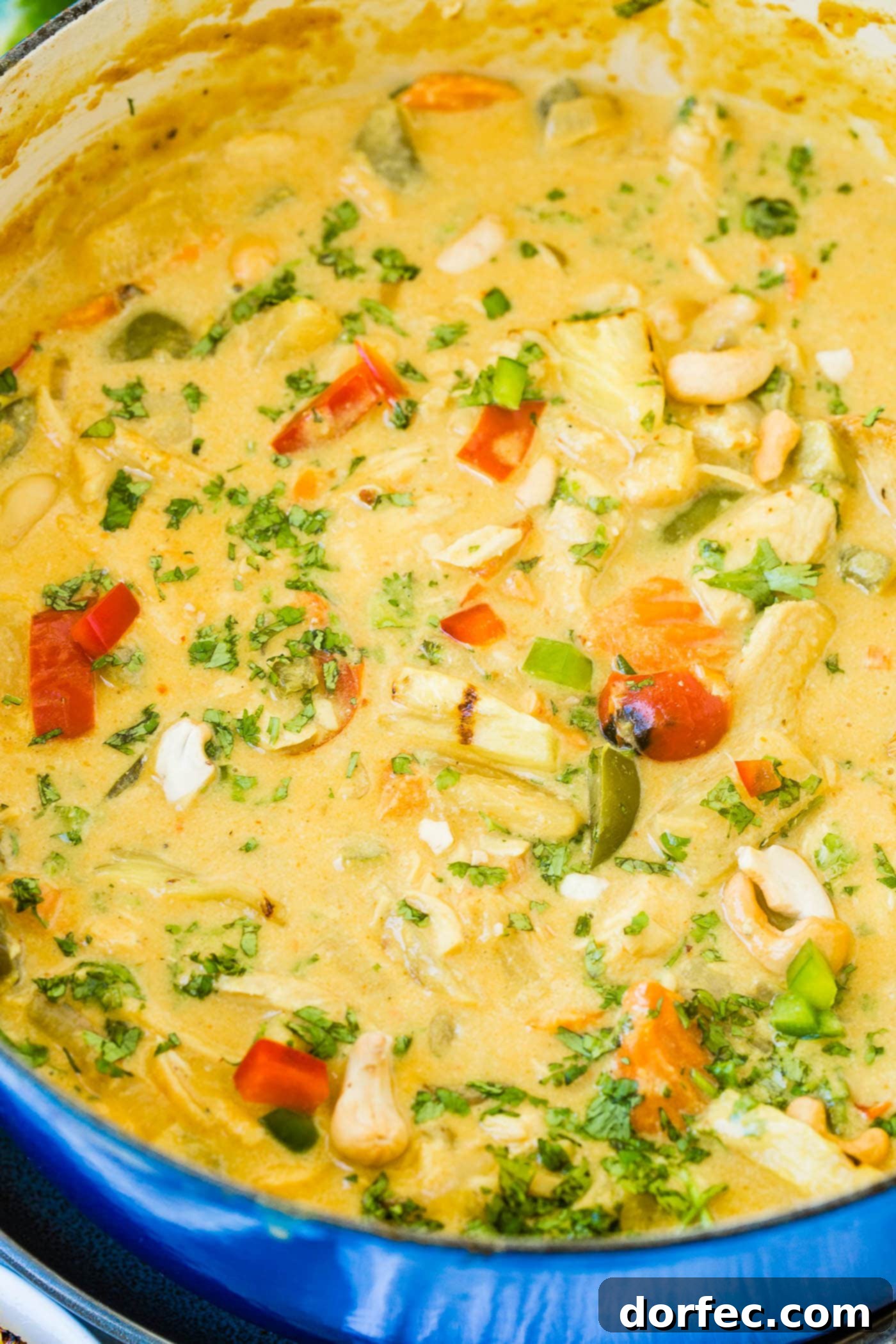
Embark on a culinary adventure with our exquisite Creamy Pineapple Coconut Chicken Curry, a dish that masterfully blends sweet, savory, and spicy notes into a harmonious symphony of flavors. This vibrant curry is generously loaded with tender chicken pieces, crisp chopped peppers, sweet onions, and earthy carrots, all enveloped in a rich, velvety coconut-pineapple sauce. To add a delightful textural contrast and a hint of saltiness, it’s finished with a handful of crunchy cashews. This recipe isn’t just a meal; it’s an experience designed to be a true crowd-pleaser, perfect for family dinners or entertaining guests. Prepare to be amazed by how easily you can bring this restaurant-quality dish to your own kitchen table!
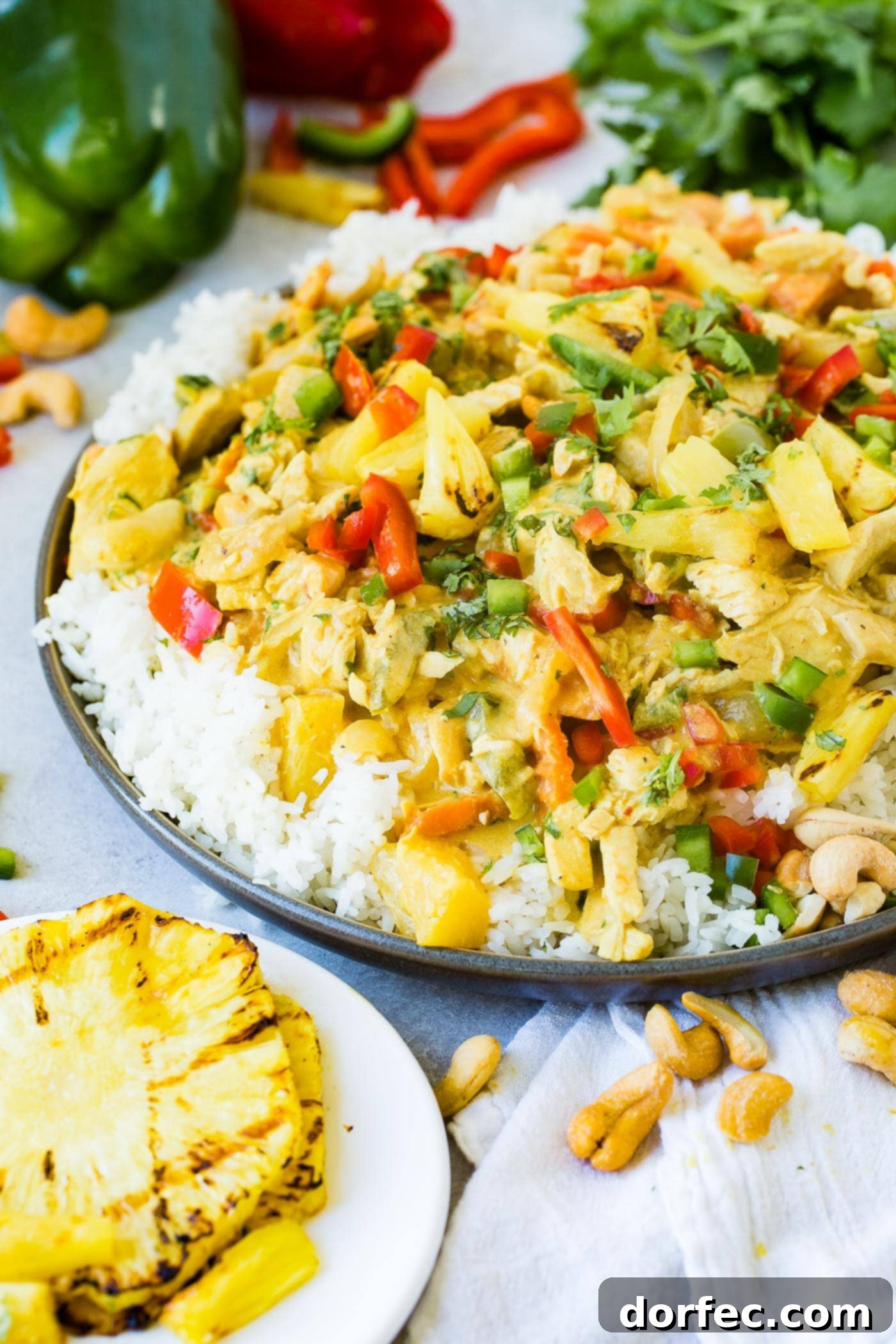
From Restaurant Inspiration to Home-Cooked Perfection
Many of our most beloved recipes originate from a simple premise: savoring an unforgettable dish at a restaurant and thinking, “I wonder if we could recreate this magic at home?” This spirit of culinary curiosity often leads to delightful discoveries. What we’ve consistently found through experimentation is that not only can restaurant-quality food be replicated in our own kitchens, but with a bit of dedication and the right ingredients, it can often surpass the original. This Pineapple Coconut Chicken Curry is a prime example of such a success story.
The journey to perfecting this curry involved meticulous testing and a deep dive into the nuances of various ingredients. We learned early on that the quality and type of coconut products, along with the specific curry paste and powder used, dramatically influence the final outcome. Even with a precise recipe, variations in brands can yield surprisingly different results. While we will share the brands that worked best for us, we wholeheartedly encourage you to explore and experiment with what’s available in your local grocery stores. Culinary exploration is part of the fun!
Learning to craft a delicious coconut curry is an excellent entry point into the diverse world of international cuisine. It allows for incredible versatility, enabling you to start with mild, approachable flavors and gradually build towards more complex and robust profiles. For this particular Pineapple Coconut Chicken Curry, our focus is squarely on the sweeter, more fragrant side of the curry spectrum, making it incredibly appealing to a wide range of palates, including those new to curry dishes.
During our extensive recipe development, we discovered that while full-fat coconut milk provides an excellent base for creaminess, a touch more sweetness and a luxuriously smooth texture were needed. This led us to embrace “Cream of Coconut” – a distinct product often found in the cocktail mixers aisle, not to be confused with regular coconut cream or milk. This sweet, thick coconut syrup is the secret ingredient that elevates the curry to its irresistibly sweet and rich character, perfectly balancing the savory spices and tangy pineapple.
What Exactly is Coconut Curry?
Coconut curry is a beloved and versatile dish found across many Asian culinary traditions, particularly prominent in Thai, Indian, and other Southeast Asian cuisines. At its heart, it’s a luscious blend where coconut milk or coconut cream forms the rich, creamy base. This base is then infused with a complex medley of spices, typically from curry paste or curry powder, or a delightful combination of both. Essential aromatics like fresh garlic and ginger are almost always included, lending a pungent warmth and depth. This fragrant mixture is then gently simmered with a selection of vegetables, meats, or seafood, allowing the flavors to meld and intensify. The resulting dish is usually served alongside or over fluffy rice, which perfectly absorbs the exquisite sauce.
Deciphering Curry: Powder vs. Paste
One of the initial hurdles in crafting an authentic and flavorful curry is deciding between curry powder and curry paste. Each brings a unique profile to the dish, and understanding their differences is key to mastering curry.
Curry Powder – The Aromatic Blend
Curry powder is most commonly associated with Indian cuisine. It’s a dry blend of ground spices, designed to deliver a robust burst of flavor. While formulations vary widely, a typical curry powder often contains a core mix of aromatic spices such as coriander, warm turmeric (which gives curry its signature golden hue), and vibrant red peppers for a hint of heat. Other common additions might include cumin, fenugreek, mustard seeds, and ginger. Curry powders offer convenience and a generally milder flavor profile compared to pastes. You might find your preference leans towards a curry powder for its earthy, mellow warmth, especially if you appreciate the nuanced spice blends typical of many Indian dishes.
Curry Paste – The Fresh & Potent Kick
Curry paste, by contrast, is a blend of fresh and dried spices mixed with wet ingredients like oil, garlic, ginger, shallots, lemongrass, galangal, and chilies. This combination creates a potent, concentrated flavor that is often more vibrant and spicier than curry powder. Popular brands like Mae Ploy and Maesri are highly regarded for their authentic Thai curry pastes, offering an intense flavor base with just a small amount. Curry pastes are typically stronger than powders, but their exact flavor and heat level can vary significantly depending on the specific ingredients and regional style. Therefore, it’s always advisable to sample different pastes to find the one that best suits your palate. For our Pineapple Coconut Chicken Curry, we found that a judicious combination of both curry powder and paste delivered the perfect balance of deep, earthy spice and bright, zesty notes, creating a truly multi-layered flavor experience.
How to Effortlessly Create Coconut Chicken Curry
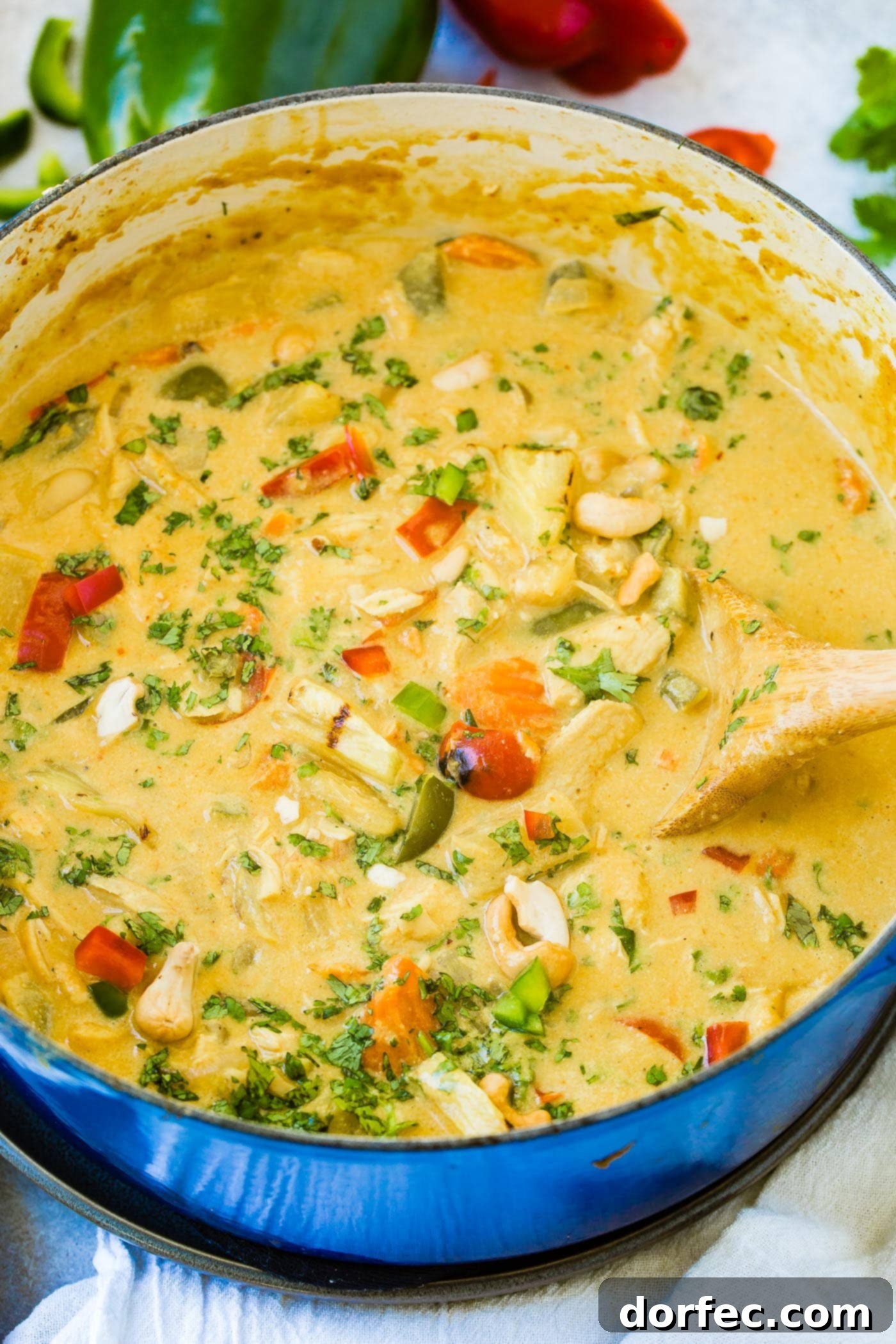
Crafting this delightful Pineapple Coconut Chicken Curry is surprisingly simple, making it an ideal weeknight meal that tastes like it took hours. The process can be broken down into just a few key steps:
- **Prepare the Chicken:** Begin by sautéing your thinly sliced chicken pieces in a pan until they are beautifully browned and cooked through. This step ensures the chicken is tender and flavorful, providing a solid foundation for the curry.
- **Build the Aromatic Base:** In the same pot, add a splash of oil, then introduce the aromatic powerhouses: fresh ginger, minced garlic, and your chosen curry paste and powder. Sauté these ingredients briefly until their intoxicating fragrances fill your kitchen, typically about one minute. This crucial step “blooms” the spices, releasing their full potential.
- **Simmer to Perfection:** Finally, incorporate the remaining ingredients, excluding the cashews, into the pot. Bring the mixture to a gentle simmer, then reduce the heat to medium-low. Allow the curry to cook, covered, for at least 20-30 minutes, or even up to 2 hours if time permits. The longer simmer allows all the diverse flavors to thoroughly meld and deepen, creating a more complex and satisfying sauce.
That’s truly all there is to it! Despite its rich appearance and seemingly complex layers of flavor, this recipe is incredibly approachable. It can be a speedy 30-minute meal when you’re short on time, or a slow-simmered masterpiece if you have the luxury of letting the flavors develop further. Either way, the result is a comforting and exotic dish that will undoubtedly impress.
Will Coconut Milk Naturally Thicken My Curry?
Contrary to a common misconception, adding coconut milk does not inherently thicken a curry sauce. In fact, full-fat coconut milk primarily contributes to the sauce’s creaminess and richness, but it can actually thin out the consistency if added in large quantities or without proper simmering. Its main roles are to provide that signature coconut flavor, impart a silky texture, and help balance or mellow out the spiciness of the curry.
Effective Ways to Thicken Your Curry
If you prefer a thicker, more luxurious curry sauce, here are a few reliable methods:
- **Low and Slow Simmer (Uncovered):** The most natural way to thicken your curry is by allowing it to simmer gently without a lid. As the liquid evaporates, the sauce will naturally reduce and concentrate, resulting in a thicker consistency and more intense flavor. Be patient with this method, as it takes time.
- **Cornstarch Slurry:** For a quicker and more controlled thickening, prepare a slurry by whisking together equal parts cornstarch and cold water (e.g., 1 tablespoon cornstarch with 1 tablespoon water). While your curry sauce is boiling, gradually whisk in the slurry. Once combined, reduce the heat to a simmer and continue cooking for a few minutes until the sauce visibly thickens to your desired consistency.
- **Yogurt or Tomato Paste (with caution):** A small amount of Greek yogurt or tomato paste can also help to thicken a curry and add an extra layer of flavor. If using yogurt, stir it in at the very end to prevent curdling, and ensure it’s at room temperature. Tomato paste not only thickens but also adds a rich, umami depth, though it will alter the flavor profile.
For most of our curries, we typically rely on the first two methods – simmering uncovered for natural reduction and using a cornstarch slurry when a faster, more significant thickening is needed. These techniques allow us to maintain the authentic flavor profile of the curry while achieving the perfect texture.
Is Coconut Curry Exclusively Indian?
No, coconut curry is not exclusively Indian! While Indian cuisine features many fantastic curries, coconut curry is a staple in various culinary traditions across Asia, most notably in Thai cooking, but also in Sri Lankan, Malaysian, and Indonesian cuisines. Both Thai and Indian coconut curries are incredibly delicious, each with its distinct characteristics and regional variations. While Thai curries often lean on fresh curry pastes (red, green, massaman, yellow) and are known for their vibrant, aromatic qualities, Indian curries frequently use a wider array of dried spices and can range from mild and creamy to intensely hot and complex. The beauty of coconut curry lies in its adaptability, allowing for diverse flavor profiles depending on the spices, herbs, and other ingredients used by the chef or region.
Is Coconut Curry Inherently Spicy?
Not necessarily! Coconut curry is generally considered to be a milder form of curry, especially when compared to some of its fiery counterparts. The creamy, rich coconut milk acts as a wonderful balancer, mellowing out the heat from the chilies and spices. However, the spiciness level is highly customizable and ultimately depends on the cook’s preference and the type and quantity of curry paste or powder used. If you prefer a milder curry, opt for a yellow curry paste, or use less of a spicier red or green paste. You can always add more heat (like a pinch of red pepper flakes) at the end if desired, but it’s harder to remove heat once it’s incorporated. Our Pineapple Coconut Chicken Curry recipe aims for a balanced, sweet, and lightly spiced profile that appeals to most.
Choosing the Best Coconut Milk for Thai Curry
When it comes to Thai curries, the choice of coconut milk truly matters. You might typically reach for any red can of coconut milk on the shelf, and while many brands are perfectly acceptable, we’ve discovered that some truly stand out. Our go-to for consistently excellent results is Chaokoh coconut milk. Its rich, creamy texture and balanced flavor significantly enhance the authenticity and deliciousness of Thai-inspired dishes. Look for full-fat, unsweetened coconut milk for the best body and flavor in your curry. Remember to shake the can well before opening, or if you prefer to separate the cream, refrigerate it overnight and scoop the thick cream from the top.
Is Coconut Curry Sauce Inherently Vegan?
Yes, the base coconut curry sauce itself, made from coconut milk, spices, and vegetables, is typically vegan. This makes it a fantastic foundation for plant-based meals. However, it’s crucial to remember that while the sauce is vegan, the overall dish might not be. Many traditional coconut curries, including our recipe, feature chicken or other meats. When dining out or purchasing pre-made curry, always double-check the menu or ingredient list to ensure no non-vegan ingredients (like fish sauce, shrimp paste, or meat) have been added. For a delicious vegan version, simply omit the chicken and add extra plant-based protein like tofu, chickpeas, or a wider variety of vegetables.
Can You Freeze Coconut Curry Chicken?
Freezing coconut curry chicken requires a bit of foresight. Because coconut milk has a tendency to separate and become slightly grainy after thawing and reheating, it’s generally best to avoid adding the coconut milk until you’re ready to reheat and serve the dish. You can prepare and cook the chicken and vegetables with the curry paste and powder, then freeze this base. When you’re ready to enjoy, thaw the base, and then simmer it with fresh coconut milk. If you must freeze the entire prepared curry, be aware that the texture of the sauce might change. To help mitigate separation, stir the thawed curry vigorously during reheating and consider a quick whisk or immersion blender to emulsify the sauce back together, if needed.
How Long Does Coconut Curry Last in the Refrigerator?
If you’re not planning to freeze your coconut curry, it can be a fantastic make-ahead meal or a source of delicious leftovers. When stored properly in an airtight container, homemade coconut curry can safely last for approximately 2-3 days in the refrigerator. Always ensure it’s cooled completely before refrigerating to maintain freshness and prevent bacterial growth. For the best flavor and texture, reheat gently on the stovetop, stirring occasionally, until thoroughly warmed through.
Explore More Delicious Curry Recipes
If you’ve fallen in love with the vibrant flavors of this curry, you’ll be thrilled to discover more of our favorite curry-inspired dishes:
- Easy Coconut Chicken Curry: A foundational recipe for creamy, comforting coconut chicken curry.
- Chicken Curry Casserole: A hearty and convenient twist on traditional curry, perfect for family dinners.
- Curry Chicken and Rice Casserole: An all-in-one baked dish that combines tender chicken, fluffy rice, and rich curry flavors.
What to Serve Alongside Your Flavorful Curry
To complete your curry experience, here are some ideal accompaniments that perfectly complement the rich flavors:
- Perfectly Cooked White Rice: The classic pairing, essential for soaking up every drop of the delicious sauce.
- Warm, Pillowy Naan Bread: Fantastic for scooping up the curry and enjoying its flavors.
- Refreshing Mango Sweet Rice: A delightful and sweet contrast, especially if your curry has a hint of spice.
Pineapple Coconut Chicken Curry
By Sweet Basil
Prep Time: 10 mins
Cook Time: 1 hr
Total Time: 1 hr 10 mins
Servings: 8
A creamy blend of coconut and pineapple curry sauce with chicken, veggies and cashews all served over fluffy white rice!
Ingredients
- 1 Tablespoon Olive oil
- 2 Boneless, skinless Chicken Breasts, sliced thin
- Kosher salt, to taste (starting with 1 teaspoon)
- 2 Tablespoons Curry Paste
- 1/2-1 Tablespoon Curry Powder (we prefer 1/2-3/4 Tablespoon for balance)
- 1 1/2 teaspoons Fresh Grated Ginger
- 6 Cloves Garlic, Minced
- 1 Onion, Sliced
- 1 Red Bell Pepper, Quartered, seeded and sliced
- 1 Green Bell Pepper, Quartered, seeded and sliced
- 1 1/2 Cups Carrots, Sliced
- 2 Cans Unsweetened Coconut Milk (13.5 ounces each)
- 1 2/3 Cups Cream of Coconut (found in the drinks section)
- 6 Ounces Pineapple Juice
- 3/4 Pineapple, Cored and Chopped
- 6 Ounces Whole Cashews
- Cilantro, Chopped for garnish (optional)
Instructions
- In a large stockpot or Dutch oven, heat the stove to medium-high heat and add the olive oil. Once hot, add the thinly sliced chicken and a sprinkle of kosher salt.
- Cook the chicken until no pink remains. Then, add the curry paste, curry powder, grated ginger, and minced garlic. Cook, stirring constantly, until fragrant, which should take about 1 minute.
- Add the sliced onions, red bell pepper, green bell pepper, and carrots to the pot and turn the heat to medium. Cook until the vegetables are tender-crisp, approximately 10 minutes.
- Add all the remaining ingredients, except for the cashews, to the pot. Bring the mixture to a gentle simmer, then reduce the heat to medium-low and allow it to cook for 20-30 minutes, or up to 2 hours for deeper flavor development.
- Just before serving, stir in the whole cashews. Serve the creamy Pineapple Coconut Chicken Curry over perfectly cooked white rice. Garnish with fresh chopped cilantro if desired.
Recipe Notes
This delicious chicken curry will keep well for up to 2-3 days when stored in an airtight container in the refrigerator. Reheat gently on the stovetop.
Nutrition (Approximate)
Serving: 1g, Calories: 508kcal, Carbohydrates: 26g, Protein: 17g, Fat: 40g, Saturated Fat: 33g, Cholesterol: 36mg, Sodium: 100mg, Potassium: 860mg, Fiber: 4g, Sugar: 13g, Vitamin A: 5187IU, Vitamin C: 80mg, Calcium: 63mg, Iron: 5mg
Nutrition information is automatically calculated, so should only be used as an approximation.
Enjoyed this recipe? Leave a comment below and share your thoughts!
Don’t miss out on more delightful recipes! REMEMBER TO SUBSCRIBE TO our FREE Oh Sweet Basil NEWSLETTER and receive easy, inspiring recipes delivered directly into your inbox every day!
When you recreate any of our recipes, we’d love to see your culinary masterpieces! Please use the hashtag #ohsweetbasil on INSTAGRAM for a chance to be featured in our stories! Be sure to FOLLOW OH, SWEET BASIL ON FACEBOOK | INSTAGRAM | PINTEREST | TWITTER for all of our latest content, mouth-watering recipes, and inspiring stories.