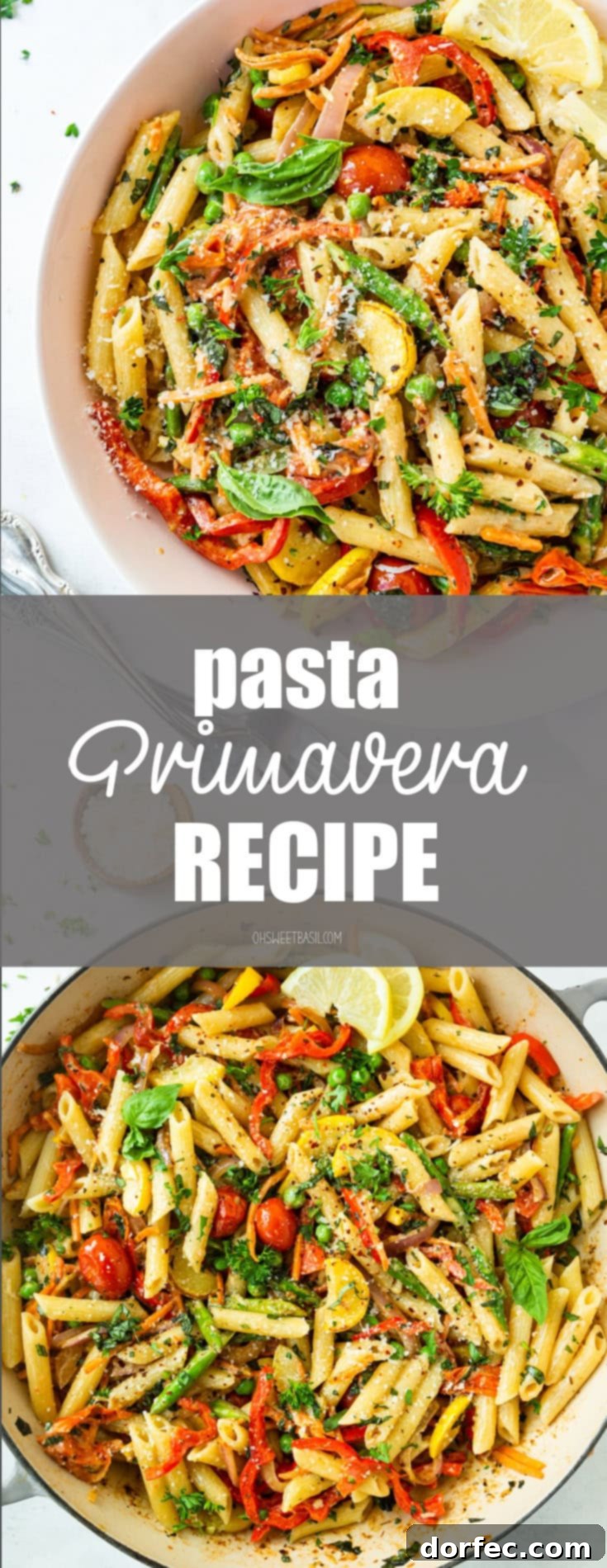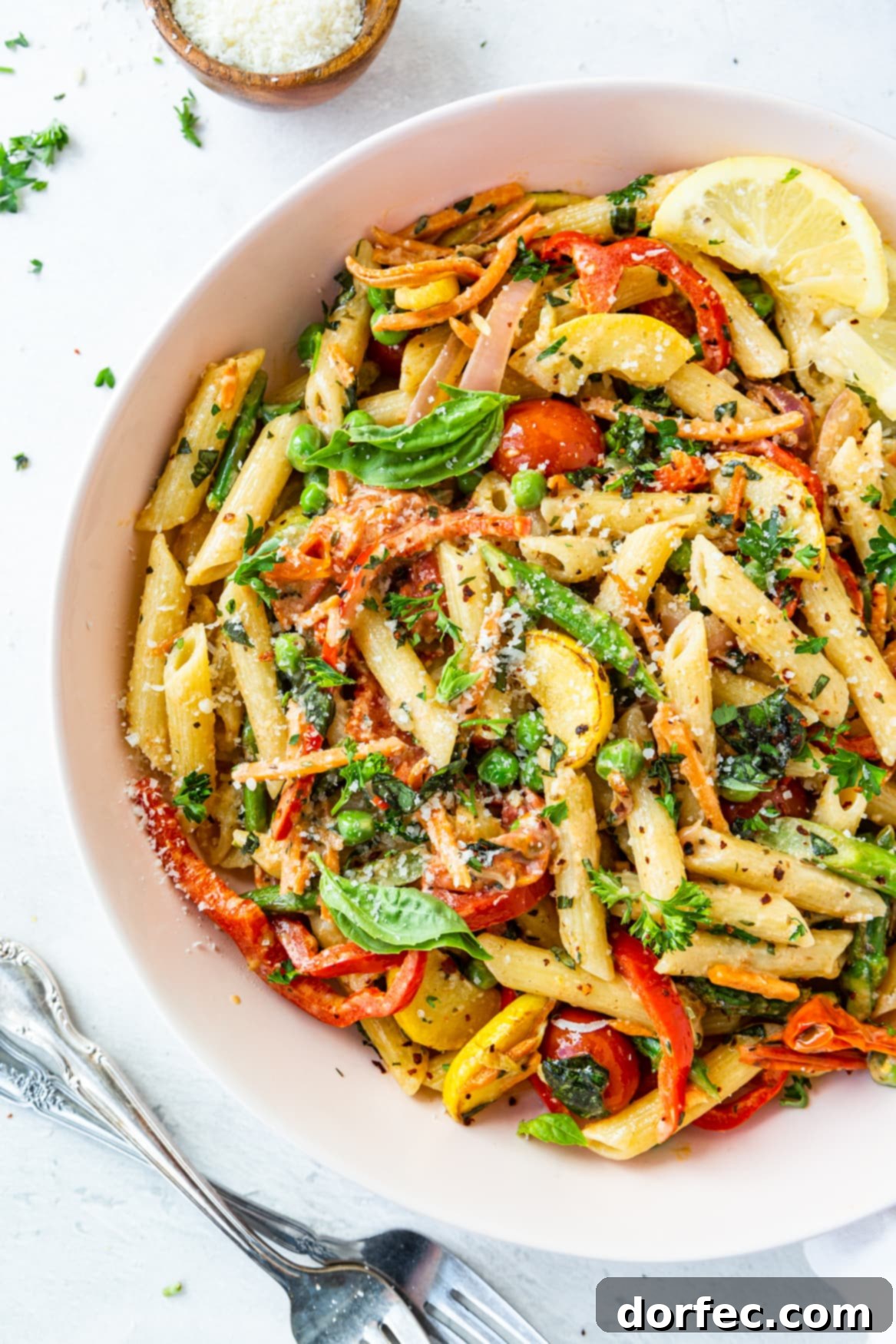
Easy & Delicious Pasta Primavera: Your Ultimate Guide to a Fresh Spring Meal
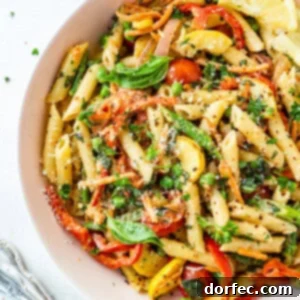
This exquisite Pasta Primavera recipe offers the perfect blend of fresh, vibrant vegetables and a luxuriously creamy sauce, making it an ideal choice for any weeknight or special occasion. Bursting with the flavors of spring, this healthy and satisfying dish is designed to be a crowd-plepleasing favorite that the entire family will adore. Forget heavy, complicated meals; Pasta Primavera is all about celebrating fresh produce with a light yet rich touch.
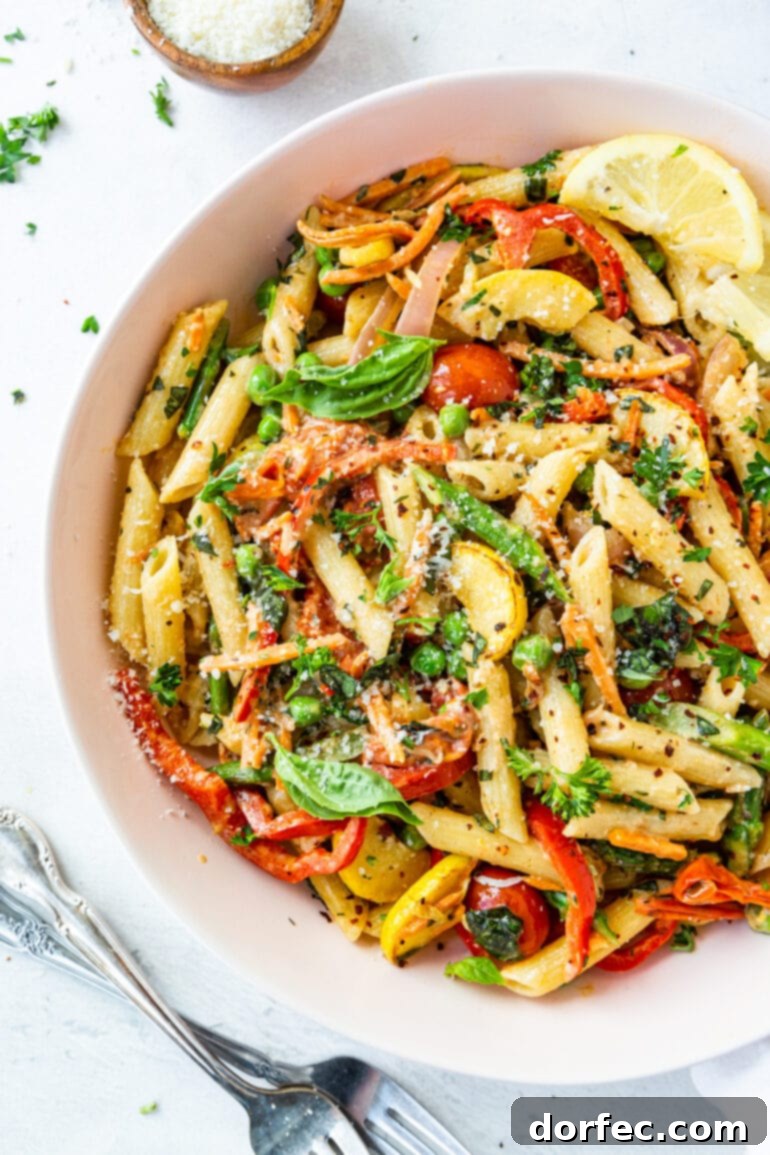
There’s nothing quite like a meal that feels both wholesome and incredibly indulgent, and this Pasta Primavera recipe perfectly fits the bill. After a busy week, I often crave something light, yet undeniably flavorful, and this pasta dish consistently delivers. As huge fans of asparagus, we find its inclusion particularly exciting, adding a delightful crisp-tender texture and distinct taste that elevates the entire dish.
Despite being a completely meatless meal, you won’t feel like you’re missing out on anything. In fact, enjoying vegetarian meals every now and then is a wonderful way to lighten up your diet without sacrificing flavor. For those who desire a protein boost, this dish is incredibly versatile. Imagine adding succulent grilled chicken marinated to perfection, or tender, pan-seared shrimp for an extra layer of deliciousness. The possibilities for customization are endless, making this recipe a truly adaptable culinary masterpiece.
What is Pasta Primavera? Decoding the Seasonal Delight
The term “Primavera” is Italian for “spring,” and in the culinary world, it perfectly encapsulates the essence of this dish. Pasta Primavera is a celebration of fresh, seasonal vegetables, typically served with pasta and a light, creamy sauce. It’s a dish designed to showcase the abundance and vibrancy of produce available during the spring and early summer months.
Unlike heavier pasta dishes, Primavera focuses on a medley of colorful, crisp-tender vegetables, allowing their natural flavors to shine through. The sauce, often a delicate blend of butter, garlic, herbs, and a touch of cream, serves to bind the ingredients together without overpowering the fresh produce. It’s a testament to simple, high-quality ingredients creating a truly memorable dining experience.
Essential Ingredients for Your Perfect Pasta Primavera
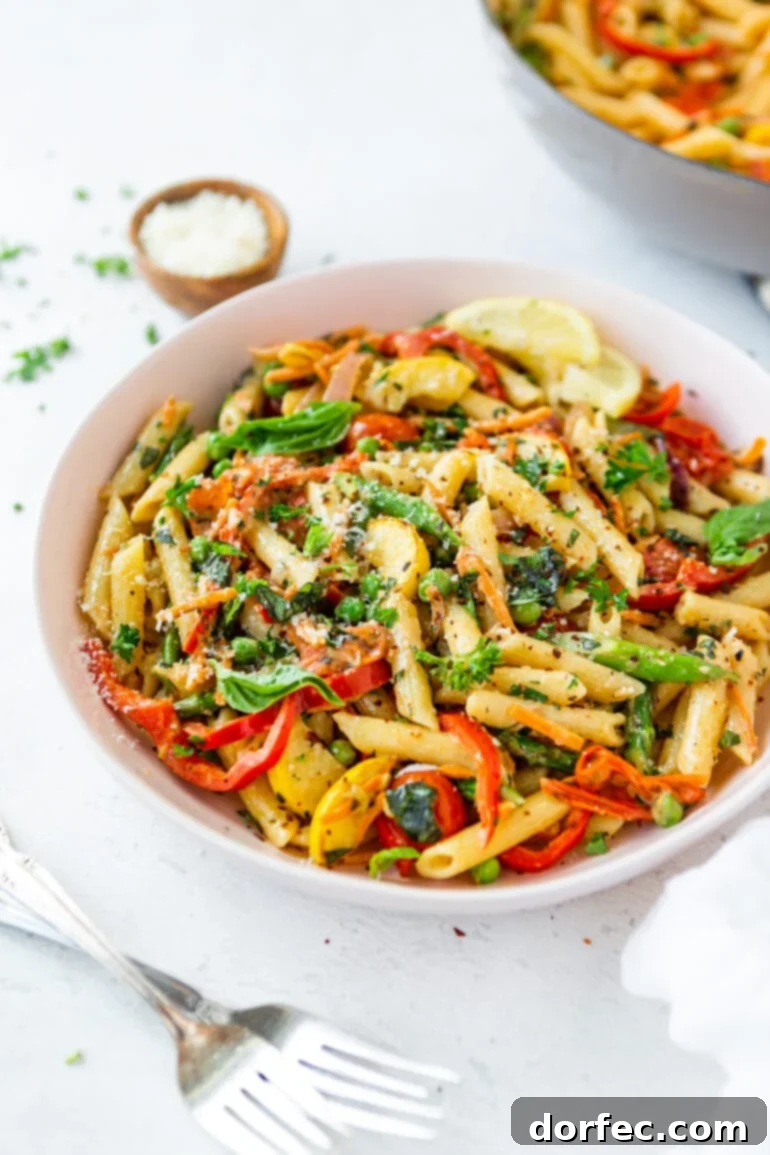
The beauty of Pasta Primavera lies in its flexibility. While we provide a list of our favorite fresh vegetables for this particular pasta recipe, feel free to substitute with whatever seasonal produce you have on hand or prefer. The key is to select fresh, high-quality ingredients that will contribute to the dish’s vibrant flavors and textures. Here’s a breakdown of what you’ll typically need:
- Pasta: Penne pasta is an excellent choice due to its ability to hold the creamy sauce and catch all the delicious vegetables. However, any bite-sized pasta will work beautifully. Consider orecchiette, rigatoni, farfalle (bow-tie), or fusilli for delightful variations.
- Core Vegetables: Our go-to selection includes tender asparagus spears, sweet yellow squash, crisp matchstick carrots, vibrant red bell pepper, pungent red onion, juicy grape or cherry tomatoes, and sweet peas. This combination offers a fantastic balance of flavors, colors, and textures.
- Other Excellent Options: Broccoli florets, green beans, fresh spinach, Brussels sprouts, or zucchini can all be fantastic additions, allowing you to tailor the dish to your taste and seasonal availability.
- Creamy Sauce Base: The sauce is deceptively simple yet incredibly flavorful. You’ll need unsalted butter, fresh garlic (minced or pressed), the bright zest and juice of a lemon, a touch of reserved pasta water (the starchy secret to a luscious sauce!), rich heavy cream, and freshly grated Parmesan cheese.
- Aromatic Seasoning: Elevate your Primavera with dried Italian seasoning, a pinch of red pepper flakes for a subtle kick (optional but recommended), and a generous scattering of fresh basil leaves and fresh curly parsley for a burst of herbaceous freshness.
Precise measurements and detailed quantities for all ingredients are provided in the comprehensive recipe card below, ensuring you have everything you need to create this masterpiece.
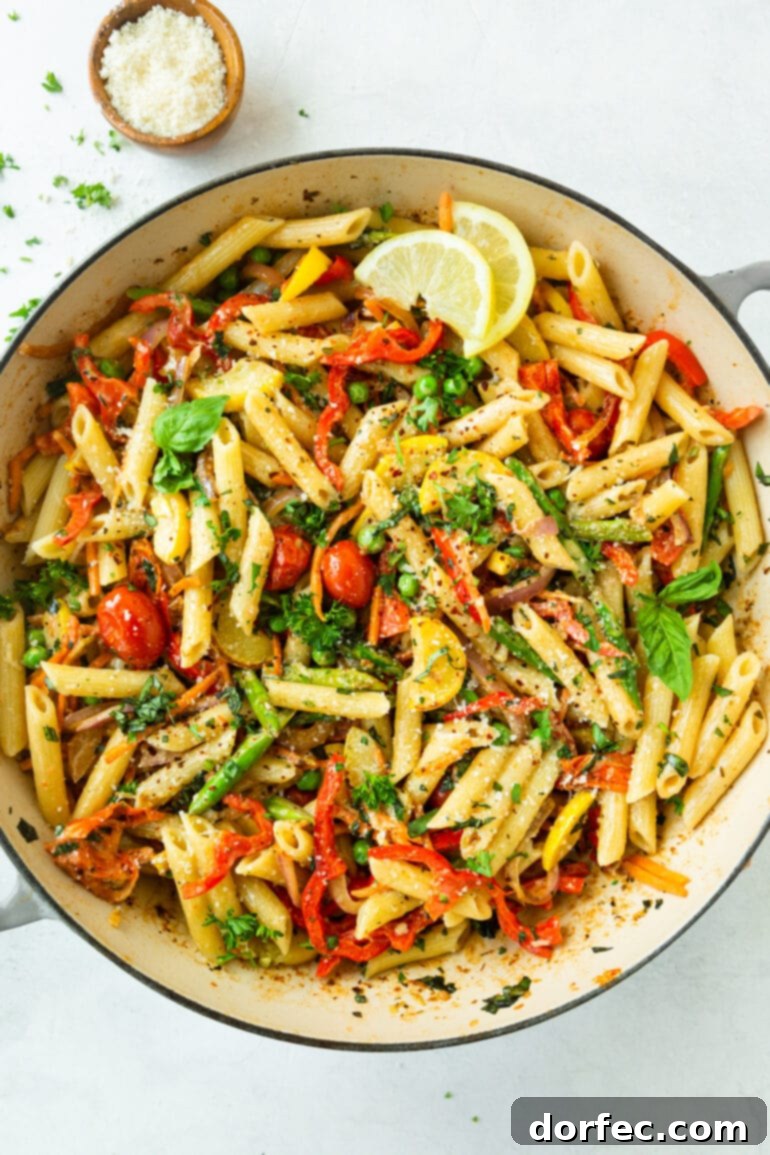
Step-by-Step Guide: Crafting Your Perfect Pasta Primavera
Creating this delightful Pasta Primavera is a straightforward process, focusing on layering flavors and textures to achieve a harmonious dish. Follow these steps for a truly exceptional meal:
- Prepare the Pasta: Begin by bringing a large pot (approximately 4 quarts) of water to a rolling boil. Add a generous handful of salt to the boiling water – this seasons the pasta from within. Add your chosen pasta (like penne) and cook until it reaches an al dente texture, meaning it’s firm to the bite. It’s crucial not to drain the pasta water completely, as you’ll need some for the sauce later. Carefully remove the cooked pasta from the pot using a slotted spoon or spider, transferring it to a colander. Set aside about 1 cup of the starchy pasta cooking liquid.
- Sauté the First Batch of Veggies: Heat a large skillet over medium-high heat and add a tablespoon of olive oil. Add the asparagus, red onions, and red bell peppers to the hot skillet. Sauté for 2 to 3 minutes, stirring occasionally, until they are slightly tender-crisp. You want them to retain a bit of their bite. Once cooked, transfer these vegetables to a plate and set aside.
- Cook the Remaining Vegetables: To the same skillet, add the yellow squash and matchstick carrots. Season lightly with salt and freshly ground black pepper. Cook for another 1 to 2 minutes, stirring, until these vegetables are tender yet still have a pleasant crunch. Add these cooked vegetables to the plate with the asparagus, onions, and peppers.
- Bloom the Aromatics: In the now-empty skillet, melt the unsalted butter over medium heat until it becomes foamy. Add the minced garlic and lemon zest, stirring for about 30 seconds until fragrant. This “blooming” process helps to release their full aroma and flavor. Stir in the dried Italian seasoning and a pinch more salt.
- Sauté the Tomatoes: Add the grape or cherry tomatoes to the skillet with the aromatics. Cook, stirring occasionally, until the tomatoes begin to brown slightly and soften.
- Create the Sauce Base: Pour in about ½ cup of the reserved starchy pasta water. Bring the mixture to a boil, then reduce the heat to a gentle simmer. Continue to simmer for about five minutes, or until the tomatoes start to burst. You can gently press on some of the tomatoes with the back of a wooden spoon to help them burst and release their juices, aiming for about half of them to burst.
- Add Peas and Cream: Stir in the fresh or frozen peas. Then, pour in the heavy cream and fresh lemon juice. Add half of the freshly grated Parmesan cheese and stir until everything is well combined and the cheese has melted into the sauce. Reduce the heat to low and let the sauce gently simmer for a few minutes, allowing it to slightly thicken.
- Combine and Toss: Return all the sautéed vegetables, chopped fresh basil, and the cooked pasta to the large skillet with the simmering sauce. Toss everything gently to ensure the pasta and vegetables are evenly coated in the creamy, flavorful sauce.
- Garnish and Serve: Transfer the Pasta Primavera to a large serving bowl. Sprinkle the remaining Parmesan cheese, fresh curly parsley, and red pepper flakes (if using) over the top. Serve immediately and enjoy the delightful flavors of spring!
For your convenience, these complete instructions, along with ingredient quantities, are also detailed in the recipe card at the end of this article.
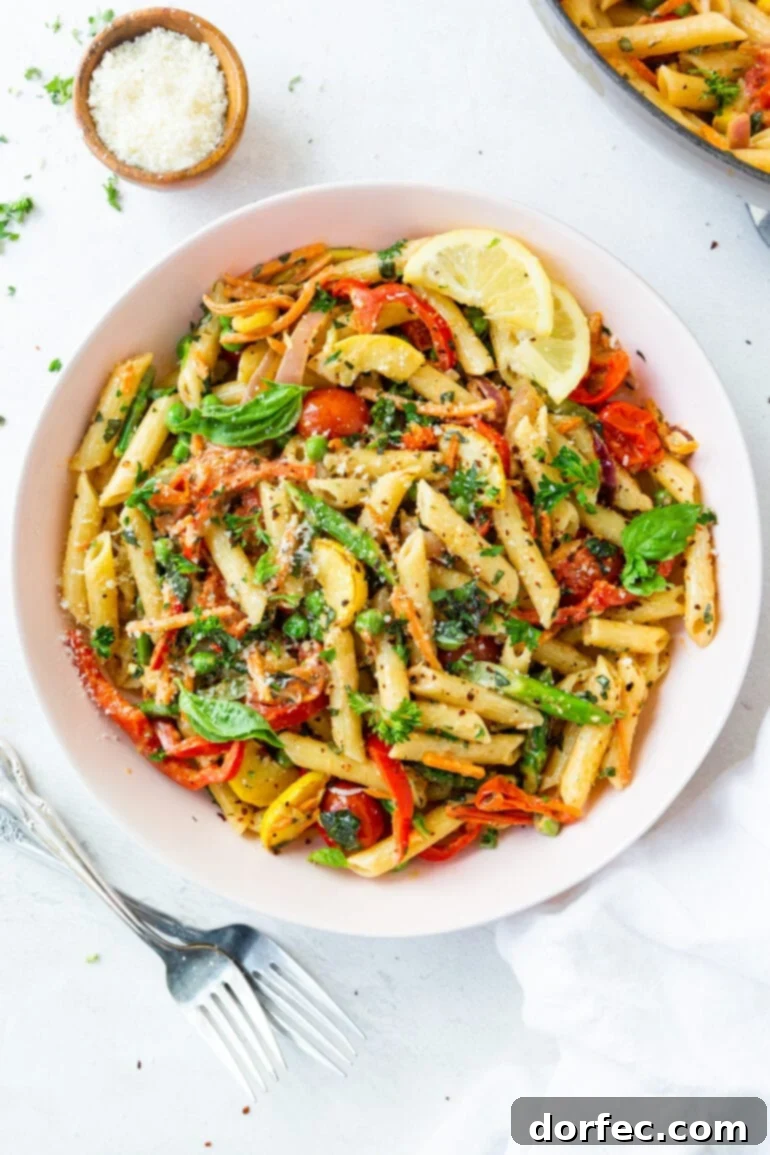
The Secret to a Luscious Pasta Primavera Sauce
The sauce for Pasta Primavera is wonderfully simple, yet it’s what truly ties the entire dish together. Its base relies on a culinary secret often overlooked: the starchy water from cooking the pasta. This reserved water is invaluable as it helps to emulsify the sauce, creating a silky, clinging texture that coats every piece of pasta and vegetable beautifully. When combined with rich heavy cream and savory Parmesan cheese, it forms a foundation of unparalleled deliciousness.
To further enhance the flavor profile, fresh lemon juice is added. This burst of citrus provides a vital brightness and acidity that cuts through the richness of the cream, balancing the flavors and making the dish taste incredibly fresh and vibrant. The simplicity of these components working in harmony is truly what makes the Primavera sauce so special and effective.
Choosing the Best Vegetables for Your Pasta Primavera
Since vegetables are the star of any Pasta Primavera, selecting the right ones is key. The good news is, almost any vegetable can be a fantastic addition! As a huge vegetable enthusiast, I believe the more, the merrier. The goal is to create a colorful and flavorful medley that celebrates the season.
We particularly love using vegetables with big, bold flavors and varying textures that hold up well to a quick sauté. Think crunchy bell peppers, sweet onions, juicy tomatoes, and tender asparagus. Beyond our core list, consider incorporating:
- Leafy Greens: Fresh spinach or arugula can be stirred in at the very end for a wilted, nutrient-rich boost.
- Cruciferous Veggies: Small broccoli or cauliflower florets, or even thinly sliced Brussels sprouts, add a satisfying bite.
- Root Vegetables: Diced carrots or parsnips can add sweetness and earthy notes.
- Summer Squashes: Zucchini and yellow squash are classic choices, offering a delicate flavor and soft texture.
- Legumes: Sugar snap peas or snow peas can add another layer of fresh sweetness and crispness.
Aim for a variety of colors and textures to make the dish visually appealing and exciting with every bite. Don’t be afraid to experiment with what’s fresh and in season at your local market!
Achieving Perfect Al Dente Pasta Every Time
The foundation of any great pasta dish is perfectly cooked pasta, and for Pasta Primavera, that means aiming for “al dente.” Al dente, an Italian phrase meaning “to the tooth,” describes pasta that is cooked to be firm when bitten, rather than soft or mushy. It should have a slight resistance, a pleasant chewiness that provides a delightful contrast to the tender vegetables and creamy sauce.
The best and most reliable way to determine if your pasta is done is simply to taste it a minute or two before the package directions suggest. Take a piece out of the boiling water, let it cool slightly, and then bite into it. If it offers a slight resistance but is cooked through, it’s al dente. A common misconception is that pasta is done if it sticks to the wall – this is actually a sign of overcooked pasta, which can result in a gummy texture and loss of flavor.
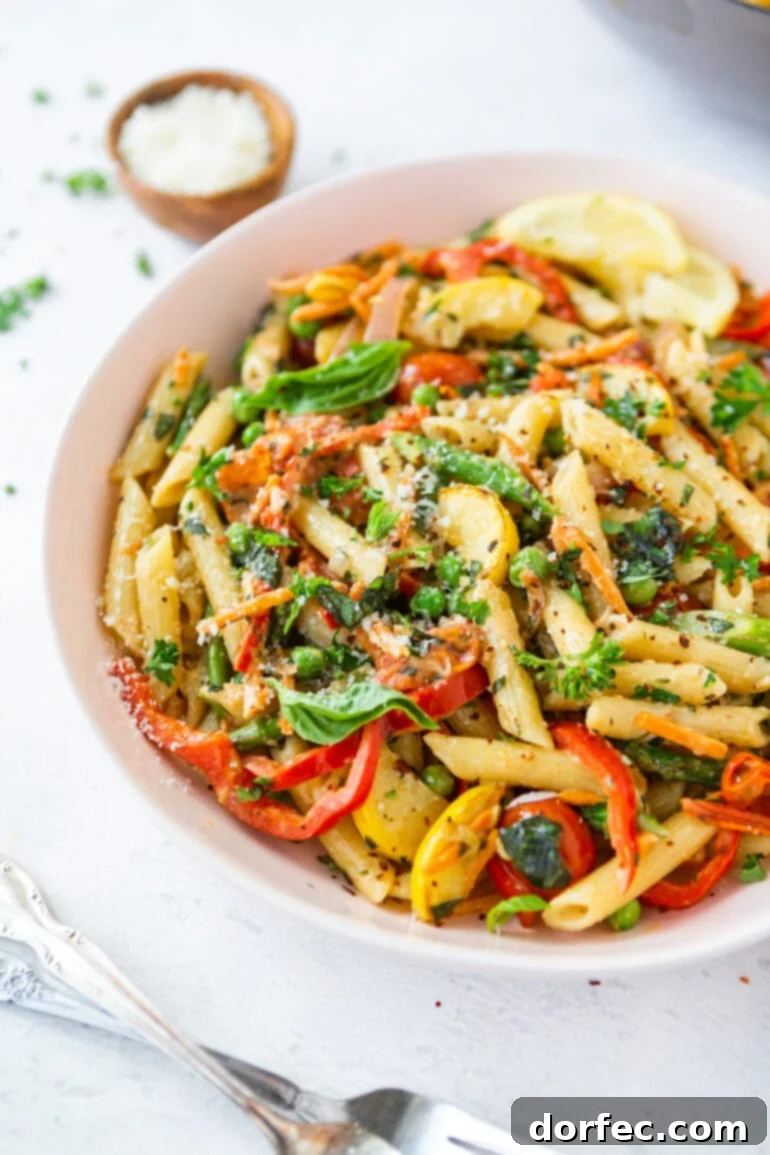
Reheating and Storing Your Pasta Primavera for Best Results
Enjoying leftover Pasta Primavera is absolutely possible, and with the right techniques, you can maintain its delicious flavor and texture. Reheating pasta that has already been tossed with sauce can be done effectively in a few ways:
- Oven Baking: For a larger portion or if you prefer a slightly crispier edge, bake the pasta in a foil-covered baking dish at 350 degrees Fahrenheit (175 degrees Celsius) until thoroughly heated through. A splash of extra broth or water can help keep it moist.
- Stovetop Reheating: Gently warm the pasta in a sauce pan over medium-low heat, stirring occasionally. You might want to add a tablespoon or two of water or broth to prevent it from drying out and to revive the creamy sauce.
- Microwave: For individual servings, reheat the pasta, covered, in the microwave. Stir halfway through to ensure even heating. Again, a tiny bit of liquid can prevent dryness.
Plain pasta, without sauce, is often best reheated on the stovetop. Bring a large pot of water to a boil, place the plain pasta in a strainer, and dip it into the boiling water for a minute or two until hot. This method prevents it from becoming soggy or clumping.
When storing cooked pasta tossed with sauce, it will typically keep for 4 to 5 days in the refrigerator. Always transfer the leftovers to an airtight container to preserve freshness and prevent odors from permeating other foods in your fridge.
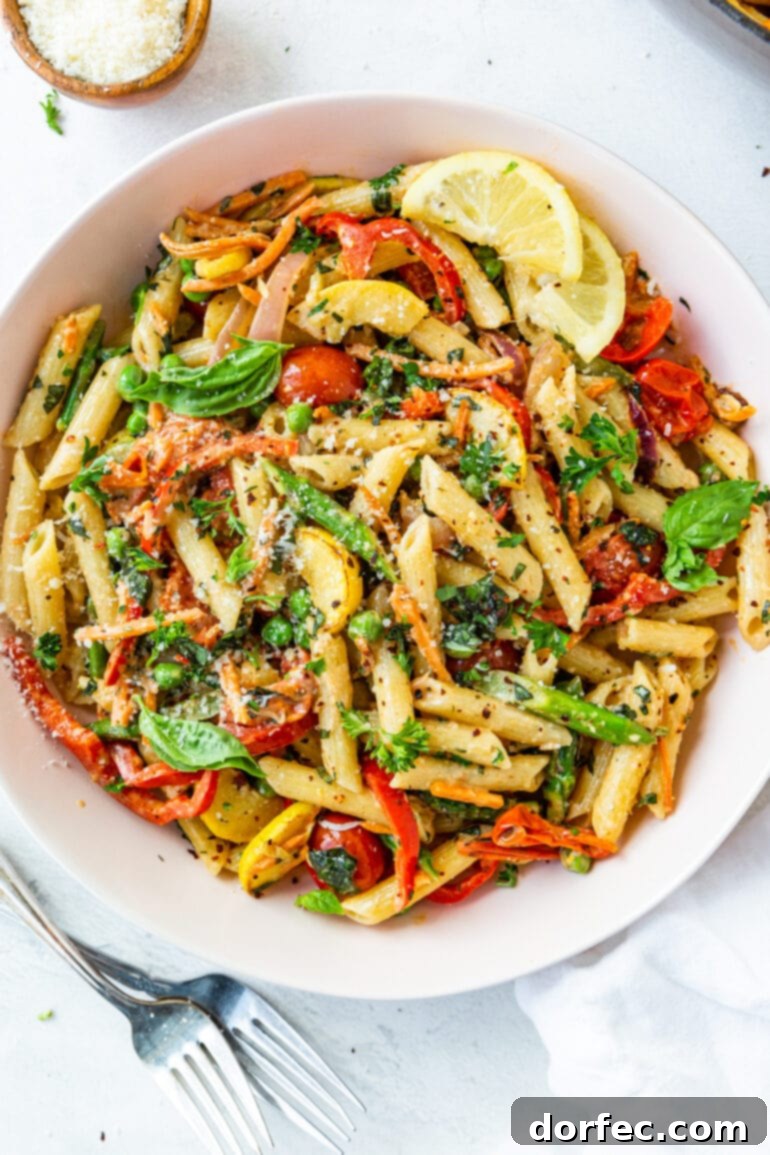
This exquisite recipe for easy Pasta Primavera is more than just a meal; it’s an invitation to savor the freshest flavors of the season. With its rich yet light creamy sauce and a medley of vibrant vegetables, this pasta dish is guaranteed to become a cherished family favorite, bringing smiles and delicious nourishment to your table.
More Irresistible Pasta Recipes You’ll Love:
- 20 Minute Tomato Basil Angel Hair Pasta
- Hearty Beef Ragu and Pasta
- Savory Roasted Garlic Tomato Basil Orzo
- Quick 15 Minute Pesto Pasta
- Spring Ham and Asparagus Lemon Cream Pasta
- Rich & Creamy Mushroom Pasta
- Skillet Italian Sausage and Penne Pasta
Pasta Primavera Recipe Card
By Sweet Basil
Prep Time: 10 mins
Cook Time: 45 mins
Total Time: 55 mins
Servings: 6
Summary
This delicious and easy Pasta Primavera recipe is perfect for a weeknight meal. Loaded with fresh veggies, flavorful herbs and tossed in a creamy sauce, it’s a crowd-pleasing and healthy dish that the whole family will love.
Ingredients
- 10 Ounces Penne, with reserved pasta water
- 2 Tablespoons Salt
- 1 Tablespoon Olive Oil
- 10 Asparagus Spears, tough ends snapped, halved lengthwise and cut on the diagonal into 3/4″ pieces
- 1/3 Red Onion, sliced
- 1 Red Bell Pepper, sliced thin
- 1 medium Yellow Squash, cut into 1/2″ dice
- 1 Cup Matchstick Carrots
- 3 Tablespoons unsalted Butter
- 3 medium Cloves Garlic, pressed through a garlic press or minced
- 1 Lemon, zested
- 2 teaspoons Dried Italian Seasoning
- 1 Cup Grape Tomatoes
- 1/2 Cup Pasta Water, reserved from cooking pasta
- 2 Tablespoons fresh Lemon Juice
- 1 Cup Peas, fresh preferred or frozen
- 1/2 Cup Heavy Cream
- 1/2 Cup freshly grated Parmesan
- 1/4 Cup Fresh Basil, chopped
- 1 Tablespoon Fresh Curly Parsley, chopped
- 1/4 teaspoon Red Pepper Flakes, optional
Instructions
- Bring 4 quarts of water to a rolling boil in a large pot for the pasta.
- Add a good handful of salt. Add pasta and cook until al dente or slightly undercooked. Do not drain! Using a spider (a handy kitchen tool), remove pasta from water into a colander. Reserve at least 1/2 cup of the starchy cooking liquid.
- While pasta is cooking, heat a large skillet to medium heat. Add the olive oil, then add the asparagus, onions, and peppers. Sauté for 2 to 3 minutes, stirring occasionally, until slightly tender. Transfer to a separate dish.
- Add the yellow squash and carrots to the skillet, season with salt and pepper, and cook for 1 to 2 minutes or until vegetables are tender yet crisp. Transfer these vegetables to the dish with the asparagus.
- Meanwhile, melt 3 tablespoons of butter in the now-empty skillet over medium-high heat until foamy. Add the garlic and cook for 30 seconds until fragrant.
- Stir in the lemon zest, Italian seasoning, a pinch more salt, and the grape tomatoes, cooking until the tomatoes begin to brown and soften.
- Add 1/2 cup of the reserved starchy pasta cooking liquid. Bring the mixture to a boil and then reduce to a simmer for five minutes – the tomatoes should be starting to burst. If they haven’t, gently push on them using the back of a wooden spoon. You only want about half to burst.
- Add the peas to the skillet.
- Stir in the heavy cream and 2 tablespoons of lemon juice along with half of the Parmesan cheese.
- Reduce heat to medium and simmer until slightly thickened, about 4 minutes.
- Add all the sautéed vegetables, fresh basil, and the cooked pasta into the large skillet. Toss to combine thoroughly.
- Add remaining fresh Parmesan cheese and chopped herbs. Top with red pepper flakes (if desired) and serve immediately!
Recipe Notes
Leftovers will keep in an airtight container in the refrigerator for 2-3 days.
Nutrition
Serving: 1g, Calories: 404kcal, Carbohydrates: 48g, Protein: 13g, Fat: 19g, Saturated Fat: 10g, Polyunsaturated Fat: 1g, Monounsaturated Fat: 6g, Trans Fat: 0.2g, Cholesterol: 43mg, Sodium: 2537mg, Potassium: 539mg, Fiber: 6g, Sugar: 8g, Vitamin A: 5521IU, Vitamin C: 52mg, Calcium: 173mg, Iron: 2mg
Nutrition information is automatically calculated, so should only be used as an approximation.
Like this? Leave a comment below!