
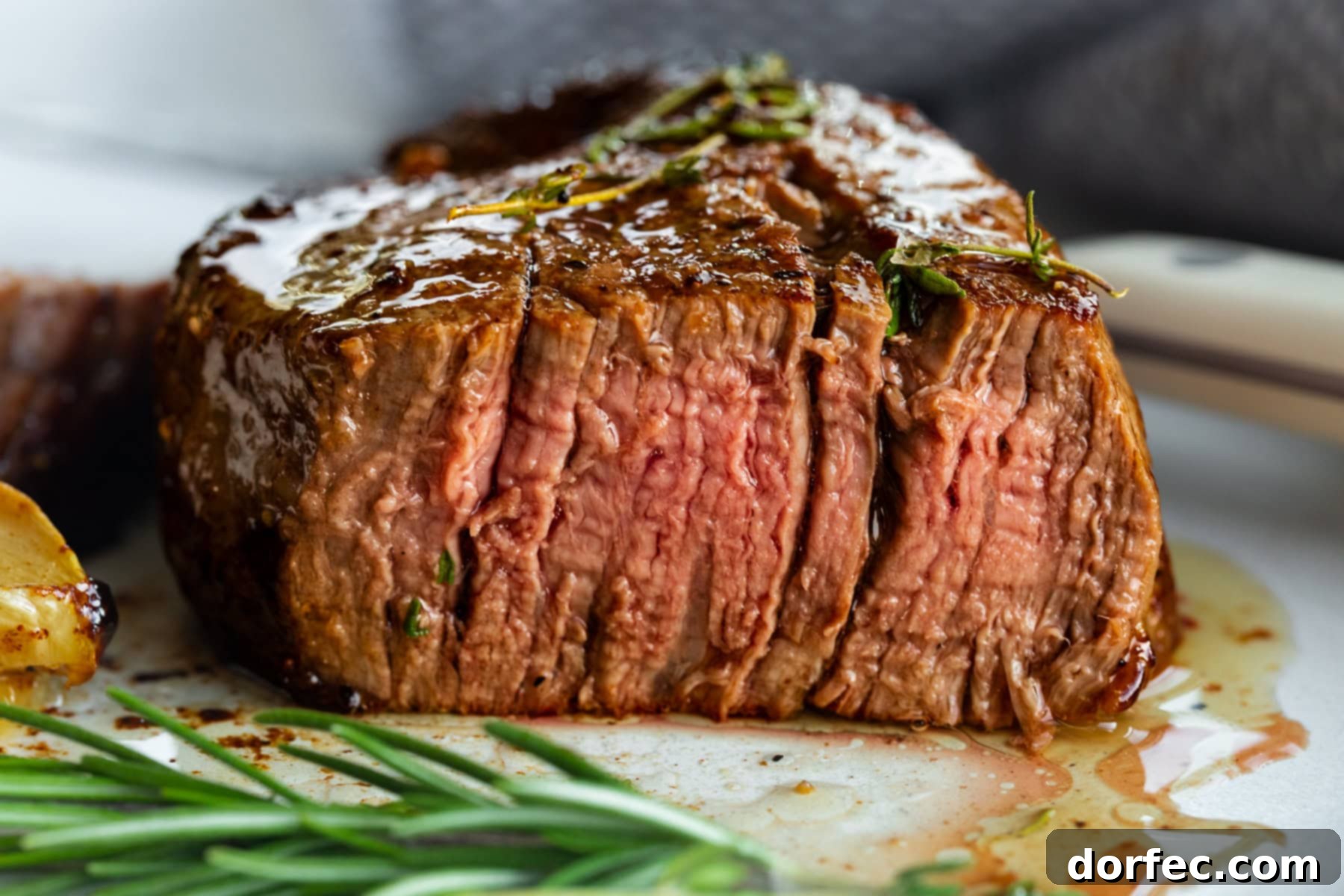
How to Cook Filet Mignon: The Ultimate Guide to a Perfect Steak
Cooking filet mignon might seem intimidating, especially when you’re dealing with such a prized cut of beef. Nobody wants to ruin an expensive steak! But the truth is, with the right knowledge and a few simple techniques, learning how to cook filet mignon the right way is surprisingly easy. In fact, it’s one of the most straightforward and forgiving cuts of beef you can prepare at home.
Forget the grill and complicated chef skills. This is a simple, reliable method that delivers consistent results every time. Get ready for tender, juicy, restaurant-quality filet mignon, cooked to perfection in your own kitchen.

I remember back in college, there weren’t many dining options around. Texas Roadhouse quickly became my favorite spot. I always ordered the Dallas filet, a loaded baked potato (no sour cream, please!), and a house salad with ranch dressing. It was my go-to meal, and I’ve never forgotten that amazing Dallas filet!
Over the years, I’ve become more of a homebody. Is that normal? Does hitting the town lose its appeal as you get older? Well, it’s definitely the case for me. Going out for Valentine’s Day with everyone else sounds… unappealing! So, I’m planning another fancy (but easy) dinner at home this year. Filet mignon is on the menu! All those fancy restaurants can eat their heart out!
Essential Equipment and Ingredients for Cooking Filet Mignon
Cooking perfect filet mignon at home requires minimal equipment. You’ll need a few flavorful ingredients, a high-quality cast iron skillet, and a reliable pair of tongs. That’s really it! A meat thermometer is also a great tool to have if you want to ensure the perfect internal temperature.
Ingredients You’ll Need to Make Filet Mignon
- Filet Mignon Steaks: This is the star of the show! Choose high-quality, tender cuts of beef that are known for their buttery texture and quick cooking time. Filet mignon offers unmatched juiciness.
- PRO TIP: Select steaks that are of similar size to ensure they cook at the same rate. Even cooking is key to achieving a perfect doneness.
- Kosher Salt: Kosher salt is your flavor enhancer. It brings out the natural flavors of the steak and helps create a beautiful, flavorful crust. Don’t skimp on the salt!
- Freshly Ground Black Pepper: Add a touch of warmth and subtle bite with freshly ground black pepper. It balances the richness of the filet mignon without overpowering its delicate flavor.
- High-Heat Cooking Oil: Opt for a neutral oil with a high smoke point, like avocado oil, grapeseed oil, or refined coconut oil. This ensures that your steak browns beautifully without burning or smoking excessively.
- Unsalted Butter: Melted butter is a key ingredient for basting. It adds richness, flavor, and that classic steakhouse taste. Unsalted butter allows you to control the saltiness of the dish.
- Fresh Garlic Cloves: Infuse your butter with savory flavor by adding crushed garlic cloves to the pan as the steak finishes cooking. The aroma alone is incredible!
- Fresh Rosemary Sprigs: Enhance your filet mignon with the subtle, woodsy flavor of fresh rosemary. It adds a touch of sophistication and complexity.
- Fresh Thyme Sprigs: Bring a soft, earthy note to your steak with fresh thyme. It pairs perfectly with beef and butter, creating a restaurant-quality finish.

Step-by-Step Guide: How to Cook Juicy Filet Mignon
Follow these steps for perfectly cooked, tender, and juicy filet mignon every time:
- Preparation is Key: Remove the filet mignon steaks from the refrigerator 30-60 minutes before cooking. This allows them to come to room temperature, promoting even cooking. Generously season each steak with kosher salt and freshly ground black pepper.
- Sear for Flavor: Place your cast iron skillet over high heat and allow it to preheat for 3-5 minutes. The skillet should be very hot. Carefully drizzle in your chosen high-heat cooking oil. Using tongs, gently place the seasoned steaks salted-side down in the hot skillet and sear for 2-3 minutes.
- Flip and Sear Again: Season the other side of the steak with salt and pepper. Using tongs, flip the steaks and sear for another 2-3 minutes, until a rich brown crust forms. Remove the skillet from the heat.
- Oven Finish: Add the unsalted butter, crushed garlic cloves, and fresh rosemary and thyme sprigs to the skillet. Place the skillet into a preheated oven at 475°F (246°C). Cook for approximately 4-7 minutes, depending on the thickness of the steaks and your desired level of doneness.
- NOTE: Use a meat thermometer inserted into the thickest part of the filet mignon to monitor its internal temperature. Remove the steak from the oven when the internal temperature is approximately 5 degrees Fahrenheit (3 degrees Celsius) below your desired doneness. The steak will continue to cook slightly as it rests.
- Rest and Rejuvenate: Remove the skillet from the oven and tent it loosely with aluminum foil. Allow the steaks to rest for 2-5 minutes. This resting period is crucial for allowing the juices to redistribute throughout the meat, resulting in a more tender and flavorful steak. Do not skip this step!
- Baste and Serve: Before serving, baste the filet mignon steaks with the melted butter, garlic, and herb mixture from the skillet. Serve immediately and enjoy!

Achieving the Perfect Doneness: Internal Temperature Guide
Everyone has a preferred level of doneness when it comes to steak. Use a meat thermometer to ensure your filet mignon is cooked to your liking. Here’s a guide to the internal temperatures for filet mignon:
- Rare: 125°F (52°C) – Red center with red juices
- Medium Rare: 130°F (54°C) – Deep pink center with reddish juices
- Medium: 140°F (60°C) – Light pink center with clearer juices
- Medium Well: 150°F (65°C) – Gentle pink center with clear juices
- Well Done: 160°F (71°C) – Fully cooked through, no pink, grey meat
Avoiding Common Mistakes: Tips for Success
To ensure your filet mignon turns out perfectly, avoid these common mistakes:
Starting with a Cold Steak: One of the biggest errors people make when cooking filet mignon is cooking it straight from the refrigerator. Always remove the steaks from the fridge well in advance and allow them to come to room temperature. Cooking a cold steak leads to uneven cooking, resulting in a steak that’s either overcooked on the outside or undercooked on the inside.
Skipping the Sear: Filet mignon benefits greatly from being pan-seared before being finished in the oven. Pan-searing creates a delicious, flavorful crust on the outside of the steak, enhancing its overall taste and texture. However, searing alone isn’t enough to cook the steak all the way through. Finishing in the oven ensures the steaks reach a safe and desirable internal temperature. This combination of searing and oven-finishing is the best way to cook filet mignon for a perfectly cooked steak.
Rushing the Resting Period: Once your filet mignon is cooked, resist the temptation to cut into it immediately. The resting period is absolutely crucial. During this time, the juices redistribute throughout the meat, resulting in a more tender and incredibly juicy steak. Be patient, and you’ll be rewarded with a melt-in-your-mouth experience.

Side Dish Suggestions: What to Serve with Filet Mignon
For me, the perfect meal consists of filet mignon accompanied by some delicious side dishes. I like to include vegetables, a starch, and a carbohydrate (yes, always bread!). Here are a few of my favorite pairings:
Vegetables: Roasted Broccoli, Grilled Asparagus, or a refreshing Strawberry Spinach Salad
Starch: Creamy Mashed Potatoes, flavorful Roasted Herb Potatoes, or classic Baked Potatoes
Bread: Fragrant Herbed Focaccia, a rustic Crusty Artisan Loaf, or soft and pillowy Potato Rolls
Storing and Reheating Leftover Filet Mignon
Filet mignon is always best enjoyed fresh, but if you happen to have leftovers, they can be stored in an airtight container in the refrigerator for up to 4-5 days. For easy reheating, I recommend slicing the leftovers before storing them.
If you’ve sliced the leftover filet mignon, a quick sear in a skillet on the stovetop is an excellent way to reheat each slice before serving. If the steak is still whole, reheating it in the oven at 250°F (121°C) for 20-25 minutes is ideal. If you’re feeling ambitious, you can even reverse sear each side for about a minute to revive that delicious crust.

So, there you have it! Now you know how restaurants achieve such incredibly tender and flavorful filet mignon. It’s not magic, and it’s certainly not overly complicated. With the correct technique and a bit of confidence, you can cook filet mignon at home that is just as impressive as anything you would order at a fancy restaurant.
Whether you’re preparing an anniversary dinner, a special Valentine’s dinner, or simply craving a truly outstanding steak, this filet mignon steak recipe is one that you’ll find yourself coming back to time and again!
More Elegant Dinner Ideas
- Garlic Butter Steak
- Authentic Italian Bolognese
- Oven Braised Short Ribs
- Whole Roasted Chicken