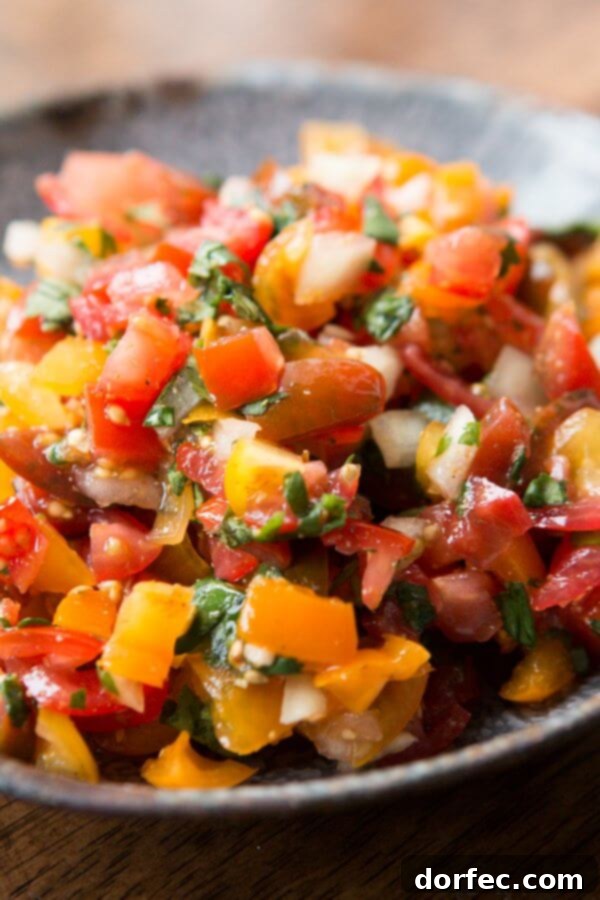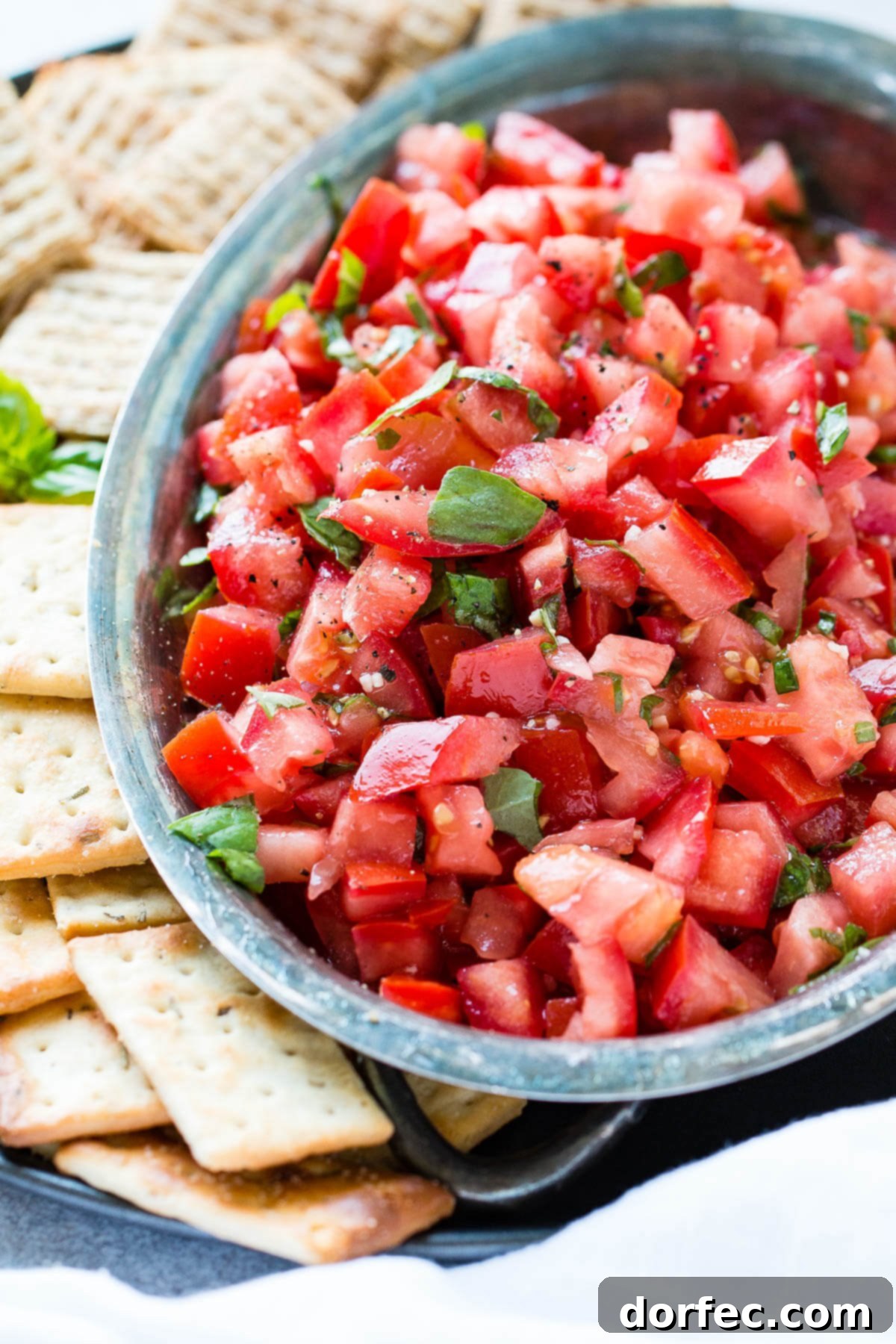
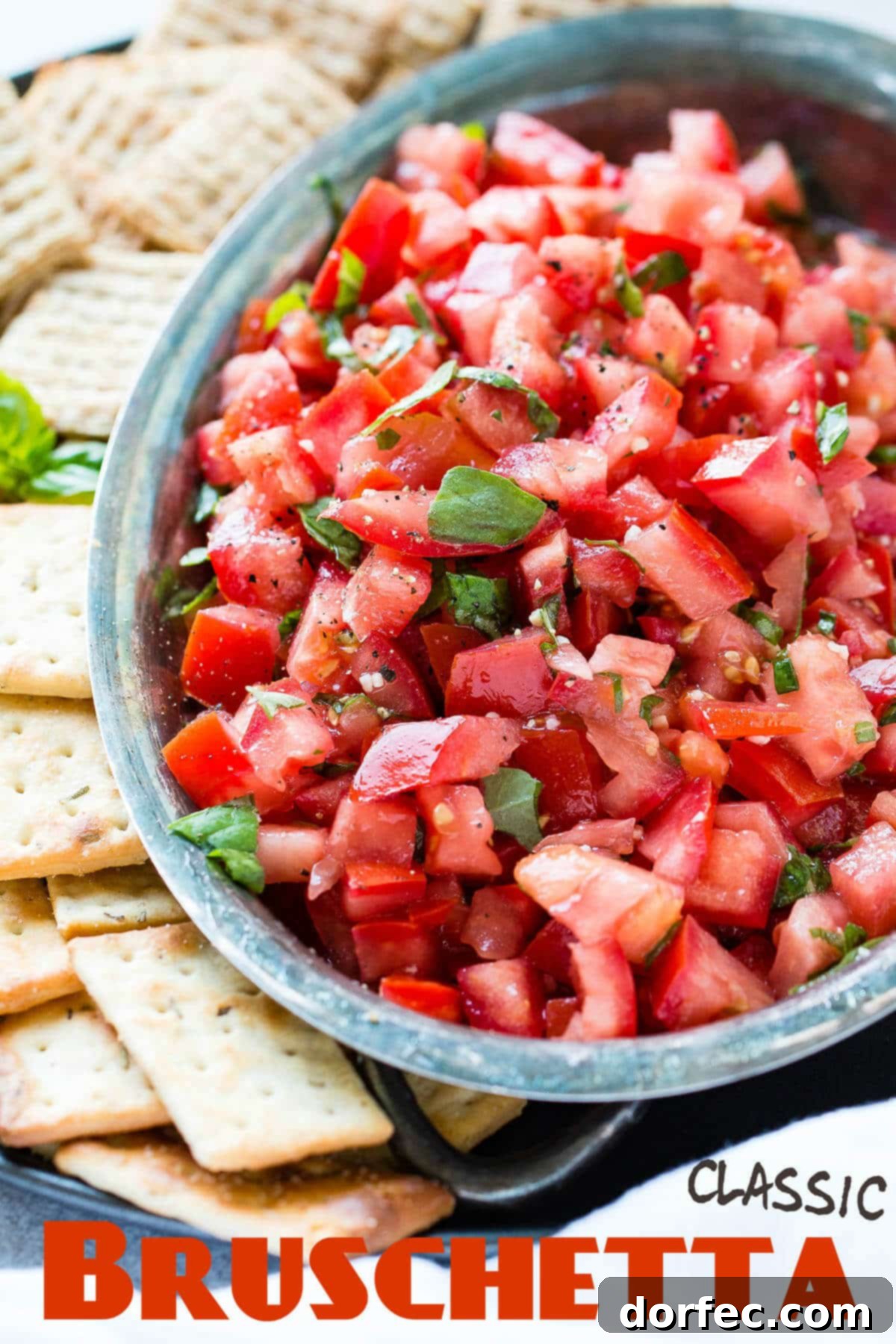
No trip to Italy is required to discover the simple, yet profoundly delicious, classic bruschetta appetizer recipe. This timeless dish is the quintessential way to celebrate the bounty of summer tomatoes or to effortlessly impress your guests during any holiday gathering or casual get-together. It’s a testament to the power of fresh, quality ingredients, brought together in perfect harmony to create an unforgettable culinary experience.
What Exactly is Bruschetta and What Pairs Best With It?
Bruschetta (Italian pronunciation: [bruˈsketta]) is a beloved antipasto (starter dish) originating from Italy. At its core, it consists of grilled bread, traditionally rubbed with fresh garlic, drizzled generously with extra virgin olive oil, and seasoned with a sprinkle of salt. While this minimalist preparation is exquisite in itself, variations often feature vibrant toppings like fresh tomatoes, an array of seasonal vegetables, hearty beans, savory cured meats, or creamy cheeses. As a delightful appetizer, bruschetta is often enjoyed on its own, its flavors a perfect prelude to any meal. However, its versatility allows it to be served alongside a variety of dishes, enhancing the overall dining experience.
For a complete meal, consider pairing bruschetta with light, fresh options. A crisp green salad, a bowl of minestrone soup, or grilled chicken or fish can beautifully complement the fresh flavors of a classic tomato bruschetta. If you’re hosting a party, bruschetta shines brightly as part of a larger spread, perhaps alongside a charcuterie board, an assortment of olives, or other Italian-inspired small bites. The key is to let the vibrant flavors of the bruschetta remain a highlight, allowing it to offer a burst of freshness and texture to your menu.
Mastering the Pronunciation of Bruschetta
Before we dive into crafting this incredible classic bruschetta appetizer recipe, let’s clarify one common point of confusion: its pronunciation. Many people mistakenly say “brush-eh-tuh” or “brush-ey-ta.” However, the correct Italian pronunciation is “brus-KET-tah.” The ‘ch’ in Italian is pronounced like a ‘k’ sound, not a ‘sh.’ So, remember: “Brus-KET-tah.” Getting this right is a small detail that adds an authentic touch to your appreciation of this wonderful Italian dish.
Creative Ways to Serve Bruschetta
Bruschetta is truly a culinary chameleon, incredibly adaptable and a joy to serve. Its simplicity, relying on just a few fresh ingredients, makes it as effortless to prepare as a fresh Mexican salsa, yet its impact is always impressive. While we often enjoy it as a cold appetizer, its potential extends far beyond that. In fact, bruschetta can effortlessly transition from breakfast to dinner, acting as either a light appetizer or a satisfying component of a main dish.
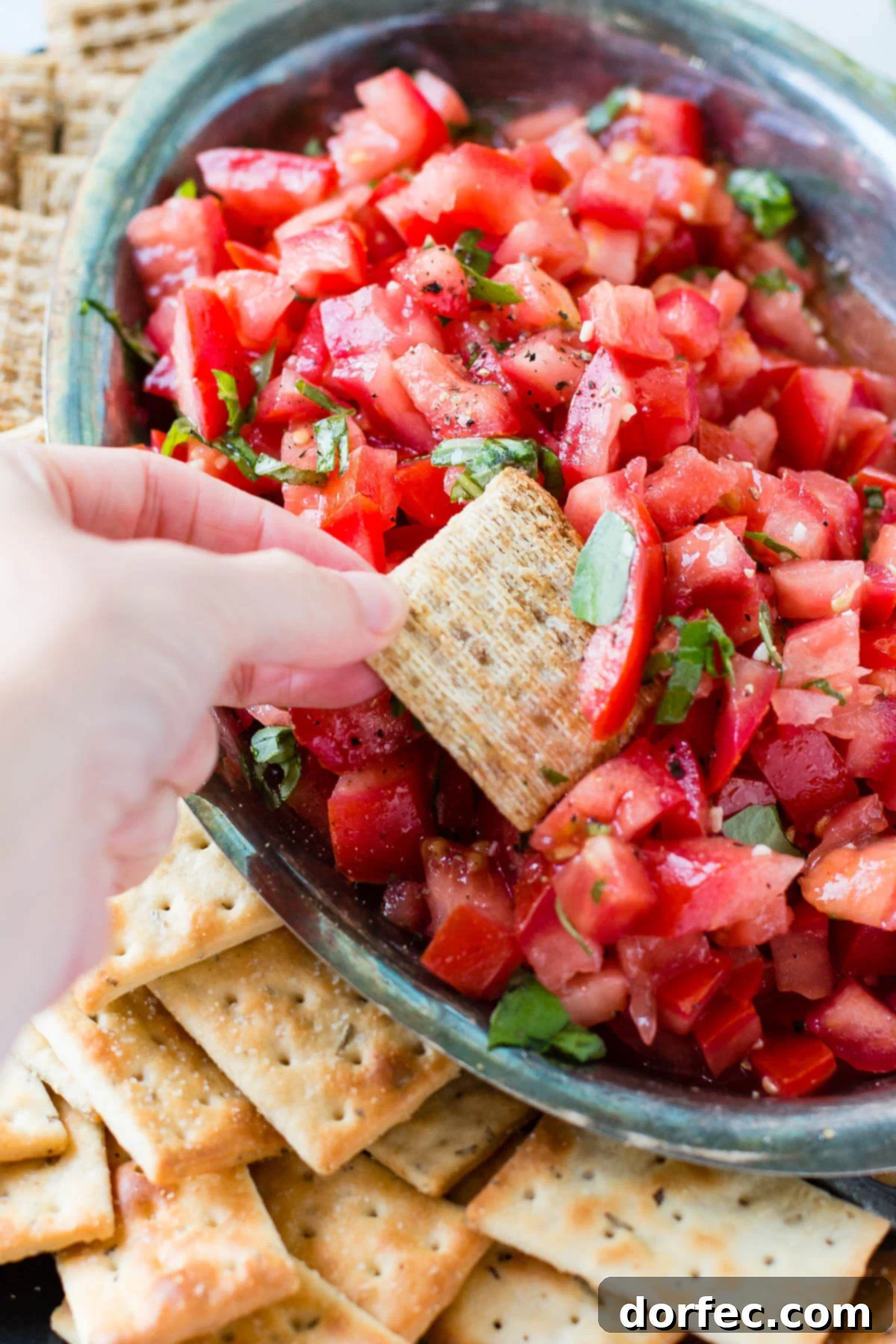
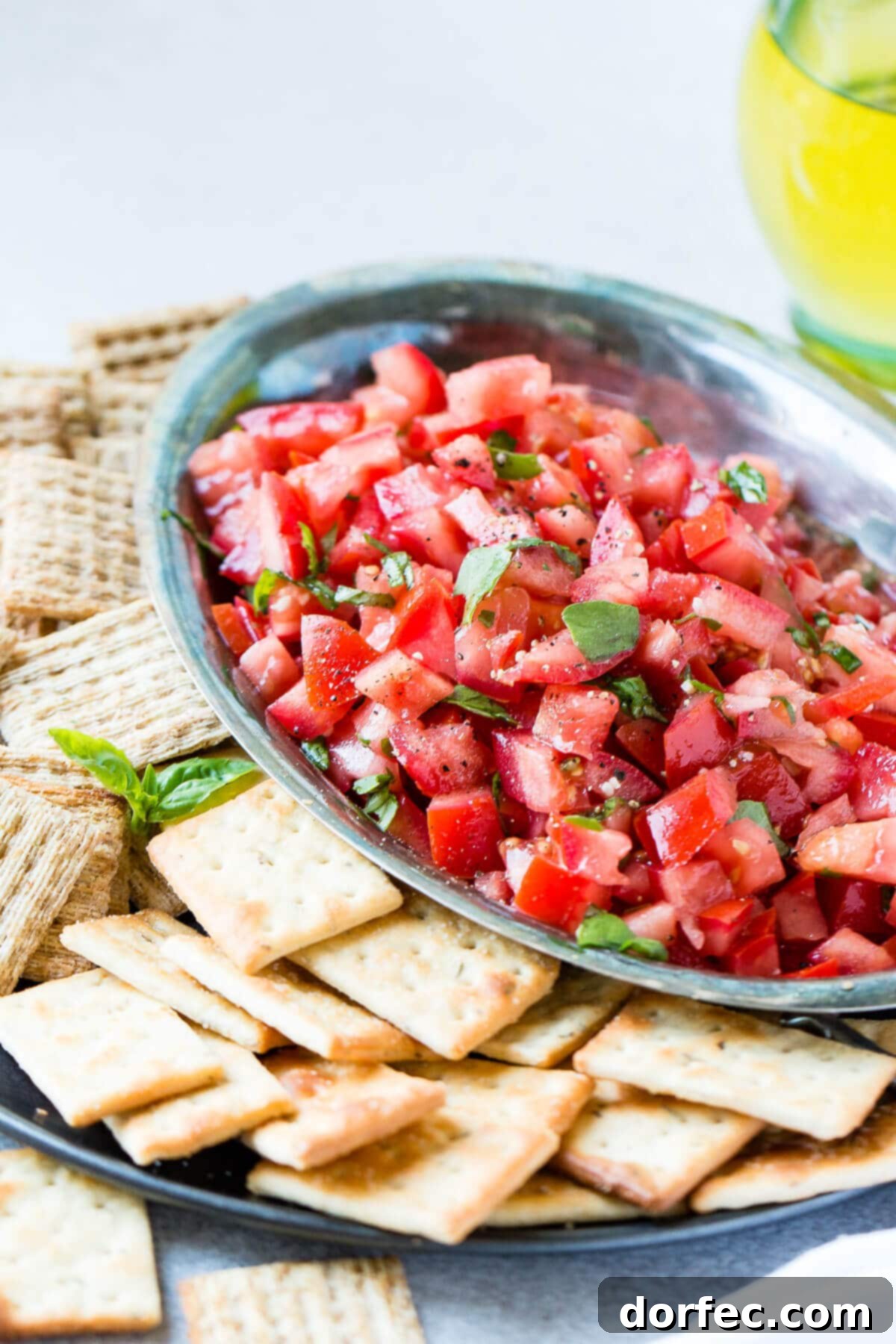
For a quick and convenient option, especially when fresh bread isn’t readily available or you’re short on time, consider using gourmet crackers. Varieties infused with balsamic vinegar and basil, or even light focaccia crackers, offer a fantastic base that requires minimal prep work. Imagine having a healthy, vibrant appetizer ready in under five minutes! This instant solution allows you to savor the incredible flavors of bruschetta without any fuss.
If you’re looking to elevate your meal or incorporate bruschetta into more substantial dishes, the possibilities are endless. Try spooning the fresh tomato mixture over grilled chicken breasts or flaky white fish for a light yet flavorful main course. It also makes a fantastic addition to a fresh green salad, adding a burst of color and tangy flavor. For a delightful breakfast or brunch, use it as a topping for scrambled eggs, a savory omelet, or even simple buttered toast. Its vibrant freshness can brighten up any morning meal. Additionally, consider serving it as a side to pasta dishes, enriching their flavor profile with fresh, seasonal ingredients.
Beyond these suggestions, don’t hesitate to experiment with different pairings. Bruschetta can be a wonderful accompaniment to a glass of chilled white wine, a light craft beer, or even a sparkling non-alcoholic beverage. Its simple elegance makes it perfect for both casual family dinners and more formal entertaining.
Optimal Storage Solutions for Bruschetta
While whole, ripe tomatoes thrive when stored at room temperature on your counter, their shelf life changes dramatically once they are sliced and combined into the bruschetta topping. The moment the tomatoes are cut, they begin to release their juices, and their vibrant flavor starts to diminish, especially when exposed to air. To preserve the freshness and quality of your homemade bruschetta topping, proper storage is essential.
Once assembled, the tomato and basil mixture should be stored in the refrigerator. Unfortunately, the cold environment will, to some extent, “zap” some of the intense fresh flavor from the tomatoes and encourage them to release more liquid. To minimize this effect, we highly recommend storing the mixture in an airtight container. A resealable plastic bag, such as a Ziploc, works exceptionally well. By pressing out as much air as possible before sealing, you reduce oxidation and help maintain the quality of the ingredients. Alternatively, rigid rubber or glass containers with tight-fitting lids are also effective.
For best results, consume the bruschetta topping within 2-3 days. If you plan to make it further in advance, consider preparing the components separately. Toast the bread just before serving to maintain its crisp texture. Dice the tomatoes and chop the basil, storing them in separate airtight containers in the refrigerator. Prepare the olive oil and garlic rub separately as well. Then, combine and assemble everything just before serving for the freshest, most flavorful bruschetta experience. This strategy prevents the bread from becoming soggy and keeps the tomato mixture at its peak vibrancy.
Mastering the Art of Toasting Bread for Bruschetta
The foundation of any great bruschetta is perfectly toasted bread. While using crackers offers a convenient shortcut, embracing fresh bread elevates the dish to another level. The process of toasting your own bread is simple and adds an incomparable aroma and texture that store-bought crackers can’t replicate. If you choose to use fresh bread, which we highly encourage for an authentic experience, follow these steps to achieve ideal results:
- Select the Right Bread: Begin with a fresh, high-quality baguette or a rustic Italian loaf. The crusty exterior and soft, airy interior are perfect for absorbing the flavors of the toppings while providing a satisfying crunch.
- Slice on the Diagonal: Using a serrated knife, slice the bread into half-inch to three-quarter-inch thick pieces on a slight diagonal. This creates larger surface areas for toppings and a more elegant presentation.
- Generous Olive Oil Application: Lightly brush both sides of each bread slice with high-quality extra virgin olive oil. The olive oil is crucial for both flavor and achieving that coveted golden crispness.
- The Garlic Rub: Once toasted, take a freshly sliced clove of garlic and gently rub it over one side of the warm, oiled bread. The heat from the toast will help release the aromatic oils of the garlic, infusing the bread with its pungent flavor without overpowering it. This is a traditional and essential step that sets bruschetta apart.
- A Hint of Sea Salt: If desired, add a tiny pinch of flaked sea salt to the bread after the garlic rub. This enhances the overall flavor profile.
- Bake or Grill to Golden Perfection:
- Oven Method: Arrange the oiled bread slices on a baking sheet. Bake in a preheated oven at 375°F (190°C) for 5-8 minutes, or until beautifully golden brown and lightly crisp. Keep a close eye on them to prevent burning.
- Grill Method: For a smoky flavor, place the oiled bread slices directly on a preheated grill over medium heat. Grill for 1-2 minutes per side, until distinct grill marks appear and the bread is golden and toasted.
- Stovetop Method: In a dry skillet over medium heat, toast the bread for 1-2 minutes per side until golden. This method is great for smaller batches or if you don’t want to turn on the oven.
The goal is a piece of bread that is crisp on the outside but still retains a bit of chewiness on the inside, ready to cradle the fresh tomato topping. If you prefer a less crispy texture on the bottom, simply brush olive oil only on the tops of the bread slices before toasting.
Discovering the Best Bread for Your Bruschetta
Choosing the right bread is a foundational step in creating an exceptional bruschetta. The ideal bread offers a robust structure to hold the toppings, a pleasant chewiness, and a subtle flavor that complements the fresh ingredients without overwhelming them. Several types of bread are excellent candidates:
- Baguette: A classic and popular choice. Its long, slender shape allows for easily sliceable portions, and its thin, crispy crust with a soft interior provides a perfect textural contrast to the juicy toppings. Baguettes are widely available and consistently reliable for bruschetta.
- Italian Loaf (Pane Toscano or Ciabatta): A rustic Italian loaf, especially one with a denser crumb and a sturdy crust, works beautifully. Varieties like Pane Toscano, known for its salt-free dough, or ciabatta, an ancient invention designed to compete with the baguette, are fantastic. Ciabatta, with its irregular holes and chewy texture, is particularly adept at soaking up the olive oil and tomato juices without becoming soggy.
- Sourdough: For those who appreciate a more complex flavor profile, sourdough bread adds a distinctive tang that can beautifully complement the acidity of the tomatoes and the richness of the olive oil. Its hearty crust and chewy crumb also hold up well to generous toppings.
- Artisan Breads: Look for any rustic artisan bread with a good crust and a medium-dense crumb. The key is to avoid overly soft breads that might become mushy or breads with very large holes that make it difficult to keep the topping in place.
Regardless of your choice, the paramount consideration is to ensure the bread is nicely toasted on both sides (unless you intentionally prefer one side softer) but never burned. A golden, aromatic crispness is what you’re aiming for, providing the perfect stage for your fresh bruschetta toppings. The quality of the bread truly makes a difference, so opt for the freshest loaf you can find.
Selecting the Perfect Tomatoes for Bruschetta
The soul of a truly classic bruschetta appetizer recipe lies in the quality of its tomatoes. This is the dish that calls for a visit to your local farmers market. When tomatoes are at their absolute peak during the growing season – bursting with flavor, perfectly juicy, and vibrant in color – that is the prime time to make bruschetta. These seasonal gems offer an unparalleled taste experience that simply cannot be replicated by out-of-season grocery store tomatoes, which often lack the depth of flavor and that beautiful, rich red hue inside.
We particularly love using heirloom tomatoes for bruschetta. Heirloom varieties come in a stunning array of colors, shapes, and sizes, each offering a unique flavor profile, from sweet and mild to tangy and robust. Mixing different heirloom tomatoes not only adds visual appeal to your bruschetta but also introduces a complex richness and depth of flavor that makes each bite exciting. Roma tomatoes are another excellent choice due to their firm flesh and lower water content, making them ideal for dicing without becoming overly watery.
Beyond heirloom and Roma, consider other varieties known for their exceptional flavor:
- Beefsteak Tomatoes: Large, meaty, and very juicy, perfect for a robust bruschetta.
- Cherry or Grape Tomatoes: Small and intensely sweet, these can be halved or quartered for a different textural experience and burst of sweetness.
- San Marzano Tomatoes: While often canned, fresh San Marzanos (if available) are renowned for their balance of sweetness and acidity.
Ultimately, the best tomato is the one that is in season, locally sourced, and bursting with natural flavor. It’s the cornerstone of a genuinely unforgettable bruschetta.
How to Identify a Perfectly Ripe Tomato
Knowing how to spot a perfectly ripe tomato is a crucial skill for making exceptional bruschetta. The ripeness directly translates to the flavor, sweetness, and juiciness of your dish. Here’s what to look for:
- Vibrant Color: A ripe tomato should exhibit a rich, full color characteristic of its variety. For example, a sunburst tomato will be a deep gold, while a Roma or Beefsteak tomato will boast a uniform, deep red. Avoid tomatoes with pale patches or greenish shoulders, as these indicate they were picked too early.
- Heavy for its Size: Pick up a tomato and feel its weight. A ripe tomato will feel surprisingly heavy for its size, indicating a high water content and juiciness. A light tomato is often under-ripe and dry. The more you handle tomatoes, the more attuned you’ll become to this subtle yet important indicator of ripeness.
- Slight Give to the Touch: Gently press on the skin of the tomato. It should have a slight, yielding give, but not be overly soft or mushy. It should feel very fragile, almost as if pressing too hard would make the skin pop, much like a water balloon. This delicate tenderness signifies that the fruit is at its peak of ripeness and ready to burst with flavor. Avoid tomatoes that are hard (under-ripe) or squishy (over-ripe).
- Aromatic Smell: Perhaps the most delightful test – bring the stem end of the tomato to your nose and inhale deeply. A truly ripe tomato will emit a sweet, earthy, and distinctly “tomatoey” fragrance. If it smells like nothing, it likely tastes like nothing.
By using these sensory cues, you can select tomatoes that will elevate your bruschetta from good to truly extraordinary.
Crafting the Classic Bruschetta Appetizer: A Step-by-Step Guide
This classic bruschetta appetizer recipe is incredibly easy, relying on fresh ingredients and minimal effort for maximum flavor. It’s a testament to simple Italian cooking at its best. Here’s how to bring it to life:
- Prepare the Tomatoes: Begin by dicing a variety of ripe heirloom or other flavorful tomatoes into small, uniform pieces. Don’t worry about removing the seeds and juices; they contribute significantly to the overall flavor and moisture of the bruschetta, making it incredibly succulent. Place the diced tomatoes into a medium mixing bowl.
- Add Fresh Basil and Olive Oil: To the bowl of diced tomatoes, gently fold in freshly chopped basil and a generous amount of high-quality extra virgin olive oil. The basil should be finely chopped or chiffonaded (cut into thin ribbons) to ensure its aromatic essence is evenly distributed.
- Introduce White Wine Vinegar: Stir in the white wine vinegar. This adds a subtle acidity that brightens the flavors and balances the sweetness of the tomatoes and the richness of the olive oil.
- Gentle Toss: Gently toss all the ingredients together until they are well combined and the tomatoes are coated with the olive oil, basil, and vinegar. Avoid over-mixing, as you want to maintain the texture of the diced tomatoes.
- Assemble and Serve: Spoon a generous amount of the vibrant tomato mixture onto each piece of freshly toasted bread or cracker. Alternatively, you can serve the tomato mixture in a bowl, family-style, allowing guests to serve themselves.
- Finishing Touch: Finish each bruschetta with a delicate sprinkle of fine flaked sea salt. This final touch enhances all the flavors, bringing them into sharper focus.
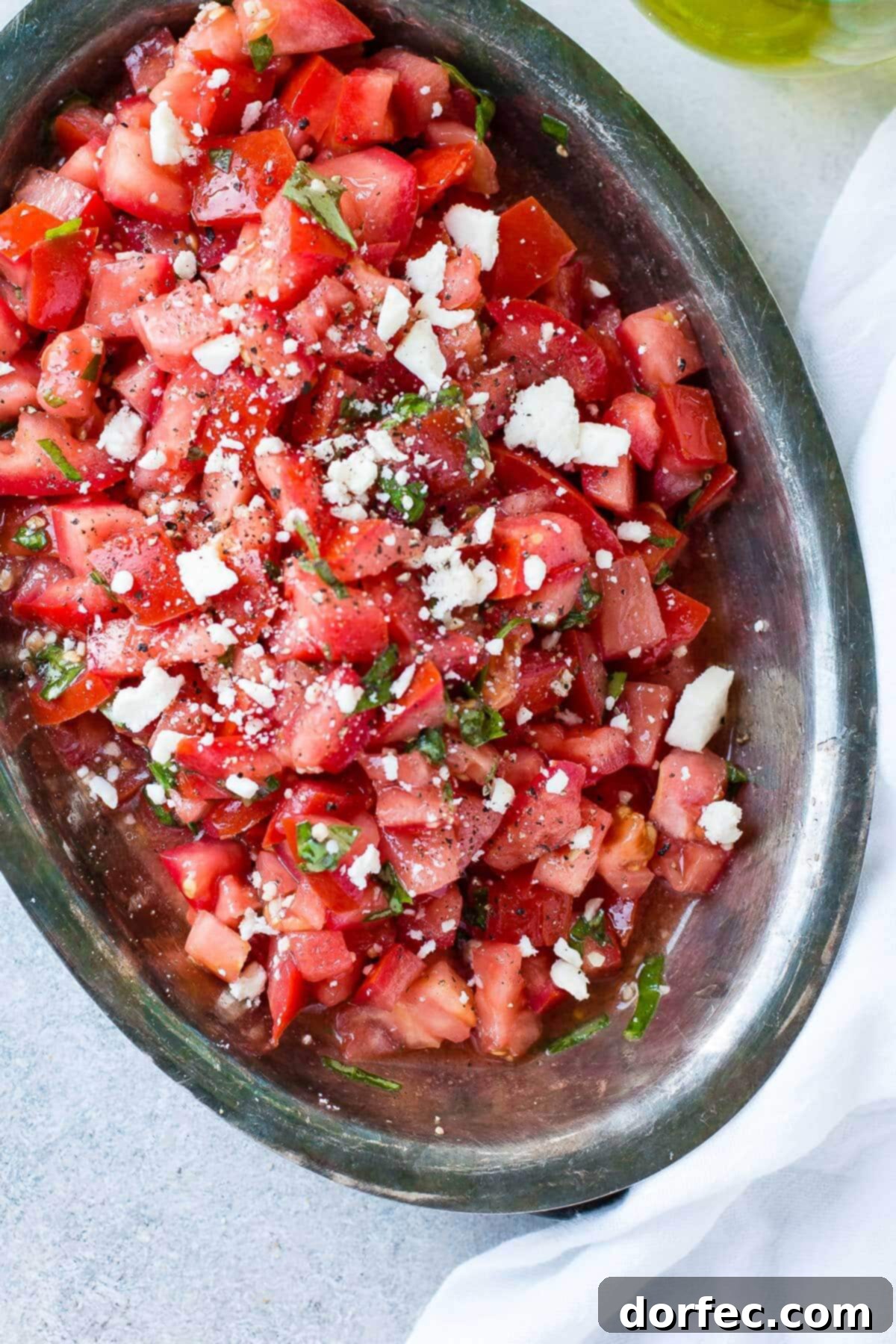
This simple combination creates an explosion of fresh, savory, and slightly sweet flavors that are utterly irresistible. Sometimes, for an extra layer of creaminess and tang, we like to throw in a little crumbled feta cheese – because when isn’t a little cheese a good idea?
Can Bruschetta Be Prepared in Advance?
Yes, absolutely! Bruschetta is an excellent dish for advance preparation, making it a fantastic option for entertaining or for quick weeknight meals. The key is to prepare the components separately to ensure the best texture and flavor. The vibrant tomato, basil, and olive oil topping can certainly be made in advance, allowing the flavors to meld and deepen.
Here’s how to prepare it ahead for optimal results:
- Prepare the Topping: Dice the tomatoes, chop the basil, and combine them with the olive oil, white wine vinegar, and a initial sprinkle of salt. Mix gently.
- Store the Topping: Transfer the mixture to an airtight container and refrigerate for up to 2-3 days. While the tomatoes might release more juice and lose a touch of their initial vibrancy, the flavors will still be delicious. Before serving, give it a good stir and drain any excess liquid if necessary.
- Prepare the Bread (Just Before Serving): To prevent the bread from becoming soggy, toast it (and rub with garlic) just before you plan to serve. This ensures each bite has that satisfying crispness.
- Assemble Last Minute: Right before your guests arrive or it’s time to eat, spoon the chilled topping onto the freshly toasted bread. Add your final sprinkle of sea salt.
By following this method, you can enjoy the convenience of pre-prepped ingredients while still delivering a fresh, impressive, and incredibly flavorful appetizer!
Classic Bruschetta Appetizer Recipe
Rating: 3.50 from 2 votes
Classic Bruschetta Appetizer Recipe
Sweet Basil
10 mins
10 mins
4-6
It doesn’t take traveling to Italy to know that the simple, classic bruschetta appetizer recipe is the perfect way to use summer tomatoes or impress holiday guests.
Ingredients
- 4 Heirloom Tomatoes, chopped
- 3 Tablespoons Basil, chopped
- 1/4 Cup High Quality Olive Oil
- 2 teaspoons White Wine Vinegar
- Crackers or bread for serving, see post for how to prepare bread
- Sea Salt, for finishing
Instructions
-
Place the tomatoes, basil, olive oil, and vinegar in a bowl and toss to coat.4 Heirloom Tomatoes,
3 Tablespoons Basil,
1/4 Cup High Quality Olive Oil,
2 teaspoons White Wine Vinegar -
Spoon a little tomato mixture onto each cracker or toasted bread slice, or serve family style. See note below.Crackers or bread for serving
-
Finish with a sprinkle of sea salt and enjoy immediately.Sea Salt
Recipe Notes
If serving family style, make sure to sprinkle a little salt into the dish and toss once to season well before presenting.
The tomato mixture will keep for 3-4 days when stored in an airtight container in the refrigerator.
Nutrition
Serving:
1
g
,
Calories:
111
kcal
,
Carbohydrates:
6
g
,
Protein:
1
g
,
Fat:
10
g
,
Saturated Fat:
1
g
,
Polyunsaturated Fat:
8
g
,
Sodium:
130
mg
,
Fiber:
1
g
,
Sugar:
2
g
Nutrition information is automatically calculated, so should only be used as an approximation.
Like this? Leave a comment below!
Related Recipe: Fresh Homemade Salsa
If you’re still brimming with beautiful, ripe tomatoes from the local farmers market, don’t let any go to waste! Our recipe for fresh homemade salsa is another fantastic way to utilize that seasonal goodness. It’s incredibly easy to make and features a little secret ingredient that takes its flavor from great to absolutely amazing, making it a perfect dip or topping for countless dishes.