
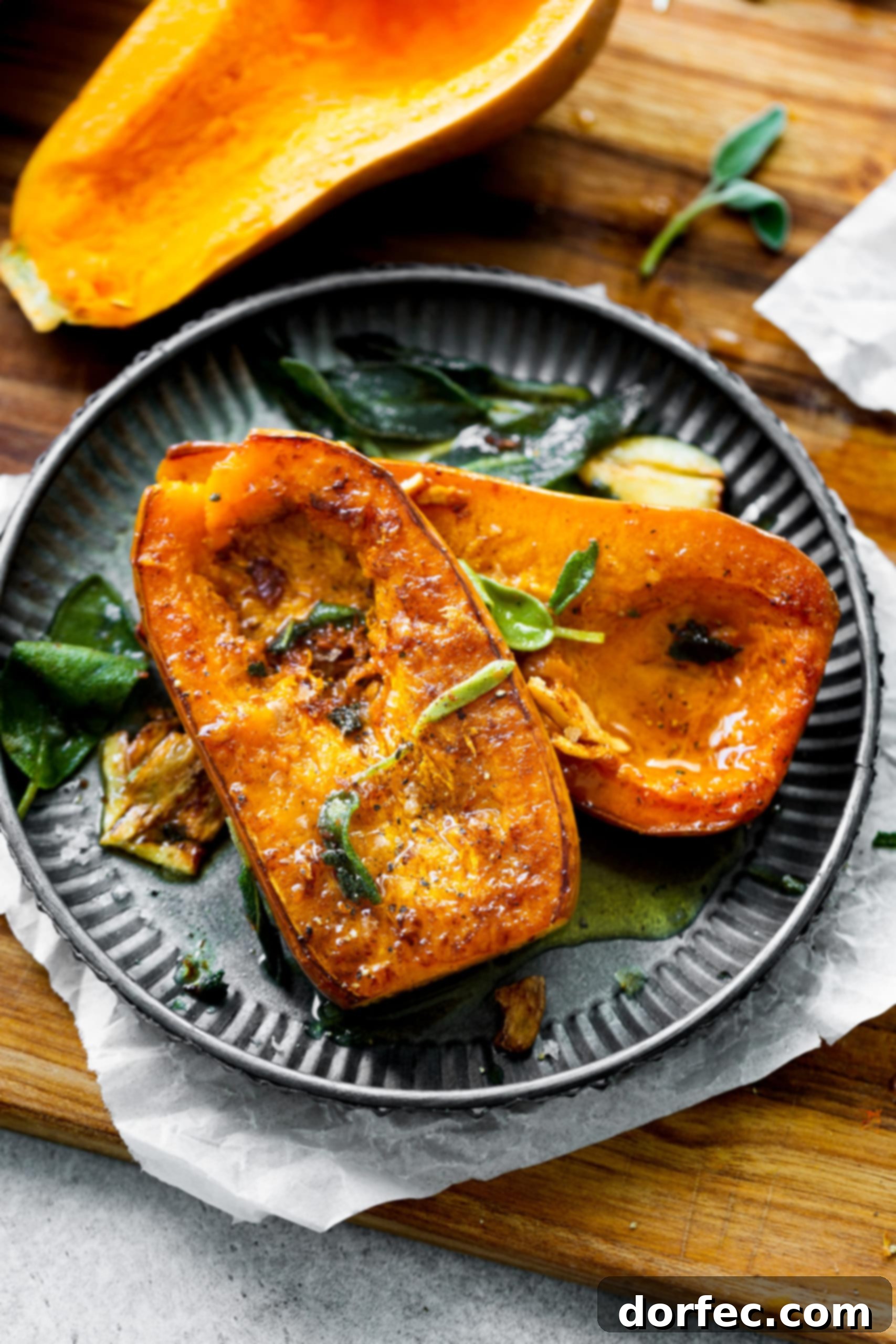
Prepare to discover your new favorite winter vegetable! If you’ve never had the pleasure of tasting honeynut squash, now is the perfect time to visit your local grocery store, grab a few, and embark on a culinary adventure with this incredible browned butter and sage recipe. This dish transforms the humble squash into a luxurious and deeply flavorful side that will capture your heart and your taste buds.
For those unfamiliar, honeynut squash is a delightful cross between buttercup and butternut squash. It stands out as one of my absolute favorite squash varieties due to its naturally sweet flavor and incredibly tender texture. While honeynut squash shines brightest in this recipe, you can easily substitute it with butternut squash, buttercup squash, or even sweet potatoes if honeynuts aren’t available. However, I highly encourage you to seek out this miniature marvel – its unique characteristics truly elevate the dish.
Our inspiration for this comforting recipe originated from a memorable ravioli dish with brown butter and sage we savored in Florence, Italy. Over time, that delightful flavor profile evolved into this standalone vegetable side dish. To balance the richness and inherent sweetness of the squash, we incorporate a bright squeeze of lemon juice instead of white wine, which perfectly cuts through the heavier notes and adds a refreshing zest.
Why You Will Absolutely Love This Honeynut Squash Recipe
There are so many reasons to adore this incredible honeynut squash creation, but let me highlight a few that make it truly exceptional. First and foremost, this recipe is incredibly convenient as it all comes together in one skillet. That means minimal cleanup and maximum flavor, without the need to even turn on your oven. While roasting is always an option, the inherent tenderness of honeynut squash means it cooks much faster and more easily on the stovetop, making this a quick and fuss-free meal.
Secondly, and perhaps most importantly, the magic truly happens with the nuttiness of browned butter. This simple technique transforms ordinary butter into a golden, aromatic elixir that coats every piece of squash with a rich, complex flavor. It’s a sophisticated taste that requires surprisingly little effort, adding depth and warmth to the dish.
Finally, the addition of fresh sage, a sprinkle of sea salt and freshly ground pepper, and that optional, yet highly recommended, squeeze of lemon completes this symphony of flavors. The earthy, slightly peppery notes of sage are a classic pairing with squash and browned butter, while the lemon provides a bright counterpoint, preventing the dish from feeling too heavy and adding a delightful zing. The result is a dish that’s not just delicious, but also incredibly balanced and satisfying.
Essential Ingredients for this Delectable Honeynut Squash Recipe
One of the many charms of this recipe is its simplicity. You won’t need a lengthy list of exotic ingredients to create something truly extraordinary. This dish proves that sometimes, less is indeed more, especially when you have quality ingredients that shine. If I could personally guide you to the grocery store to experience the joy of making this, I absolutely would! Here’s what you’ll need to gather:
- Honeynut Squash: These charming mini butternut-like squashes are becoming increasingly popular. You can reliably find them at specialty stores like Trader Joe’s, and they’re now appearing in the produce sections of most well-stocked grocery stores. Look for them alongside butternut and other winter squashes; their smaller size and slightly deeper orange hue are distinguishing features.
- Olive Oil: A good quality olive oil is essential for achieving that perfect golden sear on the outside of the squash. It helps create a beautiful crust that adds texture and depth to each bite.
- Butter: This is where the magic truly begins! Unsalted butter, gently browned, develops a nutty, rich aroma and flavor that is absolutely vital to this recipe. It’s the backbone of the dish’s irresistible taste profile.
- Garlic Cloves: Fresh garlic provides an aromatic foundation that perfectly complements the earthy sage and the deep nuttiness of the browned butter. We recommend slicing or crushing them rather than mincing to prevent burning in the hot pan.
- Fresh Sage: This herb is non-negotiable for this recipe. Its distinct, somewhat peppery, and earthy flavor is what makes this dish sing. Dried sage simply won’t deliver the same vibrant, fragrant punch.
- Flaked Sea Salt: A generous sprinkle of flaked sea salt not only enhances the flavors but also adds a delightful textural crunch. While our favorite brand is linked in the recipe card, high-quality kosher salt works beautifully too.
- Freshly Ground Black Pepper: Seasoning to taste with black pepper adds a subtle warmth and balances the overall profile of the dish.
- Lemon: The fresh squeeze of lemon juice is a critical component. It provides a bright, acidic counterpoint that cuts through the richness of the butter and the sweetness of the squash, elevating the entire dish and making it feel lighter and more vibrant.
You’ll find the precise measurements for each of these delightful ingredients in the detailed recipe card located at the very end of this post. Get ready to be amazed by how such a simple list can create such profound flavors!
How to Master Browned Butter Sage Honeynut Squash
As I’ve mentioned, one of the compelling reasons I adore using honeynut squash is its incredible ease of preparation compared to its larger cousin, the butternut. The skin of a honeynut squash is delightfully thin, meaning you don’t need to go through the tedious step of peeling it – a definite win in the kitchen! Furthermore, it cooks remarkably quickly, eliminating the need for a long roasting time. Let me guide you through these straightforward steps to achieve perfectly tender and flavorful honeynut squash every time:
- Prepare the Squash: Begin by thoroughly washing your honeynut squashes. Carefully remove the stems and then slice each squash in half lengthwise. Using a spoon, scoop out all the seeds and fibrous strands from the center. Once cleaned, cut the squash halves into uniform 3/4-inch “steaks.” Maintaining a consistent thickness ensures even cooking.
- Heat the Skillet: Place a large skillet over medium heat. Allow it to heat for a minute or two, then add a generous drizzle of olive oil. You want the oil to shimmer but not smoke, indicating it’s ready for the squash.
- Sear the Squash: Carefully arrange the squash steaks in a single layer in the hot pan. Cook them for about 3-5 minutes on one side, allowing them to develop a beautiful golden-brown sear. Then, flip the steaks and cook for another few minutes on the second side. Continue this process, flipping every minute or so, until the squash is tender all the way through and beautifully caramelized on both sides. This usually takes about 10-15 minutes total, depending on your stove and the thickness of your squash.
- Brown the Butter and Infuse Flavor: Once the squash is tender and golden, push it to one side of the pan. Add the butter and sliced or crushed garlic cloves to the empty side of the skillet. Cook, swirling occasionally, until the butter melts, foams, and begins to turn a beautiful golden-brown color, releasing a rich, nutty aroma. Be careful not to let it burn! As soon as the butter is browned, toss in the fresh sage leaves and, if desired, a bright squeeze of fresh lemon juice. Stir everything together, ensuring the squash is coated in the fragrant browned butter and sage mixture.
- Season and Serve: Finally, generously sprinkle the cooked squash with flaked sea salt and freshly ground black pepper to taste. Give it one last gentle toss and serve immediately while warm.
See how wonderfully easy that is? These detailed instructions are also conveniently available in the comprehensive recipe card below, ready for you to reference as you create this delightful dish in your own kitchen.
Perfect Pairings: What to Serve with Honeynut Squash
This browned butter sage honeynut squash isn’t just a delicious standalone dish; it’s an incredibly versatile vegetable side dish that complements a wide array of main courses. Its comforting, slightly sweet, and savory profile makes it an ideal accompaniment for hearty, home-style meals, especially during the colder months. Here are a few ideas that create a wonderfully balanced and satisfying plate:
- Roasted Chicken: The succulent, savory flavors of a perfectly roasted chicken are a classic match for the sweet and nutty notes of the squash. The browned butter and sage enhance the chicken’s natural richness.
- Classic Meatloaf: For ultimate comfort food, serve this squash alongside a hearty, flavorful meatloaf. The textures and flavors beautifully contrast and complement each other, creating a truly satisfying meal.
- Herb Roasted Turkey Breasts: Whether for a holiday feast or a weeknight dinner, tender turkey breast with its aromatic herb crust pairs wonderfully with the subtle sweetness and rich butteriness of the honeynut squash.
- Garlic Butter Steak: The robust flavor of a garlic butter steak finds a harmonious partner in this vibrant squash side. The richness of the steak is beautifully balanced by the squash’s sweetness and the bright lemon finish.
Beyond these specific suggestions, consider serving it with pork chops, lamb, or even as a substantial vegetarian main course when paired with a simple grain like quinoa or wild rice. Its versatility means it can easily elevate any meal from ordinary to extraordinary.
Deep Dive into Honeynut Squash: All You Need to Know
While I’m not talking about your breakfast cereal here, honeynut squash is equally delightful and offers a fantastic addition to your culinary repertoire. Let’s explore some common questions about this wonderful winter squash:
What Does Honeynut Squash Taste Like?
Honeynut squash boasts a flavor profile that is quite similar to its parent varieties, butternut and buttercup squash, but with a noticeable and delightful difference: it’s considerably sweeter. This natural sweetness is often described as having hints of caramel and a pronounced nutty undertone. When cooked, its flesh becomes incredibly creamy and tender, almost melting in your mouth, which further enhances its rich flavor experience. This makes it a perfect choice for both savory and slightly sweet applications.
Where to Buy Honeynut Squash
Once a specialty item, honeynut squash has become much more accessible in recent years. You can almost always find them at stores known for unique produce, such as Trader Joe’s. Beyond that, many larger conventional grocery stores are now stocking them, particularly during the autumn and winter months when squash is in season. When searching, head to the produce section and look near the butternut squash, acorn squash, and other winter varieties. They are easily identifiable by their smaller size and darker, often richer orange-brown skin compared to a standard butternut.
Is Honeynut Squash Skin Edible?
Absolutely, yes! One of the fantastic benefits of honeynut squash is its remarkably thin and delicate skin. Unlike some other winter squashes, there’s no need to laboriously peel it. When cooked properly, the skin softens beautifully and becomes completely edible, adding a slight textural contrast and contributing to the overall nutritional value. Trust me, it’s every bit as delicious and enjoyable as the skin on a perfectly cooked sweet potato.
How Long Does Honeynut Squash Last?
Proper storage is key to enjoying your honeynut squash. An uncut, whole honeynut squash has an excellent shelf life and can be stored at cool room temperature for a surprisingly long time, often up to a month or even more. Look for squashes that feel firm and heavy for their size, without any soft spots. If you notice the skin starting to wrinkle or soften, it’s an indication that the squash is beginning to dry out, and it should be cooked as soon as possible to preserve its quality.
Once you have cut and cooked your honeynut squash, any leftovers should be stored in an airtight container in the refrigerator. In this state, it will remain fresh and delicious for up to a week. For longer storage, cooked honeynut squash freezes exceptionally well. Simply allow it to cool completely, then transfer it to a freezer-safe bag or container, where it can be stored for up to 3 months. This makes it perfect for meal prepping or having a quick side ready on busy nights.
Health Benefits of Honeynut Squash
Beyond its delicious taste and ease of preparation, honeynut squash is also packed with nutritional benefits, making it a healthy addition to any diet. Like many vibrant orange vegetables, it’s an excellent source of beta-carotene, which the body converts into Vitamin A – crucial for vision, immune function, and skin health. It also provides a good amount of Vitamin C, an essential antioxidant, and a significant boost of dietary fiber, which aids in digestion and helps maintain gut health. Furthermore, honeynut squash contains various B vitamins, potassium, and magnesium, contributing to overall well-being. Incorporating this sweet and savory squash into your meals is a tasty way to boost your nutrient intake.
Why Honeynut Squash is Your New Favorite Winter Staple
By now, I truly hope I’ve painted a vivid enough picture to convince you that this Browned Butter Sage Honeynut Squash recipe is an absolute must-try! I am genuinely confident that honeynut squash will quickly ascend to the top of your list of favorite winter vegetables. The harmonious combination of its inherent sweetness with the rich, complex flavors of browned butter and aromatic sage creates a culinary experience that will make each bite melt in your mouth. This isn’t just a side dish; it’s a celebration of seasonal produce, transformed into something truly unforgettable. I eagerly await for you to discover and fall in love with this delightful and easy-to-make vegetable side dish!
More Delicious Squash Recipes to Explore:
If you’ve enjoyed this foray into the world of squash, you’ll be thrilled to know there are many other incredible ways to prepare this versatile vegetable. Here are some more of our favorite squash recipes to inspire your next meal:
- Butternut Squash Soup
- Vegetarian Butternut Squash Pasta
- Winter Roasted Butternut Squash Kale Salad
- Spaghetti Squash Pizza Crust
- Gruyere Baked Zucchini Squash Gratin
Browned Butter Sage Honeynut Squash Recipe
By: Sweet Basil
Prep Time: 5 mins Cook Time: 15 mins Total Time: 20 mins
Servings: 4

Ingredients
- Olive Oil
- 2 Honeynut Squash, seeds and stem removed and sliced in 3/4″ steaks
- 2 Tablespoons Butter
- 2-3 Garlic Cloves, sliced in half or crushed (not minced as it will burn)
- Sage Leaves, a few, fresh
- 1/2 Lemon, *optional
- Flaked Sea Salt
- Pepper
Instructions
- Heat a pan over medium heat and add a drizzle of oil.
- Add the steaks flat on the pan and cook for 3-5 minutes, then turn and continue cooking for another 5 minutes.
- Continue flipping every minute or so until tender, about 5 more minutes.
- Add in the butter and garlic and cook until nutty brown and fragrant. Throw in the sage and a squeeze of lemon if desired.
- Sprinkle with flaked salt and pepper and serve.
Nutrition
Serving: 0.5 squash, Calories: 225kcal, Carbohydrates: 46g, Protein: 4g, Fat: 6g, Saturated Fat: 4g, Polyunsaturated Fat: 1g, Monounsaturated Fat: 2g, Trans Fat: 1g, Cholesterol: 15mg, Sodium: 66mg, Potassium: 1346mg, Fiber: 8g, Sugar: 9g, Vitamin A: 40041IU, Vitamin C: 86mg, Calcium: 188mg, Iron: 3mg
Nutrition information is automatically calculated, so should only be used as an approximation.
REMEMBER TO SUBSCRIBE TO our FREE Oh Sweet Basil NEWSLETTER AND RECEIVE EASY RECIPES DELIVERED INTO YOUR INBOX EVERY DAY!
When you try a recipe, please use the hashtag #ohsweetbasil on INSTAGRAM for a chance to be featured in our stories! FOLLOW OH, SWEET BASIL ON FACEBOOK | INSTAGRAM | PINTEREST | TWITTER FOR ALL OF OUR LATEST CONTENT, RECIPES AND STORIES.