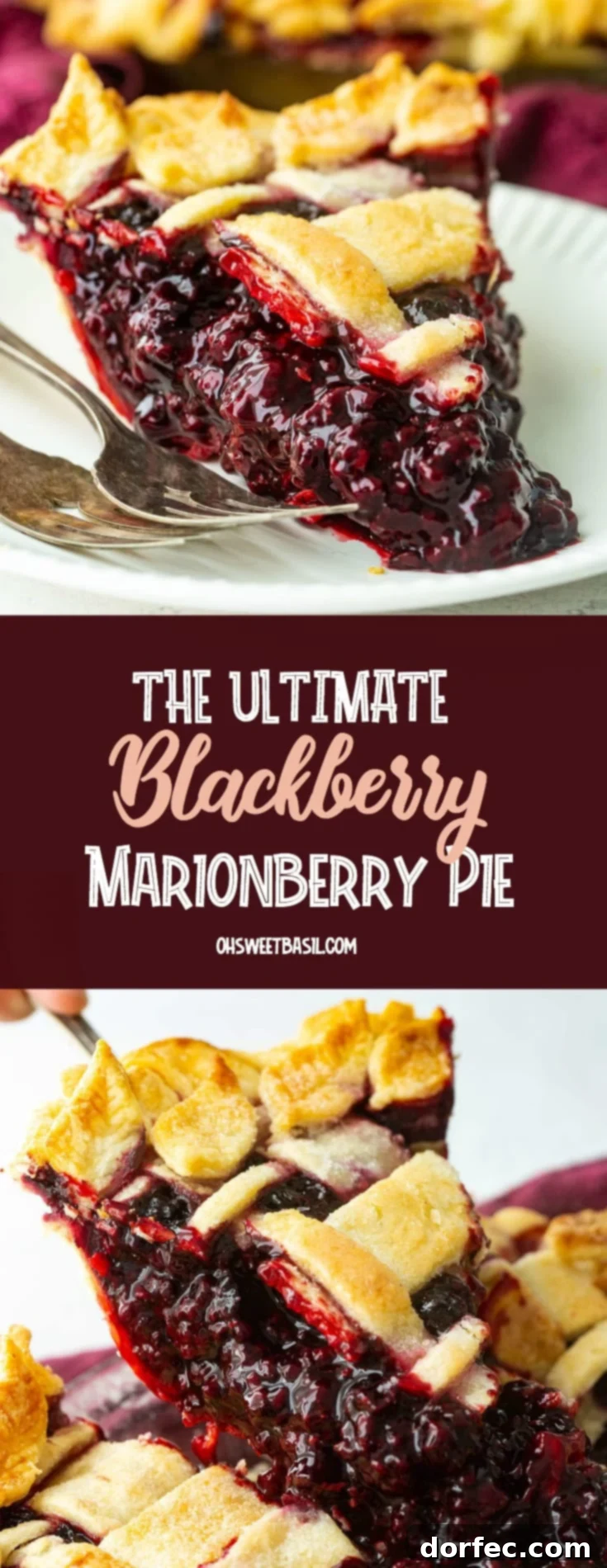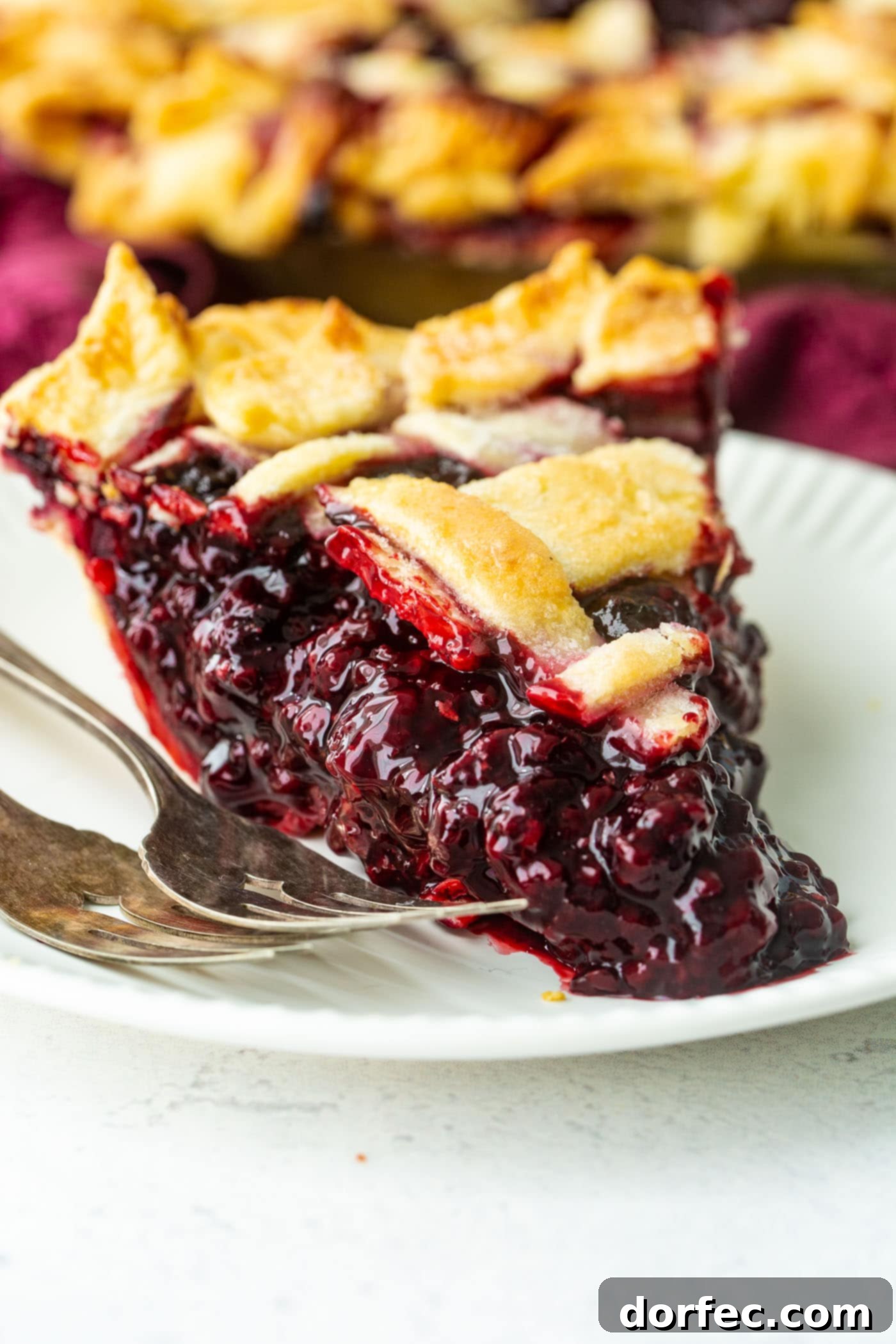
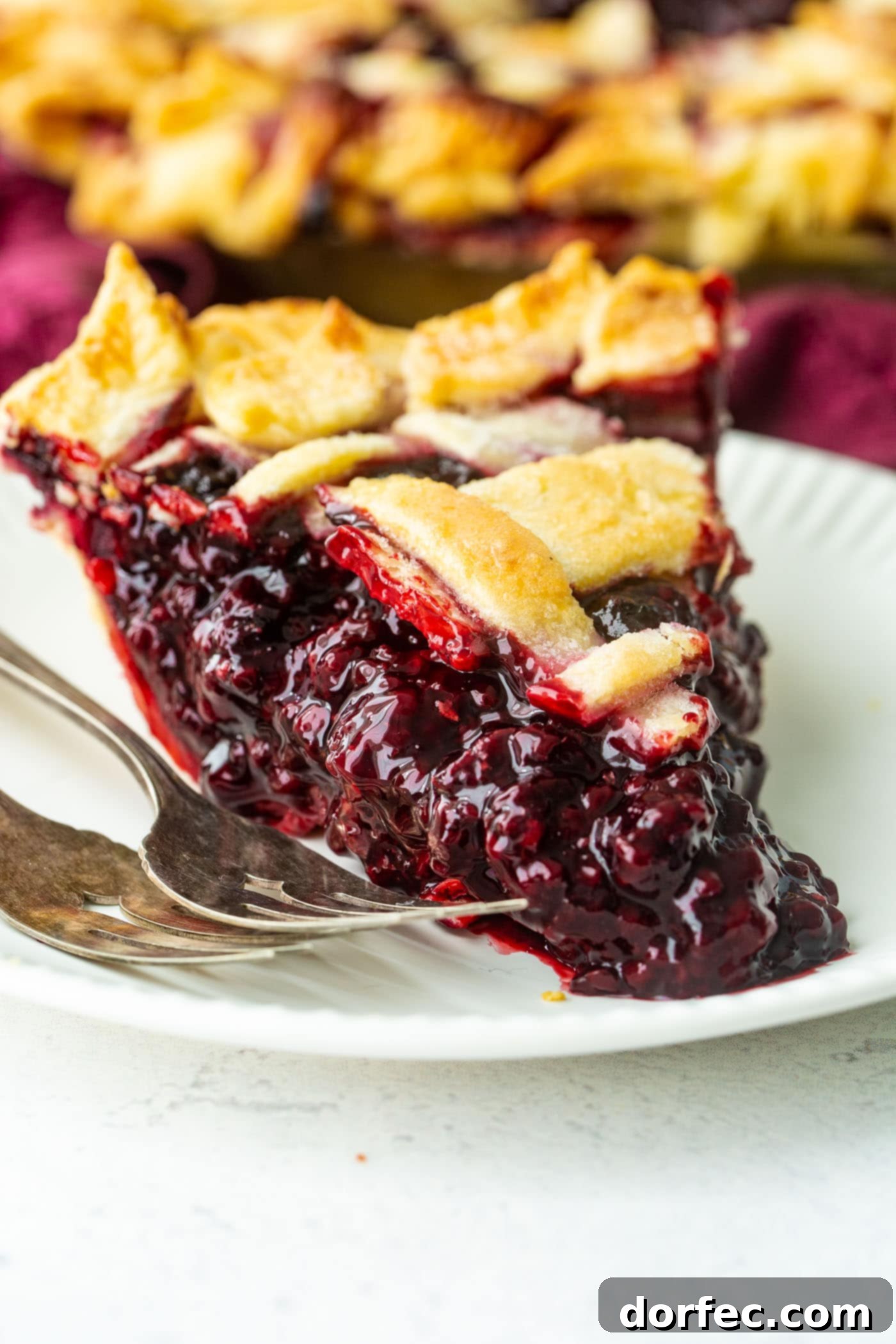
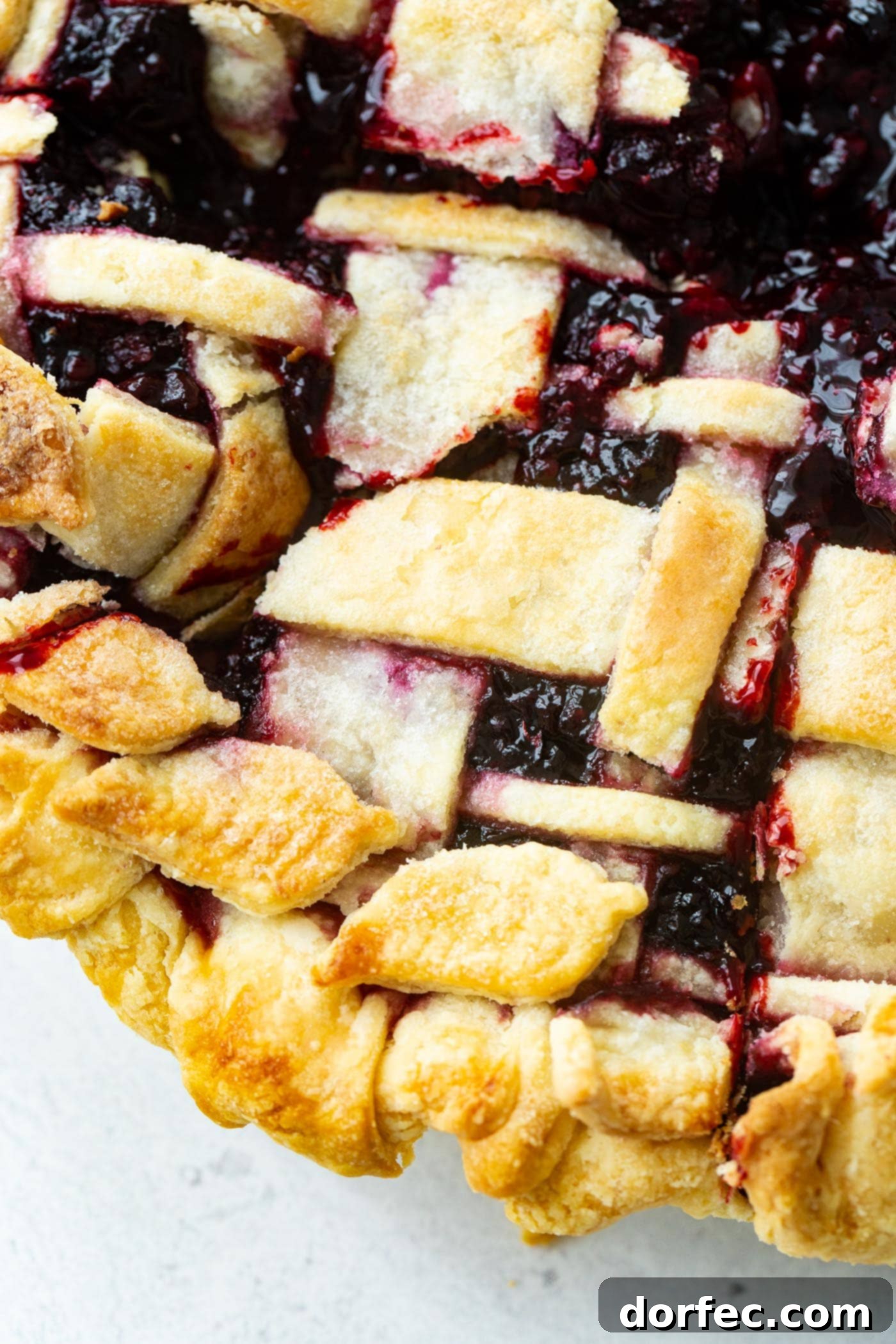
Welcome to the delightful world of Marionberry pie, a dessert that truly captures the essence of summer with its vibrant flavor and irresistible aroma. While many might mistake it for a traditional blackberry pie, due to the similar appearance and common regional availability of blackberries, the Marionberry offers a uniquely nuanced taste that elevates this dish to an unparalleled level. If you’ve never had the pleasure of tasting a freshly baked Marionberry pie, prepare to embark on a culinary journey that will redefine your appreciation for fruit desserts.
For those who know me, even for a brief encounter, it quickly becomes clear that I have a profound obsession with a select few culinary treasures. While my list of food loves is extensive – encompassing everything from savory tacos to comforting squishy rolls – there are three items that hold a special place in my heart, items I find incredibly challenging to resist:
- The perfect Marionberry Pie
- Authentic Margarita Pizza
- Crispy, hot French Fries
Each of these evokes a distinct sense of joy, but the Marionberry pie, in particular, carries with it the nostalgic aroma of Pacific Northwest summers. I vividly recall a trip to the grocery store last year when, to my utter delight, I spotted them – fresh Marionberries! It felt like destiny. I knew, without a shadow of a doubt, that I had to acquire every single container and embark on crafting the most exquisite Marionberry pie imaginable.
And so I did. Despite my modest height of 5’3″, with the coveted berries perched high on a shelf, I was undeterred. A true devotee of Marionberry pie stops at nothing. With a careful placement of my right toes onto the lower shelf, gently pushing aside other produce to make room, I reached for a higher ledge. With a determined heave, I pulled myself up, my fingers closing around each precious container. One by one, they descended into my cart. Every. Single. One. And I felt absolutely no remorse. That day, my mission was clear: to bring the magic of Marionberries home and transform them into the ultimate pie.
What Exactly Are Marionberries? The Queen of Berries Explained
Often hailed as the “King of Blackberries,” the Marionberry is far more than just another berry. It’s a specific type of blackberry that originated from the breeding program at Oregon State University in 1945, released to growers in 1956. This flavorful berry is a cross between the ‘Chehalem’ and ‘Olallie’ varieties, combining the best characteristics of both. When people ask if Marionberries are the same as huckleberries, the answer is a definitive “No.” Huckleberries, while delicious, are more akin to blueberries in their size and growth habits, typically growing wild.
Marionberries, on the other hand, offer a complex flavor profile that sets them apart. Imagine the deep, earthy sweetness of a blackberry mingled with the bright, slightly tart notes of a raspberry. That’s the Marionberry experience – a perfect harmony of flavors, slightly tarter than a common blackberry, yet sweeter and more aromatic than a raspberry. This exquisite balance makes it, quite frankly, the most perfect berry in existence for baking, especially when it comes to creating a truly unforgettable pie. Seriously, once you taste a Marionberry, you’ll understand the obsession!
Where to Find Marionberries: A Quest for Culinary Gold
If you’re wondering where to buy these magnificent berries, you’re looking primarily at the Pacific Northwest, their native stronghold. Marionberries are predominantly grown in Oregon, with a significant concentration around the Salem area, earning them a reputation as Oregon’s signature berry. You can also find them in parts of Washington state. For those outside this region, locating fresh Marionberries can be a bit of a treasure hunt, but it’s a worthwhile endeavor.
Your best bet for fresh Marionberries is often local farmer’s markets during peak season, especially if you reside in or are visiting the Pacific Northwest. Specialty grocery stores that pride themselves on local and unique produce might also carry them. Don’t overlook the frozen section either! Many brands offer frozen Marionberries or a blackberry-Marionberry blend, which works beautifully for pies and other baked goods throughout the year.
When is Marionberry Season in Oregon? Planning Your Berry Adventure
The Marionberry season is a highlight of the Oregon summer, typically running from July through August. This period is not only prime for berry picking but also one of the most picturesque times to visit the state. Imagine driving along the scenic Oregon coast, with the refreshing ocean breeze, and stopping at charming roadside stands adorned with baskets overflowing with freshly picked Marionberries. It’s an idyllic experience, offering the freshest, most flavorful berries directly from the growers. Visiting during this season allows you to enjoy the berries at their absolute peak, ensuring your pie captures the true essence of summer.
Excellent Substitutes for Marionberries: Still Delicious!
If you find yourself outside the Pacific Northwest, where I grew up, and fresh Marionberries are as elusive as a unicorn, don’t despair! You can still create a truly delicious berry pie. The best substitute for Marionberries, by far, is the common blackberry. Blackberries share a similar tart-sweet profile and texture, making them an excellent stand-in. While the flavor will be slightly different, a blackberry pie crafted with this recipe will still be incredibly satisfying.
Alternatively, if you’re not a fan of straight blackberries or simply prefer a more complex berry medley, a “Razzleberry” blend is a fantastic option. This typically involves a mix of raspberries and blackberries, and sometimes even blueberries. When combined, these berries can wonderfully mimic the unique flavor balance of a Marionberry, offering a delightful and vibrant fruit pie experience.
Using Frozen Berries for Your Marionberry Pie: Convenience Without Compromise
Absolutely! The freezer section of your grocery store can be your best friend when fresh Marionberries are out of season or unavailable. Many brands offer individually quick-frozen (IQF) Marionberries, or often a “blackberry-Marionberry” mix. These frozen berries are perfectly suitable for pie making, allowing you to enjoy this incredible dessert year-round.
The best part? There’s no need to defrost them before using. Simply measure out an equal amount of frozen berries as you would fresh ones and incorporate them directly into your pie filling. The baking process will handle the thawing, and the added moisture from the frozen berries will be managed by the thickener, ensuring a perfectly set pie every time.
The Foundation of Flavor: Blind Baking Your Pie Crust for Perfection
In my earlier baking days, I rarely blind baked the crust for fruit pies, but I’ve since embraced this technique, and the results are consistently superior. Blind baking, or par-baking, the bottom crust is a crucial step for preventing a soggy bottom, especially with juicy fruit fillings like Marionberry. A crisp, flaky crust beneath a tender, flavorful filling is the hallmark of a truly great pie.
To blind bake your bottom crust, follow these steps:
- After shaping your pie dough into the pie plate, prick the bottom and sides all over with a fork (this is called docking).
- Line the crust with parchment paper and fill it with pie weights, dried beans, or rice.
- Bake in a preheated oven (usually around 375°F/190°C) for about 15-20 minutes, or until the edges are lightly golden.
- Remove the pie weights and parchment paper, then return the crust to the oven for another 5-10 minutes until the bottom appears dry and lightly golden.
- For an extra layer of protection against sogginess, brush the par-baked crust with an egg wash (one egg beaten with a teaspoon of water) and bake for a few more minutes to create a seal.
Allow the crust to cool completely before adding the filling. This extra step is a game-changer and will ensure your Marionberry pie has that coveted perfect texture from top to bottom. For more detailed instructions on blind baking, you can refer to our lemon meringue pie post.
Crafting the Perfect Marionberry Pie Filling: Simple Yet Sublime
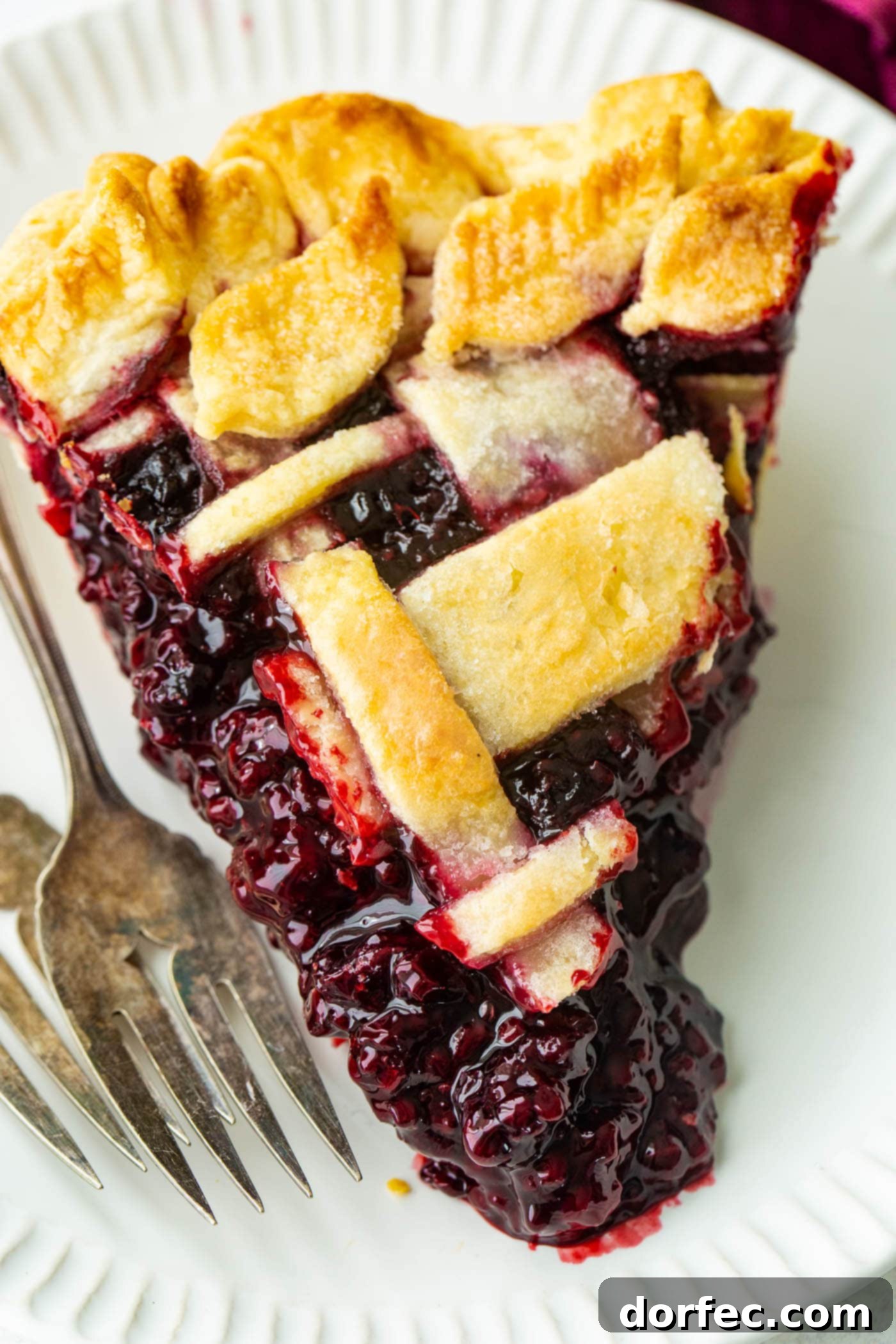
Making the filling for this Marionberry pie is surprisingly straightforward, proving that the most delicious recipes don’t have to be complicated. The key lies in gentle handling and the right thickener.
- In a large pot or saucepan, combine your fresh or frozen Marionberries with the sugar and your chosen thickener (more on this below).
- Gently fold the ingredients together using a rubber spatula until the berries are just coated. Avoid mashing the berries, as you want to preserve their shape and integrity.
- Place the pot over medium heat and cook, stirring occasionally, just until the berries begin to release their juices and the mixture starts to thicken. This usually takes only a few minutes. The goal is not to cook them down into a jam, but rather to begin the thickening process and ensure the sugar dissolves.
- Remove the filling from the heat and set it aside to cool slightly while you prepare the crust.
Troubleshooting: Why is My Berry Pie Runny?
A runny pie is one of the most common frustrations for home bakers, and it can be incredibly disappointing after all that effort. The primary reason your berry pie filling might be too liquid is that the starches or gelling agents didn’t properly set. This can happen for several reasons:
- **Excess Liquid from Fruit:** Some fruits, especially very ripe or frozen berries, release a significant amount of juice during baking.
- **Under-ripe vs. Over-ripe Berries:** Over-ripe berries can be more watery, while under-ripe berries may not release enough juice to activate the thickener effectively.
- **Insufficient Thickener:** Simply not using enough of your chosen thickening agent for the volume and juiciness of the fruit.
- **Not Enough Heat Exposure:** The thickener might not have reached a high enough temperature or cooked for long enough to fully activate and thicken the juices.
- **Insufficient Cooling Time:** Most pies need ample time to cool and set, often several hours or even overnight. Cutting into a warm pie too soon is a common cause of a runny filling.
- **Wrong Type of Thickener:** Different thickeners behave differently, and some are more effective for certain fruits or baking conditions.
The Secret to a Perfectly Set Fruit Pie: Choosing the Right Thickener
The trick to achieving a perfectly set, non-runny fruit pie filling lies in selecting and correctly using a reliable thickener. There are several options available, each with its own characteristics:
- **All-Purpose Flour:** A common and readily available thickener. It can sometimes give the filling a slightly cloudy appearance and a faint starchy taste if too much is used.
- **Cornstarch:** Provides a clear, glossy finish and a smooth texture. It works well, but pies thickened with cornstarch can become “weepy” after a day or two, especially if refrigerated.
- **Tapioca (Granulated or Quick-Cooking):** Offers a clear, fruit-forward filling with a slightly chewy texture from the tapioca pearls. It performs well with very juicy fruits and holds up better than cornstarch for extended storage.
- **Cornaby’s Ultra Gel:** This is our absolute favorite and highly recommended thickener for fruit pies. Ultra Gel is a modified food starch that provides superior thickening without imparting any flavor or cloudiness. It creates a dreamily smooth, perfectly set filling that holds its consistency beautifully, even after cooling and slicing. It’s truly a game-changer for achieving that ideal pie texture.
While all of these can technically work, we exclusively prefer Cornaby’s Ultra Gel for its consistent, exceptional results. It ensures a crystal-clear, flavorful filling that is never runny, allowing the natural goodness of the Marionberries to shine through without any distracting textures or tastes.
Using Flour as a Thickener: A Practical Alternative
If you don’t have access to Cornaby’s Ultra Gel, all-purpose flour is a perfectly acceptable alternative. The amount you’ll need can vary depending on how juicy your berries are. Generally, we recommend starting with 1/3 to 1/2 cup of all-purpose flour for a standard pie recipe. For most pies, especially those with average juiciness, 1/2 cup usually does the trick. If you notice your berries are exceptionally juicy, you might even increase this to 3/4 or even 1 cup to ensure your filling sets properly. Remember to mix the flour thoroughly with the sugar and berries before cooking to avoid lumps.
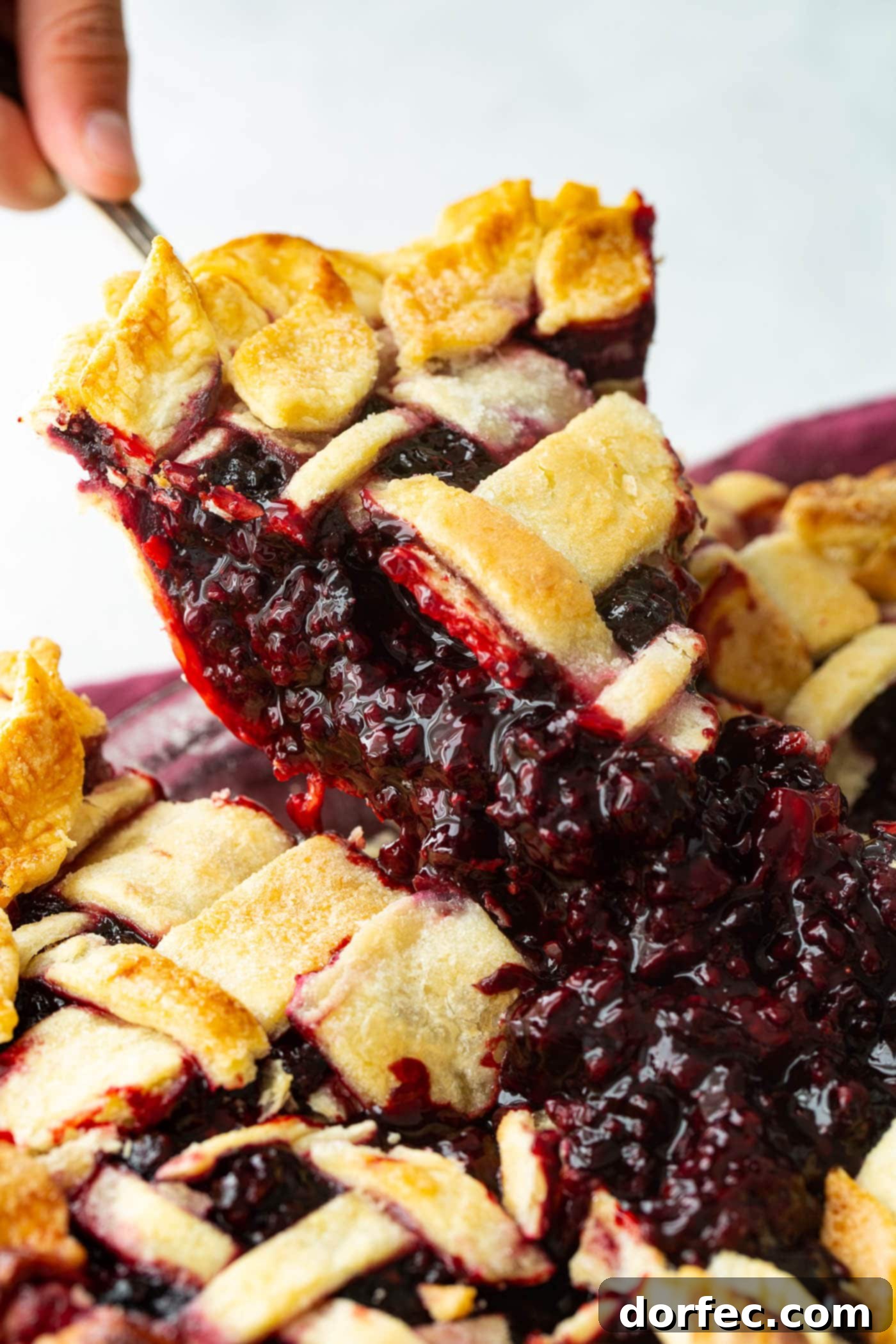
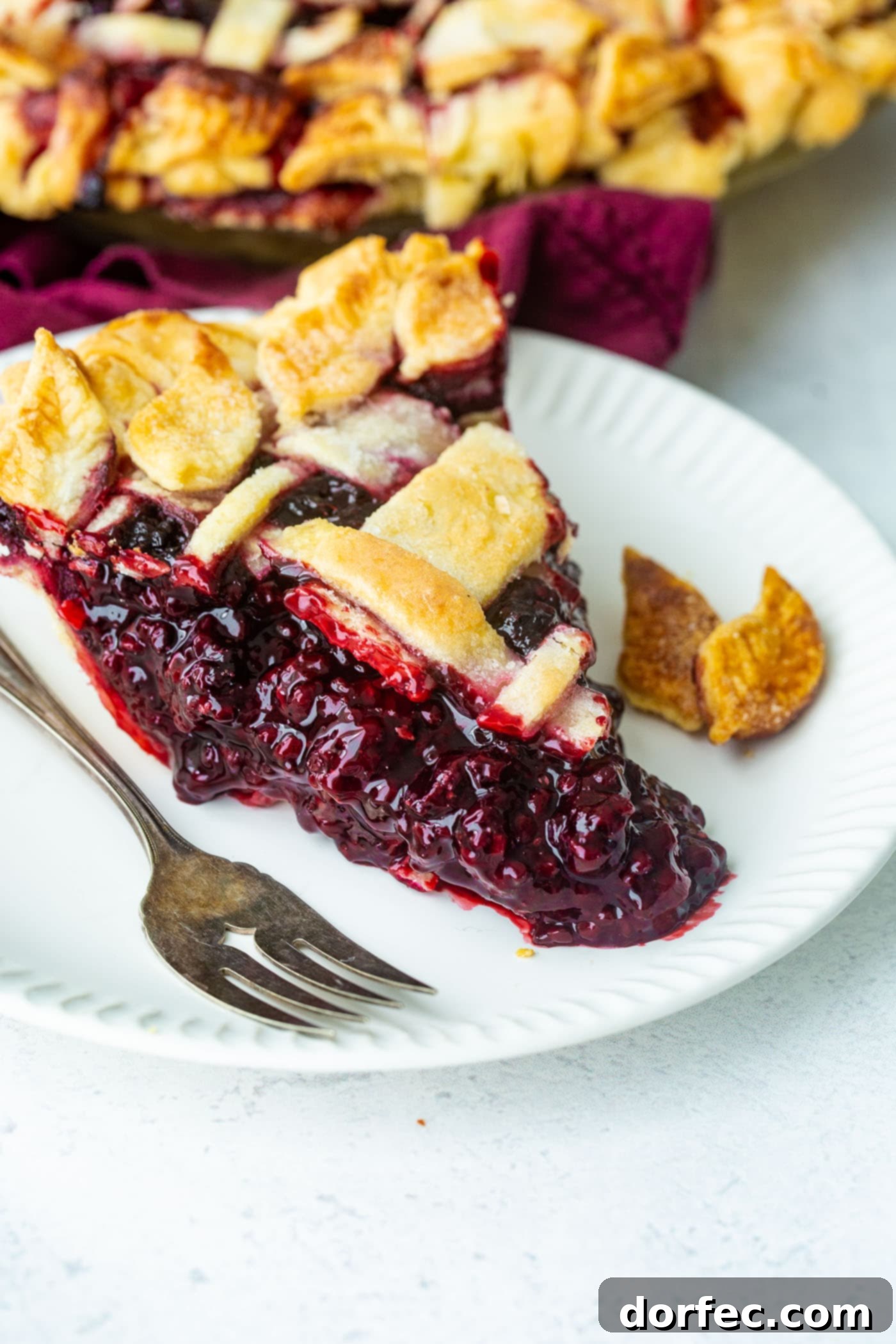
Marionberries are, quite simply, what dreams are made of. Transform them into a Marionberry pie, and you’ve created a dessert that is nothing short of heavenly. The sweet, tart burst of berries nestled in a flaky crust is an experience that transcends mere eating – it’s pure bliss. Resistance, as they say, is futile, and I wouldn’t blame you for wanting to devour the entire pie!
More Easy and Delicious Pie Recipes to Explore:
- Homemade French Silk Pie: A rich, creamy, and decadent classic that melts in your mouth.
- Dulce de Leche Banana Cream Pie: A delightful twist on banana cream pie with a luscious caramel layer.
- Marionberry Pie: Our signature recipe for the queen of berries, truly a taste of the Pacific Northwest.
- Cinnamon Roll Apple Pie: A comforting apple pie with a fun, sweet cinnamon roll crust.
- Peanut Butter Banana Cream Pie: A creamy, dreamy pie combining two beloved flavors.
- Peach Blackberry Galette: A rustic and elegant dessert showcasing the best of summer fruits.
- Lemon Jello Peach Pie: A light, refreshing, and incredibly easy peach pie with a zesty lemon kick.
- The Perfect Razzleberry Pie: A vibrant medley of berries baked into a truly perfect pie.
- Easy No-Bake Chocolate Pie: A quick and simple solution for your chocolate cravings, no oven required.
- Simple Blueberry Pie: A timeless classic, celebrating the juicy sweetness of blueberries.
- Strawberry Icebox Pie: A cool, creamy, and refreshing pie perfect for hot summer days.
- No-Bake Lemon Cream Pie: A tangy and smooth lemon dessert that’s effortlessly delicious.
- Explore ALL of Our Irresistible Pie Recipes!
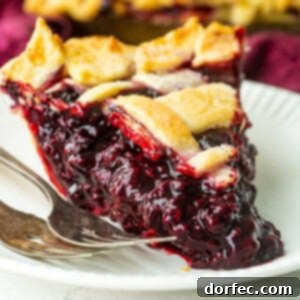
Marionberry Pie
Pin
Ingredients
- 1 Double Crust [Mom’s Magic Pie Crust Recipe]
- 5 Pints Marionberries , Blackberries work too
- 1/2 – 3/4 Cup Sugar
- 1/4 Cup [Cornaby’s Ultra Gel]
- 1 Egg
- 1/2 teaspoon Water or milk
- Turbinado or Regular Sugar, about 1-2 Tablespoons
Instructions
-
Prepare your pie crust. Divide the dough into two halves. Shape one half into a pie plate, ensuring it fits snugly and has a nice crimped edge. Slice the other half into even strips for your lattice top. Cover both the pie shell and the strips with plastic wrap and chill in the refrigerator while you prepare the filling.1 Double Crust [Mom’s Magic Pie Crust Recipe]
-
Preheat your oven to 375 degrees F (190 degrees C). Blind bake the bottom crust as described in the section above to prevent a soggy bottom. Allow it to cool slightly before proceeding.
-
In a large saucepan, combine the Marionberries, sugar, and Cornaby’s Ultra Gel (or your chosen thickener). Starting with 1/2 cup of sugar, gently fold the berries and other ingredients together with a rubber spatula, taking care not to crush the delicate fruit. Place the saucepan over medium-low heat and cook until the berries begin to release their juices and the mixture starts to thicken. Stir only occasionally to maintain the berry shape. Taste the filling; if your berries are particularly tart, add more sugar, one tablespoon at a time, until you reach your desired sweetness. Remove from heat.5 Pints Marionberries, 1/2 – 3/4 Cup Sugar, 1/4 Cup [Cornaby’s Ultra Gel]
-
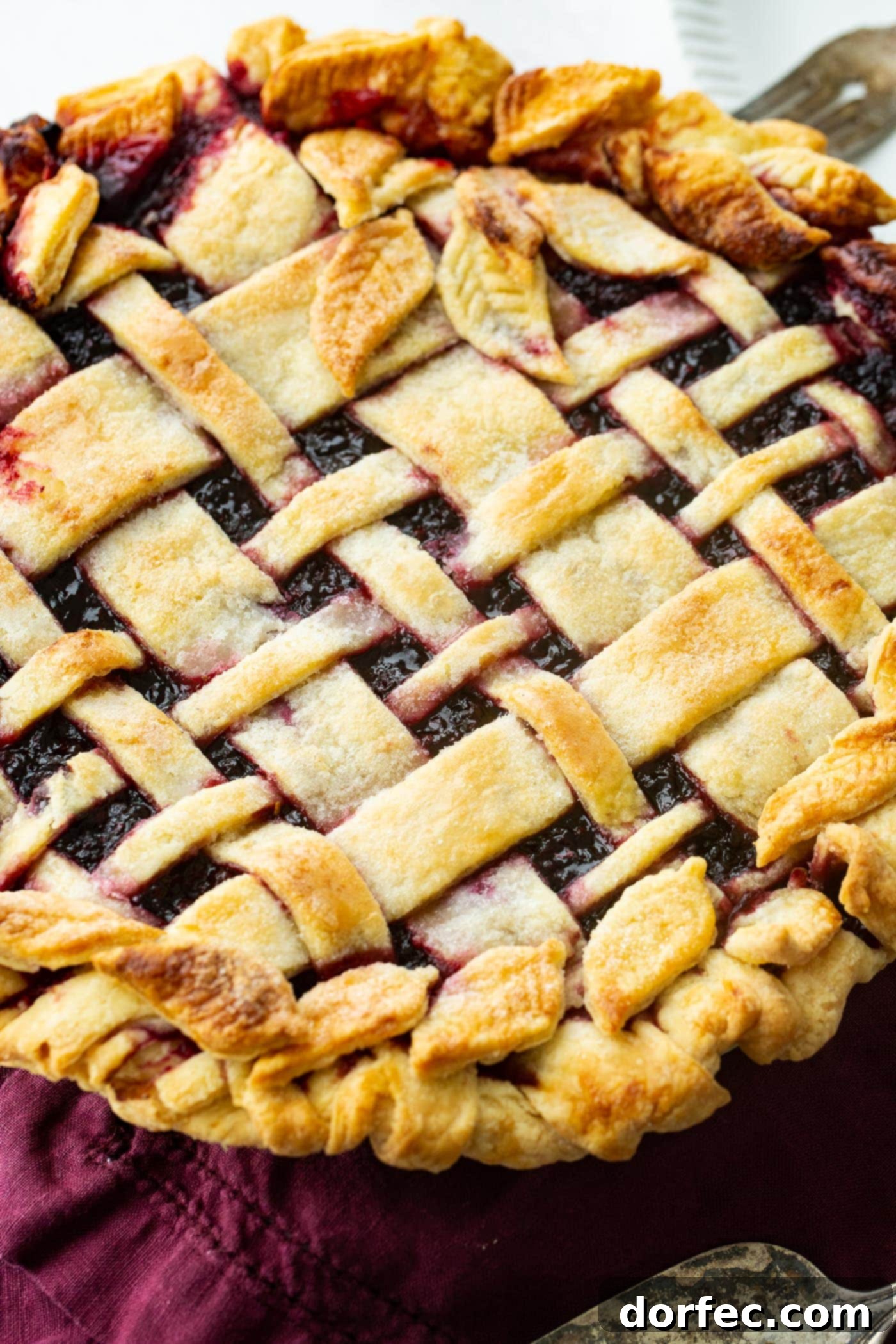
Pour the warm fruit mixture directly into your cooled, blind-baked pie crust. Arrange the chilled dough strips over the filling to create a beautiful lattice top. Start by laying parallel strips across the pie. Then, gently fold back every other strip and lay a new strip perpendicularly across the unfolded strips. Fold the original strips back over. Repeat this process, alternating which strips you lift, until you have a full lattice pattern across the entire pie. Trim any excess dough and crimp the edges to seal.
-
In a small bowl, whisk together the egg and water (or milk) to create an egg wash. Lightly brush the entire lattice top and exposed crust edges with this wash. Immediately sprinkle generously with Turbinado or regular sugar for a sparkling, golden finish.1 Egg, 1/2 teaspoon Water or milk, Turbinado or Regular Sugar
-
Bake the pie in the preheated oven for 25 minutes. After this initial bake, carefully drape a piece of aluminum foil over the top of the pie to prevent the crust from browning too quickly. Continue baking for an additional 20-30 minutes, or until the filling is visibly bubbly and thick, and the crust is a beautiful golden brown underneath the foil.
-
Once baked, remove the pie from the oven and place it on a wire rack to cool completely. This cooling step is paramount for the filling to fully set. We highly recommend allowing the pie to rest overnight at room temperature for the best results, as the filling will firm up perfectly and prevent any running when sliced. Refrigeration immediately after baking can sometimes cause the filling to sink or pull away from the crust.
Recipe Notes
Blind baking the bottom crust is a crucial step to prevent a soggy pie. This ensures a crisp, flaky base. Refer to our lemon meringue pie post for detailed blind baking instructions.
This delicious pie can be stored at room temperature for up to 2 days, making it perfect for entertaining. For longer storage, keep it in the refrigerator for up to 4 days.
Nutrition
Nutrition information is automatically calculated, so should only be used as an approximation.